

1.3.1 Bottom financial quintile admission target
NTNU has established specific targets and admission pathways to admit students from economically disadvantaged backgrounds, including those from the lowest 20% of household income groups in the country. These groups include students from low- and middle-low-income households, those eligible for the Ministry of Education’s Financial Aid Program for Disadvantaged Students, and students facing financial hardship due to special family circumstances. Through the Morning Light Dual-track Admission program, NTNU provides 54 prioritized admission places each year and uses group-based recruitment to broaden the selection pool, supporting economically disadvantaged applicants. In the 2024-2025 academic year, NTNU offered a total of 471 additional admission quotas for students from economically or culturally disadvantaged backgrounds, representing 17% of all first-year students. NTNU will continue to expand targeted admission pathways to ensure greater access and opportunities for students from the lowest-income households.
NTNU Morning Light Program
- Establishment of the “‘Morning Light Dual Pathways Admission”.
Morning Light 1.0: Each department gives priority admission to 1–2 students from economically disadvantaged backgrounds. Eligible applicants include students from low-income households, lower-middle-income families, or families facing special circumstances.
Morning Light 2.0: NTNU created five Morning Light admission groups, lowering entrance exam thresholds to ensure admission opportunities for economically or culturally disadvantaged students. This friendly admission policy promotes educational equity and social justice. Eligible applicants include students from low-income or lower-middle-income households, families with special circumstances, and children of new immigrants.
- Comprehensive post-admission support
After enrollment, NTNU provides a full range of life, academic, career, and overseas learning counseling to enhance disadvantaged students’ problem-solving, academic, and employment skills as well as global perspectives. The target groups include students from low-income and lower-middle-income households, families with special circumstances, Indigenous students, students with disabilities and their children, and students supported by the Ministry of Education’s assistance schemes for disadvantaged students.
Admission quotas and student numbers (Academic Years 2021–2025)
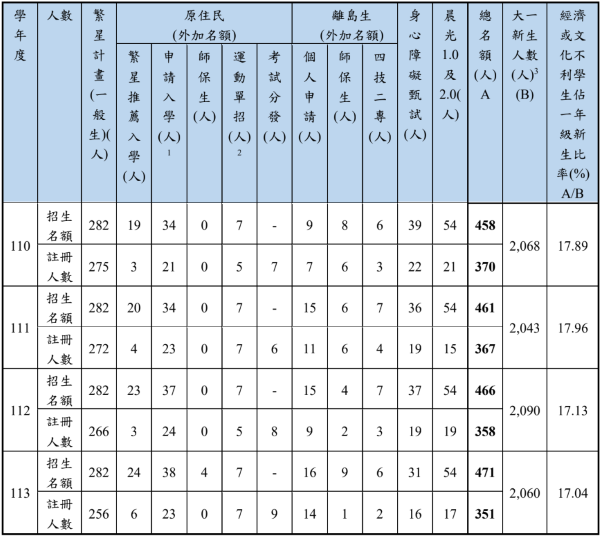
NTNU’s undergraduate programs have implemented the “Morning Light Dual Admission Pathway,” including Morning Light 1.0 (priority admission for economically disadvantaged students) and Morning Light 2.0 (admission for economically or culturally disadvantaged students and children of new immigrants), with 54 priority admission slots each year. The Morning Light 2.0 program, launched in 2022, expanded admission categories to increase the number of disadvantaged applicants passing the first-stage screening. The number of admission quotas for economically or culturally disadvantaged students increased from 458 in 2022 to 471 in 2025. Over the past four years, students admitted through this pathway have accounted for more than 17% of total undergraduate enrollment each year.
NTNU Morning Light Program – University Application Admission Guidelines
Admission Information:
To encourage students from economically and culturally disadvantaged backgrounds to pursue higher education, this admission track is open to applicants who meet the eligibility criteria for economic disadvantage or who are children of new immigrants whose parent(s) originally held nationality from a developing country (excluding countries or regions in Europe, North America, South Korea, Japan, Singapore, Hong Kong and Macao, Australia, and New Zealand).
The application review will assess applicants’ materials holistically, with particular consideration given to their perseverance and strong motivation to learn despite relatively limited economic resources.
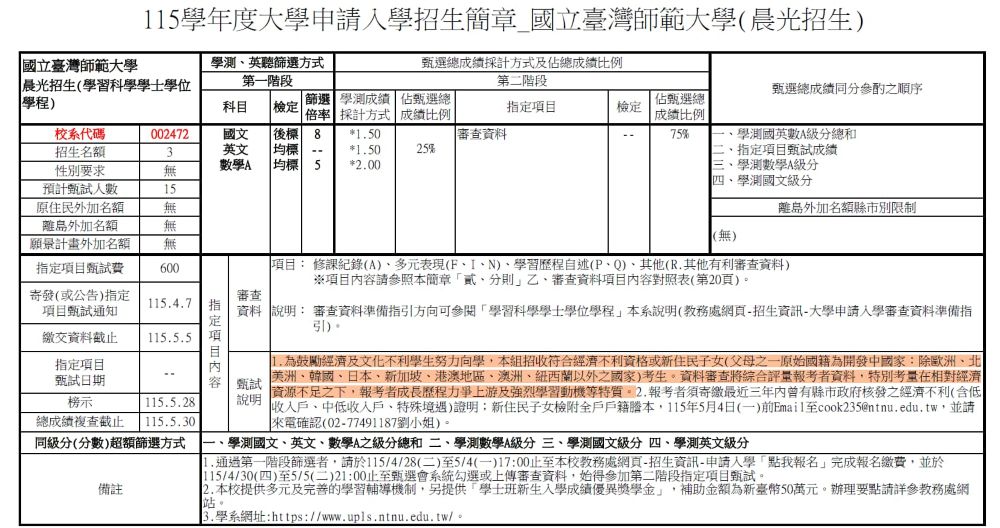
The admission guidelines for the Morning Light Program clearly state that the program is specifically designed for economically and culturally disadvantaged students.
1.3.2 Bottom financial quintile student success
National Taiwan Normal University (NTNU) is committed not only to expanding access to higher education for students from economically disadvantaged backgrounds, but also to ensuring that they successfully complete their degree programmes. Guided by the principle of “No One Left Behind,” NTNU has established a clear institutional graduation/completion target for students from economically disadvantaged backgrounds.
Target Population and Completion Target
NTNU maintains a 100% graduation/completion target for students from economically disadvantaged backgrounds, including from low-income households, middle-low-income households, students eligible for the Ministry of Education’s Financial Aid Program for Disadvantaged Students, and students experiencing financial hardship due to special family circumstances.
The University’s goal is to ensure that every economically disadvantaged student who enrols at NTNU is provided with the opportunity and necessary support to remain in higher education and successfully complete their degree programme, regardless of financial background.
Monitoring Student Progress and Completion
To achieve this target, NTNU monitors the academic progress and study status of economically disadvantaged students and identifies students who may encounter financial, academic, or personal barriers to completing their studies. Where difficulties are identified, appropriate support and intervention are provided to reduce the risk of interruption or withdrawal and to facilitate successful degree completion.
Support Ecosystem for Economically Disadvantaged Students
NTNU has established a comprehensive support ecosystem to support achievement of the 100% graduation/completion target. Support extends throughout the student journey and includes:
- Financial support: scholarships, grants, emergency financial assistance, tuition-related assistance, work-study opportunities and other forms of financial aid;
- Learning support: academic guidance, tutoring, mentoring and learning resources;
- Student-life support: accommodation assistance, counselling and other student welfare services;
- Career development: career counselling, employability development and employment support;
- International learning opportunities: financial and advisory assistance to expand opportunities for economically disadvantaged students to participate in overseas learning and international experiences.
Through these measures, NTNU seeks not merely to provide access to higher education, but to ensure that financial disadvantage does not prevent students from continuing their studies and successfully completing their degrees.

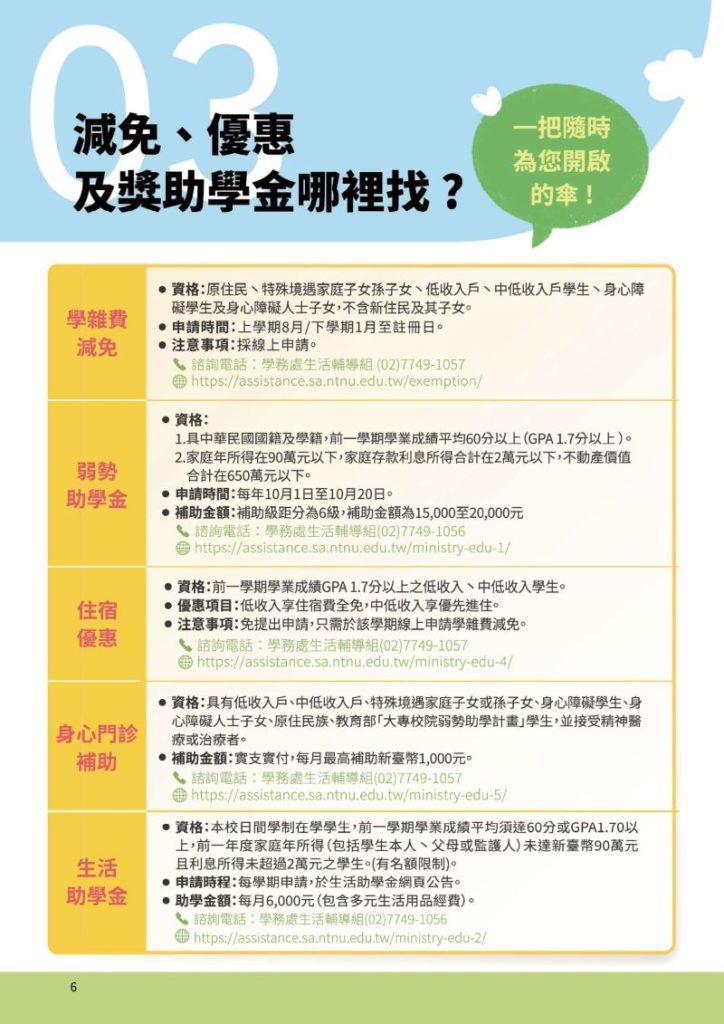
NTNU publishes the Morning Light Program Handbook annually, outlining resources that support economically and culturally disadvantaged students in completing their studies, including tuition and fee reductions, financial aid for disadvantaged students, preferential accommodation arrangements, and subsidies for mental and physical health services.
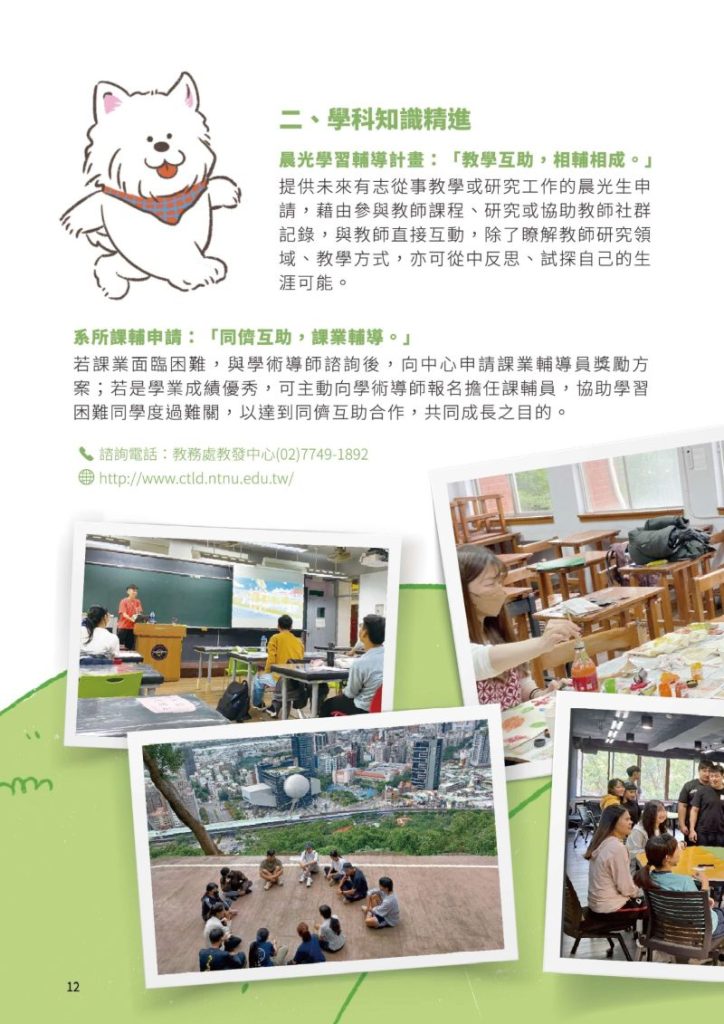
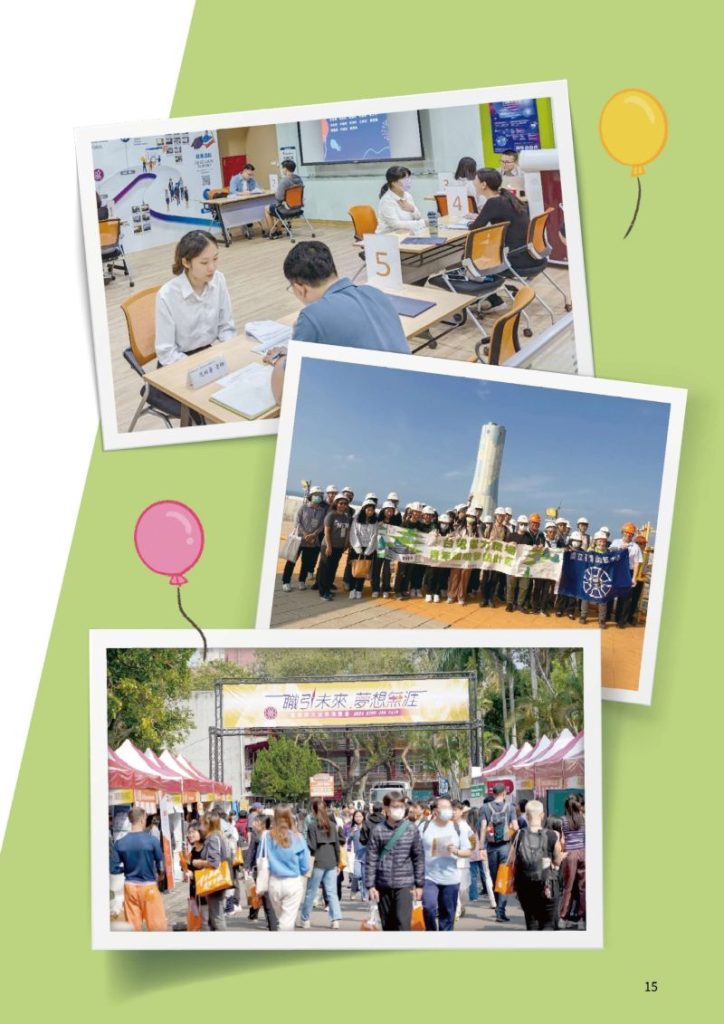
The NTNU Morning Light Program provides academic, daily-life, psychological, career, and transition support to help students successfully complete their studies and prepare for future employment.
1.3.3 Low-income student support
National Taiwan Normal University (NTNU) is committed to reducing financial barriers that may affect students’ ability to continue and complete their university education. The University provides targeted support covering essential living and food needs, accommodation, transportation, physical and mental health, and learning support.
For the purposes of these support measures, low-income and economically disadvantaged students include students from government-certified low-income and lower-middle-income households, students eligible for the Ministry of Education’s Financial Aid Program for Disadvantaged Students, and students experiencing verified financial hardship.
Through free services and targeted financial assistance, NTNU helps these students meet their basic living and learning needs, reduces the risk of study interruption caused by financial hardship, and supports them in remaining enrolled and successfully completing their degree programmes.
1. Living and Food Support
NTNU provides a Living Assistance Grant for economically disadvantaged students to help cover essential daily living and food expenses. Approximately 300–330 places are available each semester, with an additional 150–200 places provided during the summer. Each eligible student receives NTD 6,000 per month. This support helps reduce students’ financial pressure and enables them to maintain their basic living needs while continuing to focus on their studies.
In addition, the Hi-Life convenience store at NTNU’s Gongguan Campus provided NTD 180,000 in vouchers between 1 July 2022 and 30 June 2025 to support economically disadvantaged students. On average, approximately 180 students per year received vouchers worth NTD 1,000 each. These vouchers could be used to purchase food and other basic daily necessities at the convenience store, providing direct support for students’ essential food needs.
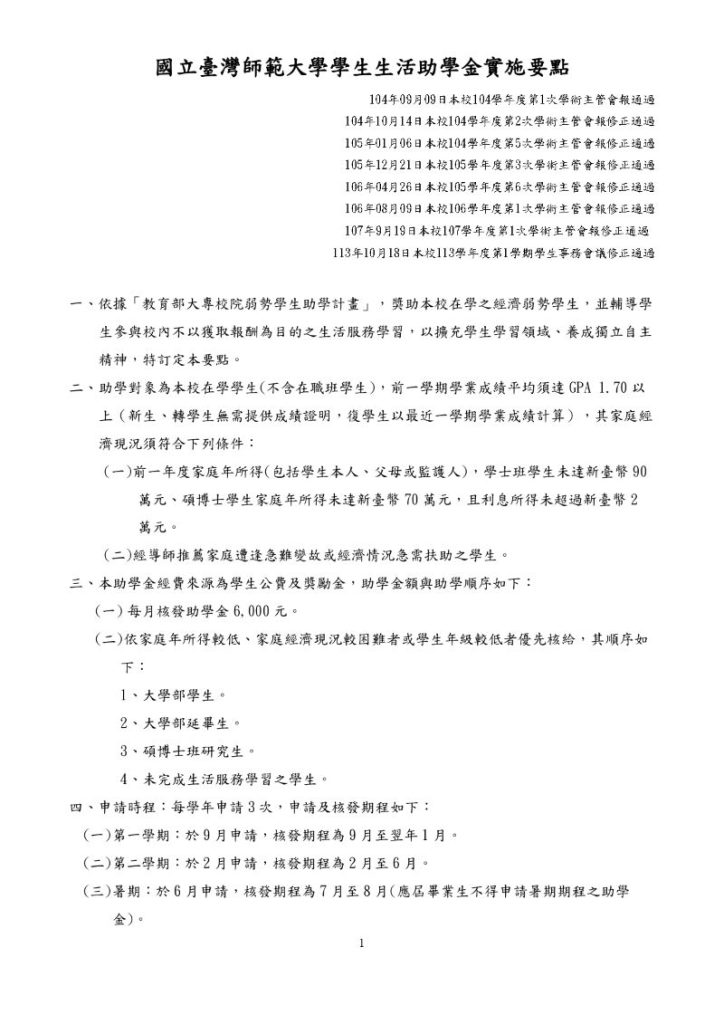
NTNU’s Guidelines for the Living Assistance Grant explicitly state that the program is designed to support economically disadvantaged students currently enrolled at the University. It also encourages students to participate in campus-based service-learning activities that are not undertaken for the purpose of earning remuneration, thereby broadening their learning experiences and fostering independence and self-reliance.
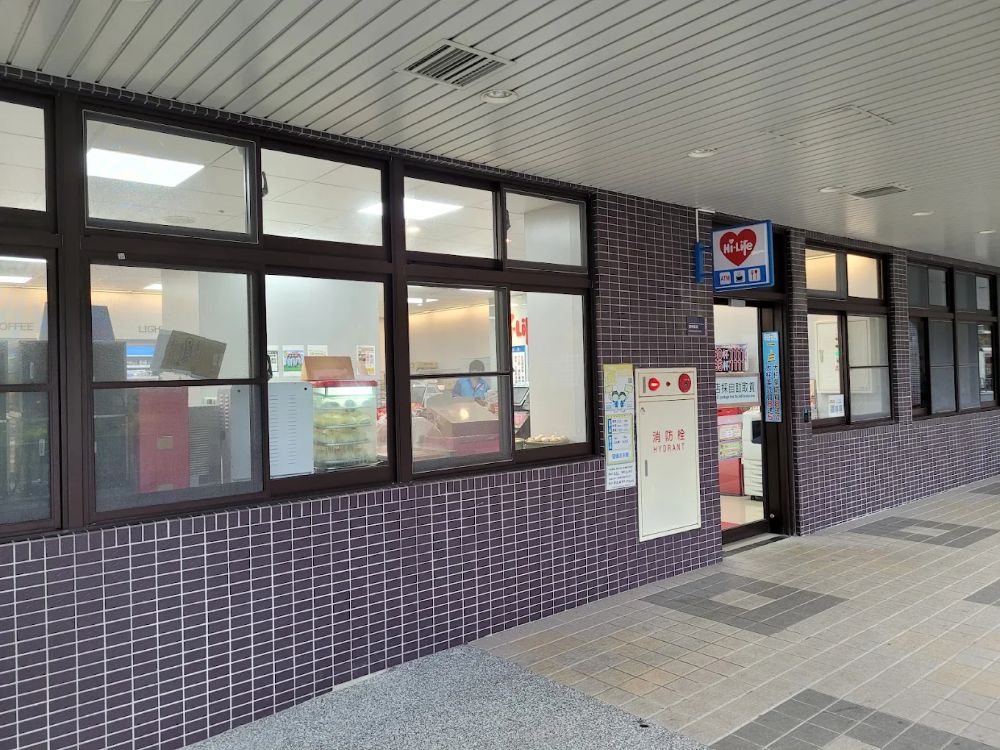
The Hi-Life convenience store located on the Gongguan Campus provides vouchers to economically disadvantaged students. The vouchers can be used to purchase food and basic daily necessities.
2. Housing Support
NTNU provides free on-campus accommodation for students from low-income households and gives priority for on-campus accommodation to students from lower-middle-income households. This support also applies during the summer and winter breaks, helping students maintain stable accommodation throughout the academic year.
In addition, under the Ministry of Education’s “Subsidy Program for On-Campus Accommodation for University Students,” implemented since February 2024, economically disadvantaged students are eligible for an accommodation subsidy of up to NTD 7,000 per semester.

Dormitory 2 on the Gongguan Campus provides nearly 3,000 beds and offers free on-campus accommodation to students from low-income households. By providing free and affordable housing support, NTNU helps economically disadvantaged students secure stable accommodation and reduces the risk that housing costs may interfere with their continued enrolment.
3. Transportation Support
NTNU provides free shuttle bus services connecting its three campuses—Heping, Gongguan, and Linkou—as well as transportation links within the National Taiwan University System with neighbouring partner universities.
Economically disadvantaged students may use these shuttle services free of charge, reducing transportation expenses associated with commuting between campuses, attending classes, and accessing academic resources across partner institutions. This support helps ensure that transportation costs do not restrict students’ participation in learning opportunities or access to university resources.

4. Physical and Mental Health and Menstrual Product Support
To support the physical and mental well-being of economically disadvantaged students, NTNU provides financial assistance to reduce the cost of psychiatric, psychosomatic, and addiction-treatment outpatient visits. The subsidy covers general outpatient consultation fees as well as fees for the Student Public-Interest Counselling Program offered by the University’s Community Counselling Center, helping students access needed mental health support without added financial burden.
NTNU also provides targeted menstrual product support for students in disadvantaged circumstances as part of its commitment to student well-being and menstrual education. The subsidy does not require students to submit individual expenditure receipts and may be used flexibly according to personal needs, including the purchase of menstrual products, items for relieving menstrual discomfort, and personal hygiene products.
5. Learning Support
To prevent insufficient access to digital equipment from affecting students’ academic progress, NTNU provides free short-term laptop loans for low-income students with demonstrated learning needs. The service enables students to complete coursework, participate in online learning, and undertake other academic activities without having to purchase their own computer equipment.
In addition, NTNU provides a range of free academic support programmes. These include “Peer Learning Communities,” which help students find partners for collaborative learning and mutual growth; “Academic Knowledge Enhancement” activities, which strengthen disciplinary knowledge and support early career exploration; and a variety of free workshops designed to develop learning strategies, study skills, communication, collaboration, and other essential academic competencies.
1.3.4 Bottom financial quintile student support
National Taiwan Normal University (NTNU) is committed to ensuring that students from the bottom 20% of household income groups, as well as students from more tightly defined economically disadvantaged groups, are able to continue and successfully complete their studies without being hindered by financial hardship.
To support these students throughout their university journey, NTNU has established a comprehensive support system covering admission, enrolment, academic progress, daily living, and career development. Support measures include tuition and fee reductions, student loans, living allowances, emergency financial assistance, scholarships and grants, as well as academic and career guidance. Together, these initiatives reduce financial barriers, promote student retention, and help economically disadvantaged students remain enrolled and successfully complete their degree programmes.
I. Reducing Tuition and Financial Barriers to Higher Education
NTNU provides tuition and miscellaneous fee reductions and student loan programmes to reduce the financial barriers faced by economically disadvantaged students in accessing and continuing higher education.
In Academic Year 2024–2025, the numbers of beneficiaries and the corresponding amounts of financial assistance were as follows:
Programme | Beneficiaries | Amount (NT$) |
Tuition and Fee Waivers | 2,218 | 33,970,477 |
Student Loans | 2,278 | 64,975,987 |
II. Providing Diverse Scholarships, Financial Aid, and Development Support
To reduce the living and learning expenses faced by economically disadvantaged students, NTNU provides a range of scholarships and financial aid programmes designed to offer sustained financial and developmental support according to students’ different needs.
Living Allowance Programme
The Living Allowance Programme provides eligible economically disadvantaged students with NT$6,000 per month for 12 months. The programme is combined with on-campus service-learning opportunities, enabling students not only to reduce their living expenses but also to gain practical experience and strengthen their workplace readiness.
Dreams Take Flight Scholarship Programme
The Dreams Take Flight Scholarship Programme supports economically disadvantaged students during their studies while encouraging them to participate in academic learning, career development, daily-life support, and service-learning programmes. Through these activities, students can broaden their learning experiences, develop professional competencies, and strengthen their capacity for independent living and future development.
NITORI International Scholarship
The NITORI International Scholarship encourages students to broaden their international perspectives by participating in international exchange and goodwill activities. Priority is given to economically disadvantaged students, helping reduce the financial barriers that may otherwise prevent them from accessing international learning opportunities.
Giving Back Scholarship
The Giving Back Scholarship is available to students who have difficulty paying tuition fees and living expenses. It provides direct financial support to help economically disadvantaged students concentrate on their studies and reduces the risk of study interruption or withdrawal caused by financial hardship.
In Academic Year 2024–2025, the numbers of beneficiaries and financial assistance provided through these programmes were as follows:
Programme | Beneficiaries | Amount (NT$) |
Living Allowance Programme | 662 | 19,818,000 |
Dreams Take Flight Scholarship, NITORI International Scholarship, and Giving Back Scholarship | 517 | 6,000,876 |
III. Emergency Financial Assistance and Additional Scholarship Support
NTNUEmergency Relief Grant and Warm Sunshine Emergency Financial Aid Programme provide timely assistance to students experiencing sudden financial difficulties resulting from changes in family circumstances, serious illness or injury, natural disasters, or other emergencies. These measures help reduce the immediate financial impact of unexpected events and lower the risk of students taking leave from or discontinuing their studies for financial reasons.
In addition, NTNU integrates University resources with donations from individuals and organisations to provide a wide range of scholarships and grants. Academic departments and graduate institutes also offer support according to their disciplinary characteristics and students’ needs, including funding for learning activities, research and academic development, scholarships, and living allowances.
In Academic Year 2024–2025, the numbers of beneficiaries and financial assistance provided were as follows:
Programme | Beneficiaries | Amount (NT$) |
Emergency Relief Grant and Warm Sunshine Emergency Financial Aid Programme | 113 | 2,708,840 |
Scholarships Funded by External Donations | 320 | 4,101,000 |
IV. Academic, Personal, and Career Support through a Dual-Track Advising System
In addition to financial assistance, NTNU provides a dual-track advising system to help economically disadvantaged students address academic, personal, and career-related challenges that may affect their ability to continue and successfully complete their studies.
The system consists of Academic and Career Advisors and Dedicated Student Advisors.
Academic and Career Advisors are faculty members from students’ respective departments or graduate institutes. They provide academic guidance, assist students in addressing learning-related issues, and support career planning and future development.
Dedicated Student Advisors are professional student-support staff from the Office of Student Affairs. They assist students with daily-life concerns, psychological well-being, adjustment to university life, and other personal challenges.

Dedicated Student Advisors regularly organize activities that create warm and memorable experiences for students.
1.3.5 Low or lower-middle income countries student support
National Taiwan Normal University (NTNU) is committed to reducing financial barriers faced by international and overseas Chinese students from low- and lower-middle-income countries. The University provides a range of financial support, including tuition and fee waivers, scholarships, living stipends, and need-based grants, enabling students with limited financial resources to meet the costs of studying and living in Taiwan and to continue successfully toward completion of their degrees.
I. A Multi-layered Financial Support System for International and Overseas Chinese Students
The Office of International Affairs coordinates University, government, and external scholarship resources to provide sustained financial assistance for international and overseas Chinese students.
1. NTNU International Student Scholarship
NTNU provides scholarships for international degree-seeking students admitted through the University’s international student admission pathway. Undergraduate recipients receive waivers of tuition and fee waivers, while master’s and doctoral students may receive waivers of baseline tuition and basic credit fees according to their year of study. These measures directly reduce the financial cost of studying at NTNU.
2. Taiwan Scholarships and Other Support for International Students
Eligible international students may also receive Taiwan Scholarships provided by the Ministry of Education (MOE) or Ministry of Foreign Affairs (MOFA). The MOE Taiwan Scholarship provides partial tuition support together with a monthly stipend of NT$15,000–20,000, while the MOFA Taiwan Scholarship provides a monthly stipend of NT$33,000. The MOE Elite Scholarship Program additionally supports university lecturers from Southeast and South Asia pursuing master’s or doctoral degrees in Taiwan with a monthly stipend of NT$25,000.
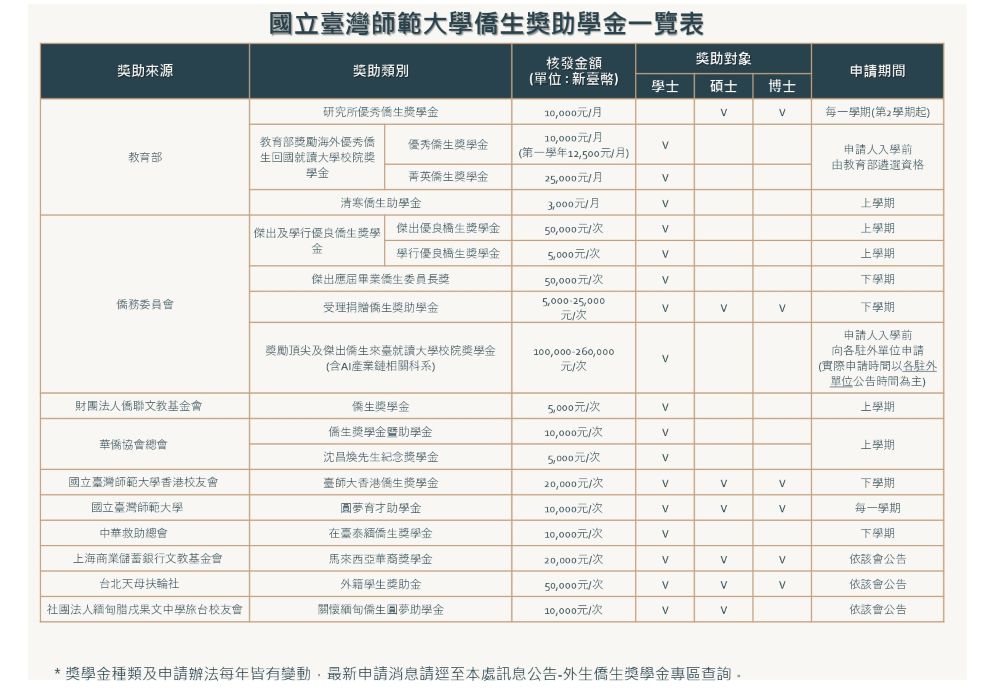
3. Need-based and Other Scholarships for Overseas Chinese Students
NTNU also provides targeted support for overseas Chinese students experiencing financial hardship. The MOE Grant for Overseas Chinese Students in Financial Need specifically supports students from financially disadvantaged families. Successful applicants receive a monthly grant of NT$3,000.
The Office of International Affairs also coordinates access to a broader range of scholarships, including scholarships and grants provided by the Overseas Community Affairs Council, the NTNU Fulfilling Dreams Scholarship, scholarships specifically available to overseas Chinese students from Thailand and Myanmar, and other externally funded financial assistance programmes.
II. Students from Low- and Lower-Middle-Income Countries Receiving Financial Support in Academic Year 2024–2025
In Academic Year 2024–2025, NTNU recorded 444 scholarship award recipient records involving students from countries classified by the World Bank framework as low- or lower-middle-income economies. These comprised 347 international student award records and 97 overseas Chinese student award records.
The 97 overseas Chinese scholarship recipient records from lower-middle-income countries represented approximately 33% of all overseas Chinese scholarship awards, demonstrating the substantial reach of NTNU’s financial support among students originating from these economies.
The supported students represented 10 lower-middle-income countries under the World Bank classification. Vietnam and Myanmar accounted for the largest numbers, while students from India, the Philippines, Eswatini, Zambia, Benin, Tajikistan, Cambodia, and Lao PDR also received financial assistance. This demonstrates that NTNU’s support extends across multiple countries in Asia and Africa rather than being limited to a single country or region.
The distribution of supported students by country is shown below:
Country | International Student Award Records | Overseas Chinese Student Award Records | Total |
Vietnam | 255 | 7 | 262 |
Myanmar | 8 | 88 | 96 |
India | 41 | 0 | 41 |
Philippines | 30 | 2 | 32 |
Eswatini | 6 | – | 6 |
Zambia | 2 | – | 2 |
Benin | 2 | – | 2 |
Tajikistan | 1 | – | 1 |
Cambodia | 1 | – | 1 |
Lao PDR | 1 | – | 1 |
Total | 347 | 97 | 444 |
List of Scholarships for International Students
Taiwan Scholarship Program | MOE New Southbound Elite Scholarship Program | TNU Foreign student scholarships |
Ministry of Education •Living allowance: NT$15,000-20,000/month •Tuition and fee reduction: Up to NT$40,000/semester Ministry of Foreign Affairs • NT$33,000/month | Living allowance: NT$25,000/month | Bachelor’s Degree: Tuition and miscellaneous fees waived per semester. Master’s & Doctoral Degree: Tuition and miscellaneous fees waived based on the base amount and basic credit hours per semester. |
List of Scholarships for Overseas Chinese Students
1.4.1 Local start-up assistance
NTNU Innovation and Incubation Center actively provides assistance to the local community by supporting start-ups and entrepreneurship initiatives, including those led by financially or socially excluded individuals. The center offers free access to essential resources and facilities for business and product innovation, along with mentorship and consultation services covering areas such as R&D for start-ups, project proposal applications, and patent licensing. It also regularly hosts industry seminars, start-up networking events, and investor matching activities to foster inclusive entrepreneurial growth.
National Taiwan Normal University Industry–Innovation Incubation Base Guidelines
To promote the value-added application of NTNU’s research achievements, foster university-derived enterprises, and cultivate industrial talent to advance technological innovation, NTNU established the Industry–Innovation Incubation Base.
Eligibility:
Teams led by full-time NTNU faculty members may apply. The teams must aim to promote innovative industrial products or technologies with the goal of developing university spin-offs or cultivating talent for industry employment.
Review Criteria:
- Innovation and uniqueness of the team’s core technology or product.
- The project leader’s past achievements in academia–industry collaboration or related projects.
- The team’s operational plan for incubation.
- Expected outcomes, including commercialization of R&D results, patent applications, technology transfer, industry collaboration, applications for R&D projects, talent cultivation, or establishment of spin-off enterprises.
Support and Resources:
- Incubation Space: Teams selected through evaluation by the Incubation Center may sign an agreement to access on-campus incubation offices, with a 50% discount on the incubation service fee for the first year and 20% off from the second year onward. Projects with total funding exceeding NT$5 million and at least 15% allocated for administrative management may apply for a full fee waiver.
- Equipment Access: Preferential rental of NTNU’s advanced instruments.
- Innovation and R&D Mentorship: Industry consultation, technical enhancement, and product development guidance.
- Project Application Guidance: Assistance in applying for relevant innovation and start-up programs.
- Networking Events: Regular industry seminars and start-up networking activities.
- Patent and Technology Transfer Support: Assistance with patent applications and commercialization of key technologies.
- Entrepreneurship Consulting: Advisory services and start-up mentoring.
- Investment Linkage: Support for investment review through NTNU Innovation Holdings Co., Ltd., and connection to external venture capital and angel investors.
Management:
Incubated teams must actively participate in entrepreneurship mentoring activities organized by the Office of Research and Development, submit quarterly progress reports, and provide a final report and presentation before the end of the incubation period. In cases of legal violations by team members, NTNU reserves the right to terminate the incubation agreement.
1.4.2 Local start-up financial assistance
NTNU established the first university-affiliated industry-academia investment holding company in Taiwan — NTNU Innovation Investment Holding Company (NII Capital) — to provide financial assistance and investment for innovative start-ups with positive social impact, including those led by financially or socially excluded entrepreneurs. Through NII Capital, NTNU combines academic and industrial resources to mentor start-up teams and, with its diverse shareholder network, offers practical business expertise and resource integration to enhance entrepreneurial success and foster a sustainable start-up ecosystem.
NII Capital has invested NT$30 million each in two university spin-off companies, Zigong Art Sharing Co. , Ltd. and Master Smart Exercise Co. , Ltd., providing direct financial support for the development of university start-ups and the commercialization of innovative outcomes. Zigong Art Sharing provides a range of arts- and culture-related services for businesses, integrating arts into corporate culture and brand development to enhance corporate image and cultural value. Master Smart Exercise, meanwhile, transforms NTNU’s research achievements in sports science into practical applications and commercial services, developing diversified sports science platforms.
Investment in NTNU Innovation Holdings Co., Ltd. (NII Capital)
Purpose and Function:
NII Capital serves as NTNU’s innovation investment platform. It provides financial assistance and equity investment to start-ups originating from NTNU’s academic ecosystem, helping transform faculty and student research outcomes into real-world applications and viable businesses. Through capital infusion and resource integration, NII Capital bridges academia and industry, becoming NTNU’s hub for innovation incubation and entrepreneurship.
Commercialization of Research Outcomes:
NII Capital focuses on the commercialization of differentiated R&D results from NTNU faculty and students. By introducing corporate resources, the company assists research teams in transforming their technological or creative outcomes into marketable products and sustainable enterprises.
Entrepreneurship Guidance and Resource Integration:
NTNU connects its entrepreneurship education programs with NII Capital’s investment initiatives to mentor local start-up teams. The diverse shareholder structure enables collaboration across multiple industries, providing practical business experience, technology transfer opportunities, and operational guidance that enhance start-up success rates and cultivate a thriving innovation ecosystem.
Operation Guidelines:
- The Office of Research and Development reviews NTNU’s investment proposals and submits them for approval to the University Fund Management Committee.
- NTNU appoints board directors and supervisors to NII Capital based on its shareholding proportion.
- Faculty serving as NII Capital board members comply with NTNU’s regulations on concurrent positions and conflict of interest.
- Quarterly, NTNU’s appointed directors report on investment performance and operational results to the University Fund Management Committee, providing meeting records and financial statements.
- The Office of Research and Development consolidates R&D results and provides them to NII Capital for investment assessment.
- University-derived start-ups invested by NII Capital are managed under the “Implementation Regulations for NTNU University Spin-offs.”
Example of Supported Start-up: Zigong Art Sharing Co. , Ltd.
- Background:
Zigong Art Sharing Co., Ltd. was established by NII Capital to build a supportive ecosystem for artists and promote the sustainable development of the arts and cultural sector. Through arts and cultural services, corporate partnerships, and digital platforms, the company creates more opportunities for artists to showcase their work, engage with audiences, and connect with the market, while bringing art into corporate environments and everyday life. - Objectives:
– Build a supportive ecosystem for local artists and foster the continued development of young and emerging artists.
– Establish trusted platforms for the exhibition, sale, and market matching of artworks, expanding opportunities for artists to showcase and sell their work.
– Bring art into corporate and everyday spaces, while promoting corporate participation in cultural sustainability and ESG initiatives.
– Integrate art with technology by developing digital art platforms and innovative services, thereby supporting the digital transformation of the arts and cultural sector.
- Capabilities and Impact:
Zigong Art Sharing Co., Ltd. integrates expertise in arts, corporate collaboration, and digital platforms to provide a range of services, including artwork promotion, online matching, art sales and leasing, corporate galleries, and art-based space enhancement. Through its ArtSharing online platform, the company helps artists increase the visibility, exhibition, sales, and market opportunities of their works. Since launching the “ArtSharing Corporate Gallery” project in 2020, it has collaborated with more than 20 young artists and partnered with companies such as Kinpo Electronics and AcBel Polytech to bring original artworks into corporate workplaces. In 2025, the project received the inaugural “ESG for Culture – Diverse Collaboration Award” in recognition of its successful integration of corporate resources with the development of the arts sector. Through revenue-sharing mechanisms, support for local artists, and corporate partnerships, Zigong Art Sharing expands artists’ market access and income opportunities while helping companies advance cultural sustainability and ESG-related social engagement.

Example of Supported Start-up: Master Smart Exercise Co., Ltd.
- Background: A start-up invested by NII Capital, dedicated to translating NTNU’s sports science research into commercial applications.
- Goals:
– Develop an intuitive brand for sports science analytics.
– Create intelligent tools for quantifying and improving athletic performance.
– Simplify professional analysis tools for everyday users, making sports science accessible to the public.
- Capabilities and Impact:
Master Smart Exercise Co., Ltd. integrates expertise in sports science, rehabilitation, artificial intelligence, and professional education to develop three core service areas: sports science-based physical therapy, intelligent sports performance analysis, and sports science education and certification. By combining biomechanics, physiology, and motor control with video-based measurement, sensor technologies, and AI-powered cloud analytics, the company transforms sports data into practical applications for training, injury prevention, and performance enhancement. Through its physical therapy services, professional training programs, and certification system, the company further translates NTNU’s sports science research into industry applications and services for a broader market.
In 2025, Master Smart Exercise hosted the “SPORT SCIENCE 2.0 – Major League Sports Science Forum,” bringing sports science and data analytics experts from Major League Baseball (MLB) organizations, including the Miami Marlins and San Francisco Giants, to Taiwan. The forum focused on practical applications of biomechanics, player performance data, training intervention, and interdisciplinary collaboration, attracting nearly 100 sports science professionals and members of the public. By introducing first-hand MLB experience in sports science and data-driven performance analysis, the event strengthened connections among professional services, education, talent development, and industry applications, demonstrating the company’s capacity to commercialize university research outcomes and contribute to the advancement of Taiwan’s sports science sector.

NII Capital invests NT$30 million in ” Master Smart Exercise Co., Ltd.”, a university spin-off company related to the development of smart sports. The aim is to transform NTNU’s sports science research results into practical applications and commercial operations, and to develop a diversified sports science platform.
Through this mechanism, NTNU provides direct financial support, incubation, and commercialization pathways for local start-ups, demonstrating its long-term commitment to sustainable innovation and local economic development.
1.4.3 Programmes for services access
National Taiwan Normal University (NTNU) is committed to supporting vulnerable populations by improving access to basic food and health services. Through student volunteer initiatives and University Social Responsibility (USR) projects, NTNU provides food assistance, community-based health promotion programmes, and professional health resources to homeless individuals and older adults.
1. Providing Food Assistance to Homeless Individuals
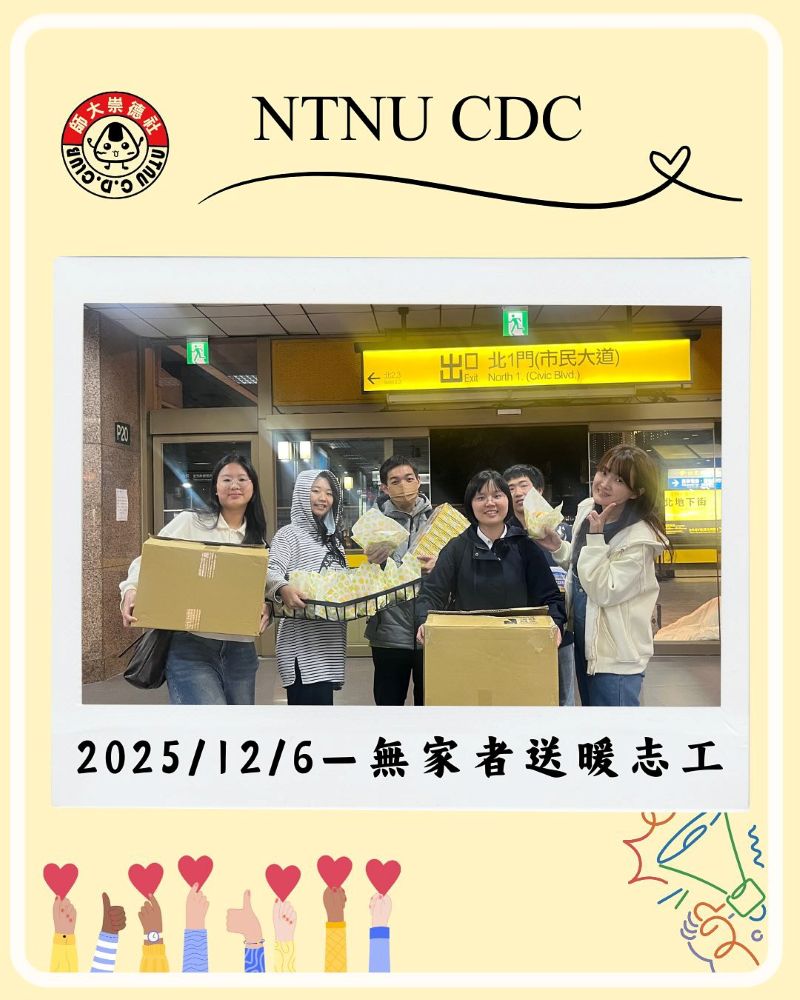
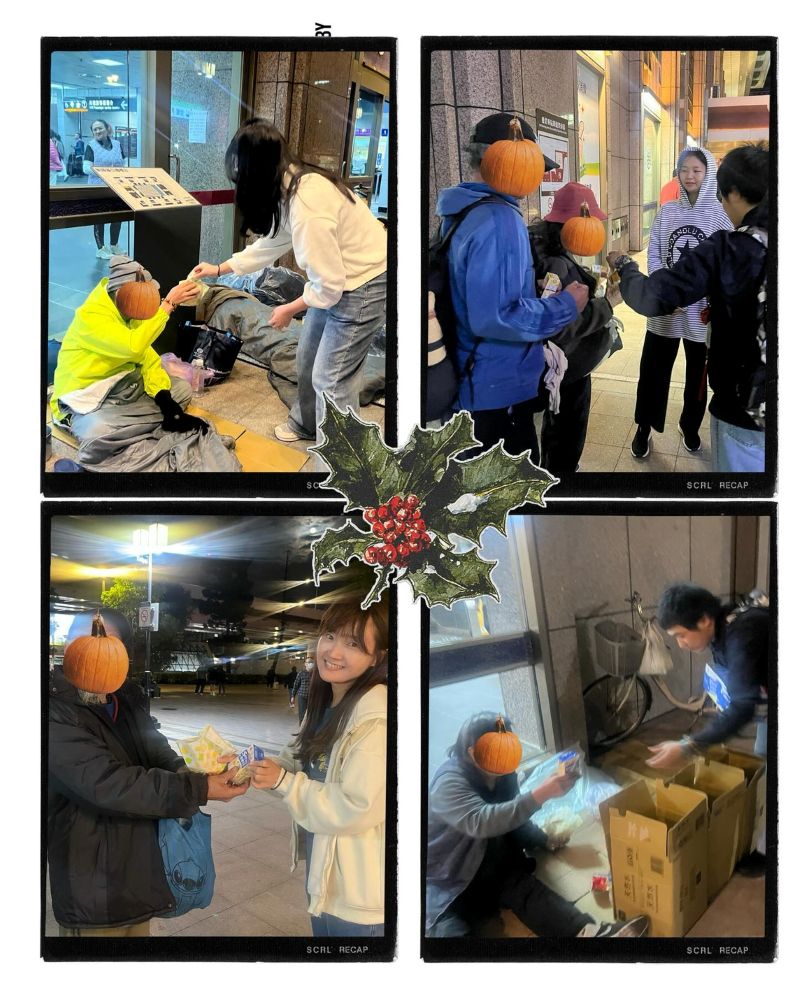
On 6 December 2025, NTNU’s Chong De Club organised a food distribution activity to support homeless individuals near Taipei Main Station. Student volunteers prepared and distributed 50 hamburgers, providing direct food assistance to people experiencing homelessness.
During the distribution, volunteers approached individuals respectfully and asked whether they would like to receive food, ensuring that assistance was provided in a manner that respected their dignity and personal choice. This initiative demonstrates NTNU’s commitment to addressing the basic nutritional needs of vulnerable populations through direct community engagement.

2. Promoting Healthy Ageing Through Community-Based Health Services
NTNU implements the Time Together: Healthy Ageing and Intergenerational Learning Project, a University Social Responsibility initiative that integrates expertise in sports science, health management, and community engagement to improve older adults’ access to health promotion services.
The project provides physical fitness activities, exercise programmes, and health education to help older adults maintain physical function, develop regular exercise habits, and strengthen their ability to manage their own health.
In 2025, NTNU implemented the large-scale Silver Wellness Wave community health promotion programme at its Gongguan Campus, organising 28 physical fitness sessions for older adults, with a total of 6,496 participant attendances. The University also conducted four health promotion lectures, attracting 904 participant attendances.
The project further extended its services to 20 communities in Wujie and Su’ao, Yilan County, where 99 physical fitness sessions were conducted, recording a total of 2,970 participant attendances.
Through collaboration with local communities, NTNU expands access to physical activity programmes and professional health education, helping older adults maintain their health, preserve physical function, and improve their quality of life.
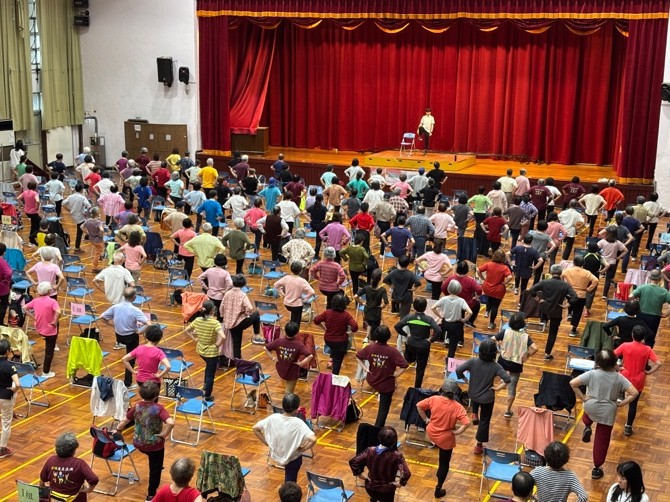
The large-scale community health promotion programme recorded over 6,000 participant attendances among older adults.
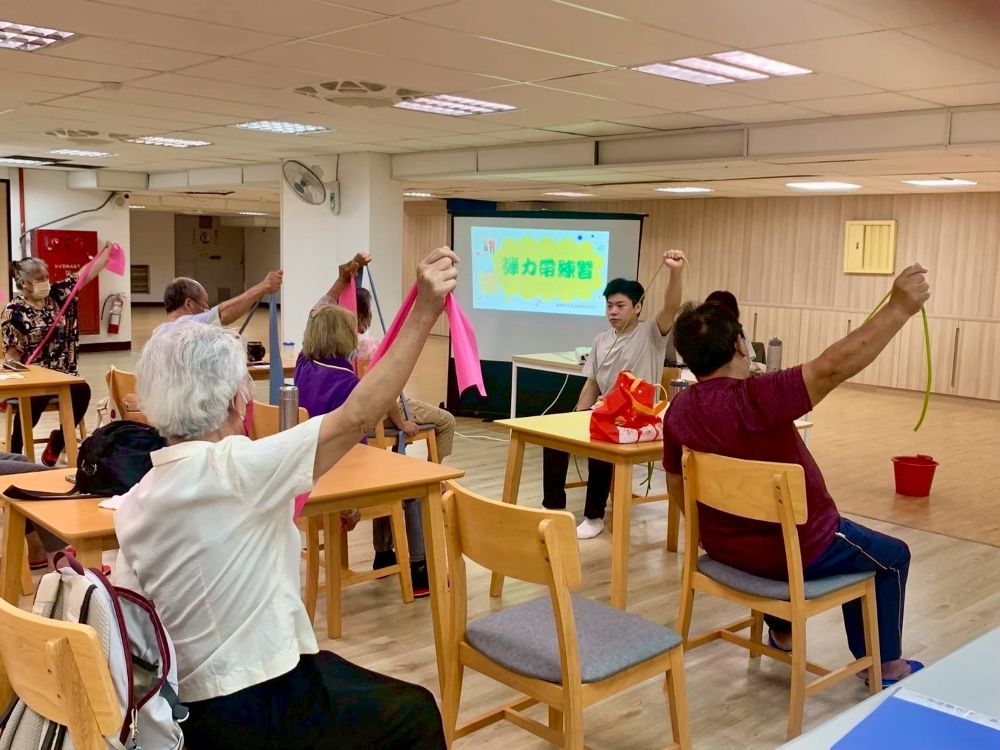
Students applied their academic expertise to design health and exercise programmes and delivered them to older adults at community centres.
1.4.4 Policy addressing poverty
NTNU’s Role in Shaping National Lifelong Learning Policies to Reduce Poverty
Professor Te-Yung Chang from the Department of Adult and Continuing Education, National Taiwan Normal University (NTNU) participated in the formulation of the Ministry of Education’s “White Paper on Learning Society” and the “Medium-Term Development Plan for Lifelong Learning.” These national policy frameworks were designed to promote equitable access to education and create sustainable pathways for poverty reduction through lifelong learning.
Under the Ministry of Education’s commission, NTNU established the Project Office for the Medium-Term Development Plan for Lifelong Learning, responsible for:
- Developing and coordinating national lifelong learning policies and regulations.
- Organizing academic and professional activities to promote policy implementation.
- Collecting and analyzing key performance indicators (KPIs) from government agencies and local authorities to assess policy outcomes.
The project outlines six strategic pillars—policy planning, professional training, learning resource expansion, learning pathway development, cross-sector collaboration, and international alignment—implemented through 17 action plans and 56 specific strategies.

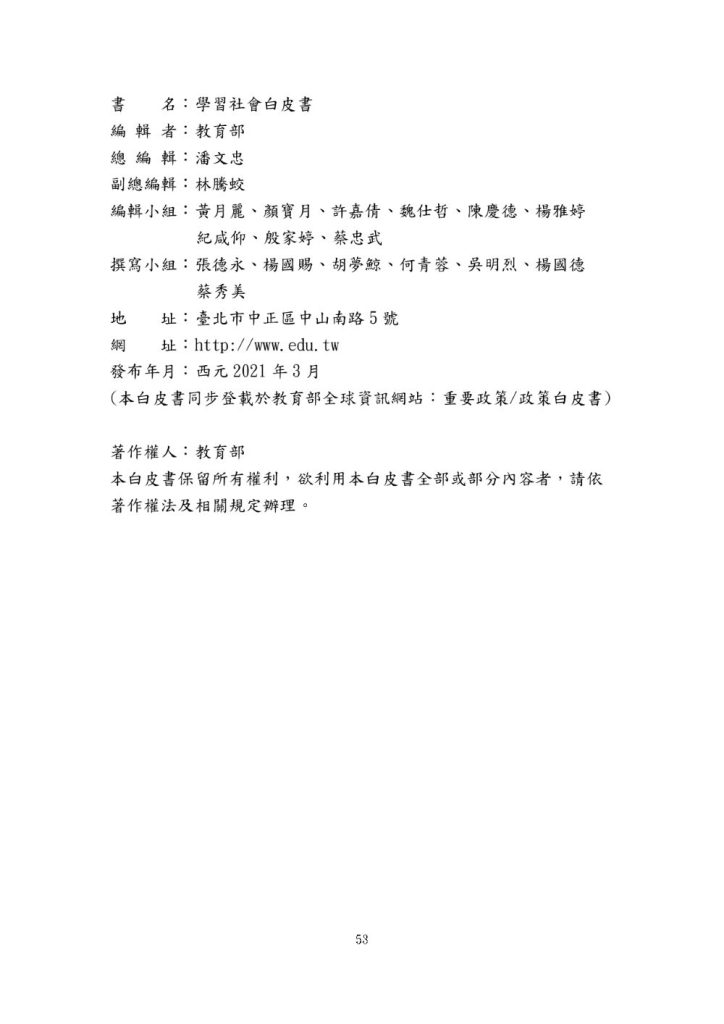
Professor Te-Yung Chang served as a member of the drafting committee for the Ministry of Education’s White Paper towards a Learning Society, which has remained an important reference for the development and implementation of lifelong learning policies in Taiwan since its publication.
In 2025, Professor Kate Yeong-Tsyr Wang of NTNU’s Graduate Institute of Social Work was invited to serve as a session moderator at the International Exchange and Practice Workshop on In-Kind Assistance, organised by Taiwan’s Ministry of Health and Welfare. The workshop brought together domestic and international experts to exchange practical experience in resource mobilisation, service outreach, and organisational development strategies for food banks. Drawing on international experience, the event facilitated collaboration among government agencies, academia, and civil society organisations, while exploring the integration of in-kind assistance with social welfare services and future policy development to strengthen support for economically disadvantaged and vulnerable populations.
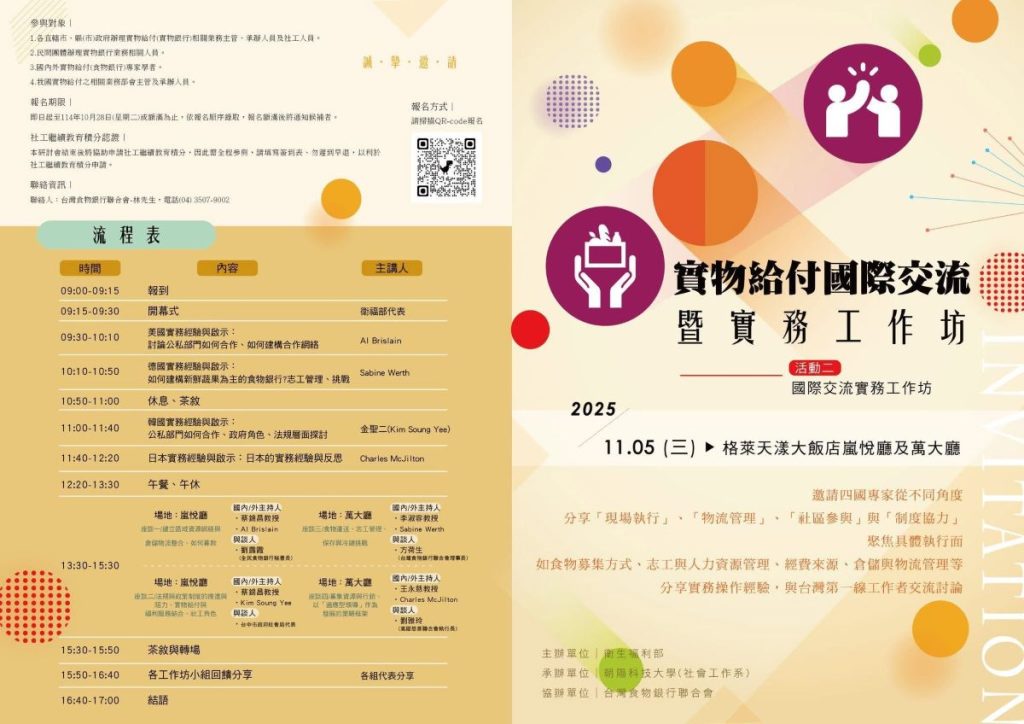
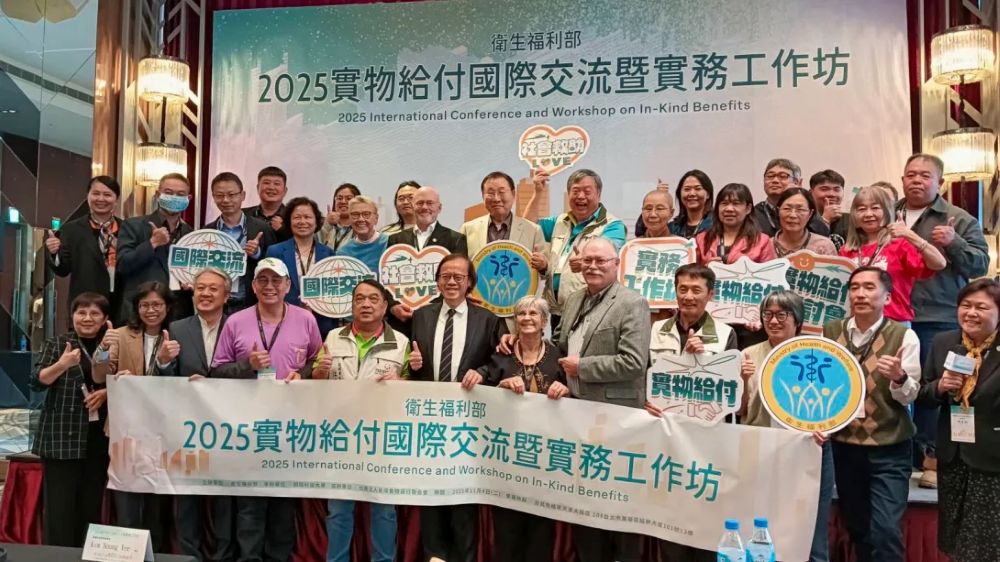
Professor Kate Yeong-Tsyr Wang moderated a workshop session alongside Charles McJilton, founder of Second Harvest Japan, and Ya-Ling Liu, Executive Director of the Kaohsiung Charity Federation. They exchanged insights on resource mobilisation and marketing strategies, with a focus on applying adaptive leadership as a framework for organisational development.