

7.2.1 Energy-efficient renovation and building
NTNU has a policy in place to ensure that all renovations or new builds follow energy efficiency standards. Its policy and standards for energy-efficient renovation and building are primarily based on the Operation Directions of Applying for Approval of Green Building Label and Building Energy-Efficiency Label.The Directions were formulated by the Ministry of the Interior (MOI) on 20 October 2009 and amended on 18 July 2025. They aim to encourage green buildings that promote ecology, energy saving, waste reduction and health, support the net-zero transition, improve building energy efficiency, and create comfortable, healthy and environmentally friendly living environments. NTNU also uses its publicly available Energy Management Policy and applicable government energy conservation requirements as the policy framework for campus new builds and renovations. Using 2025 as the reporting year, this section describes the scope of applicable projects and energy efficiency standards, and presents implementation through green building certification outcomes and the candidate certificates for the Mandarin International Dormitory.
Energy Management Policy and Scope of Works
The NTNU Energy Management Policy commits NTNU to complying with energy-related laws and regulations, providing the resources needed to improve energy efficiency, reducing energy consumption and greenhouse gas emissions, and continually improving its energy management system and energy performance. The policy is publicly available on the energy management webpage of the NTNU Environmental and Public Safety Center.
The same webpage also publishes the Electricity Efficiency Improvement Plan for Government Agencies and Schools (2024–2026). The Plan runs from 1 January 2024 to 31 December 2026 and applies to implementing entities including the Executive Yuan and its subordinate administrative agencies and schools. Its building electricity conservation provisions cover new buildings and improvements to existing buildings.
Energy Efficiency Standards for New Builds and Renovations
Under Item 7, Subparagraph 3, Paragraph 5 of the Plan, improvements to existing buildings and new builds are, in principle and except under special circumstances, required to meet the Ministry of the Interior (MOI) Building Energy-Efficiency Label rated Level 2 or better. This requirement is to be included in project design and procurement specifications. This named requirement provides a verifiable energy efficiency standard for new builds and renovations at NTNU.
Item | Policy or standard |
|---|---|
Scope of works | New buildings and improvements to existing buildings |
Energy efficiency requirement | MOI Building Energy-Efficiency Label rated Level 2 or better |
Conditions of application | Applies in principle, except under special circumstances |
Stages of incorporation | Project design and procurement specifications |
Whether an individual project has obtained a Building Energy-Efficiency Label, and its rating, is documented in the approval documents and certificates for that project. Green building and intelligent building certification levels do not directly correspond to Building Energy-Efficiency Label ratings.
The government building energy efficiency assessment system is based on the daily energy-saving indicator and evaluates the energy efficiency of the building envelope, air-conditioning systems and interior lighting systems.
Campus Green Building Certification Results
NTNU green building assessments and certification applications are also conducted in accordance with the MOI Operation Directions of Applying for Approval of Green Building Label and Building Energy-Efficiency Label. The title of these Directions was revised in 2023, and certain provisions were amended on 18 July 2025.
The following table distinguishes certifications valid as of 31 December 2025 from historical certification results, based on the certificate validity periods.
Building | Level | Certificate validity period | Status in 2025 |
|---|---|---|---|
Multifunctional Activity Center | Bronze | 19 Jan 2021 – | Valid |
Dormitory No. 2, | Silver | 22 Aug 2022 – | Valid |
School of Teacher Education Building | Certified | 18 Nov 2022 – | Valid |
Cultural Life Hall | Silver | 7 Dec 2016 – | Historical |
No. 28, Lane 60, Taishun Street | Certified | 19 Jan 2015 – | Historical |
Information and Academic Building, Linkou Campus | Certified | 18 Oct 2013 – | Historical |
The original certificate validity periods are shown for historically certified buildings. These buildings are not counted among those with certifications still valid in 2025.
Energy-Efficient Design for the Mandarin Training Center (MTC) International Dormitory New Building
NTNU broke ground on the Mandarin Training Center (MTC) International Dormitory on 25 September 2023, with completion originally scheduled for 2027. In 2024, the project obtained a Bronze-level Green Building Candidate Certificate and an Intelligent Building Candidate Certificate at the Certified level. Both certificates remained valid in 2025. The Green Building Candidate Certificate provides design-stage evidence that energy efficiency was addressed under green building standards. The Intelligent Building Candidate Certificate provides supplementary evidence of the project’s intelligent building design.
References
NTNU Environmental and Public Safety Center energy management webpage
ABRI Directions amended on 18 July 2025
ABRI Green Building Label and Building Energy-Efficiency Label system
NTNU green building certification records and the Mandarin International Dormitory candidate certificates are presented in the table above and Figures 1 and 2.
Mandarin International Dormitory Green Building Candidate Certificate
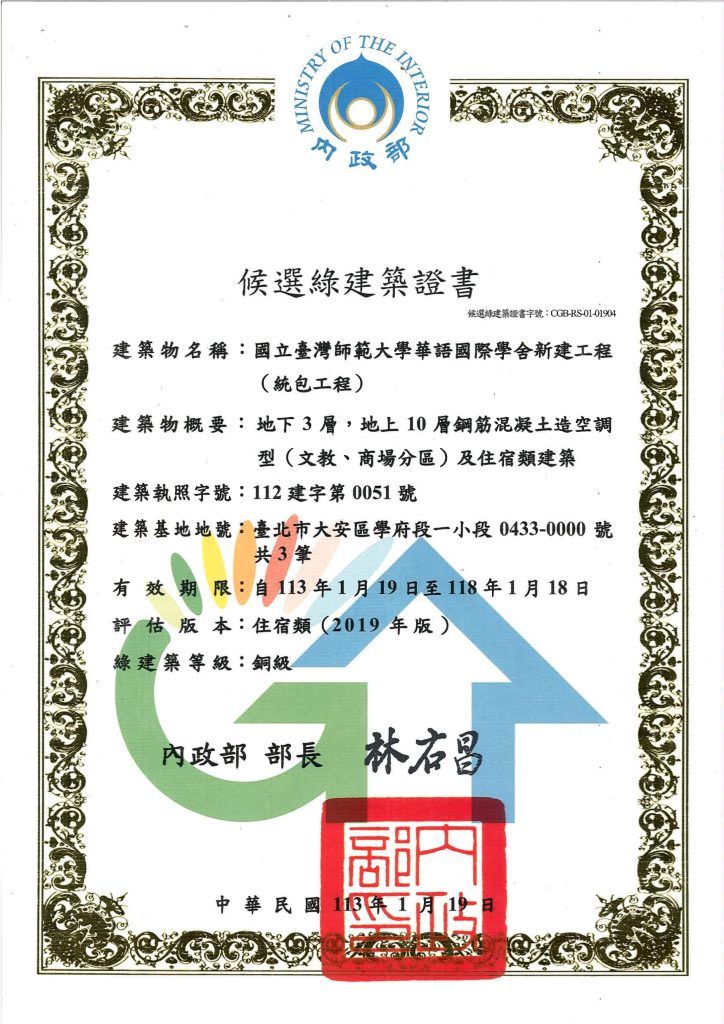
Figure 1. The Mandarin International Dormitory obtained a Bronze Green Building Candidate Certificate on 19 January 2024.
Certificate No. CGB-RS-01-01904; valid until 18 January 2029. Assessment version: Residential, 2019 edition.
Mandarin International Dormitory Intelligent Building Candidate Certificate
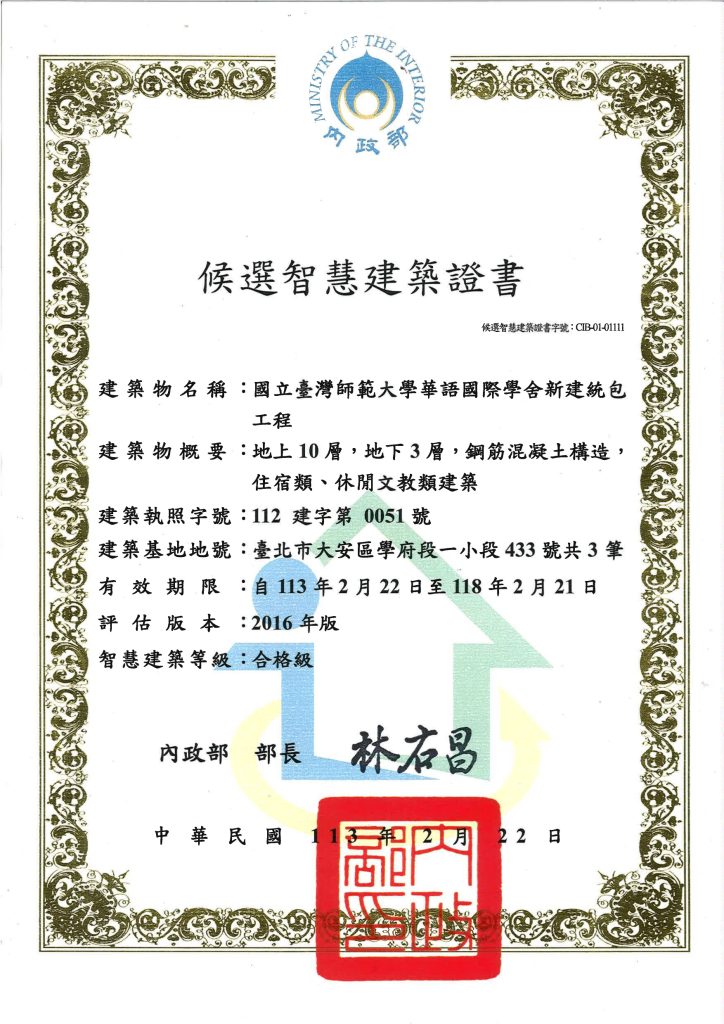
Figure 2. The Mandarin International Dormitory obtained an Intelligent Building Candidate Certificate at the Certified level on 22 February 2024.
Certificate No. CIB-01-01111; valid until 21 February 2029. Assessment version: 2016 edition.
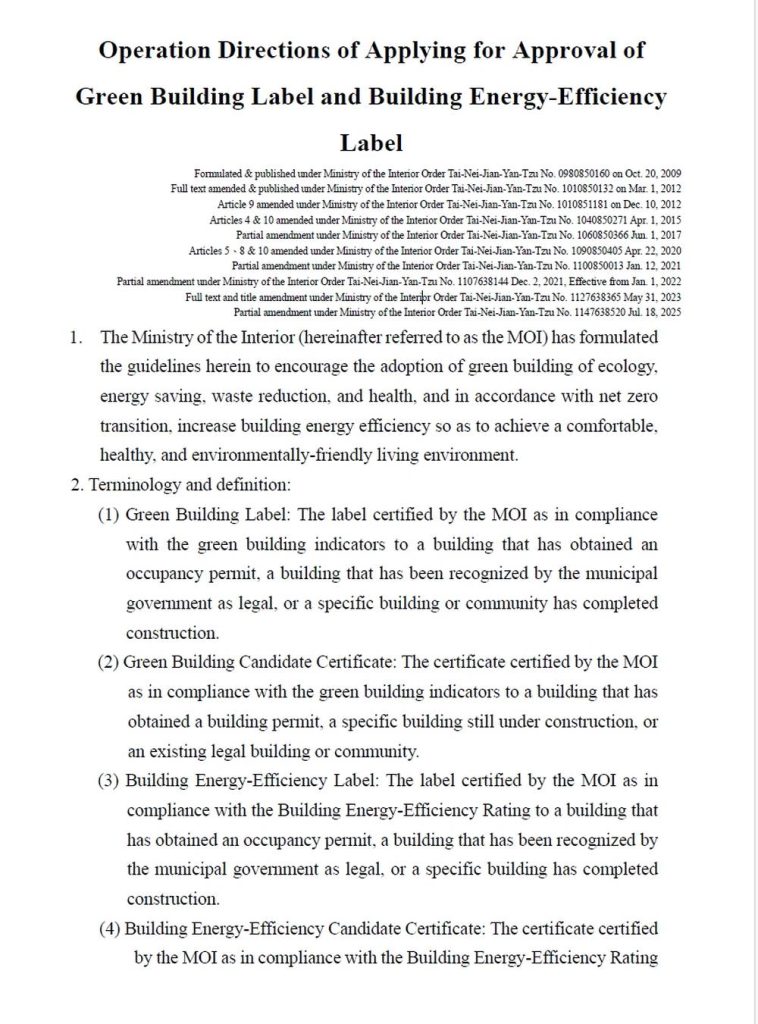
Excerpt from regulations Operation Directions of Applying for Approval of
Green Building Label and Building Energy-Efficiency Label (2025.7.18)
7.2.2 Upgrade buildings to higher energy efficiency
NTNU plan for improving energy efficiency in existing buildings
NTNU implements annual energy conservation plans to improve the energy efficiency of its existing buildings. These plans cover upgrades to air-conditioning, lighting, power supply and ventilation equipment, as well as the use of smart controls and energy monitoring to track and manage electricity consumption.
1. Policy Framework and Annual Improvement Plans
Under its Energy Management Policy, NTNU commits to providing the resources needed to improve energy efficiency, reduce energy consumption and greenhouse gas emissions, and support the use of energy-efficient services, products and equipment. The Campus Energy Conservation Committee, established under the Sustainable Development Committee, prepares annual implementation plans, allocates budgets for equipment maintenance and replacement, monitors energy use and reviews progress each year.
The 2024 plan combined equipment upgrades with changes to building operations. Measures included replacing and cleaning air-conditioning units, cleaning fans, adjusting water dispenser operating schedules, conducting energy inspections and consolidating summer dormitory accommodation.
Over the first year, NTNU aims to establish an energy-use baseline and pursue electricity savings. Over three years, the University plans to continue replacing equipment and expanding smart energy monitoring. Over five years or more, it aims to advance smart energy management and improve the sustainability of its buildings.
2 Improvement Targets and Equipment Replacement Progress
Performance indicator | Target or direction |
|---|---|
Annual electricity savings rate | At least 1% |
Replacement rate for LED lighting and high-efficiency air conditioning | Continue toward 100% replacement |
Energy Use Intensity (EUI) | A 3% reduction in each successive period |
EMS and smart meters | Advance deployment to support energy monitoring and operational improvements |
Equipment replacement progress is shown below. The percentages indicate current progress toward the 100% replacement target.
Equipment | Total units | Upgraded equipment | Progress |
|---|---|---|---|
Lighting | 24,766 lights | 21,867 LED lights | Approx. 88% |
Air conditioning | 5,004 units | 3,720 energy-efficient units | Approx. 74% |
3 Equipment Replacement and Operational Controls
NTNU continues to improve equipment, air-conditioning controls, operation and maintenance according to the condition of existing building equipment and the needs of users.
Category | Measure | Implementation and benefit |
|---|---|---|
Equipment replacement | High-efficiency transformers | Upgrade the high-voltage transformer equipment at Liberal Arts Buildings I and II to high-efficiency amorphous-core equipment with low core losses, reducing electricity losses in the transformer. |
Inverter air conditioners | Replace older air-conditioning equipment with inverter air conditioners to improve operating efficiency. | |
Dormitory heat pumps | Use heat pump systems in dormitories to reduce energy consumption. | |
LED lighting | Use LED lighting fixtures to reduce building lighting demand. | |
Air-conditioning controls | Outdoor air intake in spring and autumn | Use programmed controls to introduce outdoor air during spring and autumn and delay morning start-up of the air-conditioning plant by one hour. At 1 hour/day × 30 days/month × 6 months across the two seasons, the estimated reduction in operating time is approximately 180 hours. |
Earlier shutdown before closing | Use programmed controls to shut down the air-conditioning plant two hours before the facility closes each day. At 2 hours/day × 360 days/year, the estimated annual reduction in operating time is approximately 720 hours. | |
Timer controls | Use timers to control air-conditioner operating hours and align switching times with space use. | |
Routine operation and maintenance | Air-conditioning cleaning and maintenance | Regularly clean and maintain air-conditioning equipment to improve operating efficiency. |
Classroom air conditioning in autumn and winter | Reduce the number of air conditioners serving classrooms from two to one in autumn and winter, reducing simultaneous operation. | |
Holiday water dispenser management | Switch off water dispensers during the Lunar New Year holiday and other consecutive holidays to reduce heating electricity consumption when they are not in use. |
Note 1. The 180-hour reduction is estimated using 1 hour per day, 30 days per month and six months across spring and autumn. The 720-hour annual reduction is estimated using 2 hours per day and 360 days per year. Actual electricity savings are determined from equipment power, operating loads and electricity records.
4 Improvements to Existing Facilities
Smart Lighting Controls at the Heping Campus Gymnasium
NTNU uses a smart lighting system to manage lighting from the first basement level to the fifth floor of the Heping Campus Gymnasium. The system also serves three outdoor courts and the sports field. Facility managers can schedule lighting and switch lights on or off remotely, matching operating hours to facility use and limiting electricity consumption when spaces are unoccupied.
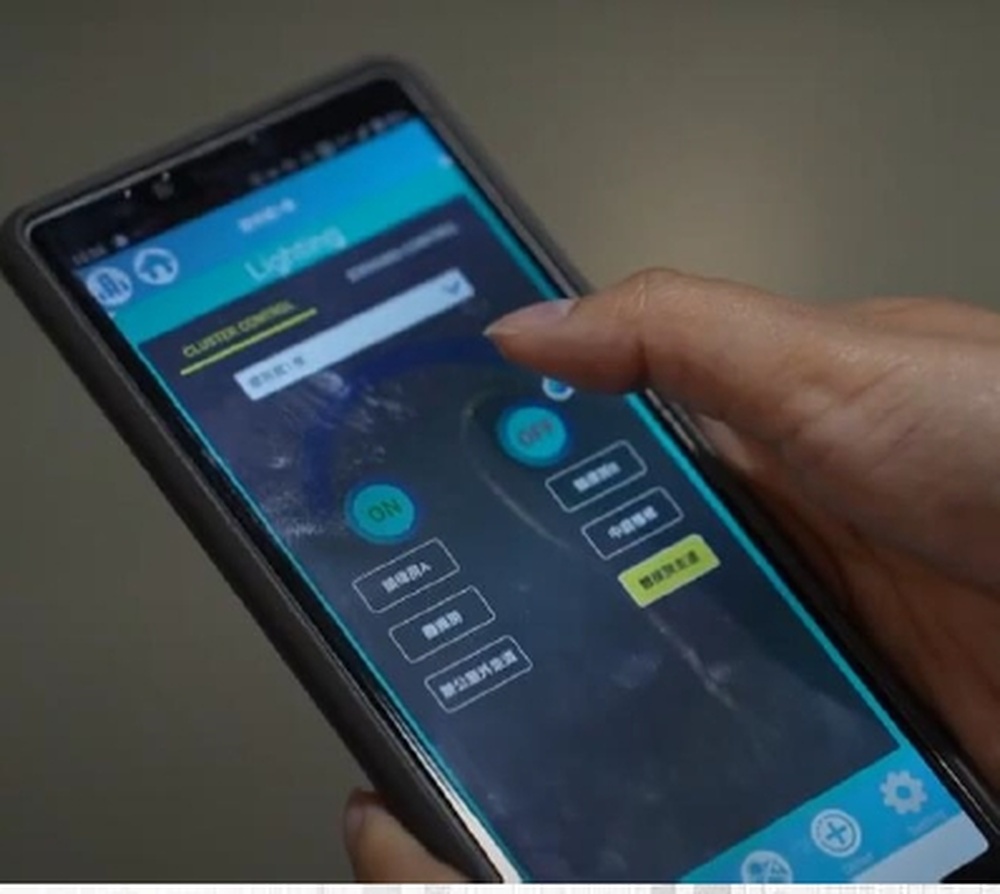
Figure 1. The smart lighting app allows facility managers to schedule and remotely control lighting in the Heping Campus Gymnasium and outdoor sports facilities.
Laboratory Exhaust System Upgrades in the College of Science Building
From 2019 to 2024, NTNU progressively replaced the rooftop exhaust gas treatment towers and laboratory fume hoods in the College of Science Building. The original equipment used fixed-speed motors and had been in service for more than a decade. The upgraded system uses fume hood sash positions, motorised dampers, differential pressure controls and variable-speed motors to adjust exhaust airflow to laboratory demand. These controls reduce unnecessary airflow and improve energy efficiency while supporting safe laboratory ventilation.
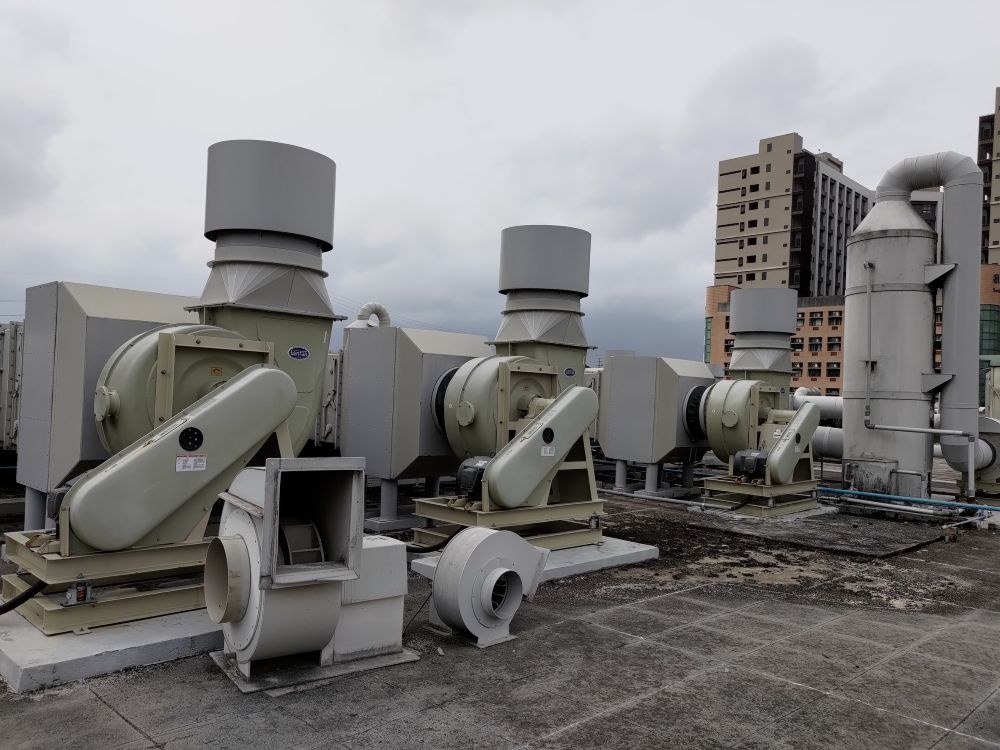
Figure 2. Upgraded laboratory exhaust controls regulate airflow and pressure in the College of Science Building.
5. Energy Management and Renewable Electricity Generation
(1) Server Consolidation and Data Center Efficiency
NTNU hosts approximately 530 virtual machines on 27 physical servers. This consolidation allows the University to operate multiple workloads on shared hardware. In 2024, the data center recorded a Power Usage Effectiveness (PUE) of 1.35. NTNU uses PUE, the ratio of total data center energy use to the energy used by IT equipment, to track facility energy performance.
(2) Energy Management System and Smart Metering
NTNU has established an energy management framework and standard operating procedures, designated personnel responsible for energy conservation, and compiled monthly electricity-use statistics to monitor consumption in existing buildings. The first phase of the campus Energy Management System (EMS) calls for approximately 60 smart meters. The EMS will collect and display electricity-use data in real time, helping facility managers identify unusual consumption and adjust operating schedules for air conditioning, lighting and other equipment.
NTNU will track annual electricity savings, equipment replacement rates and Energy Use Intensity (EUI) to assess progress. The results will inform maintenance priorities, equipment replacement and adjustments to operating schedules.
(3) Solar Photovoltaic Systems
NTNU installs solar photovoltaic systems on existing building rooftops and at other suitable campus locations to increase on-site renewable electricity generation. The installations listed below have a combined capacity of 2,873.475 kW. Annual generation increased from 367,776 kWh in 2023 to 2,557,891 kWh in 2025, with most of the increase coming from the Linkou Campus installation. NTNU tracks renewable electricity generation through installed capacity and annual output, and assesses building energy efficiency through electricity use, EUI and equipment performance.
Campus and location | Installed capacity | 2023 generation | 2024 generation | 2025 generation |
|---|---|---|---|---|
Heping Campus | 108.225 | 124,280 | 116,920 | 122,640 |
Heping Campus | 216.450 | 243,496 | 231,968 | 242,856 |
Linkou Campus | 2,548.800 | 0 | 634,273 | 2,192,395 |
Total | 2,873.475 | 367,776 | 983,161 | 2,557,891 |
The systems listed have a combined installed capacity of 2,873.475 kW. Annual electricity generation increased from 367,776 kWh in 2023 to 983,161 kWh in 2024 and 2,557,891 kWh in 2025, reflecting renewable energy supply as systems were progressively installed.
Units: Installed capacity is measured in kW; annual electricity generation is measured in kWh.
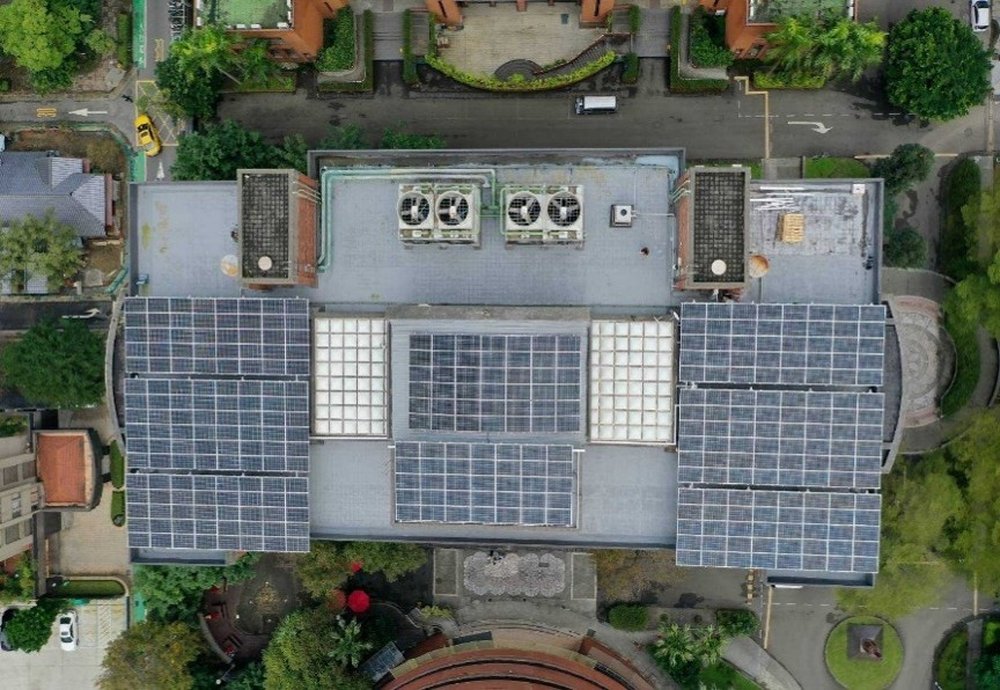
Figure 3. Rooftop solar panels on the Education Building at Heping Campus
6. Energy Conservation Education and Ongoing Management
NTNU conducts at least one energy conservation education activity each year and reinforces its guidance through energy-saving competitions, campus communications and information cards displayed in public areas. Staff and students are encouraged to set air conditioning to 26–28°C in summer, clean filters regularly and use circulating fans to support efficient cooling.
NTNU also conducts energy inspections, adjusts water dispenser temperature settings, schedules dispensers to switch off during holidays and consolidates summer dormitory accommodation to limit unnecessary energy use. The Campus Energy Conservation Committee monitors progress throughout the year and reviews implementation results to guide equipment replacement and operational improvements in the following year.
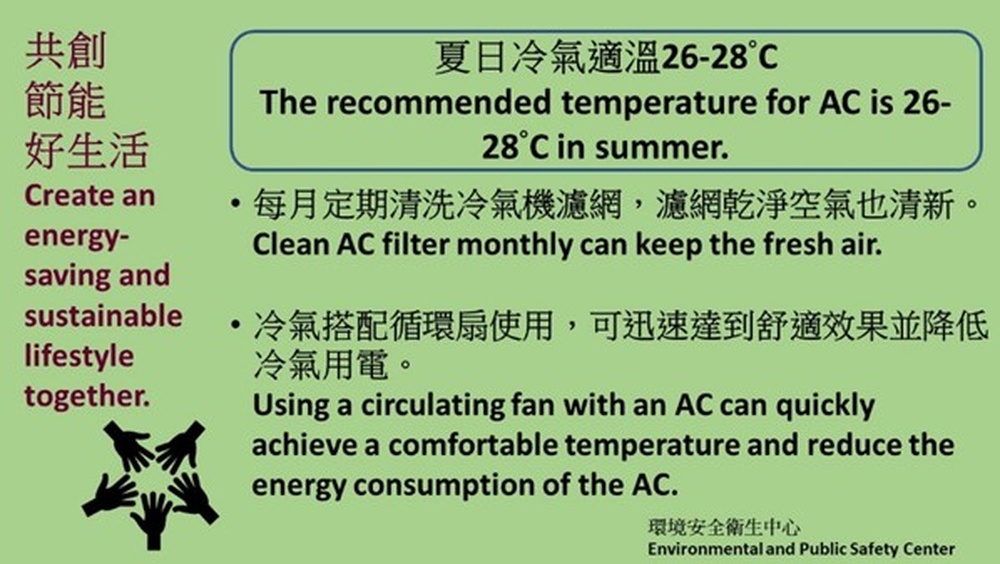
Figure 4. Energy conservation information cards in public areas explain recommended air-conditioning settings, filter cleaning and the use of circulating fans.
7.2.3 Carbon reduction and emission reduction process
Under its Energy Management Policy, NTNU has established a process for carbon management and reducing carbon dioxide emissions. The process coordinates campus carbon reduction through four stages: governance and target setting, annual planning, emissions inventory and implementation, and review and continuous improvement. Findings from emissions tracking inform subsequent annual plans.
1 Policy and governance
The NTNU Committee for Sustainable Development was established in 2019, followed by the Sustainable Development Center in 2020, to advance campus sustainability, greenhouse gas inventories and low-carbon living. The Campus Energy Conservation Task Force plans, promotes and oversees energy management plans under its establishment guidelines. Amended on 21 December 2022, the guidelines provide the institutional basis for annual energy conservation management.
2 Four stages of carbon management and emissions reduction
Stage 1 Governance and target setting
The Energy Management Policy emphasizes regulatory compliance, improved energy efficiency, participation by all university members, and continuous improvement. It commits NTNU to reducing energy consumption and greenhouse gas emissions. The NTNU Carbon Neutral Claim sets targets to reduce carbon emissions by 50% by 2030 and achieve full carbon neutrality by 2048. The Energy Conservation Targets also set an average annual electricity-saving target of 1% to guide annual energy conservation planning.
Stage 2 Annual planning and action
Through the Campus Energy Conservation Task Force, NTNU develops annual energy conservation plans covering energy efficiency improvements, equipment replacement and energy use management. These plans also incorporate renewable energy facility planning, green procurement, carbon management teaching and research, and professional training, translating university carbon reduction priorities into actions that individual units can implement.
Stage 3 Emissions inventory and implementation
NTNU launched a university-wide greenhouse gas (GHG) inventory in 2024 and established the NTNU Greenhouse Gas Inventory Task Force in October of the same year. The 2023 inventory has received third-party verification, and 2023 has been designated as the baseline year. Since 2024, NTNU has conducted an annual GHG inventory of the preceding year’s emissions. GHG inventory and emissions tracking identify emission sources and changes, informing carbon reduction planning and performance review. Annual energy conservation measures and energy education are implemented in parallel, and the inventory results are publicly available on the NTNU website.
Stage 4 Review and continuous improvement
The Guidelines for the Establishment of the Campus Energy Conservation Task Force require two meetings per year, with additional meetings as needed. As part of NTNU’s management process, the task force tracks implementation of the annual energy conservation plan, reviews the measures taken and incorporates its findings into subsequent annual plans, maintaining an ongoing carbon management process.
3 Four strategies for campus carbon reduction
NTNU organizes campus carbon reduction into four areas: energy use, research and technological application, policy and management, and education and outreach. Annual planning and implementation in these areas support the objective of reducing carbon dioxide emissions.
Strategy area | Main actions |
|---|---|
Energy use | Improve energy efficiency, plan renewable energy facilities, and implement electricity conservation and energy use management measures. |
Research and technological application | Conduct research on energy technologies and energy use behavior, apply the findings, and develop smart energy information systems. |
Policy and management | Implement national green procurement policy and conduct GHG inventories and emissions tracking to support carbon reduction planning. |
Education and outreach | Strengthen sustainability literacy and promote low-carbon campus living through carbon management courses, teaching and research, training in net-zero and sustainability management, and energy education. |
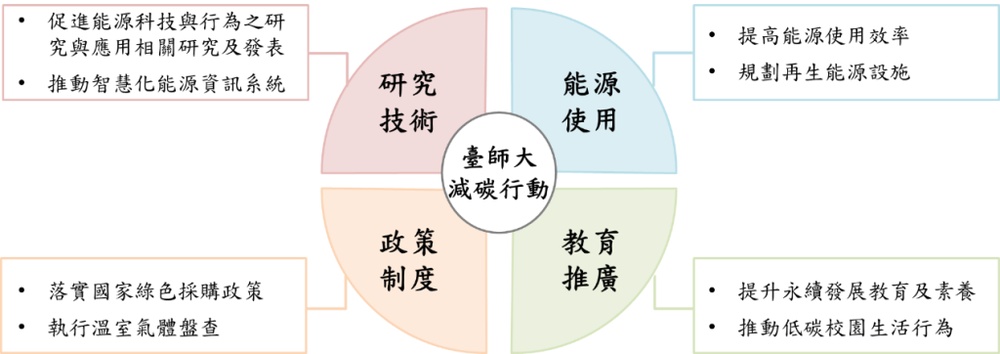
Figure 1. NTNU’s four strategies for campus carbon reduction encompass energy use, research and technological application, policy and institutional measures, and education and outreach.
4 Policy and energy conservation evidence
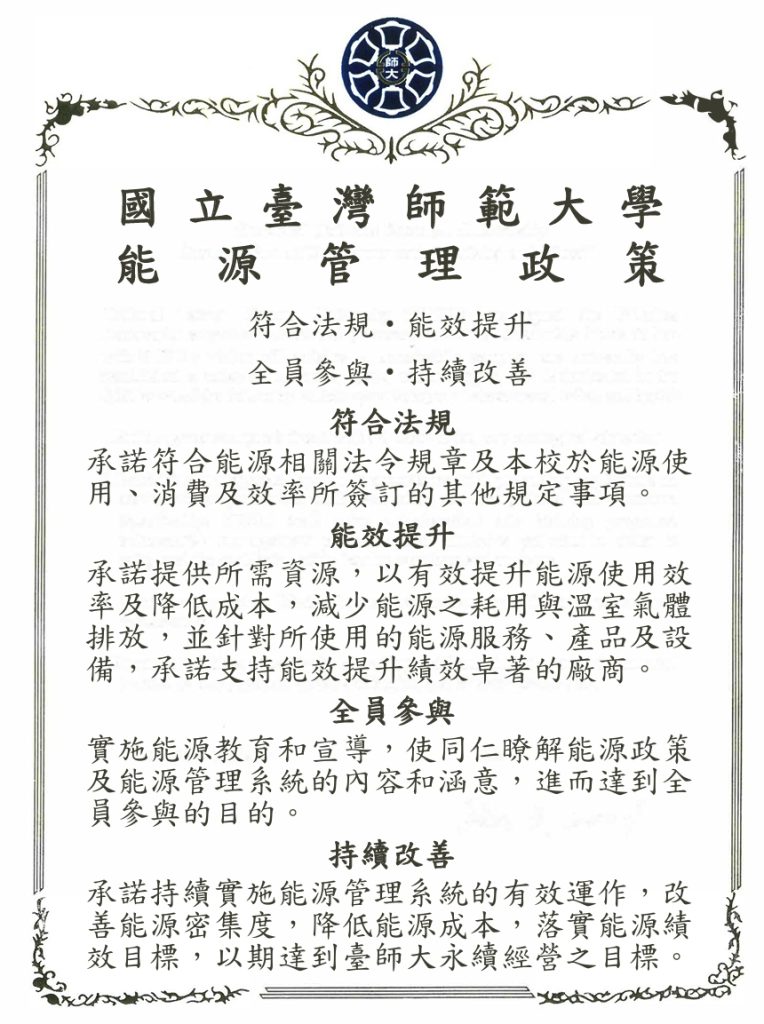
Figure 2. NTNU’s Energy Management Policy emphasizes regulatory compliance, energy efficiency, participation by all university members, and continuous improvement to support energy management and greenhouse gas reduction.
Energy Conservation Targets
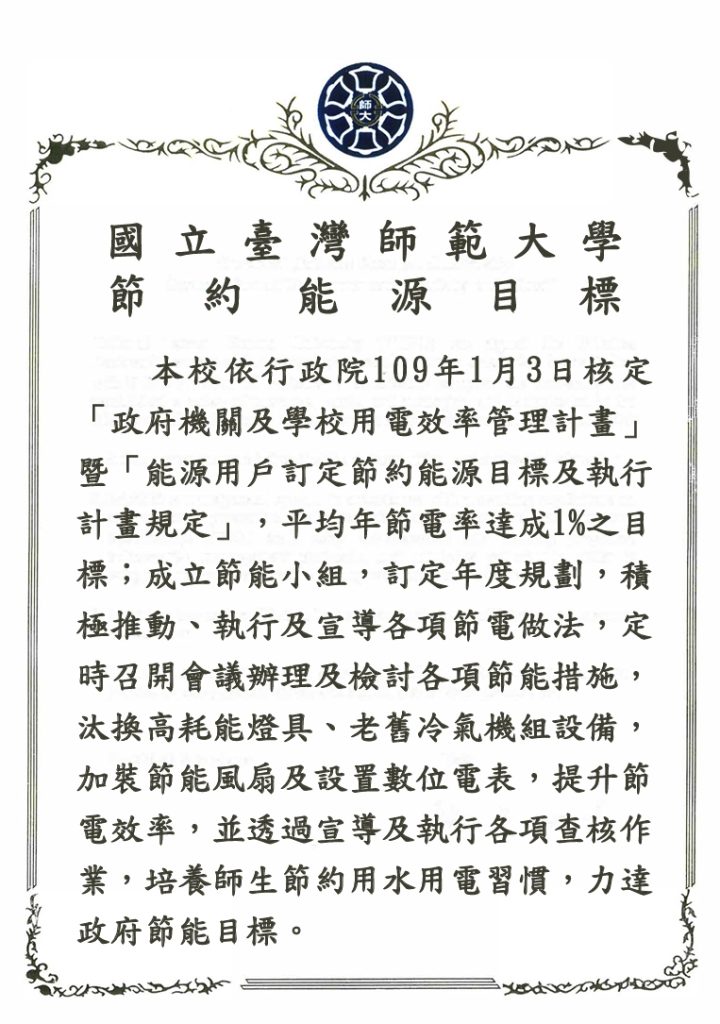
Figure 3. NTNU’s Energy Conservation Targets specify an average annual electricity-saving target of 1%. Energy conservation is advanced through annual planning, implementation, regular meetings and checks.
7.2.4 Plan to reduce energy consumption
NTNU establishes an annual energy efficiency plan to reduce overall energy consumption, integrating equipment efficiency improvements, management of energy use, participation by faculty, staff and students, and regular review into campus energy management. The 2025 plan specifies energy conservation measures, budgets, implementation periods and responsible units. The Campus Energy Conservation Task Force tracks the related work.
1 Policy and energy reduction targets
NTNU promotes energy conservation under the Electricity Efficiency Improvement Plan for Government Agencies and Schools (2024–2026). Its energy reduction targets include an average annual electricity-saving target of 1% to guide annual energy conservation planning. NTNU uses annual electricity consumption data and the Energy Usage Index (EUI) to review energy use, plan improvements to air conditioning (AC), lighting and other equipment, and conduct reviews based on implementation progress.
2 Governance and implementation tracking
Under the Guidelines for the Establishment of the Campus Energy Conservation Task Force, the task force plans, promotes and oversees NTNU’s energy management plan. Its responsibilities also cover energy use management, facility improvements and the promotion of appropriate energy use. The guidelines require two meetings each year, with additional meetings as needed.
At its two meetings held on 26 March and 13 November 2025, the Campus Energy Conservation Task Force recorded decisions, responsible units, implementation status and completion rates for individual cases, following up on previous decisions and the chair’s instructions. The task force also requested a review of heat pump settings at Linkou Campus and called for cooperation between the Office of General Affairs and the Environmental and Public Safety Center (EPSC) on deep energy-saving measures. Implementation tracking and performance review inform subsequent improvements.
Figure 1. Cover of the approved Electricity Efficiency Improvement Plan for Government Agencies and Schools (2024–2026), which provides the policy basis for NTNU’s energy efficiency plan.
3 Energy efficiency measures for 2025
NTNU implements its annual energy efficiency plan through equipment maintenance and replacement, holiday and seasonal energy management, inspections, and education and outreach. The following table summarizes the annual plan and formal notices.
Measure | Plan and actions | Implementation period | Responsible unit |
|---|---|---|---|
AC maintenance | Allocate NT$300,000 to subsidize AC cleaning and maintenance across university units. | Mar–Nov | EPSC |
AC replacement | Allocate NT$500,000 to replace air conditioners aged 12 years or more. Subsidized models must be cooling-only units with Grade 1 energy efficiency. | 3 Mar–30 Oct | EPSC |
Fan cleaning | Allocate NT$100,000 to subsidize cleaning and maintenance of energy-saving fans to improve energy use and reduce reliance on AC. | 27 Feb–30 Oct | EPSC |
Holiday energy use | Adjust the number of operating water dispensers during the Lunar New Year holiday, keeping those on the first floor in service. | Lunar New Year holiday | Maintenance and Renovation; EPSC |
Dispenser temperature | Set water dispenser chilled-water temperatures to 10°C to reduce unnecessary electricity use for cooling. | Campus Apr–Oct; dormitories Mar–Nov | Maintenance and Renovation; EPSC |
Seasonal operation | Disable water dispenser chilled-water functions during the specified winter periods. | Campus Nov–Mar*; dormitories Dec–Feb* | Maintenance and Renovation; EPSC |
AC operation | Reduce AC use by switching off one air conditioner in each unit and classroom. | Late Nov–Mar* | Maintenance and Renovation; EPSC |
Dormitory energy use | Consolidate summer accommodation and coordinate the use of space to reduce energy use across dispersed locations. | July–August | Student housing management units |
Energy inspections | Plan campus energy inspections by the Student Environmental Patrol Team and reporting of abnormal energy use. | January–December | EPSC |
Education and outreach | Publish a quarterly energy conservation and carbon reduction newsletter, and organize related activities in July and October. | Newsletter Jan, Apr, Jul, Oct; activities Jul, Oct | EPSC |
* March and February fall in the following year.
Applications for AC replacement and fan cleaning subsidies are governed by the formal notices and may close early if the allocated budgets are exhausted. AC replacement cases must be closed and payments completed by 30 October 2025.
4 Electricity use analysis and further improvements
NTNU compiles electricity consumption data for its campuses and major buildings and analyzes equipment and space use to inform energy conservation planning and the prioritization of improvements. The 2026 Energy Use Inventory and Energy Conservation Handbook and energy conservation presentations identify further directions for equipment upgrades, smart monitoring and management systems.
Equipment upgrades: NTNU plans to replace old air conditioners and lighting in phases, increase the share of high-efficiency equipment, and continue equipment maintenance.
Smart monitoring: NTNU plans to implement an Energy Management System (EMS) and install 60 smart electricity meters in the first phase to support electricity data analysis and alerts for abnormal electricity use.
Management and education: NTNU plans to compile monthly electricity use data, appoint building energy managers, and encourage participation by faculty, staff and students through energy conservation education and competitions.
Institutional basis for the Campus Energy Conservation Task Force
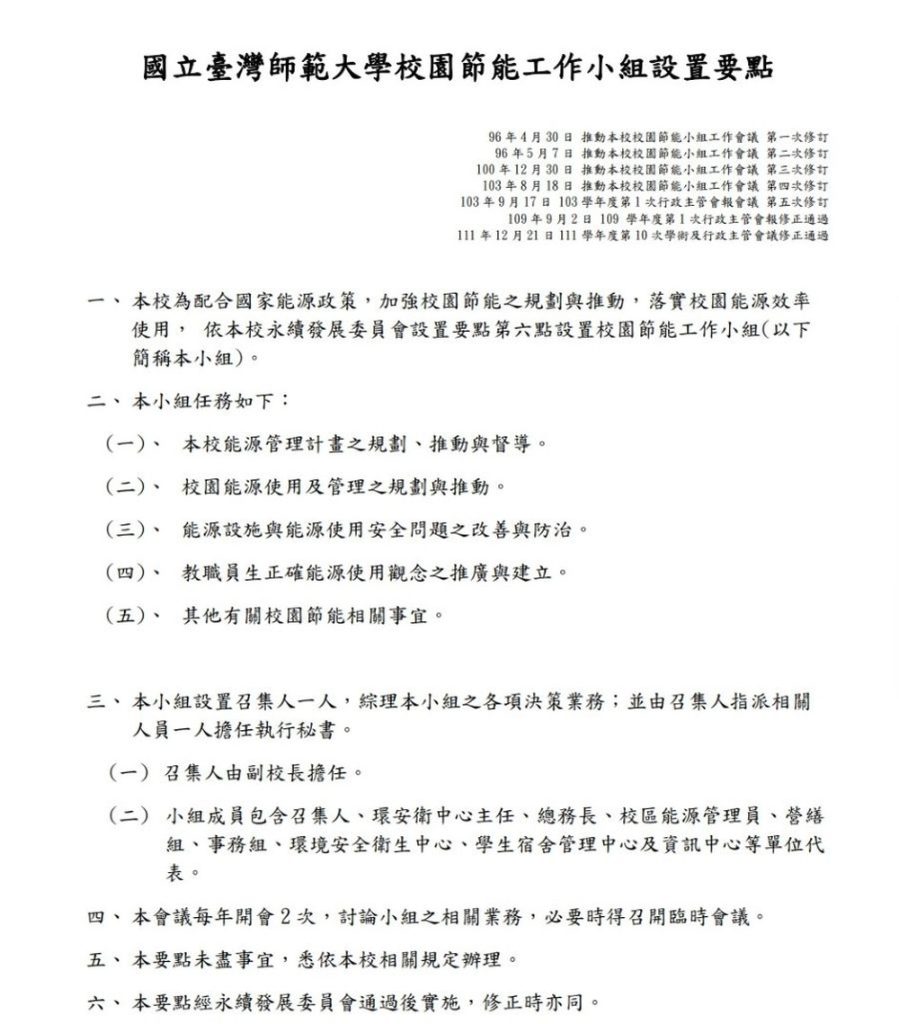
Figure 2. NTNU’s Guidelines for the Establishment of the Campus Energy Conservation Task Force specify planning, implementation and oversight responsibilities, together with the requirement for two meetings each year.
5 Evidence of equipment improvements and management
Air conditioner replacement subsidies
On 3 March 2025, NTNU issued the Notice on Subsidies for Air Conditioner Replacement, with an annual subsidy budget of NT$500,000. The subsidy is NT$20,000 per packaged air conditioner with a cooling capacity of 5 refrigeration tons or more, and NT$10,000 per window or split-system unit. Applications require quotations and proof of Grade 1 energy efficiency for review by the relevant units. Applicants must also complete the required asset write-off procedures for the old units, close the cases and complete payment.
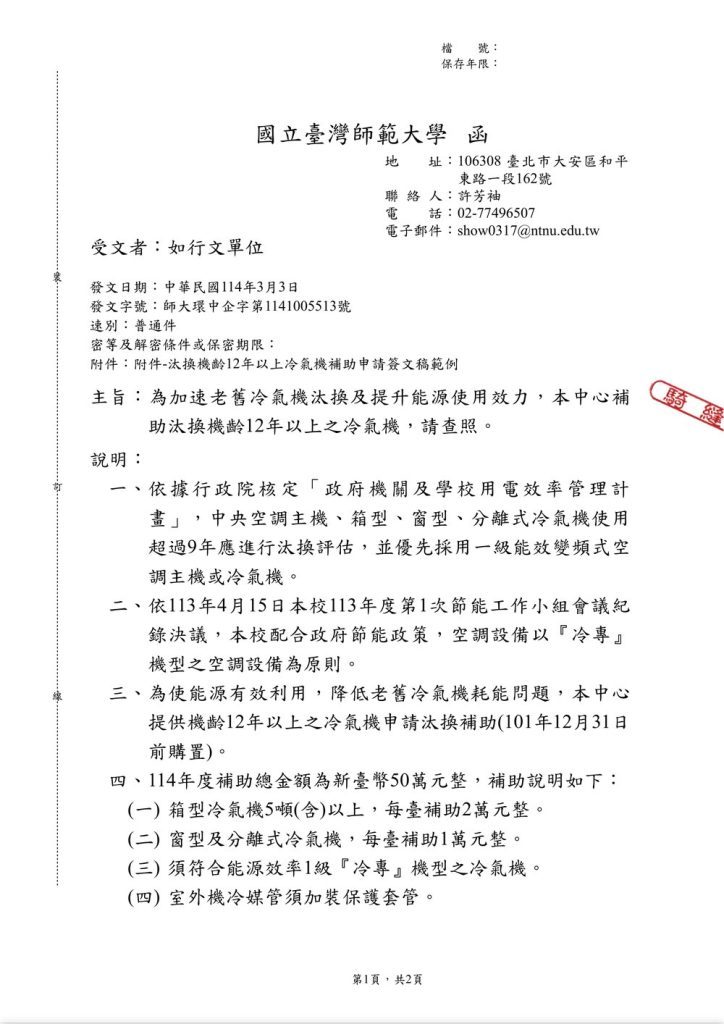
Figure 3. Page 1 of the Notice on Subsidies for Air Conditioner Replacement, dated 3 March 2025, specifying eligible equipment, the annual NT$500,000 budget and Grade 1 energy efficiency requirements.
Subsidies for cleaning energy saving fans
On 27 February 2025, NTNU issued the Notice on Subsidies for Cleaning Energy-Saving Fans, allocating NT$100,000 for the year. The subsidy is capped at NT$150 per fan and NT$5,000 per academic department or first-level administrative unit, subject to the eligibility requirements in the notice. Cleaning and maintenance cover fan blades, external surfaces and lubrication of motor bearings, supporting efficient energy use through equipment maintenance.
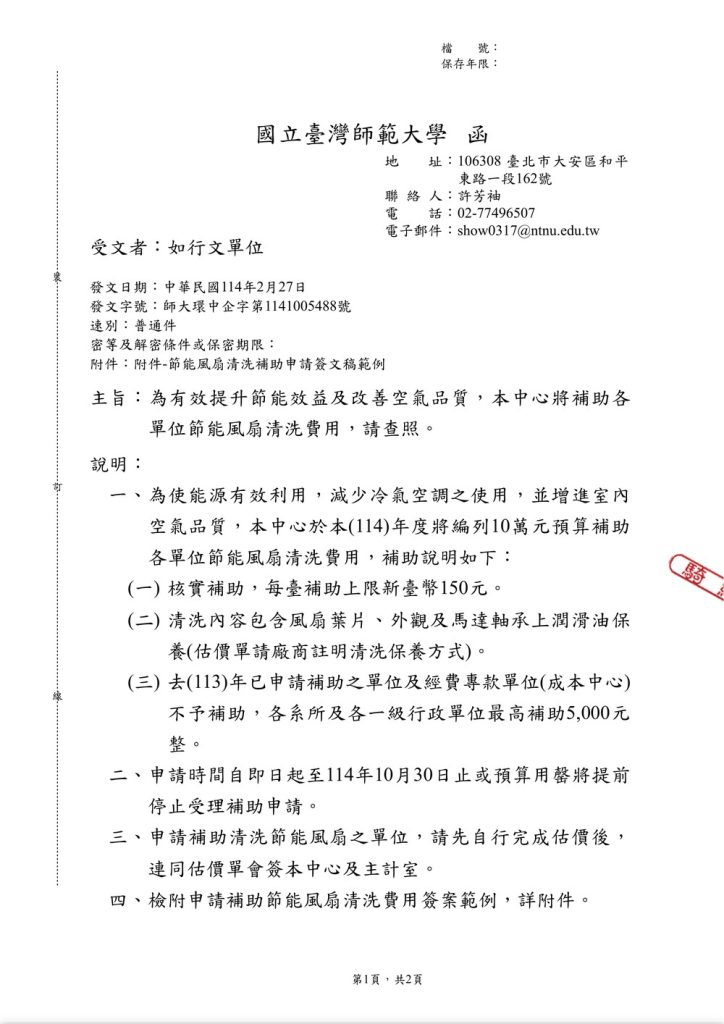
Figure 4. Page 1 of the Notice on Subsidies for Cleaning Energy-Saving Fans, dated 27 February 2025, specifying the annual NT$100,000 budget, subsidy limits and application deadline.
Task force meetings and follow up on previous cases
The minutes of the meeting held on 26 March 2025 document university-level energy management across units, follow-up on previous cases and discussions of specific equipment purchases. Completion rates track progress on individual decisions.
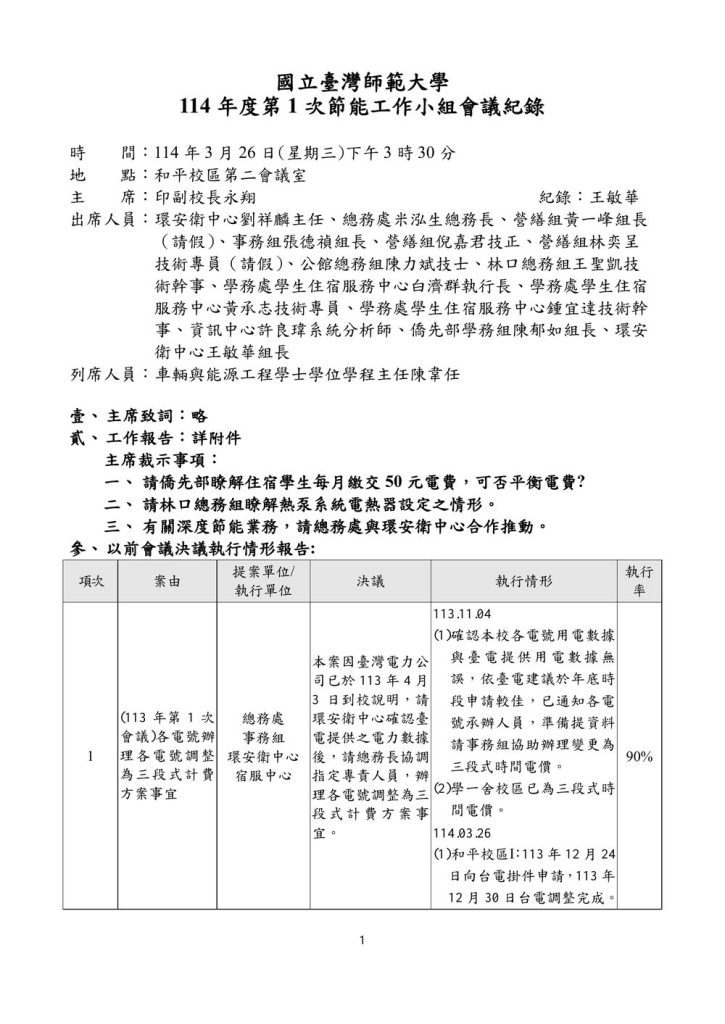
Figure 5. Page 1 of the minutes of the Campus Energy Conservation Task Force meeting held on 26 March 2025, recording the meeting date, participation across units and follow-up on previous cases.
Implementation progress and subsequent decisions
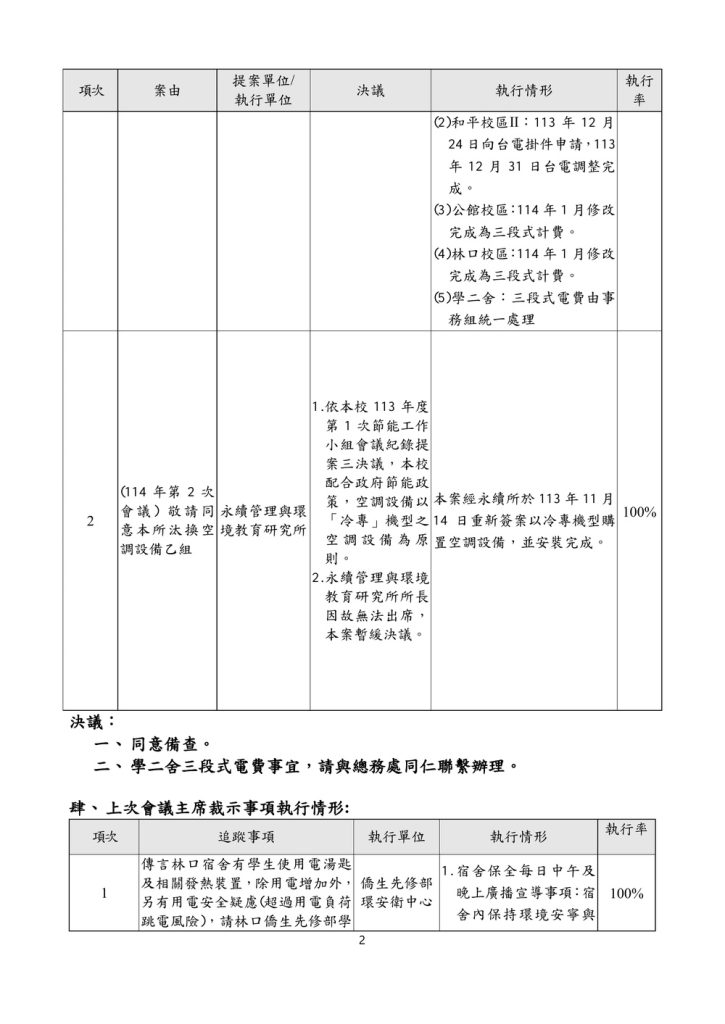
Figure 6. Page 2 of the same meeting minutes, showing responsible units, implementation progress and subsequent decisions.
7.2.5 Energy wastage identification
NTNU conducts energy reviews by combining electricity consumption analysis for campuses and buildings, on-site energy inspections, and review by the Campus Energy Conservation Task Force. Comparisons of electricity use and checks on operating conditions help screen high-consumption areas and locations where energy may be wasted. The aim is to identify areas where energy waste is highest and guide inspections and improvements to reduce unnecessary energy use.
1 Review electricity data and select areas for inspection
NTNU compiles electricity consumption data for campuses and major buildings using campus power monitoring and digital electricity meters. At Linkou Campus, digital meters installed in low-voltage switchboards record electricity use by area. Major building records also include manual readings. Annual and same-period comparisons show consumption patterns and changes.
The 2026 Energy Use Inventory and Energy Conservation Handbook compiles electricity data for 2025. The table below presents selected major buildings and facilities in the Main Campus / Library Campus grouping, providing data for subsequent energy reviews.
Building or facility | 2025 electricity use | Share of the table total |
|---|---|---|
Cin and Pu Buildings | 2,095,200 | 14.29% |
Mechanical Engineering Building / College of Technology and Engineering | 1,822,949 | 12.43% |
Underground Parking / Swimming Pool | 1,550,400 | 10.58% |
Source: Energy Use Inventory and Energy Conservation Handbook, 5 June 2026. Percentages use the 2025 cumulative total of 14,659,824 kWh in the Main Campus / Library Campus table as the denominator, rather than NTNU’s total electricity consumption.
Electricity consumption and its share of the total help select priorities for further inspection. Determining whether energy is being wasted also requires consideration of space use, occupancy, equipment operation and operating hours. NTNU also maintains a Digital Water Meter Query System as an additional tool for resource monitoring.
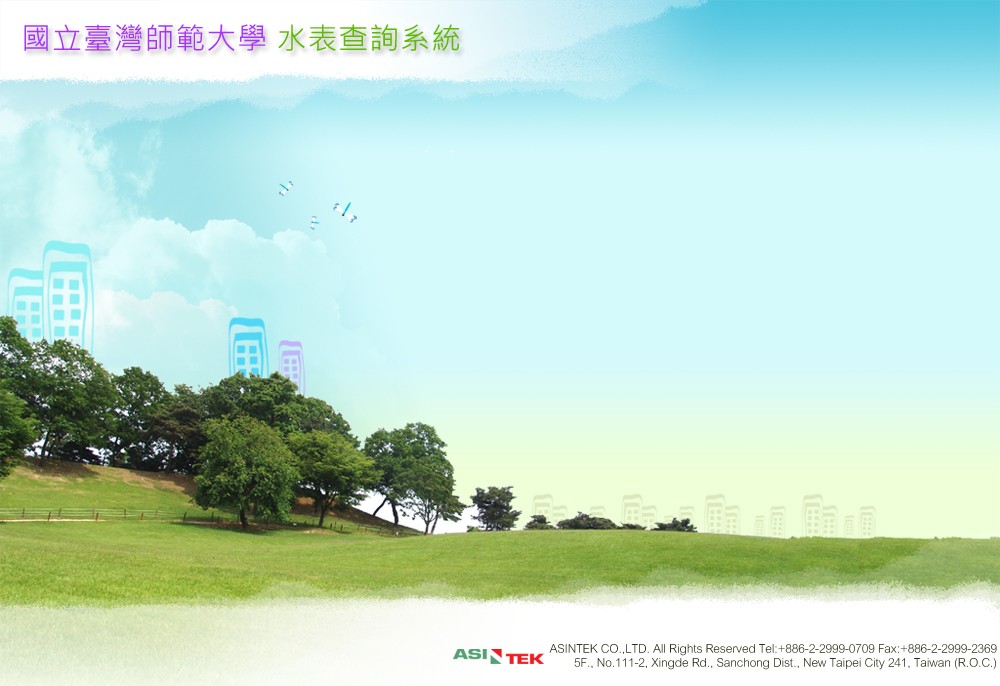
Figure 1. Homepage of NTNU’s Digital Water Meter Query System, an additional tool for resource monitoring.
2 Identify unnecessary energy use through on-site inspections
NTNU uses the Student Environmental Patrol Energy Inspection System and on-site inspections to check energy use, including lighting and air conditioning, across university units and report abnormal conditions. Inspections focus on unnecessary electricity use, such as lights left on in unoccupied spaces and air conditioners left running after occupants have left. These checks help identify areas of wastage and are accompanied by energy conservation outreach to encourage appropriate energy use.
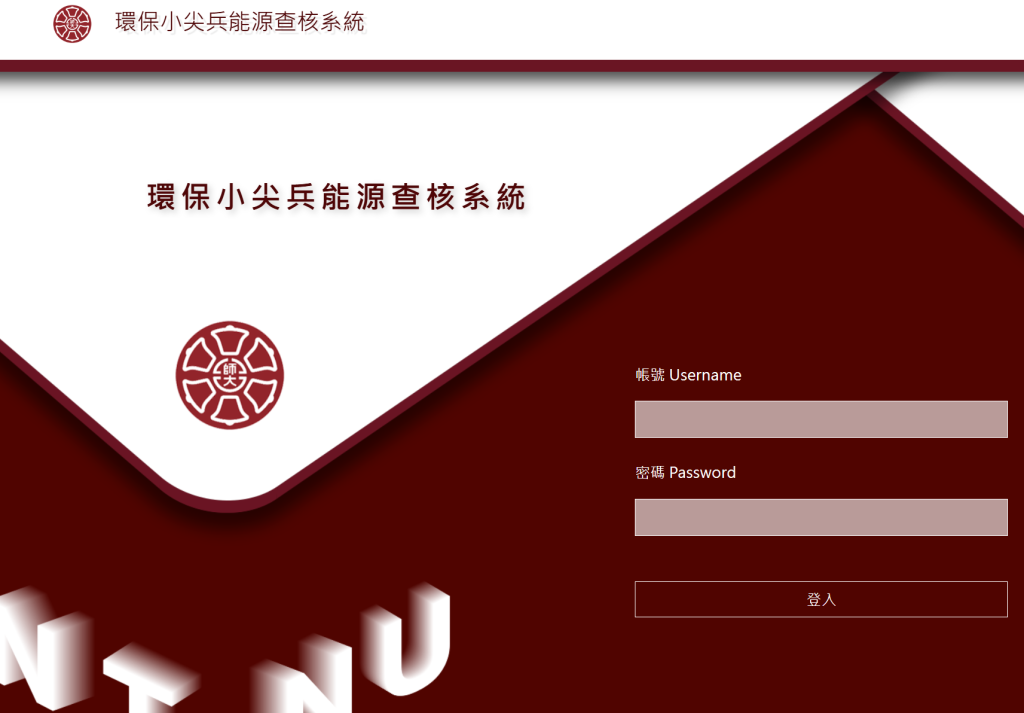
Figure 2. Login page of NTNU’s Student Environmental Patrol Energy Inspection System. The system supports energy wastage identification through on-site inspections and reporting of abnormal conditions.
3 Review changes in electricity use and follow up
The Campus Energy Conservation Task Force reviews energy management matters at its meetings. On 26 March 2025, it requested an investigation into the electric-heater settings in the heat pump system at Linkou Campus, and cooperation between the Office of General Affairs and the Environmental and Public Safety Center on deep energy-saving measures. The minutes list responsible units, implementation status and completion rates for individual cases, following up on previous decisions and the chair’s instructions and assigning matters to the relevant units.
The 2026 energy conservation monitoring and review presentation further compares building electricity consumption for January–August 2025 and 2026, identifying buildings with larger increases. The data below illustrate ongoing reviews of electricity use and inform further investigation of causes and discussions of improvements.
Building | Jan–Aug 2025 | Jan–Aug 2026 | Increase |
|---|---|---|---|
General Building | 556,462 | 656,485 | 17.97% |
Applied Science Building | 456,300 | 524,800 | 15.01% |
Dormitory 7 | 1,254,842 | 1,416,528 | 12.88% |
Source: Presentation for the Second Energy Conservation Monitoring and Review Meeting of 2026. Both periods cover January–August. Increases provide leads for inspection and do not directly establish energy wastage or energy-saving performance.
4 Strengthen energy review capacity
NTNU currently combines existing local power monitoring, digital electricity meters and manual records to analyze electricity use. To improve analysis by time period and building, its 2026 energy conservation planning proposes an Energy Management System (EMS) and 60 smart electricity meters in the first phase to support subsequent electricity data analysis and alerts for abnormal electricity use.
5 Historical certification of energy management
Gongguan Campus obtained ISO 50001 Energy Management System Certification in December 2021, providing a foundation for systematic energy management. The original certificate below records the scope and validity period of that certification.
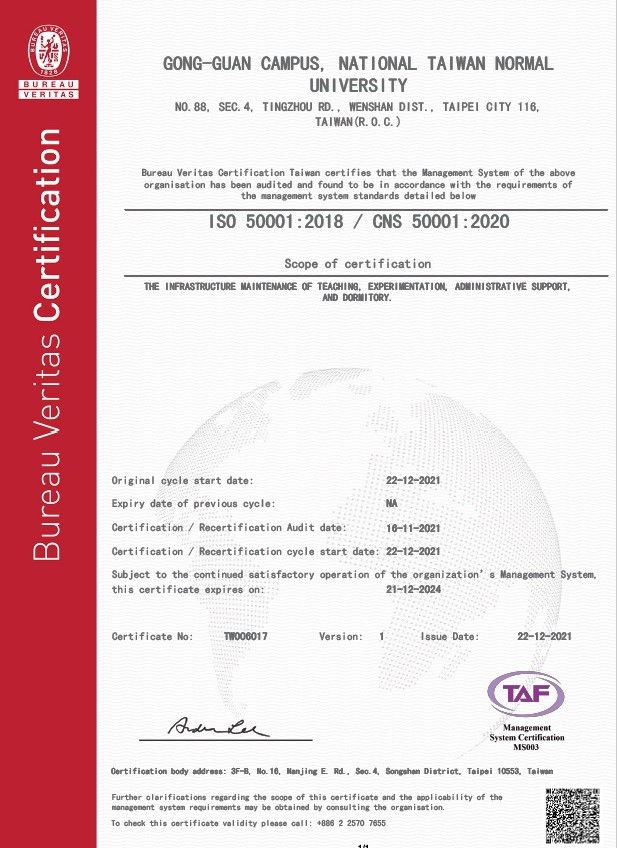
Figure 3. Original ISO 50001:2018 energy management system certificate for Gongguan Campus. The certification cycle ran from 22 December 2021 to 21 December 2024. This image documents historical certification.
6 Use emissions inventories to support energy reviews
NTNU completed its greenhouse gas inventory for 2023 and obtained third-party verification. The accompanying Third-party Verification Statement was issued on 11 March 2025. Inventory data provide a reference for understanding emission sources and tracking carbon reduction efforts. Together with electricity data analysis, on-site inspections and meeting reviews, these data support energy reviews.
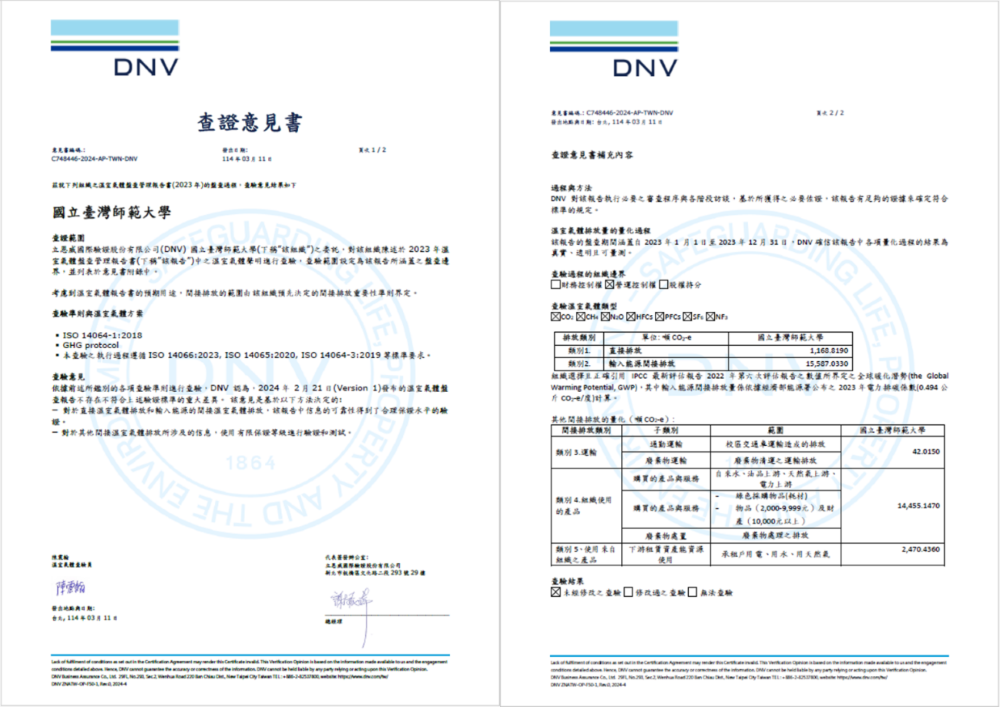
Figure 4. Third-party Verification Statement for NTNU’s 2023 greenhouse gas inventory, issued on 11 March 2025, providing supporting evidence for the emissions inventory.
7.2.6 Divestment policy
National Taiwan Normal University (NTNU) has adopted a Policy Statement on Responsible Investment and Divestment that restricts direct investment in carbon-intensive energy industries, particularly coal and oil, and establishes a process for progressively divesting from these industries. The NTNU Sustainable Development and University Social Responsibility Committee approved the statement at its third working meeting on 22 October 2026. The statement builds on the responsible investment requirements in Article 3 of NTNU’s Guidelines for Investment Management (amended on April 13, 2022).
1. Restrictions on direct investment
As a general principle, NTNU does not invest directly in companies whose primary business is in carbon-intensive energy, particularly coal and oil, or whose operations cause substantial pollution.
2. Portfolio review and progressive divestment
NTNU regularly reviews its existing investment portfolio to identify holdings in coal, oil and other carbon-intensive energy industries, as well as investments associated with substantial pollution. The policy requires NTNU to develop divestment plans that take into account applicable laws and regulations, financial soundness, contractual investment obligations and the findings of climate risk assessments. NTNU implements appropriate divestment strategies to progressively reduce its exposure to carbon-intensive energy industries, with particular attention to coal and oil.
3. Responsible investment and climate risk
NTNU incorporates the United Nations Sustainable Development Goals (SDGs), environmental, social and governance (ESG) responsibilities, and climate-related financial risks into its investment assessments and decisions. Subject to applicable laws and regulations and the principles of financial soundness and risk management, NTNU gives priority to investments that contribute to the SDGs.
4. Implementation, review and disclosure
The University units responsible for financial management and investment implement the policy within their respective areas of responsibility. NTNU regularly reviews the policy and its implementation measures in light of developments in climate science, sustainable finance, national laws and regulations, and international sustainability standards. Where appropriate, NTNU includes relevant information on implementation in publicly available institutional documents.
5. Institutional background
The minutes of the Investment Management Division’s third meeting on 4 October 2021 record that NTNU held no investments in highly polluting or high-carbon-emitting industries at that time. The Division also resolved to continue selecting companies that prioritise sustainable and sound operations, environmental protection and social responsibility.
Article 3 of the Guidelines for Investment Management, approved at the 124th meeting of the University Endowment Fund Committee on 13 April 2022, applies these criteria to investments in shares, corporate bonds and convertible corporate bonds issued by listed or over-the-counter companies. Section IV of the 2023 Financial Planning Report continues this approach. The 2026 policy statement builds on this framework by explicitly restricting direct investment in carbon-intensive energy companies and setting out a process for progressive divestment.
國立臺灣師範大學「責任投資及撤資」政策聲明
115年10月22日本校115年第3次永續發展與大學社會責任推動委員會工作會議通過
依據本校「國立臺灣師範大學投資管理要點」第三點:「投資上市、上櫃公司所發行股票、公司債及可轉換公司債之公司必須重視永續穩健經營、保護環境及善盡社會責任」;為落實此項社會責任承諾及遵循聯合國永續發展目標(SDGs)之呼籲,明確規範限制高碳排能源產業(特別是煤炭與石油產業)之直接投資,並逐步推動化石燃料產業撤資措施,特訂定此項政策聲明。
- 限制高碳排投資:本校原則上不直接投資以高碳排能源(特別是煤炭與石油產業)為主要業務或產生高污染之企業。
- 投資檢視與逐步撤資:本校應定期檢視既有投資組合,辨識涉及高碳排能源產業之投資項目,並依相關法規、財務穩健性、投資契約義務及氣候風險評估結果,研提撤資計畫。
三、責任投資:本校應將永續發展目標及ESG(環境、社會、公司治理)責任納入投資決策考量,並在符合相關法令、財務穩健及風險管理原則下,優先考量有助於永續發展目標之投資。
四、執行機制:本政策由本校財務管理及投資業務相關權責單位依職掌執行。相關事項如下:
- 定期檢視本校投資組合,辨識涉及煤炭、石油及其他高碳排能源產業或高污染之投資項目。
- 執行適當之高碳排能源產業撤資策略,特別是煤炭與石油產業。
- 將氣候相關財務風險及永續發展因素納入投資評估與決策。
- 因應氣候科學、永續金融、國家法令及國際永續發展規範之變化,定期檢討本政策及相關執行措施。
- 相關執行情形得納入本校校務資訊公開文件,以提升投資治理之透明度及社會信任。
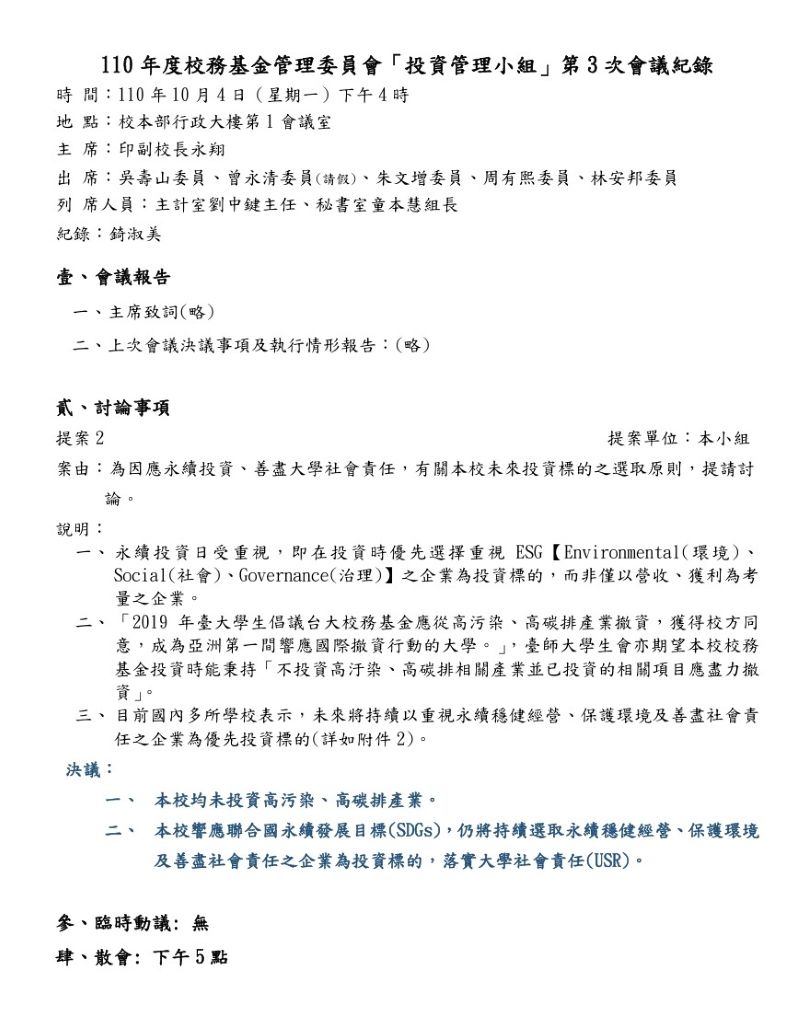
Figure 1. NTNU Investment Management Division meeting minutes, 4 October 2021, recording that NTNU had no investments in industries with high pollution or high carbon emissions at that time.
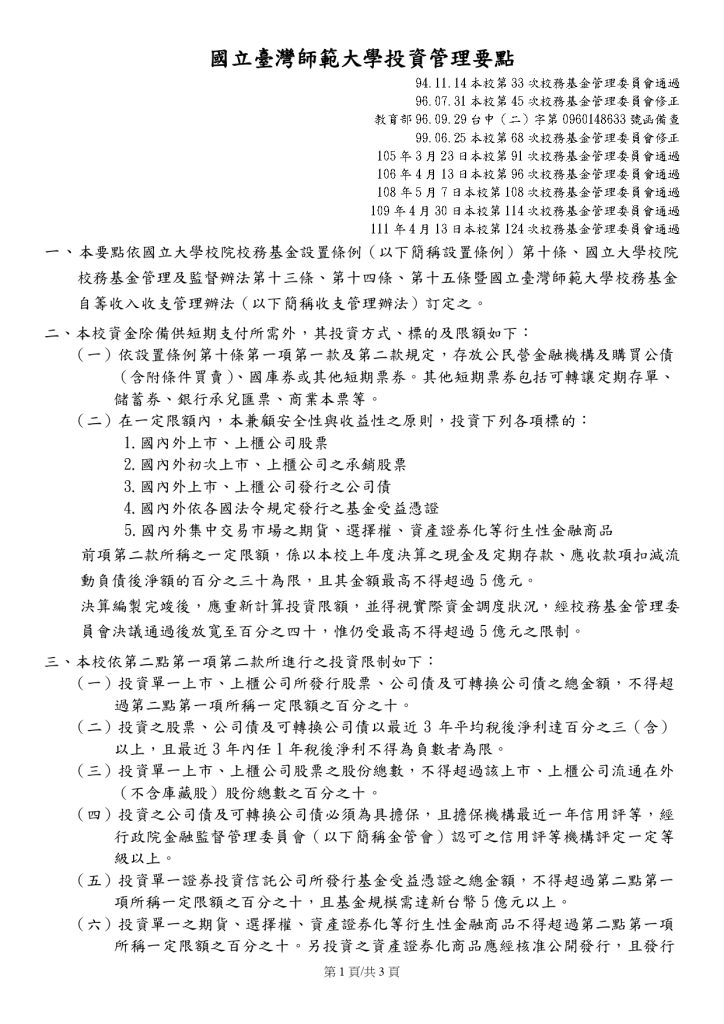
Figure 2. Page 1 of the NTNU Investment Management Directives, which set out the institutional investment framework.
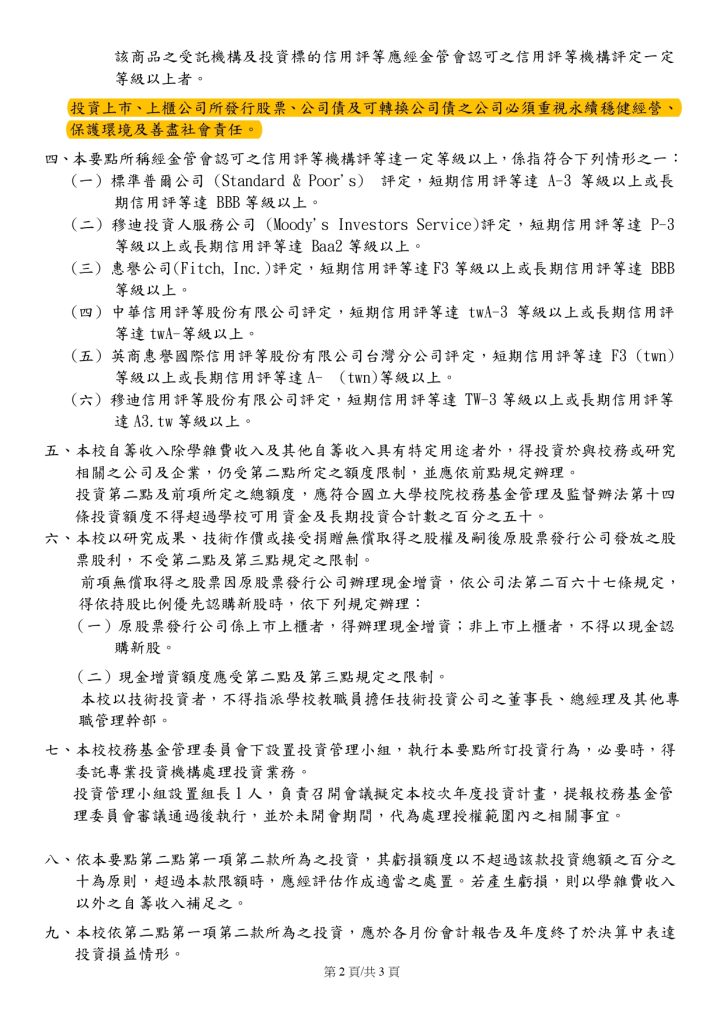
Figure 3. Page 2 of the NTNU Investment Management Directives. The highlighted provision requires investment target companies to emphasize sustainability, environmental protection and social responsibility.
7.4.1 Local community outreach for energy efficiency
NTNU provides programmes for the local community through energy education in elementary and junior high schools, teacher training and public science activities. These learning opportunities serve teachers and students outside NTNU, parents and members of the public. They help participants learn about the importance of energy efficiency and clean energy by connecting energy conservation, solar power and wind energy with teaching and everyday life.
In 2025, NTNU continued the Energy Education Guidance Programme for Elementary and Junior High Schools and partnered with the Department of Education, Taipei City Government to organise Taipei Science Day. These activities introduced energy knowledge to school communities, families and citizens. NTNU also supported Pingtung County inter-school alliances during the 2025 academic year (2025–2026), helping teachers develop local curricula through collaborative learning. The 2026 exchange event presented practices involving smart meters, low-carbon and energy-efficient campuses, and green energy picture books. Local net-zero courses further extended community sustainability education.
1 Local Energy Education Priorities
The programme focuses on implementing energy education in schools, developing energy educators and broadening the dissemination of energy knowledge. NTNU makes its teaching and professional resources available to elementary and junior high schools across Taiwan. Teacher workshops support local teaching, while student competitions and publicly available materials offer additional ways to learn about energy.
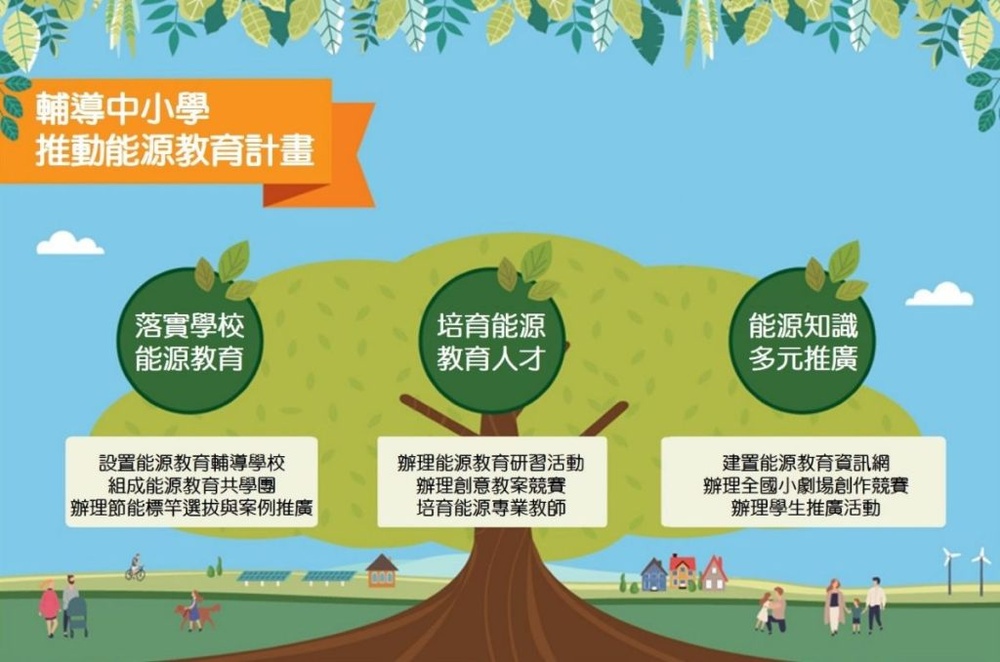
Figure 1. The three core priorities and activities of the Energy Education Guidance Programme for Elementary and Junior High Schools.
2 Energy Education Guidance for Schools
NTNU’s Department of Mechatronic Engineering has long supported energy education outreach. In 2025, NTNU implemented the Energy Education Guidance Programme for Elementary and Junior High Schools, commissioned by the Energy Administration, Ministry of Economic Affairs, from 1 January to 31 December 2025. Primarily serving elementary and junior high school teachers and students, the programme provides teaching resources, workshops and exchange opportunities through local schools and energy education learning communities.
Priority | Activities | Local learning focus |
|---|---|---|
Implementing energy education in schools | Energy education guidance schools, learning communities, energy conservation benchmark selection and case sharing | Use local schools’ teaching and facilities as contexts for sharing energy conservation and efficient energy use practices. |
Developing energy educators | Energy education workshops, creative lesson-plan competitions and specialist teacher development | Help teachers turn energy efficiency and clean energy knowledge into lessons suitable for elementary and junior high school students. |
Broadening energy knowledge outreach | Energy Education Portal, mini-theatre competitions and student outreach activities | Increase opportunities to understand energy issues through public resources and non-formal learning. |
2025 Northern Taiwan Energy Education Capacity Building Workshop
The implementation plan for the 2025 Northern Taiwan Energy Education Learning Community energy conservation demonstration and observation activities identified NTNU as the organiser and New Taipei City Wanli Elementary School as the host. Scheduled for 23 May at Wanli Elementary School, the workshop targeted energy education promotion schools in northern Taiwan and other interested teachers. It was designed to support local teacher development through observation, practical activities and lesson-plan sharing.
The planned curriculum included Energy and Wanli, exploration of energy classrooms and campus energy facilities, construction of solar- and wind-powered model cars, sharing of green energy lessons, and group discussions on sustainable campuses. Solar and wind activities provide tangible materials for learning about clean energy. Facility observation and lesson-plan exchange support teachers in explaining energy use and the importance of conservation. These hands-on and experiential courses can inform participants’ subsequent teaching.
2025 Creative Energy Conservation Mini Theatre Competition
NTNU also served as the implementing institution for the 2025 Creative Energy Conservation Mini-Theatre Competition for Elementary and Junior High Schools. Organised by the Energy Administration, the competition was supported by the K-12 Education Administration, Ministry of Education and local education authorities. It invited public and private elementary and junior high schools nationwide to explore energy conservation through energy awareness, energy concepts, energy use, energy development and the net-zero transition.
Through drama creation and performance, students can express energy knowledge in ways that relate to everyday life. The competition provides energy learning beyond the classroom and makes energy conservation a subject for teachers and students to discuss and explore creatively.
3 Public Energy Learning Resources and Teacher Support
NTNU operates the Energy Education Portal, which publicly provides programme information, details of energy education promotion schools, activity announcements and reference resources. By bringing together workshop and teaching information from different locations, the portal helps teachers and students outside NTNU, as well as interested members of the public, find materials and learning opportunities.
Teachers can combine portal resources with workshop content to plan lessons on energy efficiency, energy conservation and clean energy. Students can encounter these topics through energy activities and creative competitions. Public resources complement in-person workshops, providing local schools with continuing access to learning materials.
4 Energy Experiences for Families and Citizens at Taipei Science Day
Since 2015, NTNU’s College of Science and the Department of Education, Taipei City Government have jointly promoted Taipei Science Day. The event invites students outside NTNU, parents and citizens interested in science. Student demonstrations, interactive experiments and hands-on activities bring science into public learning settings and create opportunities for local community participation beyond the university.
The eleventh Taipei Science Day took place at NTNU Gongguan Campus on 3 May 2025. With the theme Exploring Science for Global Sustainability, it featured 59 activity booths. Energy-related content included Generating Electricity with Love, an interactive green energy activity offered by Taipei Municipal Ren Ai Junior High School. The wider event also covered green chemistry, the circular economy and water conservation.
NTNU provided the venue and helped plan the event, bringing together local schools’ demonstrations and teaching activities so that families and citizens could experience energy and sustainability learning. Green energy booths offered shared learning opportunities for students, teachers, parents and citizens, extending public outreach beyond teacher workshops.
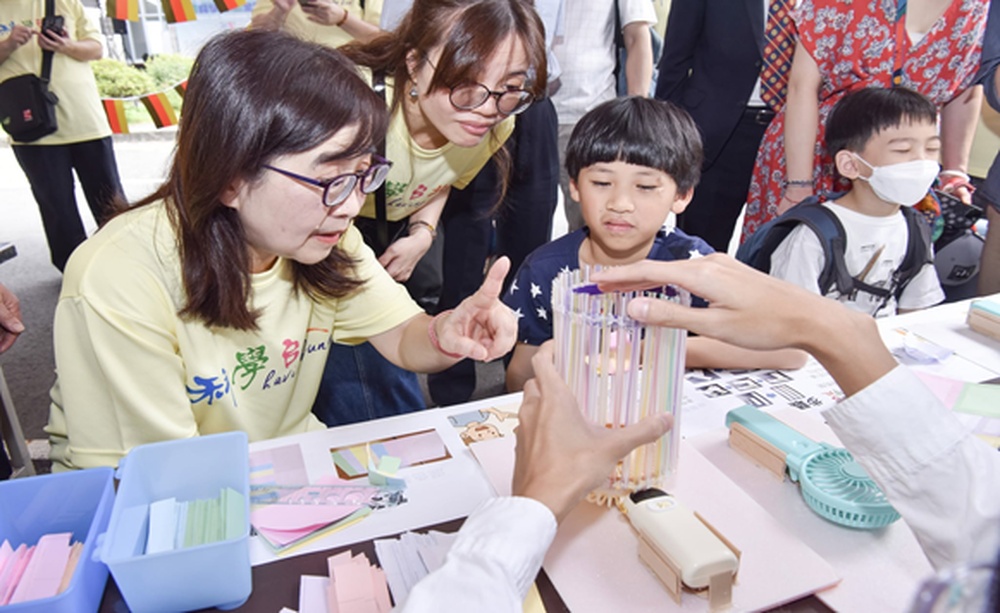
Figure 2. A hands-on activity at Taipei Science Day showing participation by students and parents from outside NTNU.
5 Support for Local Teachers and Curricula through Pingtung Alliances
NTNU’s Sustainable Development Center and its expert team participated in the Pingtung County Inter-School Alliance Working Groups for School-Based Education for Sustainable Development. They supported local schools in incorporating sustainability into school-based curricula through joint lesson preparation, curriculum exchange and on-site consultation. The 2025 academic year covered the second half of 2025 and the first half of 2026. Cooperation encompassed the Southern Pingtung Sustainability Alliance, Northern Pingtung Route 185 Place-Based Learning Alliance, International Bilingual and Marine Education Alliance, and Xiaoliuqiu Ecological Sustainability Alliance.
The outcomes report records that Professor Tzuchau Chang and Secretary Hsi-Yung Wang of NTNU’s Sustainable Development Center joined other university and local education experts in year-round visits to schools, providing curriculum advice. These teacher training programmes and workshops bring university expertise into local teacher communities and support teaching that responds to local needs.
Sustainability Education Workshops Recorded in 2025
The outcomes report lists the following dates and venues for sustainability education workshops in 2025. These records show continuing opportunities for collaborative learning among local teachers. Energy-related school curricula and materials were subsequently presented at the 2026 exchange event.
Date | Host school and venue | Activity category |
|---|---|---|
2 October 2025 | Xiangtan Elementary School | Education for sustainable development workshop |
3 October 2025 | Linbian Primary School | Education for sustainable development workshop |
20 November 2025 | Manzhou Junior High School | Education for sustainable development workshop |
21 November 2025 | Daluguan Elementary School | Education for sustainable development workshop |
NTNU provided professional guidance and exchange support within the alliances, while local schools developed curricula suited to their campus conditions and community characteristics. Workshops, field observation and teacher dialogue enabled educators outside NTNU to share materials and implementation approaches, and discuss how to turn sustainability issues into participatory learning activities for students.
6 Energy Efficiency and Green Energy Curricula in Pingtung
The inter-school alliance exchange for the 2025 academic year presented schools’ approaches to incorporating sustainability into their curricula from August 2025 to June 2026. Smart meters and low-carbon, energy-efficient campuses provide teaching contexts for understanding energy use, conservation and efficiency. Green energy picture books and energy technology courses offer other ways for students to explore energy issues.
School or shared example | Curriculum described in the supporting materials | Connection with energy learning |
|---|---|---|
Zhenxing Elementary School and Sinpi Junior High School | Use microclimate sensors, smart meters and other systems to relate carbon reduction and hydrological data to daily life. | Smart meters enable observation of electricity use and discussion of energy consumption and conservation. |
Tai’an Elementary School | Connect exploration of Makatao cultural roots with a low-carbon, energy-efficient smart green campus. | Local culture and campus settings connect with energy conservation, providing materials for learning about the importance of energy efficiency. |
Pingtung County FangLiao High School | Develop school-based curricula around energy technology and power machinery, incorporating the SDGs. | Specific technologies and curriculum themes support energy learning and illustrate local schools’ approaches to energy education. |
Evergreen Lily Elementary School | Principal Shih-Tsung Chen shared the green energy picture book majli msjli: The Light of the Future and its promotion mechanisms. | Picture books and teaching exchange provide an entry point for learning about green energy and clean energy. |
These examples are grounded in local schools’ teaching practices. Through alliance guidance and exchange activities, NTNU provides professional support that enables teachers to learn from one another’s materials and methods, expanding the resources available for local energy education.
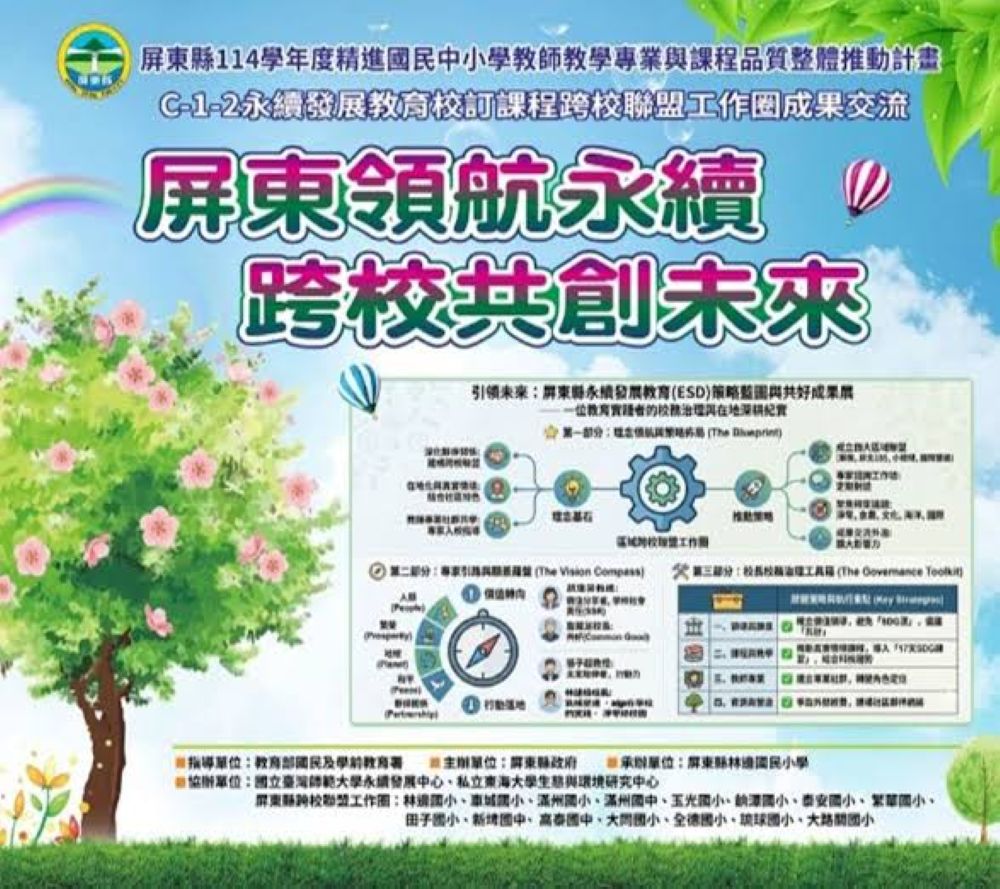
Figure 3. Poster for the Pingtung County inter-school alliance exchange in the 2025 academic year, identifying NTNU’s Sustainable Development Center as a co-organiser.
7 Pingtung Inter School Outcomes Exchange in 2026
On 11 June 2026, the Department of Education, Pingtung County Government held the Pingtung Leads Sustainability through Inter-School Collaboration for the Future exchange at Linbian Primary School. NTNU’s Sustainable Development Center and Tunghai University co-organised the event. Eighteen alliance schools and nearly 250 teachers and students shared learning outcomes through lectures, curriculum presentations and exhibition booths. These figures describe the entire sustainability education event.
Students served as booth presenters, explaining their learning outcomes to visiting teachers, students, experts and education personnel. Green energy picture book sharing and energy-related curriculum presentations brought energy knowledge into inter-school exchange, complementing teacher workshops with additional opportunities for learning and communication.
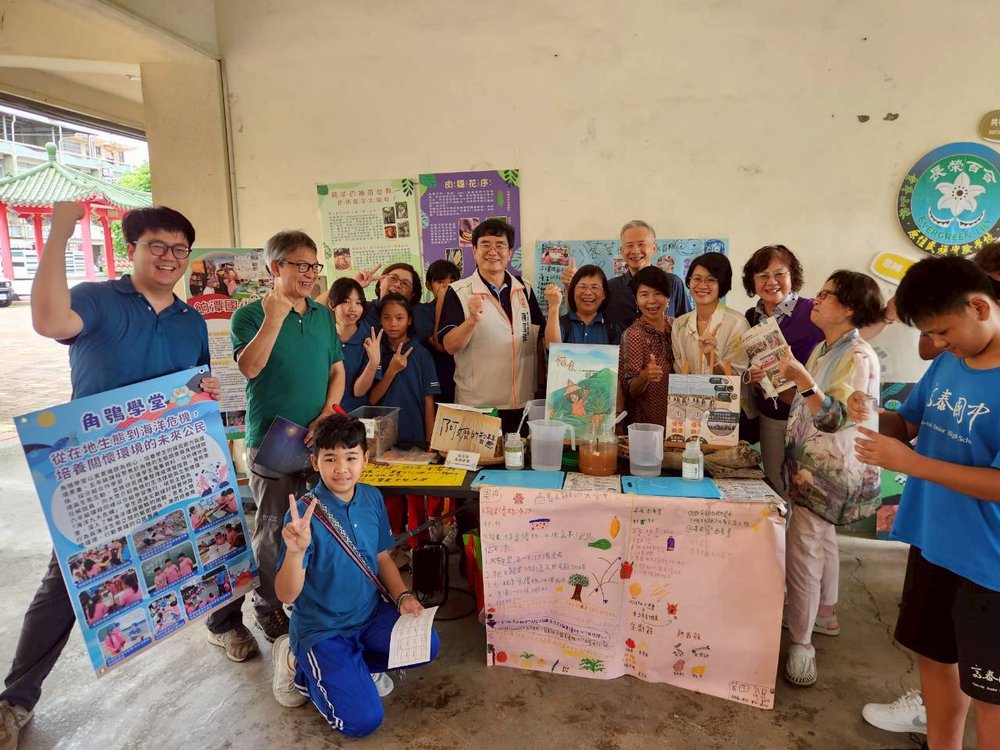
Figure 4. Students present learning outcomes at the 2025 academic year exhibition, illustrating exchange among schools, teachers, students and experts.
8 Extending Local Net Zero and Sustainability Education
Alongside outreach directly focused on energy, NTNU faculty participate in local governments’ net-zero and sustainability education, bringing university expertise into local communities. On 30 June 2025, Professor Shin-Cheng Yeh of NTNU’s Graduate Institute of Sustainability Management and Environmental Education was invited to teach at Hualien County’s Huilan Net-Zero Academy. His session was titled ESG and Sustainable Development: Trends and Prospects in the Interactions among Climate, Nature and Corporate Sustainability.
Held at the Hualien County Government Auditorium, the event drew approximately 170 participants from local industries, public agencies and community organisations. The course provided expert perspectives on climate, nature and corporate sustainability as part of local net-zero talent development, increasing opportunities for local participants to learn about sustainable development.
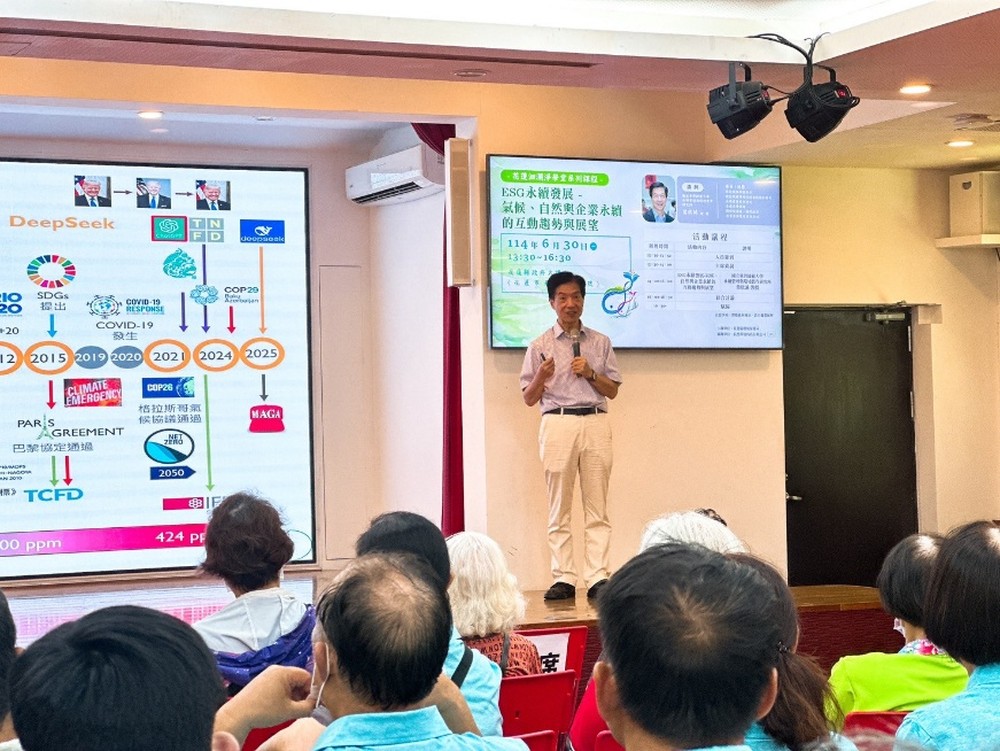
Figure 5. Professor Shin-Cheng Yeh shares knowledge on climate, nature and corporate sustainability at Hualien’s Huilan Net-Zero Academy on 30 June 2025.
7.4.2 Promoting a Public Pledge toward 100% Renewable Energy
NTNU promotes a public pledge toward 100% renewable energy as part of its commitment to SDG7 Affordable and Clean Energy. Public advocacy, energy forums, science education and industry-academia exchanges encourage organisations beyond the university to consider renewable energy adoption and the energy transition. Campus solar installations, carbon reduction policies and energy research support this work.
1 Public Advocacy for 100% Renewable Energy
NTNU publicly advocates progress toward 100% renewable energy, supports initiatives such as RE100, and plans medium- and long-term sustainable energy actions. Alongside campus governance and infrastructure, NTNU encourages other organisations to participate through research, teaching, policy engagement and social responsibility initiatives, extending advocacy beyond the university.
To promote a public pledge, NTNU uses meetings, discussions and events as channels for engagement. Its public advocacy for 100% renewable energy establishes a shared direction, while activities help external partners understand renewable electricity adoption, energy technologies and transition needs.
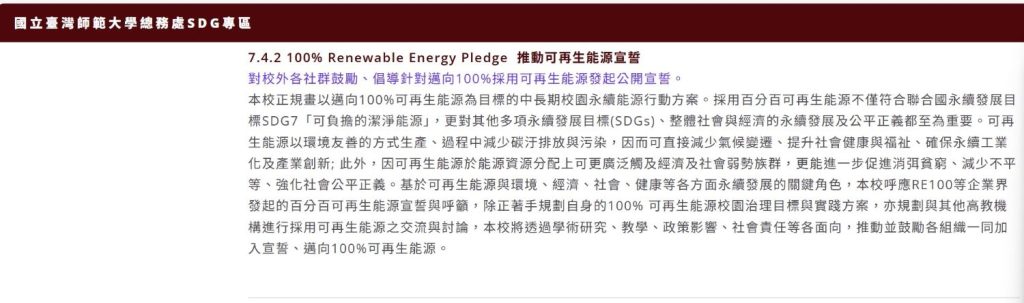
Figure 1. NTNU publicly advocates 100% renewable energy and encourages external organisations to participate in the energy transition.
2 Public Forums on Renewable Electricity and the Energy Transition
On 21 October 2025, NTNU’s Institute and Undergraduate Program of Electro-Optical Engineering and Institute and Undergraduate Program of Vehicle and Energy Engineering jointly organised the Pathways to a Net-Zero Society Forum Series: Green Energy and Climate Adaptation Strategies with the Taiwan Association for Net-Zero Strategies and Sustainable Development. The forum brought together participants from industry, government, academia and research institutions to discuss green energy technologies, climate adaptation and industry-academia collaboration.
The Industrial Technology Research Institute (ITRI) examined the relationship between renewable energy and sustainable development. GREENET CO., LTD. discussed corporate adoption of renewable electricity, market mechanisms and corporate sustainability commitments, while U Hydrogen Technologies Co., Ltd. introduced green hydrogen applications and development. NTNU also outlined talent development in green energy technology and sustainability governance, covering energy generation, conservation and storage. Through public forums, NTNU brings renewable energy adoption into external exchanges and encourages industry-academia discussions on the energy transition.
3 Solar Photovoltaic Deployment through Sustainability Governance
NTNU’s Sustainable Development Committee monitors the planning and implementation of renewable energy facilities. The minutes of its thirteenth meeting on 27 March 2024 recorded the identification of 14 buildings at Linkou Campus with potential for rooftop solar photovoltaic installations. The project filing had received approval from the New Taipei City Government in January 2024. The committee continued to track rooftop leasing and equipment installation, incorporating energy planning into university governance.
NTNU adopts the Solar Photovoltaic Energy Service Company (PV-ESCO) model, leasing rooftops for solar installations. Site assessments, administrative procedures and installation work support the expansion of renewable energy facilities and provide a practical foundation for NTNU’s energy transition.
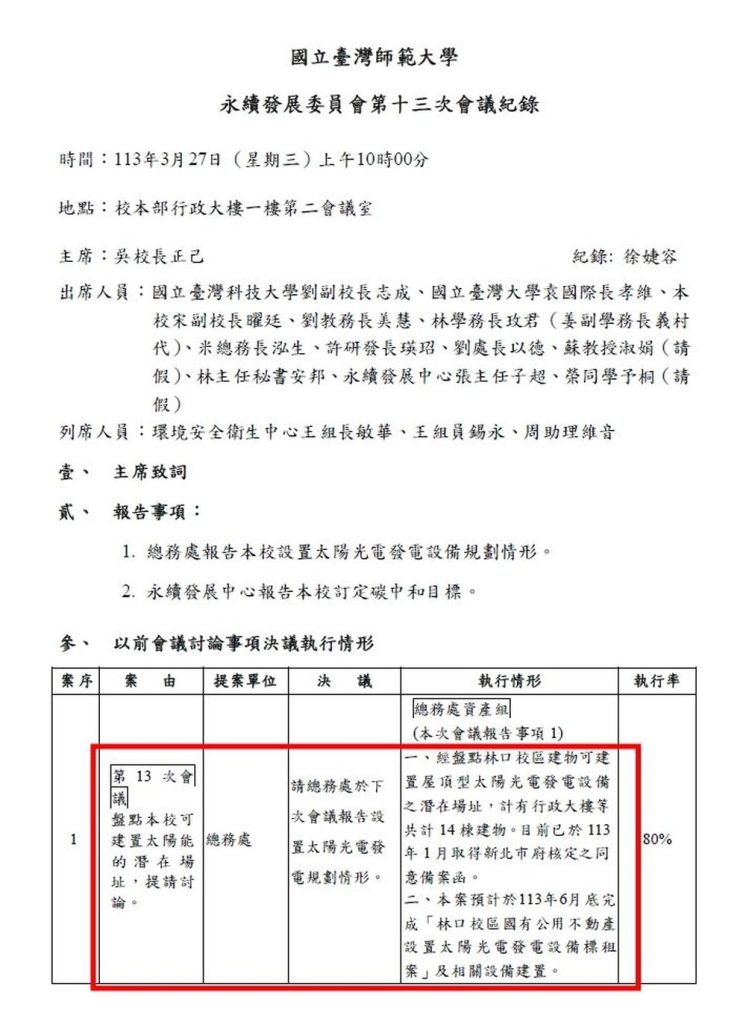
Figure 2. The thirteenth Sustainable Development Committee meeting on 27 March 2024 reviewed site assessments and solar installation planning at Linkou Campus.
Solar Installation and Progress Monitoring
The minutes of the fourteenth Sustainable Development Committee meeting on 1 April 2025 confirmed that the relevant equipment had been installed on 29 June 2024 and that Taiwan Power Company (Taipower) had issued a letter for grid-connected trial operation. The 2025 NTNU Sustainable Development Annual Report also records completion and grid connection of the Linkou Campus solar installation in 2024, with an installed capacity of 2,417.85 kWp.
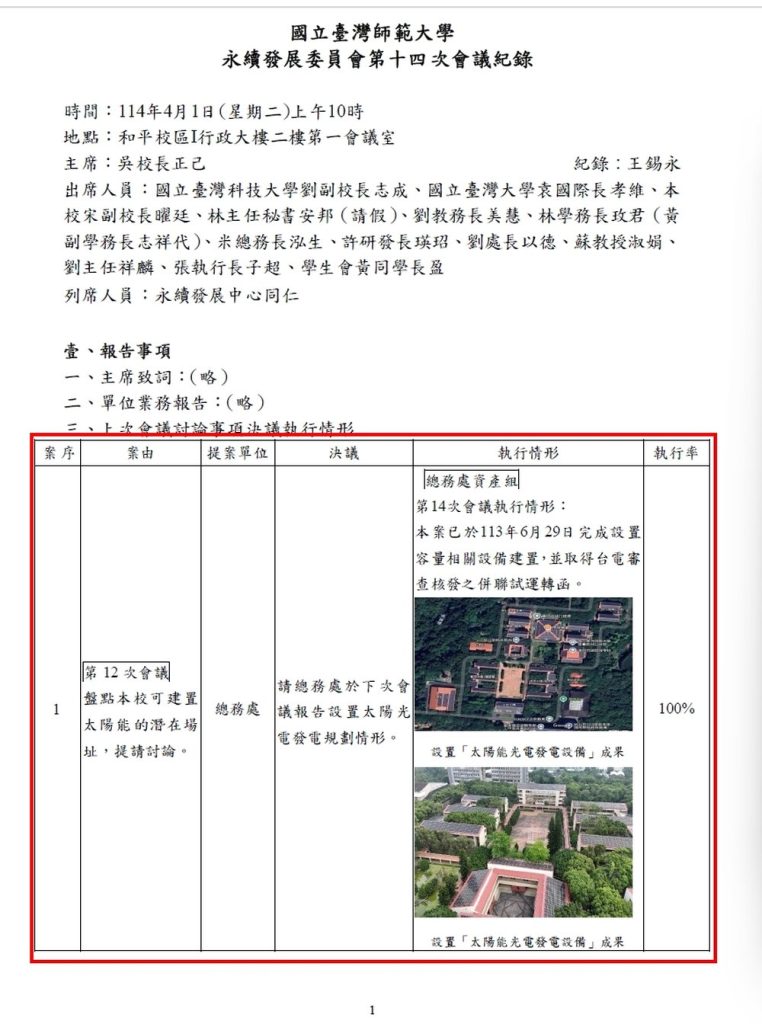
Figure 3. The fourteenth Sustainable Development Committee meeting on 1 April 2025 confirmed installation in 2024 and receipt of the letter for grid-connected trial operation.
4 Integrating Renewable Energy into Carbon Reduction Targets
NTNU has set targets to reduce carbon emissions by 50% by 2030 and achieve full carbon neutrality by 2048, in alignment with the government’s 2050 net-zero emissions policy. The campus carbon reduction action plan covers energy efficiency, sustainability education, energy technology research, renewable energy facility planning and greenhouse gas inventories, providing a foundation for the campus energy transition.
NTNU has established an interim renewable energy target of 5% by 2030. The 2025 NTNU Sustainable Development Annual Report projected that this target would be reached ahead of schedule in 2025. This interim plan and the long-term advocacy for 100% renewable energy together communicate NTNU’s direction, with progress monitored through university governance.
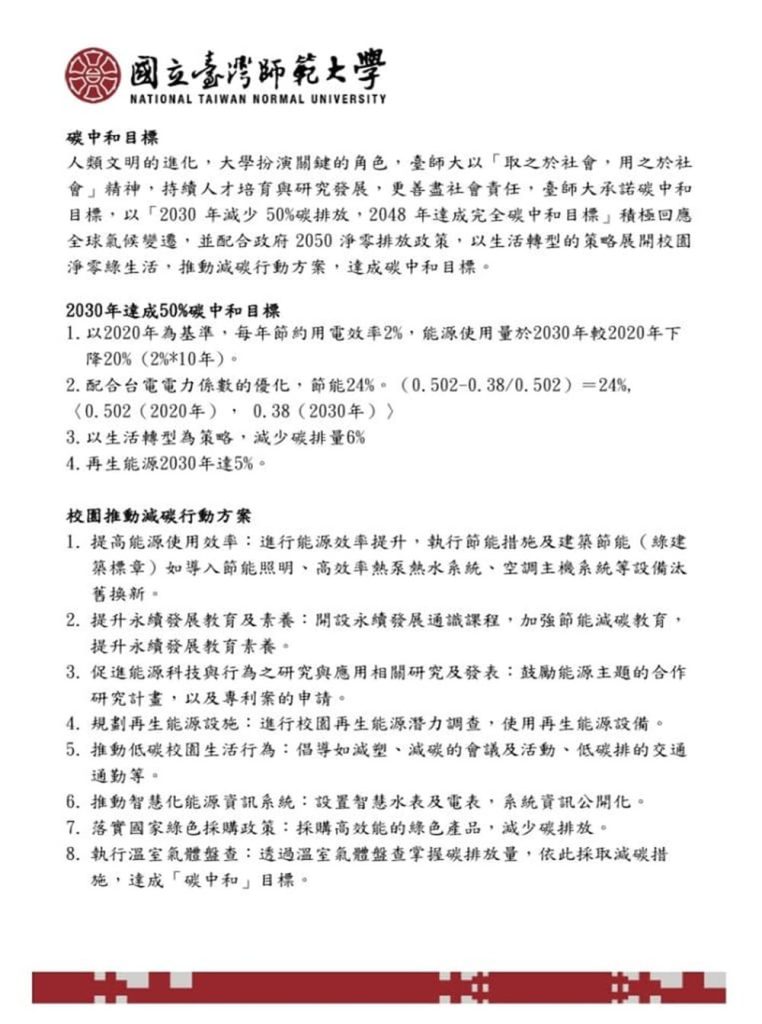
Figure 4. NTNU’s carbon neutrality targets and carbon reduction action plan include an interim renewable energy target of 5% by 2030 and planning for renewable energy facilities.
5 Energy Learning and Participation beyond the University
NTNU’s College of Science and the Department of Education, Taipei City Government jointly organised the eleventh Taipei Science Day at Gongguan Campus on 3 May 2025. With the theme Exploring Science for Global Sustainability, the event offered approximately 60 science activity booths and interactive experiences. Students, families and citizens were invited to participate, bringing energy and sustainability topics into public learning settings.
The event’s visual design incorporated solar panels, wind turbines, hydrogen symbols and electric vehicles to reflect renewable energy and future technologies. Taipei Municipal Ren Ai Junior High School offered Generating Electricity with Love, an interactive activity introducing green energy concepts. Hands-on participation helped visitors encounter energy conversion and sustainable living topics. Such public events for external communities help build energy literacy and public understanding of the renewable energy transition.
6 Industry-Academia Exchanges on Renewable Energy Technologies
On 7 January 2025, the Industry Liaison Center of NTNU’s Office of Research and Development held the Industry-Academia AI Innovation Matchmaking Event. Start-ups and NTNU faculty exchanged ideas on precision AI applications, technologies for older adult care, renewable energy technologies, sports technologies and interdisciplinary technology industries. Company presentations and 30-minute one-to-one discussions helped both sides understand research, development and application needs.
Participating companies included Konsttech Ltd., Yun yun AI Baby Camera Co., Ltd., AUO Care Inc., FIT N FUN SPORT AND HEALTH MANAGEMENT Ltd. and PurismEV INC. AUO Care Inc.’s recorded discussion focused on industries serving older adults. ITRI also participated and introduced relevant programme resources. The event provided a platform for exchanges among industry, government, academia and research institutions, with renewable energy technologies among the topics explored for potential collaboration.
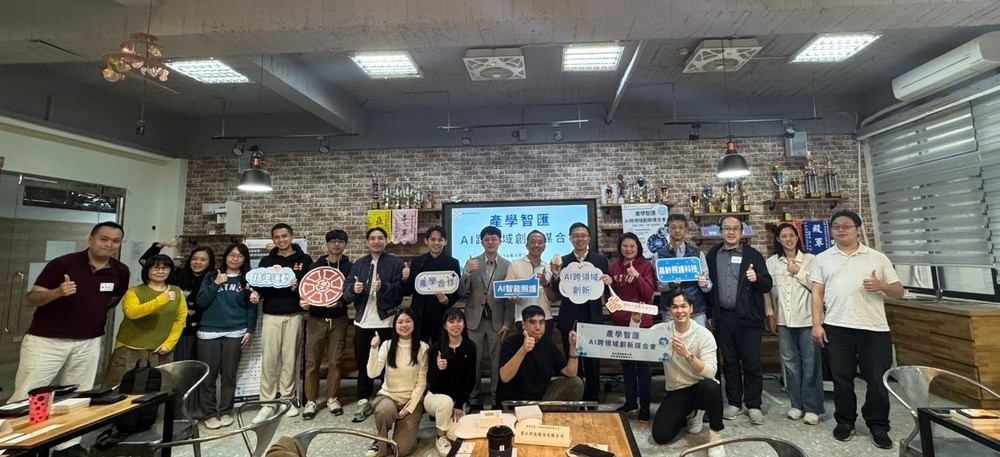
Figure 5. NTNU’s 2025 AI innovation matchmaking event facilitated cross-sector exchanges, with renewable energy technologies among the discussion topics.
7 Research and Talent Development for Renewable Energy Applications
Associate Professor Hwa-Dong Liu of NTNU’s Undergraduate Program of Vehicle and Energy Engineering leads research on solar energy, power electronics and energy conversion technologies. In collaboration with Professor Adil Sarwar of Aligarh Muslim University in India and Professor Chang-Hua Lin of National Taiwan University of Science and Technology, the team applied finite control set model predictive control (FCS-MPC) to a single-phase five-level T-type multilevel inverter. In 2025, Liu visited the Indian team’s laboratory to study hardware and controller design and brought this experience back to improve the research.
Multilevel inverters convert direct current into alternating current. Through topology and control strategies, the team improved output voltage quality, reduced switching losses and decreased filter size, creating potential for lightweight, efficient power conversion. The research can support solar, wind and energy storage systems, with possible applications in electric vehicles and microgrids, providing technology options for renewable energy adoption.
The research has not yet been commercialised; further product development requires industry investment. Associate Professor Liu has published more than 50 SCI-indexed international journal articles, holds three Taiwanese patents, and supervised students who won first place in a student poster competition at an IEEE IAS international conference in 2025. International collaboration and talent development continue to strengthen NTNU’s research capacity to support the renewable energy transition.
Potential Applications of Renewable Energy Research
Potential application | Functions the research could support |
|---|---|
Solar and wind energy systems | Improved renewable energy conversion and output quality, supporting system integration. |
Energy storage and microgrids | Integration with energy management, load balancing and microgrid dispatch control. |
Electric vehicles and charging equipment | Lightweight inverter designs with potential applications in onboard equipment and charging stations. |
NTNU’s public pledge toward 100% renewable energy provides a direction for advocacy through external forums, educational activities and industry-academia discussions. Infrastructure development and technology research provide practical support. Together, these activities extend NTNU’s participation in the energy transition and continue to encourage external partners to consider and adopt renewable energy.
7.4.3 Energy efficiency services for industry
Through collaborative research with industry partners, technology exchange and university spin-offs, NTNU connects research in bioenergy, energy management and smart grids with industry needs to provide energy efficiency services for industry. Its biodiesel collaboration with CHANT OIL CO., LTD. demonstrates direct services to local industry, helping the company improve production processes and develop clean energy technologies.
Activities in 2025 included continuing research on biodiesel biocatalysts, smart charging applications by an NTNU spin-off, smart grid collaboration and industry-academia exchange. NTNU combines collaborative research aimed at improving energy efficiency with research on renewable energy options. Professional training and industry-academia platforms provide a foundation for further collaboration.
1 Biodiesel Process Development and Technical Services for Industry
Professor Guan-Chiun Lee has a long-standing collaboration with CHANT OIL CO., LTD., applying expertise in genetic engineering and microbial fermentation to develop recombinant lipases and biocatalysts for biodiesel production. Enzymatic catalysis improves on conventional strong-alkali transesterification processes, helping the company investigate technical options for converting used cooking oil or non-edible oils into biodiesel.
Enzymatic catalysis offers technical advantages including low energy requirements, simpler reaction conditions, and easier separation and purification of products and by-products. It can also reduce the wastewater treatment requirements associated with strong-alkali processes. This collaboration applies NTNU biotechnology expertise to industrial process development, addressing industry needs in both energy efficiency and clean energy.
The collaboration continued in 2025. NTNU faculty research records list the following CHANT OIL projects covering 2025, demonstrating sustained cooperation in biocatalyst development and microbial fermentation research facilities.
Collaborative Project | Project Period | Project ID |
|---|---|---|
Establishment of a Microbial Fermentation Research Laboratory and Training Plant to Develop Biocatalysts for Biodiesel Production | 1 Jan 2025 | 114EE00102 |
Development of Novel Recombinant Lipases for Biodiesel Synthesis | 1 Jul 2024 | 113KK00102 |
Establishment of a Microbial Fermentation Research Laboratory and a Microbial Fermentation Training Plant | 1 Jul 2024 | 113KK00101 |
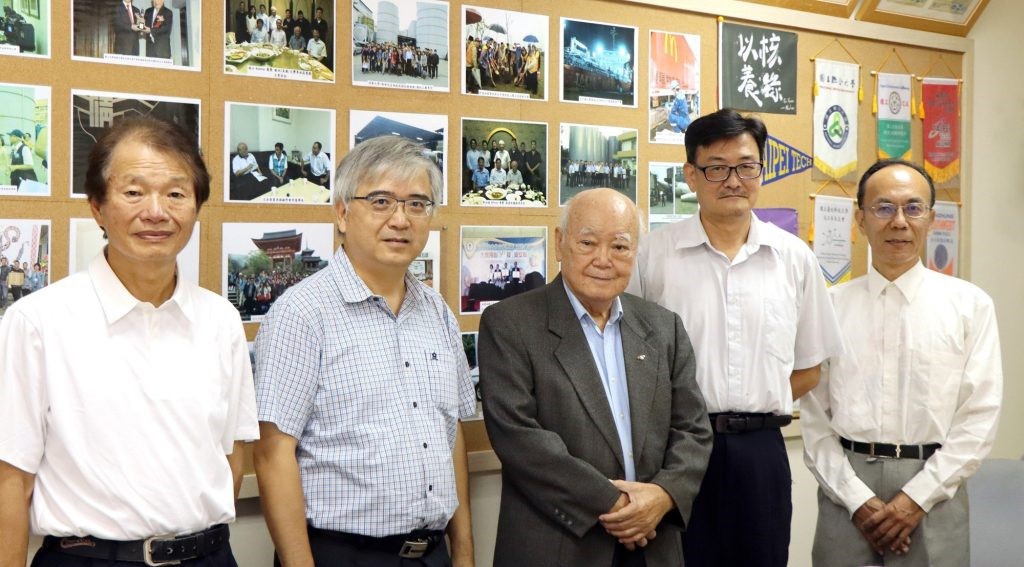
Figure 1. NTNU and CHANT OIL CO., LTD. have a long-standing collaboration in biocatalyst and biodiesel process research to support clean energy technology development. The photograph shows an earlier collaboration exchange.
2 Industrial Applications of Energy Management and Smart Charging
NTNU supports faculty members in translating energy technology research into industrial applications. NeoPower Technologies, a university spin-off co-founded by faculty members including Yi-Hsuan Hung and Syuan-Yi Chen, focuses on energy management control and power system design. It develops intelligent energy controllers, customised energy control software and related control technologies.
NeoPower Technologies can design control strategies for single-source or hybrid energy systems to meet the needs of different energy applications and vehicles. Its optimisation algorithms and controllers improve the utilisation of energy and power systems. Applications also include hybrid vehicle powertrains and auxiliary power systems, offering industry technical options for energy-efficient vehicles and energy control solutions.
In 2025, NeoPower Technologies applied its smart charging management technology at Chung-Shing Bus Company, Ltd. depots and introduced the SMARTHUB smart charging roaming platform, integrating vehicle dispatch, timetables and charging management. Real-time data and charging schedules improve the utilisation of vehicles and charging points and help manage grid loads, extending energy management applications to fleet operations.
3 Smart Grid Collaboration and Energy System Research
The NTNU College of Interdisciplinary Industry-Academia Innovation collaborates with CYBERNET SYSTEMS TAIWAN Co., Ltd. on smart grid development and control simulation systems for intelligent mobility. The partners began collaborating on digital simulation engineering talent development in 2024 and publicly introduced the cooperation in 2025. The collaboration combines university research resources with practical engineering experience from industry to develop digital simulation and system integration skills through projects.
Smart grids, electric vehicles and energy control systems require modelling, measurement, analysis and validation technologies. This collaboration provides a practical channel for exchange between academia and industry, supporting energy technology research and related talent development.
NTNU teams in vehicle and energy engineering, green energy technologies and related fields also conduct research on energy efficiency and renewable energy technologies. The following projects covered 2025 and provided a technical foundation for engagement with industry.
Researcher | Research Topic | Project Period |
|---|---|---|
Wei-Jen Chen | Automated energy-efficient design of air distribution systems for building air conditioning | 1 Aug 2025 |
Yi-Hsuan Hung | Optimised control and engineering validation of integrated vehicular hydrogen and energy storage systems incorporating battery health | 1 Aug 2024 |
Hwa-Dong Liu | Power dispatch technology for solar microgrids integrating multifunctional energy storage systems | 1 Aug 2024 |
These studies cover building energy efficiency, hydrogen-powered vehicles and solar energy storage, providing a reference for further energy technology collaboration and applied research.
4 Industry Matchmaking and Professional Training
On 7 January 2025, the Industry Liaison Center of the NTNU Office of Research and Development held the Industry-Academia AI Innovation Matchmaking Event, bringing companies together with faculty experts. Renewable energy technologies were among the discussion areas. Company presentations and one-to-one meetings helped participants understand research capabilities and application needs, establishing contacts for further collaboration.
Figure 2. The 2025 Industry-Academia AI Innovation Matchmaking Event connected companies with NTNU research teams. Renewable energy technologies were among its discussion areas, providing opportunities to explore further collaboration.
In professional training for the net-zero transition, NTNU signed an industry-academia memorandum of understanding with Cedars Digital in March 2025. The cooperation draws on expertise from the Graduate Institute of Sustainability Management and Environmental Education and other NTNU units to develop carbon management courses and digital tool applications. Courses cover climate science, carbon disclosure frameworks, RE100, carbon accounting and corporate emissions reduction strategies. The CarbonM platform is used for practical learning through simulated business cases.
Students can practise carbon accounting, emissions reduction strategy planning and carbon neutrality pathway design through the platform, with internships and corporate projects connecting learning to workplace needs. The partners also plan to contribute to net-zero workforce training and provide participants with information on carbon management technologies. These activities support the knowledge and skills needed for corporate net-zero transitions and complement research on energy technologies for industry.
5 Circular Materials Technology and Industrial Collaboration
Pade Technology Co., Ltd., an NTNU spin-off, uses artificial intelligence and AIoT technologies to develop used clothing collection and textile material identification equipment. Its technologies assist the recycling and textile industries with material identification, sorting and reuse. At CES 2025, the company worked with industry partners including LEALEA Group and Portwell, Inc. to demonstrate these technologies, connecting academic research with circular textile applications.
6 Industry Service Platforms and Technical Talent Development
Through the NTNU Global Research and Industry Alliance (GLORIA) and the Global Industry Platform of NTU System (T5GIP), NTNU connects enterprise needs with research teams within and beyond the university. The platform combines resources from National Taiwan University, National Taiwan University of Science and Technology, NTNU, Chang Gung University and Ming Chi University of Technology. It provides channels for matchmaking and customised industry-academia services, helping companies identify relevant research expertise.
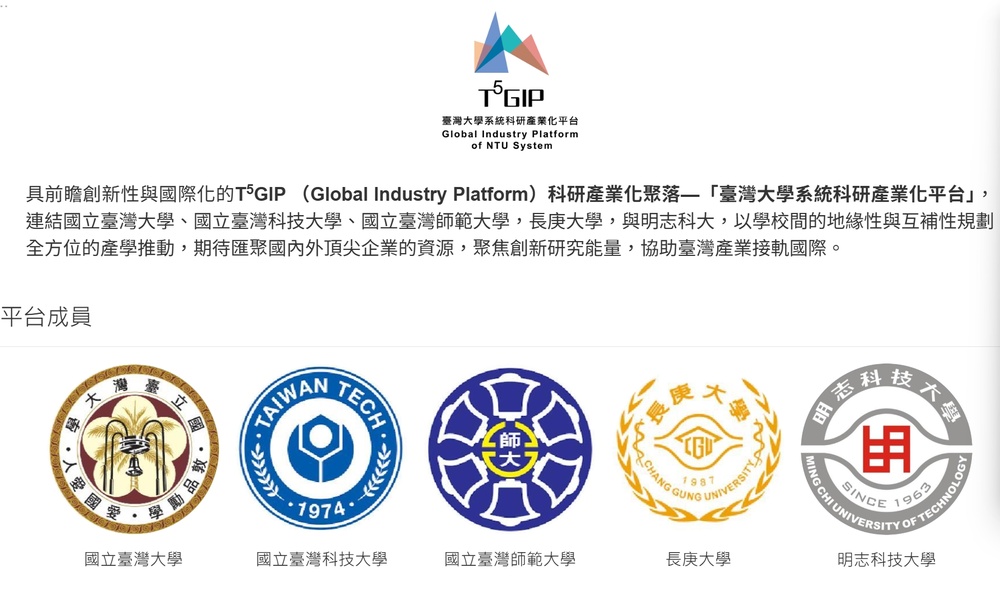
Figure 3. The Global Industry Platform of NTU System connects the research resources of five universities and provides a channel for collaboration between companies and academic teams. The image shows an introduction to the platform.
The NTNU Advanced Materials and Green Energy Research Center integrates materials preparation, characterisation and device application research across physics, chemistry and electro-optical engineering. It provides a foundation for interdisciplinary cooperation and, together with energy research teams, forms a professional network for industrial technology exchange.
AIoT and Sensing Technology Workshops
NTNU collaborates with companies including Realtek Semiconductor Corp. and KaiKuTeK Inc. to deliver practical AIoT workshops and millimetre-wave radar training and to establish related laboratories. These activities primarily support faculty and student learning and research, developing skills in sensing, control and system integration.
On 23 June 2025, NTNU and KaiKuTeK Inc. jointly delivered millimetre-wave radar training for around 50 faculty members and students, combining technical instruction with practical applications. The same year, the Millimeter-Wave Radar and AI Innovative Applications Competition received registrations from 85 teams. A workshop on 27 September provided development tools, practical learning materials and technical advice to help participating students develop applications integrating sensing and AI.
Realtek One-Day AIoT Workshops combine theory and practice, inviting faculty members and students from Japanese universities to use the Ameba platform to learn about integrating artificial intelligence and the Internet of Things. The session for Osaka Metropolitan University was held on 15 January 2025. These industry-academia activities support interdisciplinary technical talent development through access to company tools and practical experience.
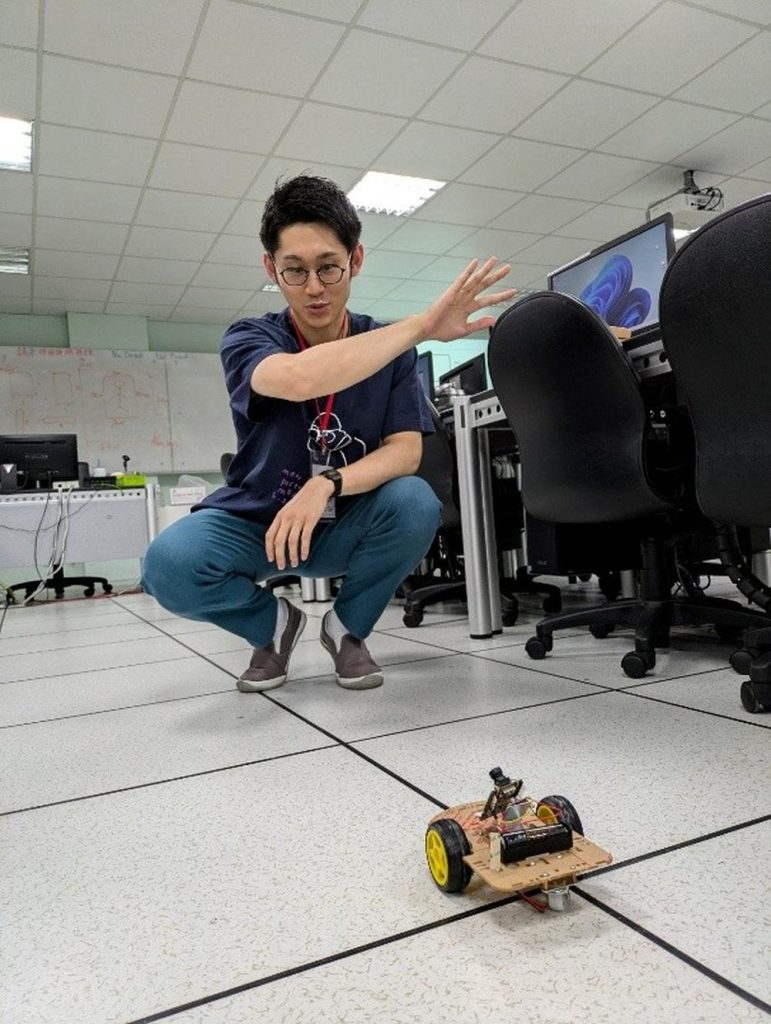
Figure 4. AIoT practical training develops technical skills through sensing, control and mobile vehicle operation, providing a foundation for industry-academia talent development. The photograph shows a teaching and practical learning activity.
7.4.4 Policy development for clean energy technology
NTNU draws on faculty expertise and interdisciplinary industry-academia collaboration to inform and support governments in clean energy and energy-efficient technology policy development. Specific policy issues, expert recommendations and publicly available government records document NTNU’s contributions to national and municipal governments. Cross-university platforms, talent development and technology research also support policy implementation.
Expert Advice on National Energy Policy
On 27 May 2025, Professor Tsung-Chen Lee participated in an academic and technical expert consultation on draft third-phase sectoral greenhouse gas reduction action plans. He commented on the emission reduction potential of hydrogen and ammonia energy and the cumulative installed capacity of other renewable energy sources. The Ministry of Economic Affairs’ approved Third-Phase Greenhouse Gas Reduction Action Plan for the Energy Sector records his comments and the ministry’s responses, including explanations of the Hydrogen and Ammonia Supply Chain Flagship Action Plan and plans for solar photovoltaics, offshore wind, geothermal energy and small hydropower. This record demonstrates NTNU’s participation in providing information and expert advice for government clean energy policy development.
Smart Meter and Building Energy Policies in New Taipei City
On 23 December 2025, at the sixth meeting of the New Taipei City Climate Change Response Committee, Professor Shin-Cheng Yeh recommended systematically improving residents’ understanding of and engagement with the functions of advanced metering infrastructure (AMI) smart meters. He also recommended aligning the city’s net-zero building policy with the near-zero building principles promoted by the Ministry of the Interior. Professor Tsung-Chen Lee proposed quantitative targets, evidence-based governance and public-private partnerships to develop net-zero industrial zones. These named contributions brought energy information applications, building energy efficiency and governance tools into municipal policy discussions.
Public Engagement on National Green Living Policy
On 16 April 2025, Professor Shin-Cheng Yeh participated in a public consultation meeting for the Ministry of Environment’s Net-Zero Sustainable Green Living Carbon Reduction Flagship Action Plan. The plan addressed residential thermal insulation and improvements to building energy efficiency. Professor Yeh offered recommendations on supply and demand, social incentives, technology applications and corporate environmental, social and governance (ESG) performance, supporting discussions on cross-ministerial policy design and behavioral change.
Industry and Academic Support for Energy Efficient Technology
Research and Industry Collaboration Across Universities
NTNU collaborates with National Taiwan University, National Taiwan University of Science and Technology, Chang Gung University and Ming Chi University of Technology through the Global Industry Platform of NTU System (T5GIP). The platform integrates research capacity and industry-academia advisory services across the universities to promote collaboration, talent development and the application of research results. It provides an institutional framework for NTNU’s collaborations in clean energy and energy-efficient technology.
Green Energy Research and Talent Development
NTNU’s College of Interdisciplinary Industry-Academia Innovation includes the Graduate Institute of Green Energy and Sustainable Technology. The 2024 Operational Plan identifies renewable energy, energy-saving technology, smart grids, power conversion and green vehicles as priorities for research and talent development. It also plans an interdisciplinary platform for green energy applications through industry-academia collaboration, in line with the green electricity and renewable energy industries component of the Program for Promoting Six Core Strategic Industries approved by the Executive Yuan in 2021.
Low Power Communications Technology Supporting Government Priorities
Associate Professor Shuen-De Wu’s team won first prize in the practical implementation category of the 2024 Communication Innovation and Energy-Saving Optimization Competition, organized by the Industrial Development Administration, Ministry of Economic Affairs, for its low-power, high-performance Artificial Intelligence of Underground Things (AIoUT) technology. The project received support from the Startup Value Creation Program (SVCP), with a funding period in 2025. This case illustrates NTNU’s technical support for government efforts to advance energy-efficient communications and smart city applications.
Related Research Expertise and Projects
Researcher or team | Documented technology areas or project | Role of the evidence |
|---|---|---|
Wei-Jen Chen | Building energy efficiency, building automation and AI energy management. The KPI profile lists 2024 research on sensor compensation and solar maximum power point tracking. | Expertise in energy-efficient technology |
Tun-Ping Teng | Energy efficiency in refrigeration and air conditioning, renewable energy, nanofluids and energy storage. The KPI profile lists 2025 research on environmentally friendly refrigerants and automotive air-conditioning efficiency. | Expertise in energy-efficient technology |
Yi-Hsuan Hung and the Green Power Technology Lab (GPTL) | Fuel cells, energy storage, electric vehicles, energy and thermal management, control and system validation. | Clean energy research capacity |
Hwa-Dong Liu and the Vehicle Control and Power Quality Lab (VCPQ Lab) | The project “Development of a Novel Stand-Alone High-Gain Solar Power Converter for Next-Generation Solar Systems” was launched in July 2025, with a scheduled end date of February 2026. | Research initiated in 2025 |
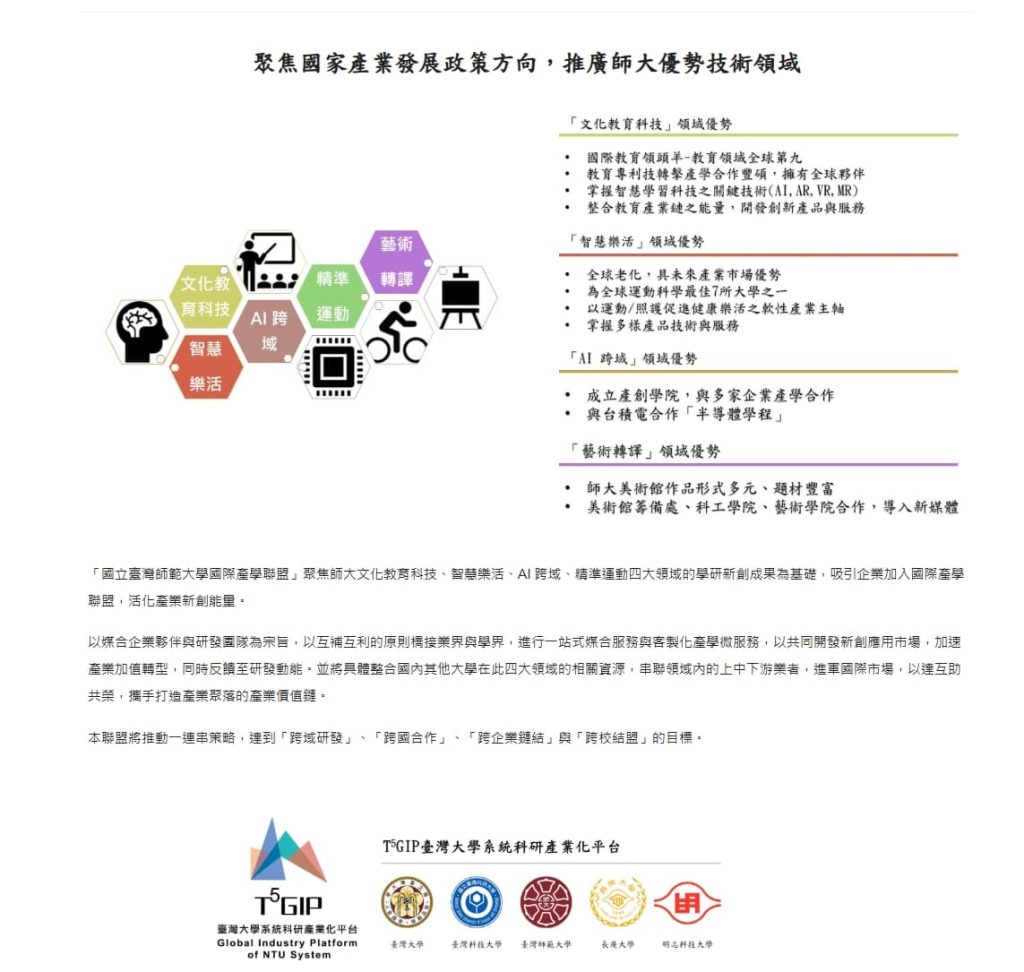
Figure 1. The Global Industry Platform of NTU System (T5GIP) integrates research and industry-academia service resources from five universities, providing a foundation for cross-university collaboration and technology applications.
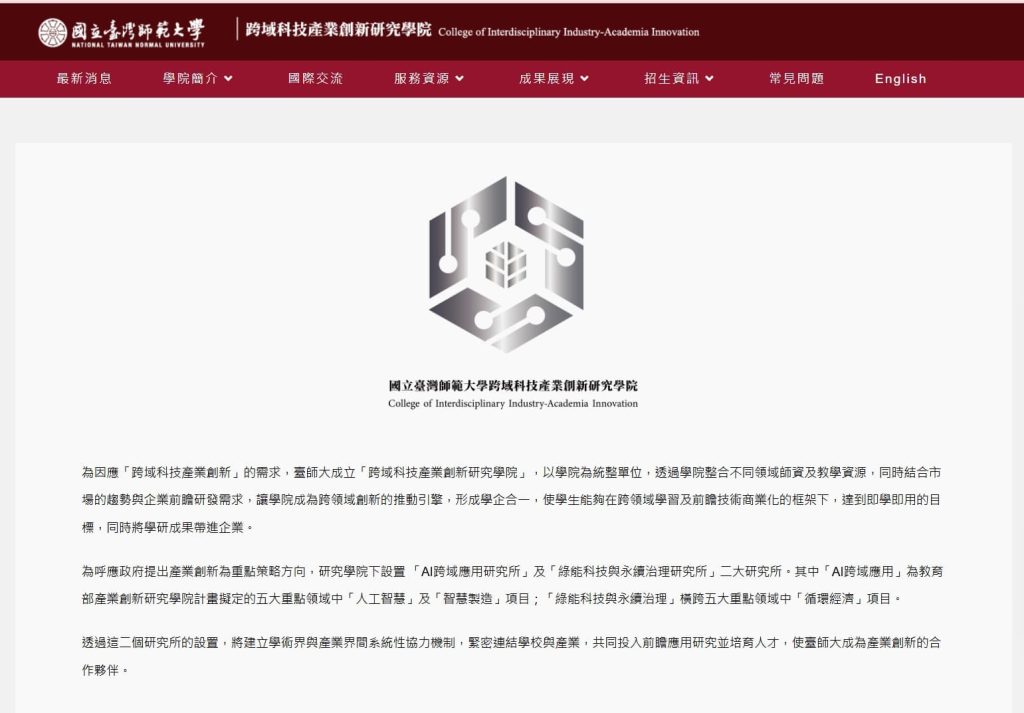
Figure 2. The College of Interdisciplinary Industry-Academia Innovation integrates interdisciplinary research and talent development through its two graduate institutes.
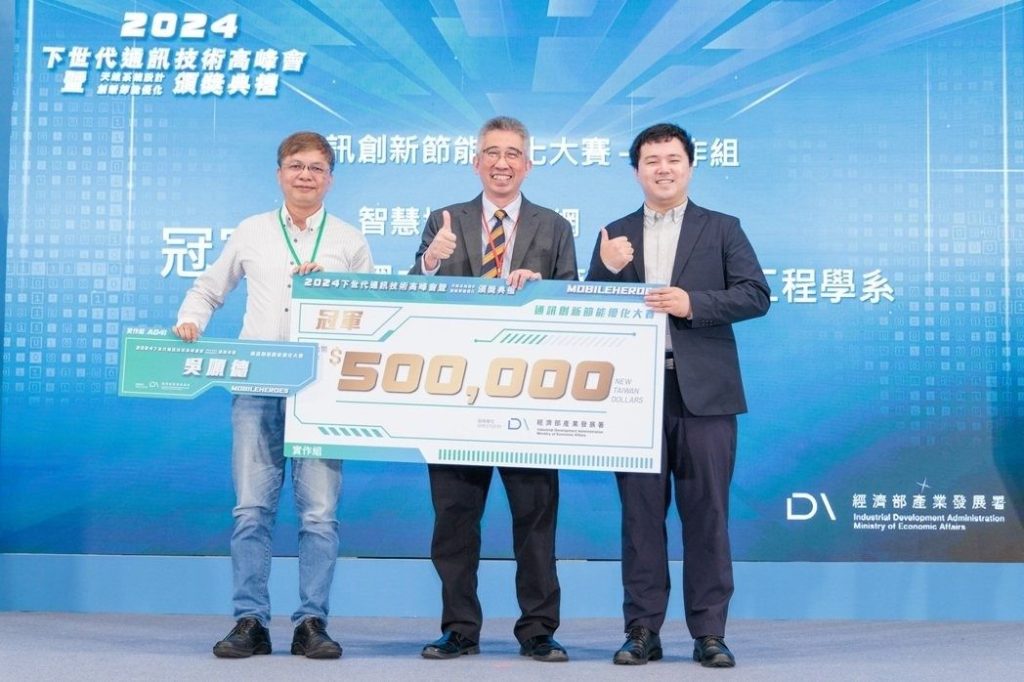
Figure 3. Associate Professor Shuen-De Wu’s team won first prize in the practical implementation category of the 2024 Communication Innovation and Energy-Saving Optimization Competition for its Artificial Intelligence of Underground Things (AIoUT) technology. The photograph documents a technology research achievement aligned with government priorities.
National Government Policy Consultation Records
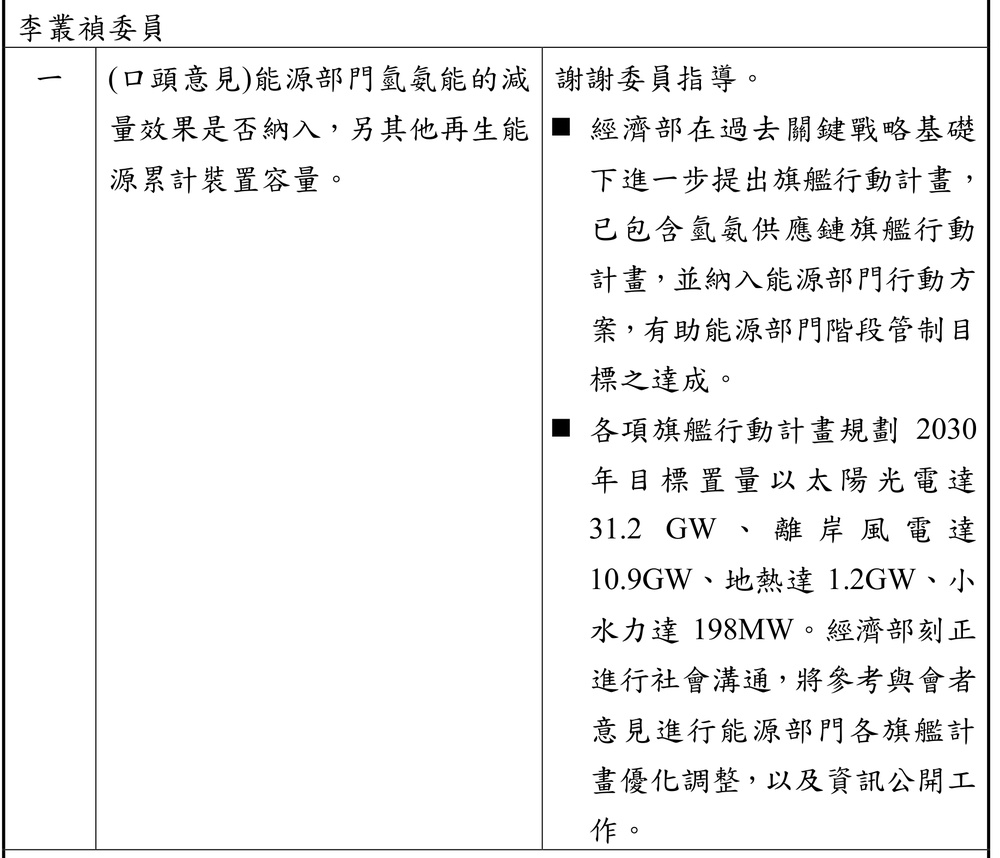
Figure 4. The Ministry of Economic Affairs’ approved Third-Phase Greenhouse Gas Reduction Action Plan for the Energy Sector records the academic and technical expert consultation held on 27 May 2025 in its section on responses to public comments. Professor Tsung-Chen Lee of NTNU’s Graduate Institute of Sustainability Management and Environmental Education commented on the emission reduction potential of hydrogen and ammonia energy and installed renewable energy capacity. The ministry’s response outlines the relevant plans.
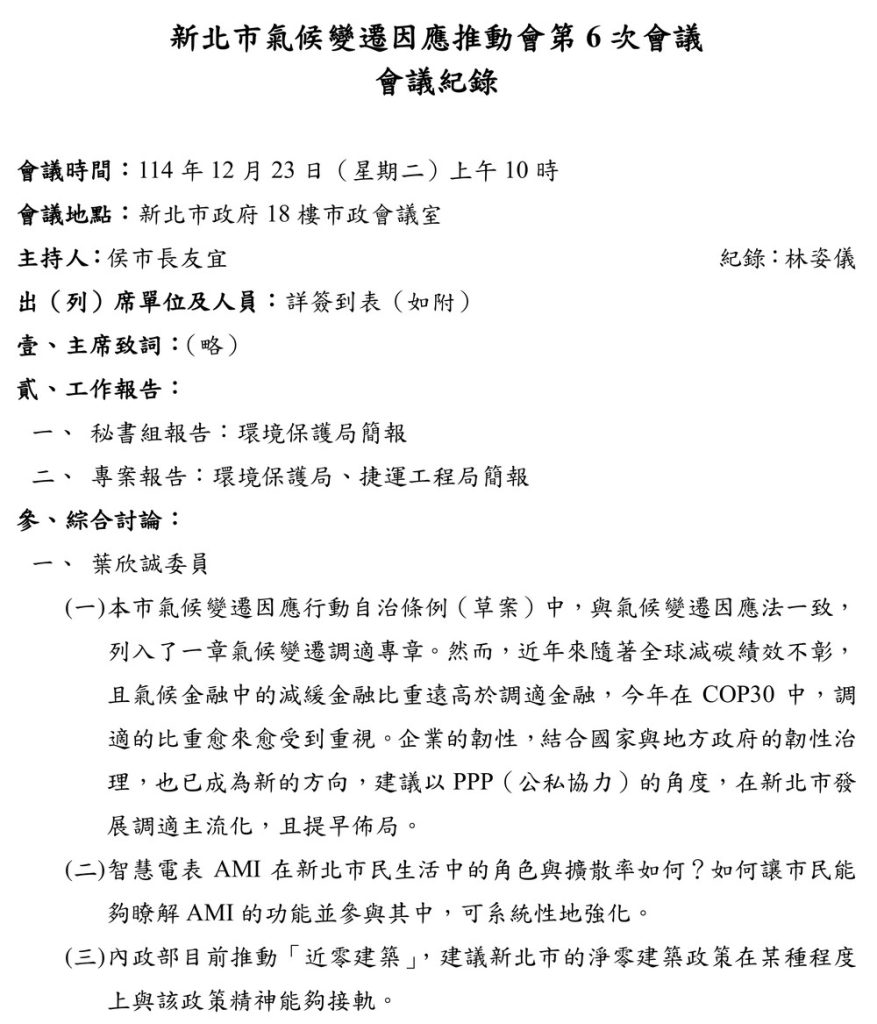
Figure 5. Minutes of the sixth meeting of the New Taipei City Climate Change Response Committee on 23 December 2025 record Professor Shin-Cheng Yeh’s recommendations on promoting AMI smart meters and aligning building policy with near-zero building principles.
7.4.5 Assistance to low-carbon innovation
NTNU helps start-ups develop and commercialize low-carbon technologies through business incubation, faculty entrepreneurship support, technology transfer and continued research collaboration. This assistance has supported applications in textile recycling, energy management and energy-efficient transport. NTNU also helps research teams with commercial potential connect with industry and prospective markets, as illustrated by its support for low-power underground monitoring technology.
1. Incubation and Commercialization Support
The Innovation & Incubation Center, part of NTNU’s Office of Research and Development, provides mentoring and business guidance to university entrepreneurs. It helps research teams develop business ideas, connect with government programmes and industry partners, and pursue technology transfer. NTNU’s 2025 handbook sets out procedures for technology valuation, start-up review, licensing, contracts and outside appointments. Together, these services help teams move from research and business planning to company formation and commercialization. This assistance also enables university spin-offs to build on NTNU research and continue developing their technologies and market applications.
2. Pade Technology — AI-Assisted Textile Recycling
Technology transfer and continued R&D support. Pade Technology Co., Ltd. is an NTNU spin-off established through technology transfer. Beginning in 2023, the company received electro-optical AIoT sorting technology developed by NTNU’s Graduate Institute of Electro-Optical Science and Technology. The technology combines near-infrared spectroscopy with AI to identify the fibre composition of used clothing. Pade has used it to develop consumer-facing clothing collection equipment and fibre identification applications for industrial recycling.
NTNU continued to support the company’s R&D through faculty supervision and doctoral research. In 2025, doctoral student Ching-Yuan Chang, supervised by Professor Jen-Jie Chieh, applied spectral processing and AI methods from his thesis to improve the identification of soiled and blended textiles. This work helped the company address sorting challenges encountered with used clothing and apply the research to product development and testing.
Commercial applications and contribution to textile circularity. Pade works with recyclers, textile manufacturers and specialists across collection, sorting, fibre opening and recycled yarn production. More accurate sorting can help recovered fibres return to textile manufacturing and reduce demand for virgin materials. In 2025, Pade exhibited its smart clothing recycling equipment at CES and gave consumers an opportunity to use it in a department store recycling campaign. These activities illustrate how the company brought NTNU-developed technology into commercial and consumer settings.
Product Demonstration and Market Applications in 2025
Date in 2025 | Company development outcomes | Application demonstrated |
|---|---|---|
January | Selected for Taiwan’s start-up delegation to CES 2025 and exhibited AIoT used-clothing identification and recycling technology. | Product demonstration and contact with international markets |
29–30 May | Received the Climate Award and Global Award at the Digital with Purpose Global Awards. | External recognition of low-carbon innovation in textile circularity |
October | Worked with a department store operator on a used-clothing recycling campaign, attracting nearly 2,500 participants over two weeks. | Consumer applications and user participation |
4–8 December | Entered ReFiber One in the APICTA Awards 2025 and won Best Startup in the cross-category competition. | Visibility for start-up products and commercial applications |
3. NeoPower Technologies — Smart Energy Management and Efficient Powertrains
Faculty entrepreneurship and start-up support. NTNU Professors Yi-Hsuan Hung and Syuan-Yi Chen teamed up with Professor Chien-Hsun Wu of National Formosa University to develop energy management and powertrain technologies for commercial use. The team secured annual grants of NT$4.5 million to NT$6 million through the Ministry of Education’s University–Industry Innovation R&D Program to support start-up formation and train advanced R&D personnel. NTNU’s institutional support for NeoPower also included start-up review and an earlier university investment.
NeoPower builds on the team’s expertise in energy management, control systems and powertrain integration to provide the following services.
Service | Application | Energy efficiency objective |
Multi-energy system control | Control strategies, software and chips tailored to energy installations or vehicle specifications | Improve energy and powertrain system efficiency |
Hybrid powertrain retrofits | Collaboration with motor suppliers to retrofit trucks, including container and refrigerated trucks | Reduce vehicle energy use and extend driving range |
Power assistance and electrification | Auxiliary power and electric retrofits for carts, bicycles, tricycles and other equipment | Match power delivery to operating needs and improve energy efficiency |
4. Supporting Low-Power Underground Monitoring for Commercialization
A team led by Shuen-De Wu of NTNU’s Department of Mechatronic Engineering developed low-power, high-performance Artificial Intelligence of Underground Things (AIoUT) technology for sewer monitoring and maintenance. The team won first prize in the practical implementation category of the 2024 Communication Innovation and Energy-Saving Optimization Competition, organized by the Industrial Development Administration of the Ministry of Economic Affairs. The project also received funding in 2025 through the Ministry’s Startup Value Creation Program, supporting the development of commercial applications for its energy-efficient communications technology.
NTNU worked with the Global Industry Platform of NTU System (T5GIP) to select the team’s platform for exhibition at InnoVEX 2025, held from 20 to 23 May. The platform integrates low-power wireless communication modules, radar water-level sensors, industrial safety imaging equipment and AI edge computing to support real-time sewer monitoring and maintenance. By helping bring the platform to InnoVEX, NTNU gave the team an opportunity to demonstrate the technology to industry and international audiences and explore potential markets.
The project applies low-power communications to a practical urban infrastructure need. NTNU’s exhibition support and the Ministry’s funding illustrate how university research teams can access assistance as they explore commercial applications.
5. Cross-University Resources and Green Energy Research
Cross-university collaboration and industry partnerships. Through T5GIP, NTNU collaborates with National Taiwan University, National Taiwan University of Science and Technology, Chang Gung University and Ming Chi University of Technology. The platform pools research expertise and industry–academia advisory services to help teams connect with corporate partners, develop talent and identify practical applications for their research.
NTNU’s College of Interdisciplinary Industry-Academia Innovation supports interdisciplinary training and applied research through its Graduate Institute of Green Energy and Sustainable Technology. The College’s 2024 Operational Plan identifies renewable energy, energy-saving technologies, smart grids, power conversion and green vehicles as priorities. It also proposes a green energy application platform developed with industry partners. These priorities align with the green electricity and renewable energy component of the Executive Yuan’s Program for Promoting Six Core Strategic Industries.
Training in smart grids and digital simulation. In 2024, the College began working with CYBERNET SYSTEMS TAIWAN Co., Ltd. to train students in digital simulation engineering. Outcomes reported in 2025 focused on smart grid development and simulation systems for intelligent mobility control. The partnership combines NTNU’s research expertise with industry engineering experience to develop skills in system design, simulation, control and validation.
Research capabilities in energy efficiency and materials. The Green Power Technology Lab studies fuel cells, hybrid energy storage, charging systems, electric mobility, and energy and thermal management. Its work spans modelling, optimisation, control and physical validation. The Advanced Materials and Green Energy Research Center brings together materials preparation, characterisation and device development, providing shared research resources for interdisciplinary work on energy and materials.
Faculty projects further illustrate the range of NTNU’s applied research.
Researcher or team | Research directions and projects | Support for low-carbon innovation |
|---|---|---|
Wei-Jen Chen | Building energy efficiency, automation, and AI energy management; research includes sensor compensation and solar maximum power point tracking. | Expertise in building energy efficiency and energy control |
Tun-Ping Teng | Refrigeration and air-conditioning efficiency, renewable energy, nanofluids, and energy storage; 2025 research includes environmentally friendly refrigerants and automotive air-conditioning efficiency. | Energy-saving equipment and thermal management technologies |
Yi-Hsuan Hung and GPTL | Fuel cells, energy storage, electric vehicles, energy and thermal management, control, and system validation. | Clean energy integration and powertrain technology |
Hwa-Dong Liu and VCPQ Lab | Development of a stand-alone high-gain power converter for next-generation solar energy systems began in July 2025, with a scheduled end date of February 2026. | R&D in solar power conversion and power quality |
These studies identify NTNU expertise that can support technology transfer and industry collaboration. Their role in this indicator is to support the environment for low-carbon innovation, while Pade Technology and NeoPower Technologies provide named examples of assistance for university spin-offs.
6. Industry Exchange and Applied Technology Training
On 21 October 2025, NTNU units specializing in electro-optical engineering and vehicle and energy engineering co-organized the Net-Zero Social Practice Forum with the Taiwan Association for Net-Zero Strategies and Sustainable Development. Participants included GREENET Co., Ltd., U Hydrogen Technologies Co., Ltd., and representatives from industry, government, academia and research organizations. Discussions covered green electricity markets, green hydrogen technologies and opportunities for industry–academia collaboration. The forum gave technology developers and researchers an opportunity to discuss industrial applications and potential partnerships.
NTNU also worked with industry partners to organize a millimetre-wave radar AI workshop and application competition. Training in September 2025 supported 85 registered teams through free kits, instruction, open-source code and access to consultation. This activity developed practical skills in radar and AI for a broad range of smart applications and provides supplementary evidence of NTNU’s applied technology training.
7. Carbon Management Teaching and Talent Development with Cedars Digital
On 25 March 2025, NTNU signed a memorandum of understanding with Cedars Digital, an AI carbon management company founded in 2023, to develop carbon management talent in the Asia-Pacific region. Professor Shin-Cheng Yeh of NTNU’s Graduate Institute of Sustainability Management and Environmental Education facilitated the partnership, bringing together the University’s expertise in climate science, carbon inventories, carbon neutrality policy and finance with the company’s digital carbon management technology.
NTNU incorporates Cedars Digital’s CarbonM platform into teaching. Using simulated business cases, students practise preparing carbon inventories, developing emissions reduction strategies and planning pathways to carbon neutrality. NTNU contributes academic expertise and a teaching setting for applying the platform, while Cedars Digital contributes its technology and industry experience. The company also plans to offer internships, certification support and early job offers for outstanding students. The partnership provides evidence of joint talent development with a carbon management technology company.
8. Professional Training for the Low-Carbon Transition
In April 2025, NTNU’s Graduate Institute of Sustainability Management and Environmental Education participated in the Ministry of Environment’s Northern Regional Net-Zero Green Talent Development Center. The initiative brings together professional training and industry exchange in carbon management, carbon footprint assessment, and environmental, social and governance (ESG) practices. It complements NTNU’s company-specific partnerships by developing skills that can support the wider low-carbon transition.
9. Summary of NTNU Assistance and Related Outcomes
NTNU supports low-carbon start-ups and research teams at different stages of development. Its assistance includes technology transfer, supervised R&D, support for company formation and opportunities to present technologies to industry. The table distinguishes NTNU’s contributions from government funding, company outcomes and wider research and training activities.
Area | NTNU contribution | Case or related outcome |
Technology transfer | Transferred electro-optical AIoT sorting technology developed at NTNU. | Pade Technology applied the technology to used-clothing sorting and fibre identification for textile recycling. |
Continued R&D and talent development | Provided faculty supervision for doctoral research that contributed to the company’s R&D in 2025. | Pade Technology used spectral processing and AI methods to improve the identification of soiled and blended textiles. |
Faculty entrepreneurship and start-up formation | Supported start-up review and previously invested in the company. | NeoPower Technologies developed applications in smart energy management and energy-efficient powertrains. The inter-university team separately secured Ministry of Education grants. |
Commercialization support for a research team | Worked with T5GIP to bring the team’s underground monitoring platform to InnoVEX 2025. | Shuen-De Wu’s team demonstrated its low-power AIoUT technology to industry audiences. The project also received Ministry of Economic Affairs funding. |
Product demonstration and market exposure | Provided the underlying university technology and continued R&D support. | Pade Technology exhibited its recycling equipment at CES 2025 and demonstrated its use in a department store recycling campaign. |
Incubation and commercialization guidance | Provides mentoring and management guidance through the Innovation & Incubation Center. The 2025 handbook covers valuation, review, licensing, contracts and outside appointments. | University entrepreneurs can access guidance on company formation and commercialization. |
Joint carbon management training | Contributed academic expertise and incorporated CarbonM into teaching. | Cedars Digital and NTNU developed practical training in digital carbon management. |
Research, training and industry exchange | Provides research expertise, training and opportunities for industry collaboration in green energy, smart grids and digital simulation. | Cross-university platforms, research laboratories, corporate partnerships and industry events support the wider development of low-carbon technologies. |
Photographic Evidence of Low Carbon Startups
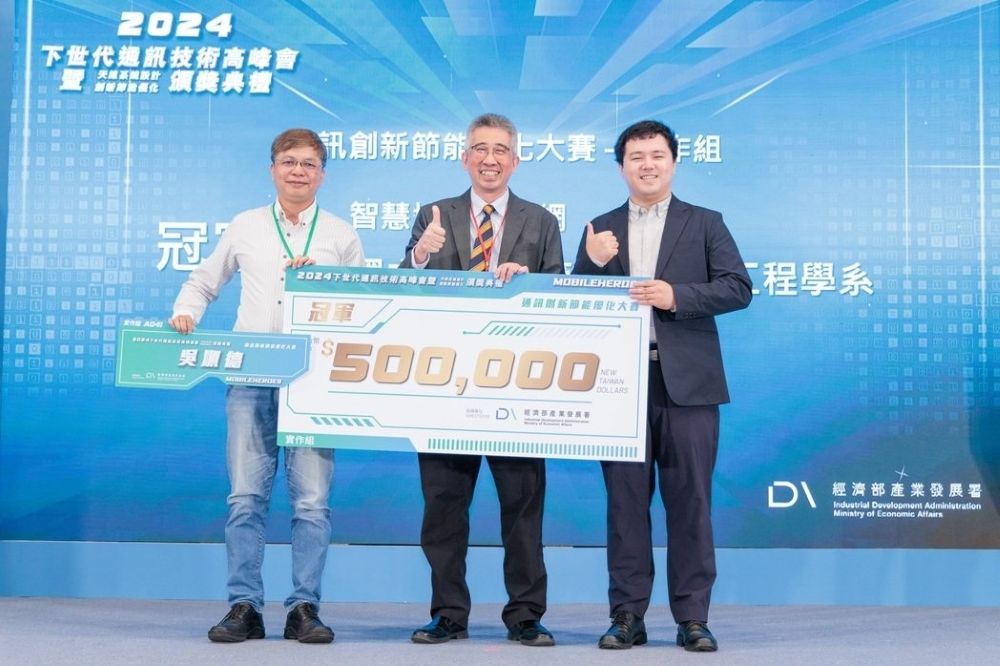
Figure 1. NTNU’s low-power underground monitoring technology receives first prize in 2024. The AIoUT team won in the practical implementation category of the Communication Innovation and Energy-Saving Optimization Competition.
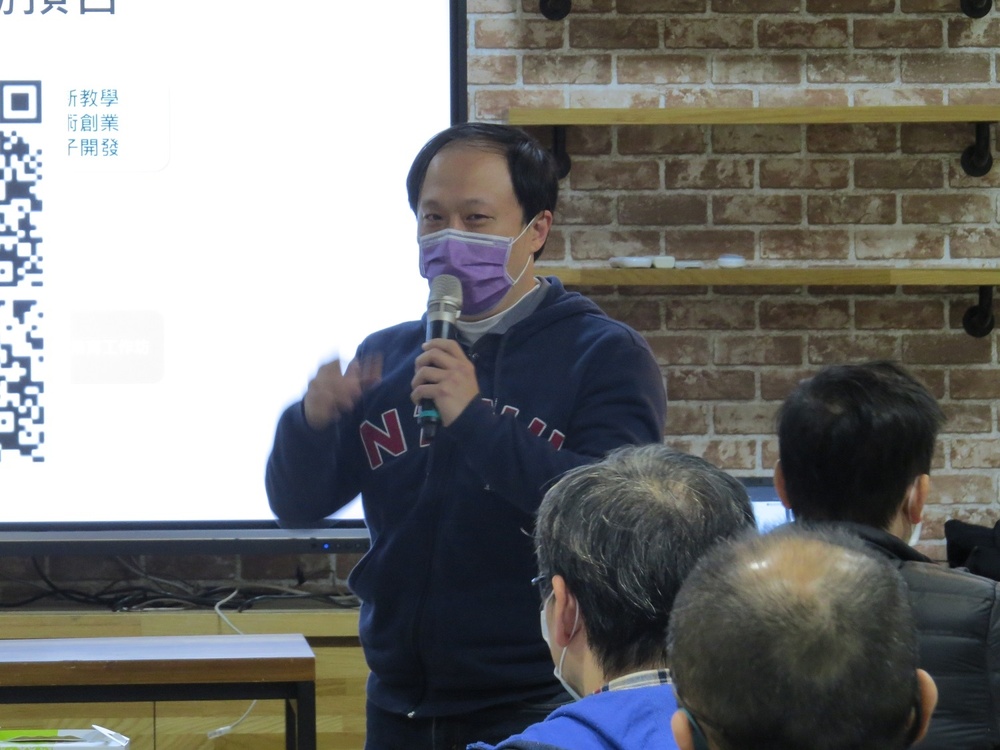
Figure 2. Faculty entrepreneurship and the NeoPower Technologies case. Professor Yi-Hsuan Hung shared his experience in 2022 of commercializing faculty research in smart energy management and powertrain technologies.
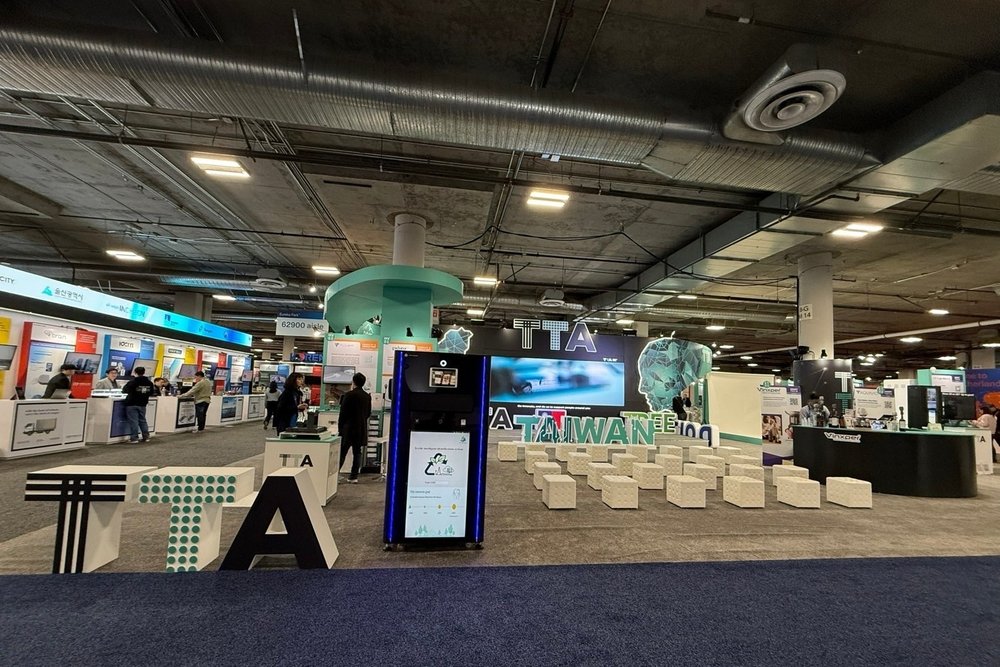
Figure 3. Pade Technology’s smart clothing recycling equipment at CES 2025. The exhibit showed how the spin-off applied NTNU-developed AIoT sorting technology to used-clothing collection and recycling.
Figure 4. Pade Technology receives the Climate Award and Global Award at DWP in 2025. The awards recognized the company’s AI applications for textile circularity.
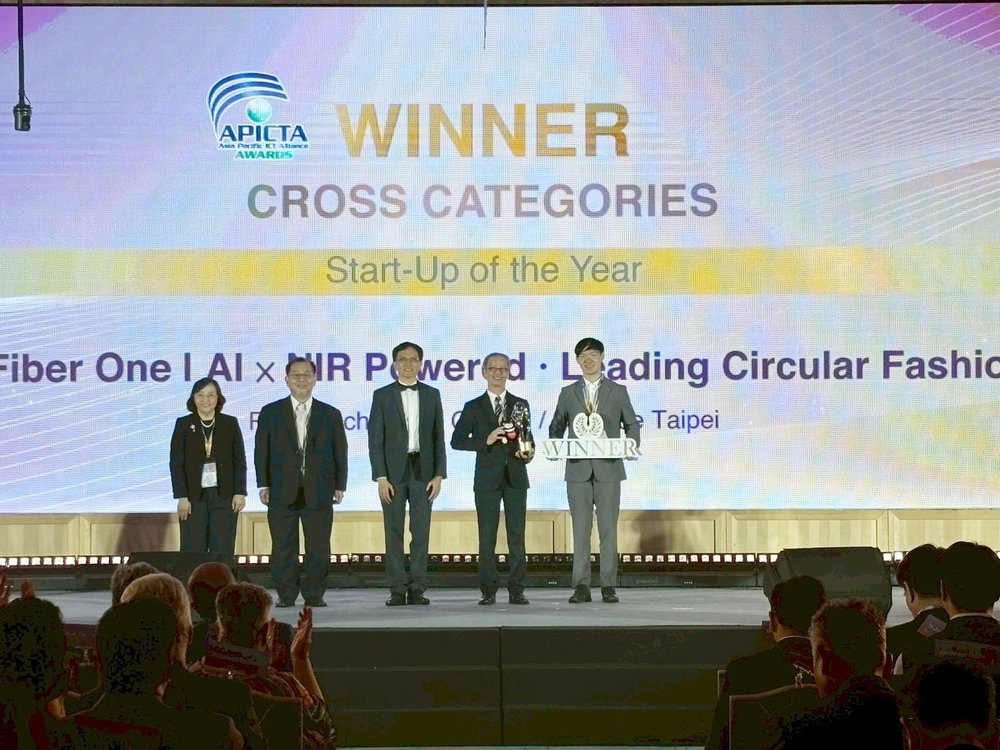
Figure 5. Pade Technology wins Best Startup in the cross-category competition at the 2025 APICTA Awards. Its ReFiber One system applies AI-assisted fibre identification to used-clothing sorting and material recovery.