




The NTNU Open Course Ware (OCW) follows the principle of open learning, providing free access to courses for the University faculty, staff, students, the general public, and users from other countries and regions.
As of 2025, NTNU had made a total of 724 courses and lectures available through its OpenCourseWare platform, providing free access to online educational resources for the general public and promoting lifelong learning opportunities beyond the university. In 2025, the platform recorded over 810,000 page views, with cumulative views exceeding 14.53 million since its inception. Additionally, NTNU has established a YouTube channel for OpenCourseWare, where general education lecture videos are made freely available to the public, enabling learners of all backgrounds to access educational content and engage in lifelong learning.
NTNUOpenCourseWare offers open course videos covering diverse topics such as academic lectures, cultural discussions, and film director talks, enabling the public to engage in continuous learning through online platforms.
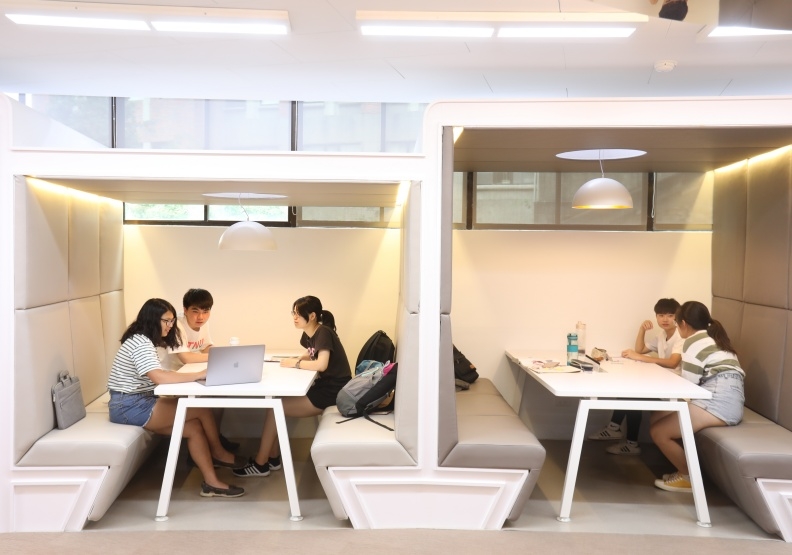
In accordance with the “Guidelines for External Users Accessing the Library”, the NTNU Library is open to the public, providing access to approximately 1,493,282 printed volumes and 1,611 current periodicals. Its electronic collections include approximately 1,956,382 e-books, 107,472 e-journals, and 280 databases. In 2025, the library recorded approximately 115,885 visits from external users.
The NTNU Library website also provides a virtual library platform integrating online catalog searches, digital collections, open educational resources, virtual tours, online consultations, and information literacy materials, facilitating public access to educational resources and supporting lifelong learning beyond the campus.
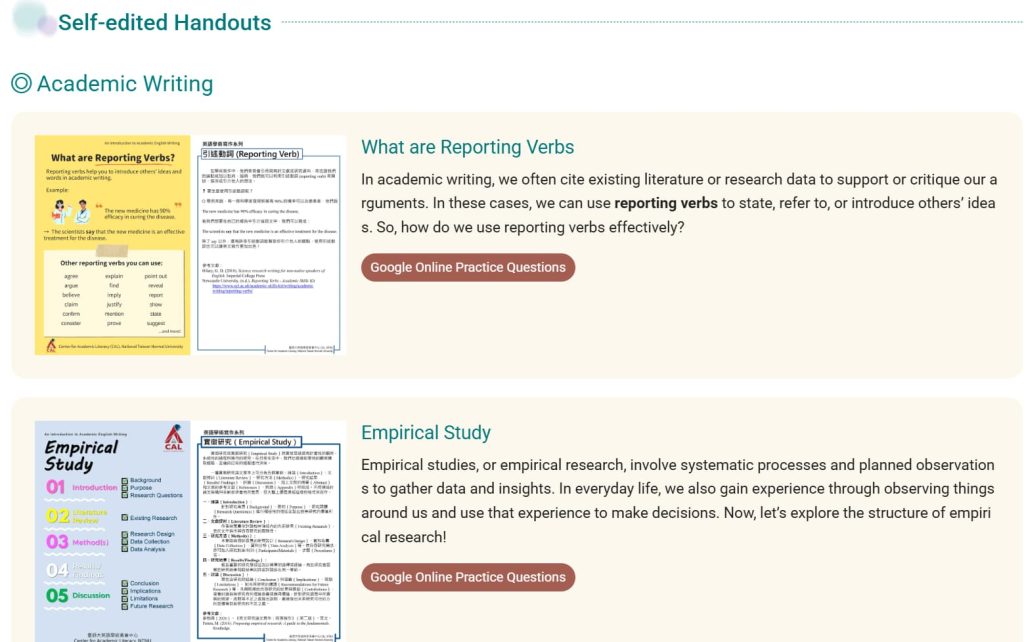
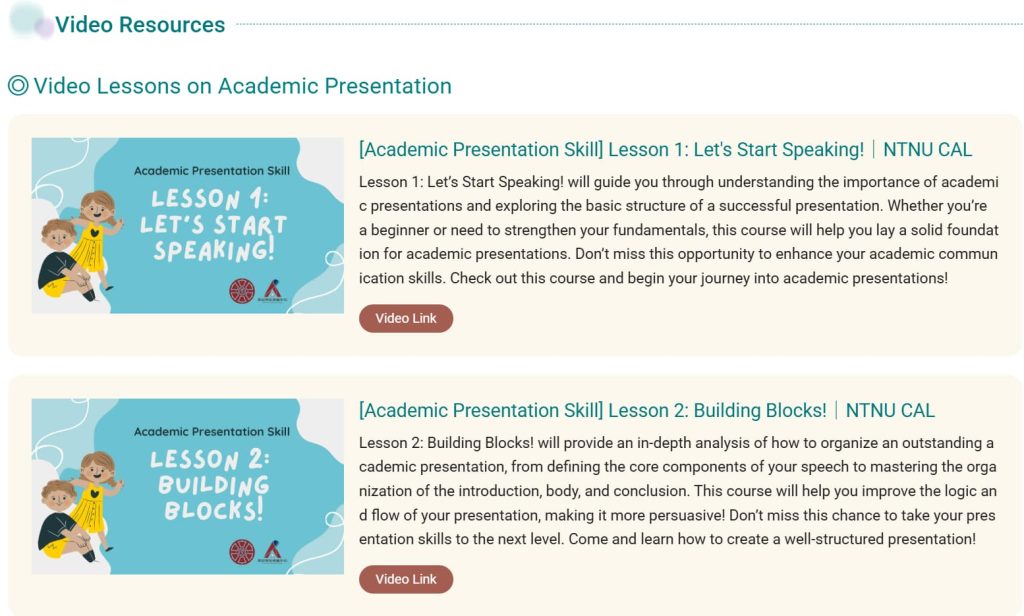
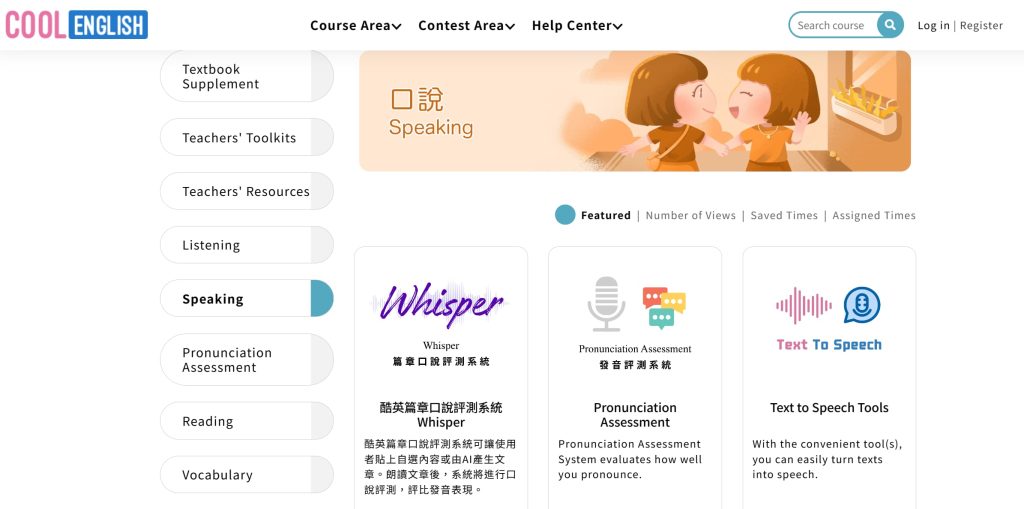
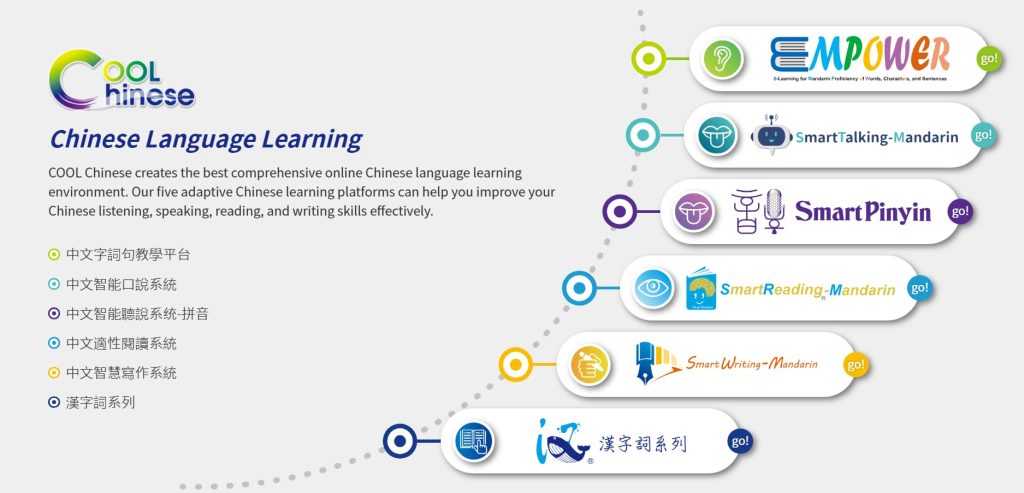
NTNU offers a variety of free educational resources for English and Chinese language learning. The Center for Academic Literacy (CAL) has developed self-produced English academic writing handouts and instructional videos to enhance learners’ academic English proficiency. For Chinese language learners, resources include the TOCFL Chinese Vocabulary Tool, Chinese Character Learning Book, Comprehensive Chinese Character Retrieval System, and the Contemporary Chinese Course textbooks. Additionally, the platforms “Cool English” and “COOL Chinese” effectively enhance listening, speaking, reading, and writing skills.
The Center for Academic Literacy (CAL) has developed self-produced English academic writing handouts and instructional videos, which are available for free download online.
Cool English, an online English learning platform established in 2015, offers free courses in listening, speaking, reading, writing, vocabulary, grammar, games, learning support, and exam preparation. It has been widely recognized by students, parents, teachers, and schools across Taiwan.
COOL Chinese, a comprehensive online platform for Chinese language learning, integrates listening, speaking, reading, and writing exercises to effectively enhance users’ Chinese proficiency.
In 2025, Professor Lin Chen-Hsing’s team from NTNU’s Department of Chinese as a Second Language collaborated with the Education Department, New Taipei City Government, the Rotary Club of Taipei Hwa Yang and the Foundation for Educational Reform and Culture to launch 166 digital Mandarin learning videos for new immigrants. The partnership combined NTNU’s expertise in Mandarin teaching and teacher education, the Rotary Club’s grant resources, and the Foundation’s experience in addressing the needs of new immigrant families.
The learning materials focus on everyday situations, including shopping, using public transport, communicating during medical visits and parent–child interaction. Delivered as short videos, they enable new immigrants to preview lessons, review content and practise repeatedly on smartphones or tablets. All videos are available free of charge upon registration. This reduces time and location barriers and helps learners apply their learning directly to daily life. By providing Mandarin learning resources that address practical needs, the initiative helps new immigrants adapt to life in Taiwan and integrate into Taiwanese society.
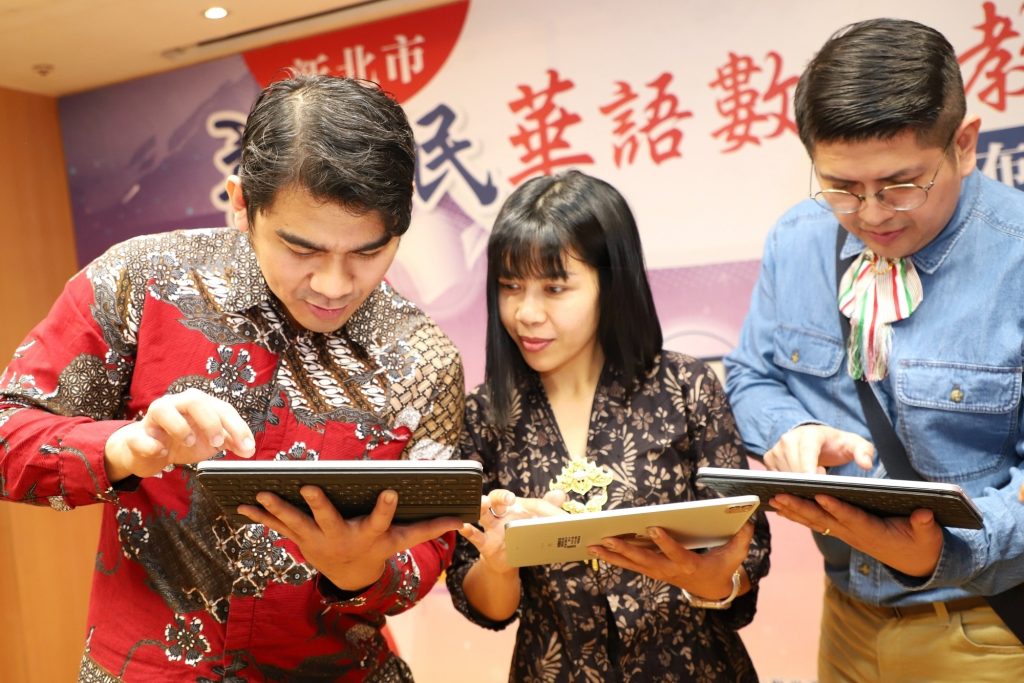
In 2025, NTNU collaborated with the Education Department, New Taipei City Government, the Rotary Club of Taipei Hwa Yang and the Foundation for Educational Reform and Culture to launch 166 “Pocket Mandarin Teacher” digital learning videos, enabling new immigrants to learn practical Mandarin through smartphones and tablets. The photo shows learners from Indonesia and Mexico sharing their experiences of using the digital learning materials.
In 2025, National Taiwan Normal University (NTNU) hosted hundreds of free public educational events on campus, including lectures, community learning activities, art exhibitions and cultural performances. These events welcomed students and faculty from other universities, neighboring residents and the general public, providing lifelong learning opportunities for people of different ages and backgrounds.
Event information was published on the website and Facebook page of the Public Affairs Center, Office of the Secretariat, and through the NTNU Campus Events Portal, helping members of the public discover and participate in these opportunities.
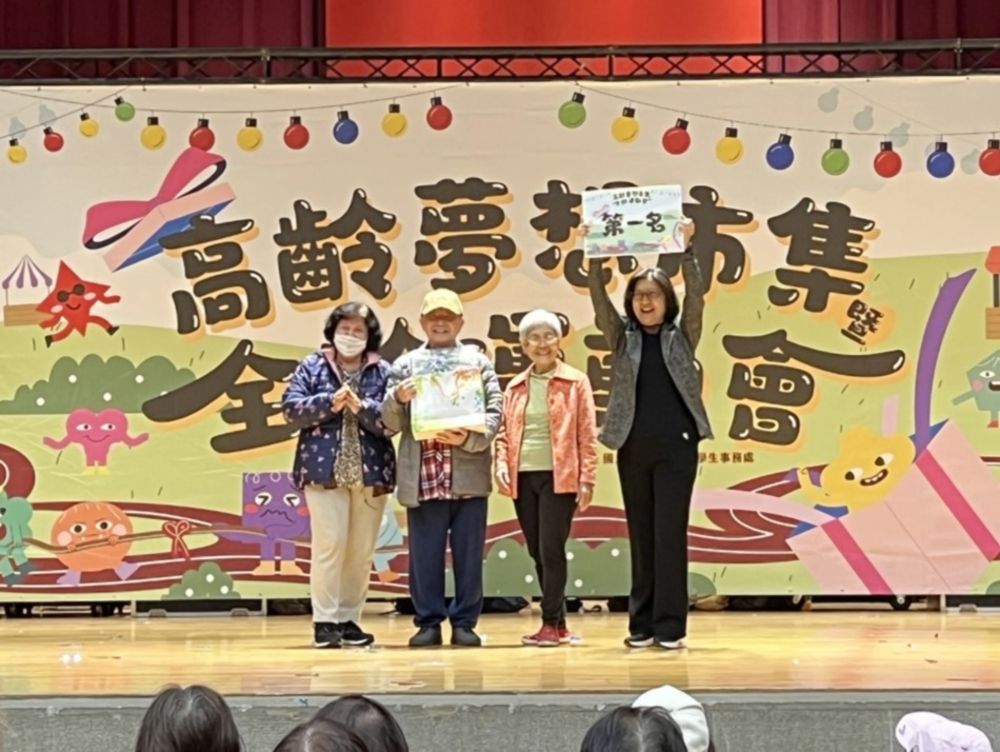
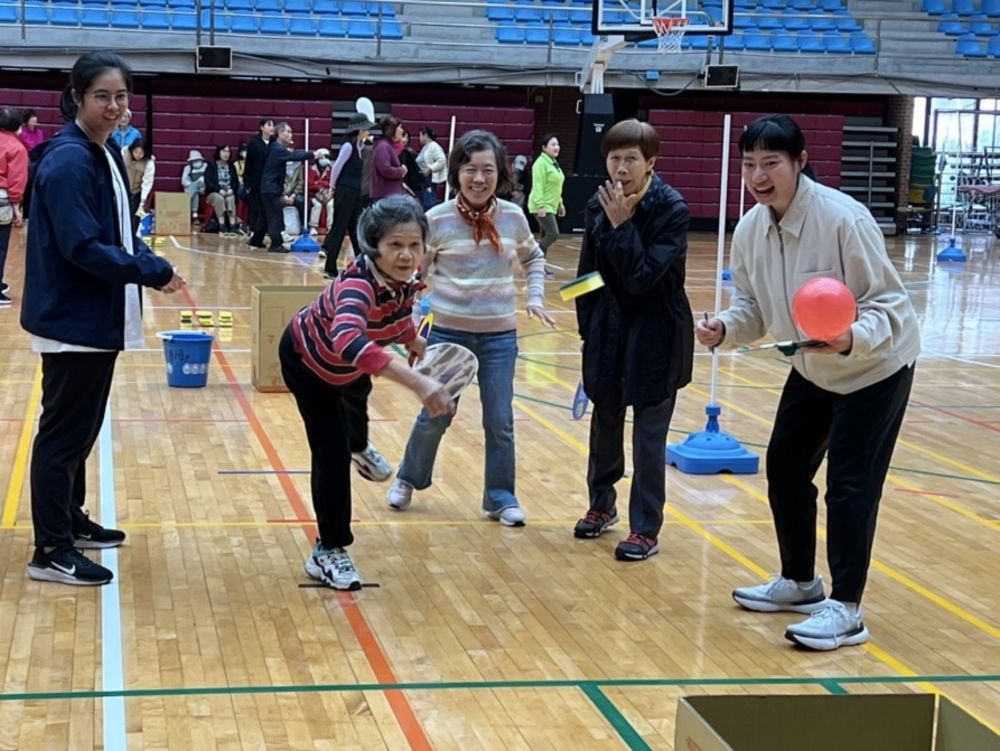
On 22 November 2025, NTNU hosted the Senior Dream Market and the inaugural All-Age Sports Day to promote healthy ageing and intergenerational learning. Both events were open to the public free of charge and together attracted more than 750 participants, including older adults, community residents, NTNU faculty and students, and community partners.
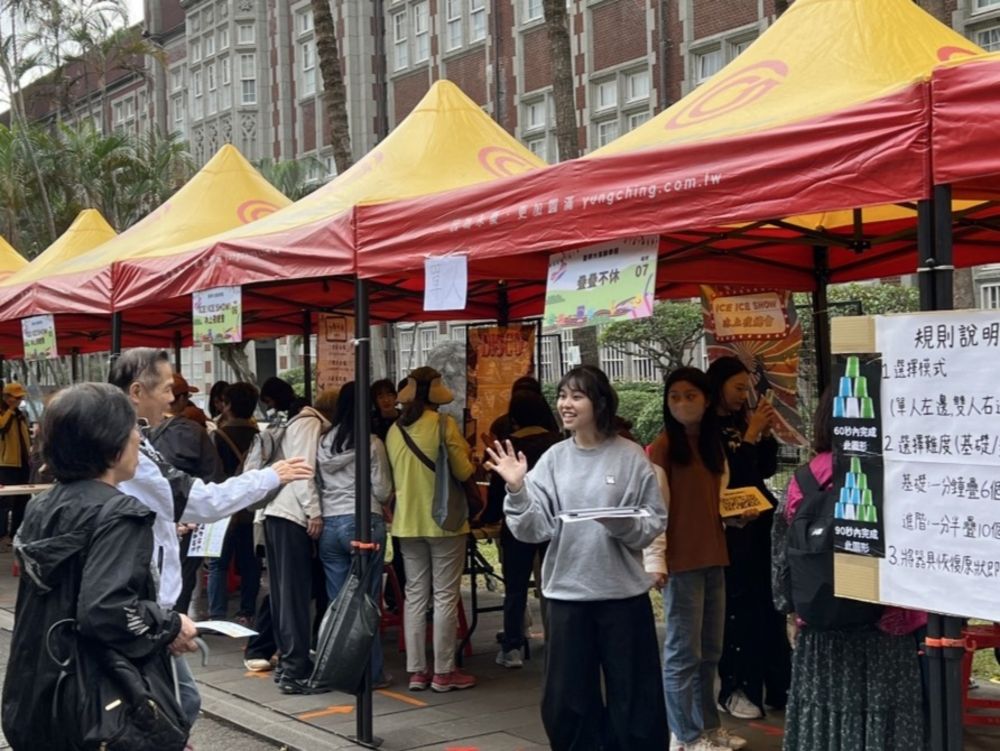
The Senior Dream Market featured six themes: physical activity, leisure, physical and mental well-being, creative arts, information, and technology. Interactive booths designed by faculty and students enabled older adults to explore health and everyday-life knowledge through practical activities and exchanges with younger participants.
Held in the afternoon, the inaugural All-Age Sports Day brought together more than 20 teams, with senior participants averaging 71 years of age. Warm-up exercises, fitness challenges and recreational competitions encouraged participants to learn about physical well-being while engaging in exercise and social interaction.
By combining academic expertise with community partners’ resources, NTNU created opportunities for younger and older generations to learn together, putting the principles of “Ageing Together, Intergenerational Learning, and Community Well-being” into practice.
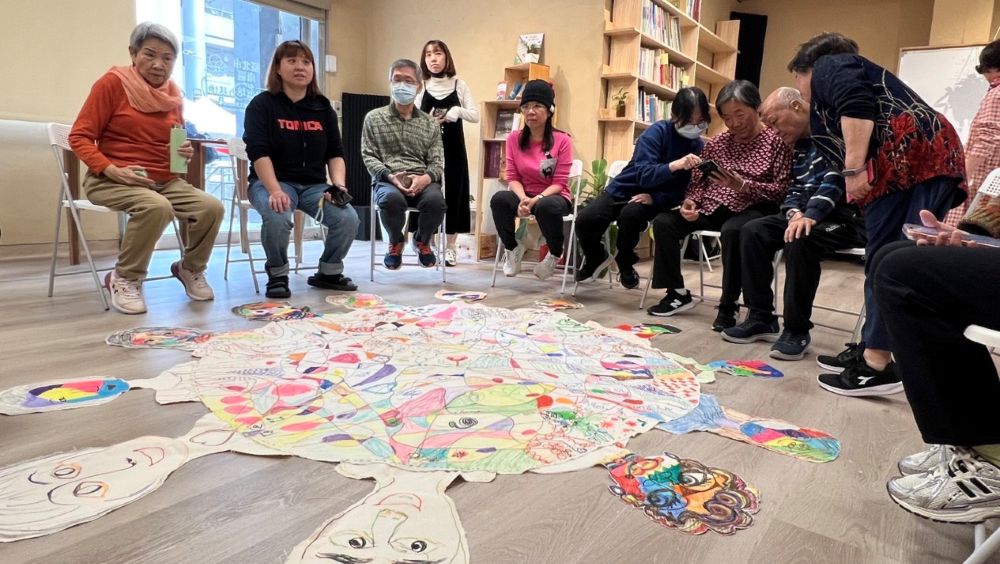
Older adults explore interactive booths, try activities and exchange ideas at the Senior Dream Market, learning about health and everyday life through engagement with NTNU faculty, students and community partners.
The inaugural All-Age Sports Day brings older adults and university students together for fitness activities and recreational competitions, promoting active ageing and intergenerational interaction.
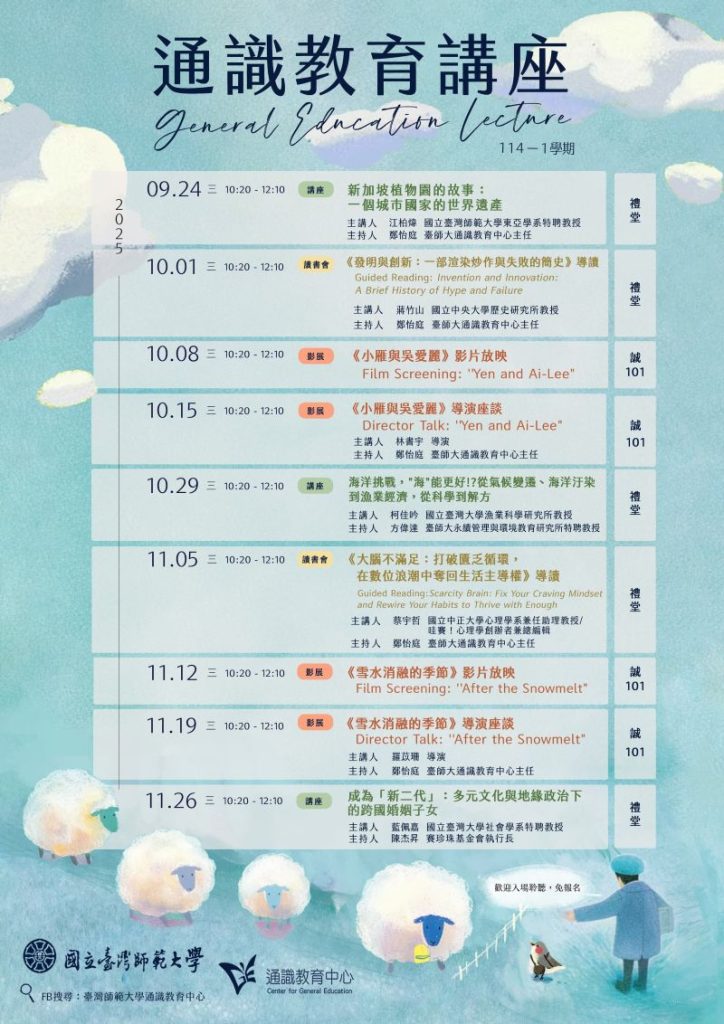
NTNU organizes General Education Lectures every semester, inviting scholars, experts and film directors to share knowledge and engage audiences in discussion. Topics include global perspectives, critical reading and thinking, filmmaking, marine ecology, everyday philosophy and multiculturalism.
The autumn 2025 program included lectures on marine environmental issues, film screenings and discussions with directors. Alongside NTNU faculty, staff and students, members of the public could attend free of charge without registration, extending access to university learning opportunities.
Through expert presentations and dialogue, these events encourage participants to explore contemporary issues, consider different perspectives and deepen their understanding of society, culture and the environment.
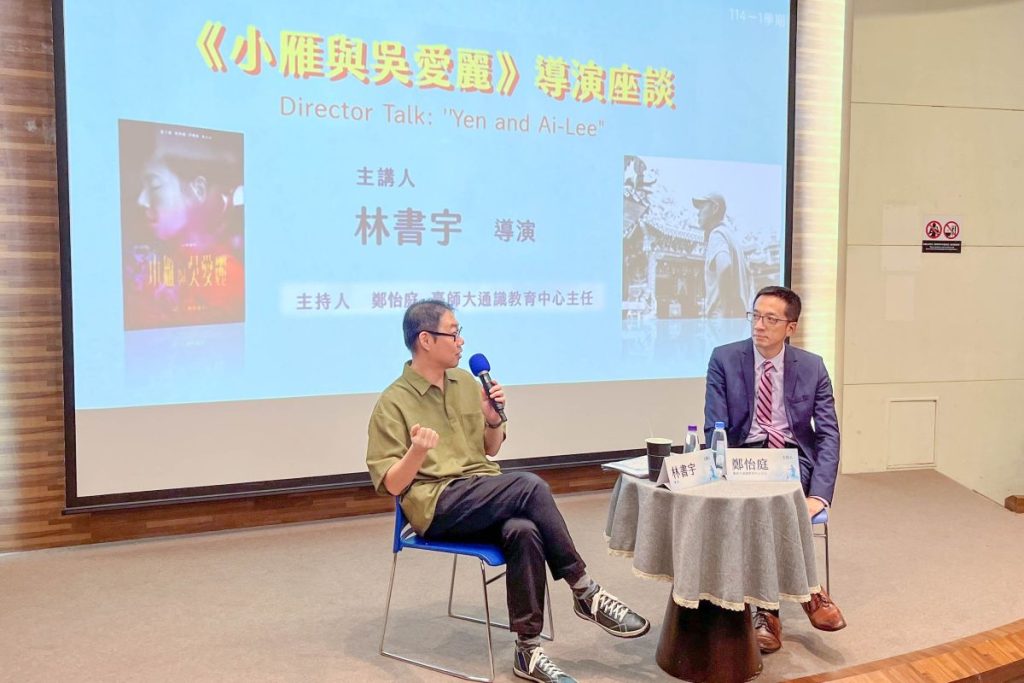
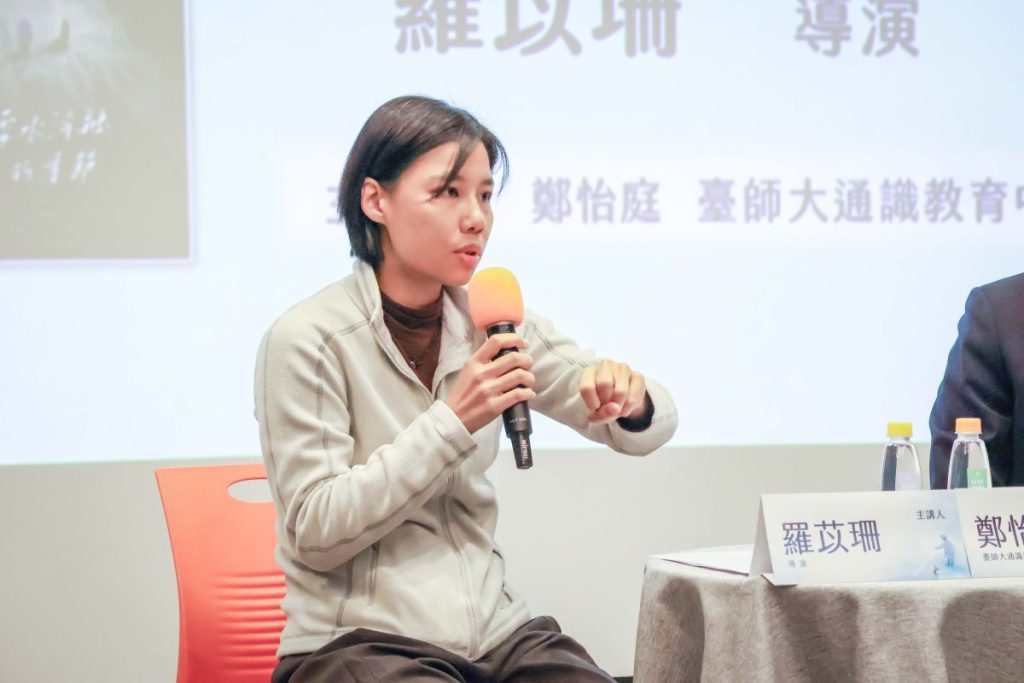
NTNU’s General Education Lectures provide opportunities to learn directly from filmmakers. Lo Yi-shan, director of After the Snowmelt, shares the inspiration behind her film and her reflections on life. Tom Lin Shu-yu, director of Yen and Ai-Lee, discusses the film’s exploration of domestic violence and the complex relationship between a mother and daughter, alongside its use of black-and-white cinematography.
The NTNU Art Museum supports lifelong learning through free exhibitions that introduce the public to diverse artistic practices and perspectives.
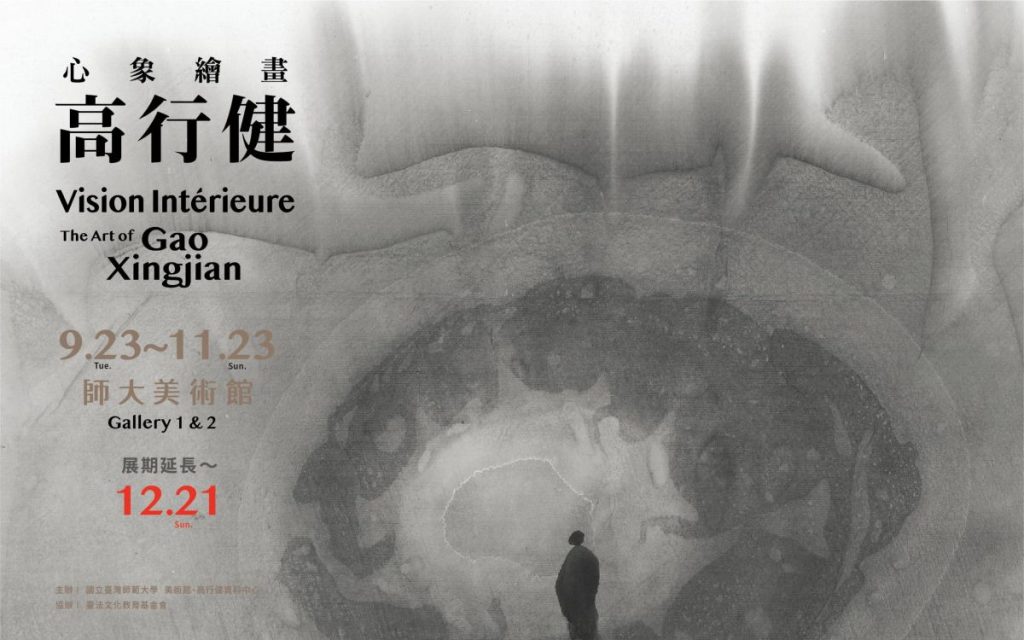
From 16 March to 15 May 2025, the museum presented Oli Epp, Hors d’œuvres, inviting visitors to reflect on social media, self-presentation and interpersonal interaction through contemporary art. From 23 September to 21 December 2025, it presented Vision Intérieure: The Art of Gao Xingjian, showcasing Gao’s ink paintings and prints. Both exhibitions were open to the general public free of charge, providing accessible opportunities for art appreciation, reflection and learning about visual culture.
NTNU’s College of Liberal Arts holds an annual Humanities Festival to promote public engagement with language, literature and culture through arts and cultural activities.
On 2 May 2025, the College hosted the “Our Land, Our Songs” concert at the NTNU Auditorium, offering free admission to the NTNU community and the general public. The program combined musical performances with discussions of creative ideas and introductions to traditional instruments, enabling audiences to learn about Taiwanese Hokkien, Hakka and Taiwan’s diverse musical cultures.
By connecting traditional cultural expressions with contemporary creativity, the concert provided community residents with opportunities to deepen their cultural understanding through shared learning and artistic participation.
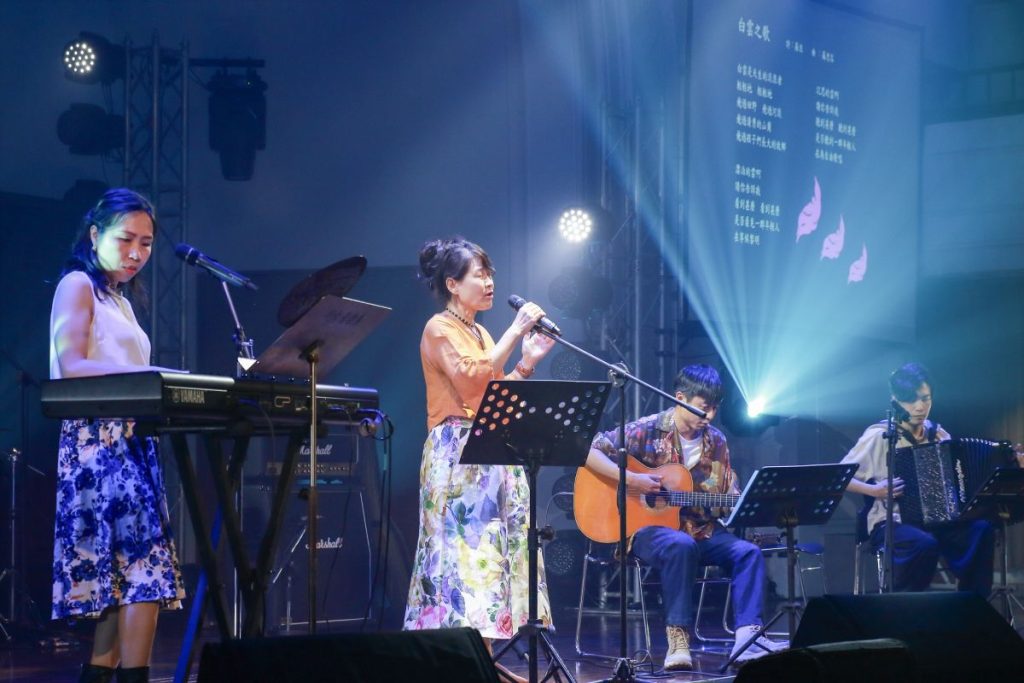
The Humanities Festival’s “Our Land, Our Songs” concert features performances by Golden Melody Award winners Lilium and Lo Sirong & Gomoteu, combining musical performance with opportunities to learn about Taiwan’s languages and musical cultures.
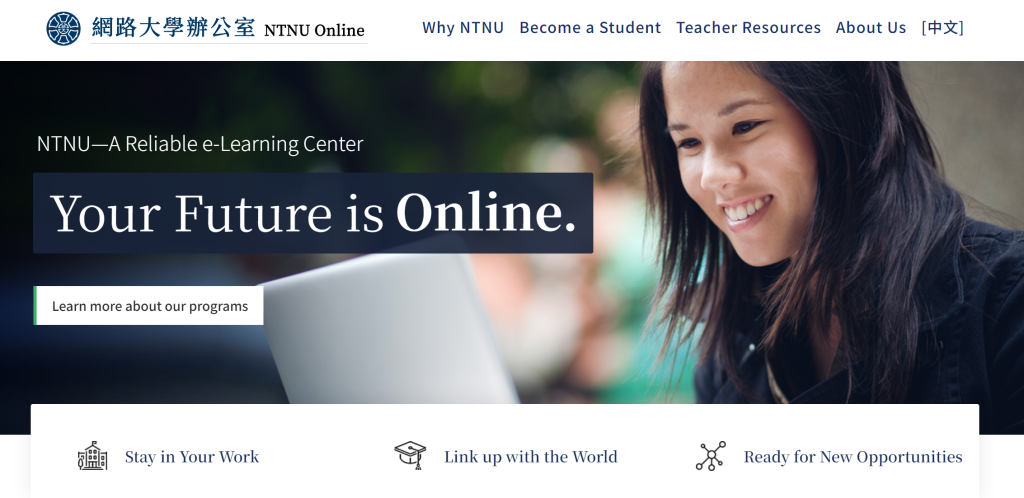
National Taiwan Normal University (NTNU) provides short courses, vocational training and continuing education opportunities through NTNU Extension, School of Continuing Education, and NTNU Online. These opportunities are open to the general public, including people who are not enrolled in NTNU degree programmes, supporting lifelong learning, professional development and skills enhancement.
NTNU Extension, School of Continuing Education offers a diverse range of continuing education courses, training activities and educational projects. Drawing on the university’s teaching expertise and resources, these programmes enable members of the public and working professionals to develop practical skills, update their knowledge and pursue further learning outside formal degree programmes.
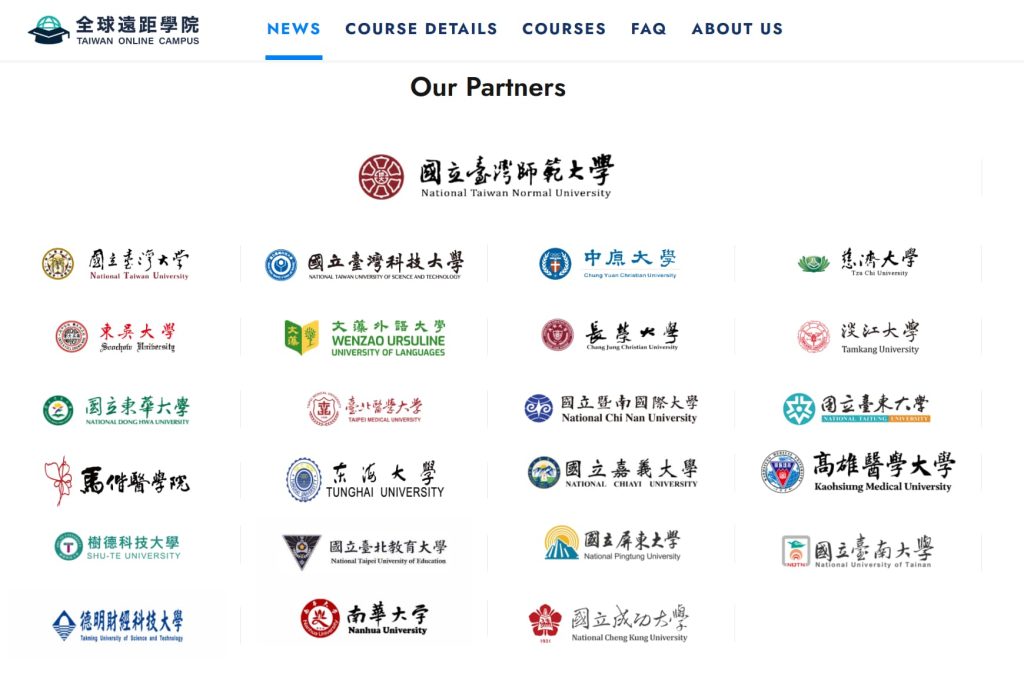
NTNU Online expands access to continuing education for learners in Taiwan and abroad through flexible online learning opportunities. Its Taiwan Online Campus (TOC) platform brings together credit-bearing courses taught in Chinese and English by partner universities and colleges. Individual courses enable learners to explore subjects of interest, strengthen relevant knowledge and undertake preparatory studies without enrolling in a full degree programme.
In 2025, NTNU collaborated with 16 partner institutions to offer 41 online courses. By the end of that year, collaboration had extended to 23 partner institutions, with a cumulative total of 299 online courses offered. Learners who successfully complete a TOC course may receive a certificate from the institution offering it, subject to the relevant course requirements.
These short-course and online learning opportunities broaden public access to university education and provide flexible pathways for continued learning alongside work and other responsibilities.
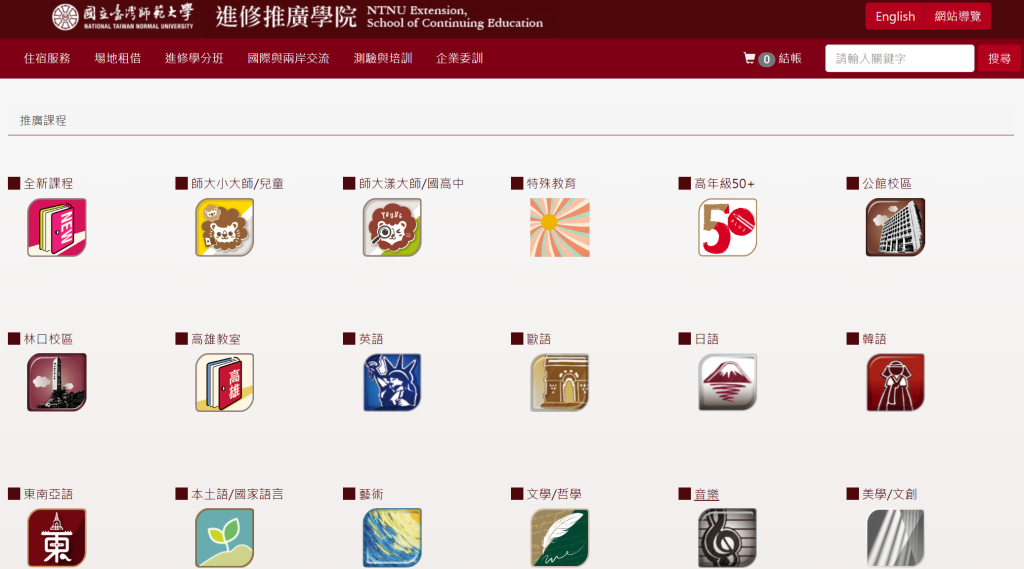
NTNU Extension, School of Continuing Education provides publicly accessible short courses, vocational training and continuing education opportunities.
Taiwan Online Campus offers individual online courses in Chinese and English from partner universities and colleges. Learners who successfully fulfil course requirements may receive a certificate from the institution offering the course.
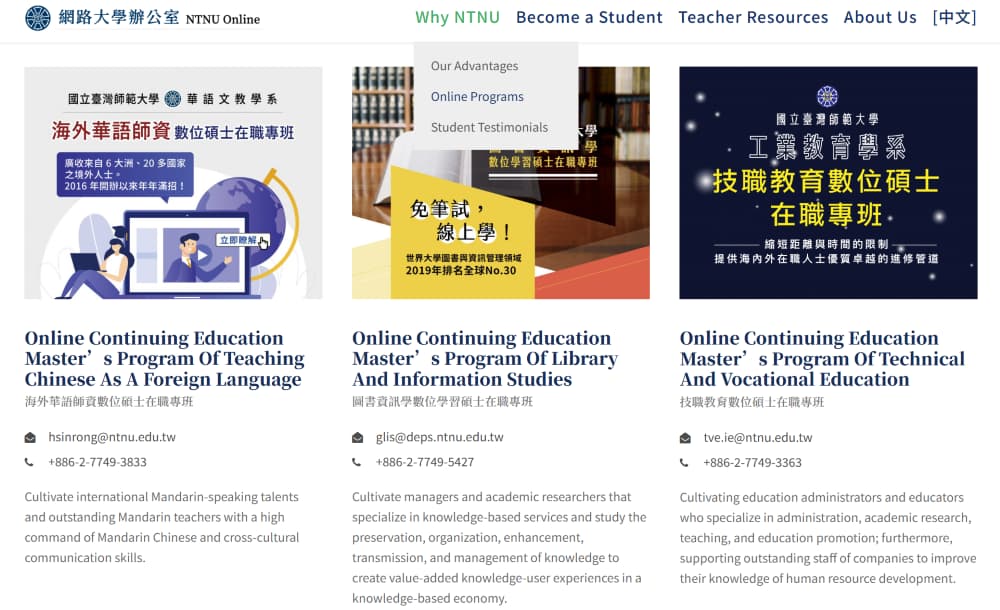
NTNU offers the following online programs: Online Continuing Education Master’s Program of Teaching Chinese as a Foreign Language, Online Continuing Education Master’s Program of Library and Information Studies and Online Continuing Education Master’s Program of Technical and Vocational Education. Allow students to learn and improve their skills with great flexibility, while earning the same academic certificates as those studying on campus.
National Taiwan Normal University (NTNU) draws on its educational expertise and interdisciplinary teaching resources to deliver educational outreach in local schools and communities beyond campus. In 2025, faculty and students provided subject tutoring, media literacy education, health education and digital learning through ongoing programs, recurring service camps and tailored workshops. These activities addressed the learning needs of schoolchildren, young people and older adults, extending university resources to rural communities and overseas partner schools.
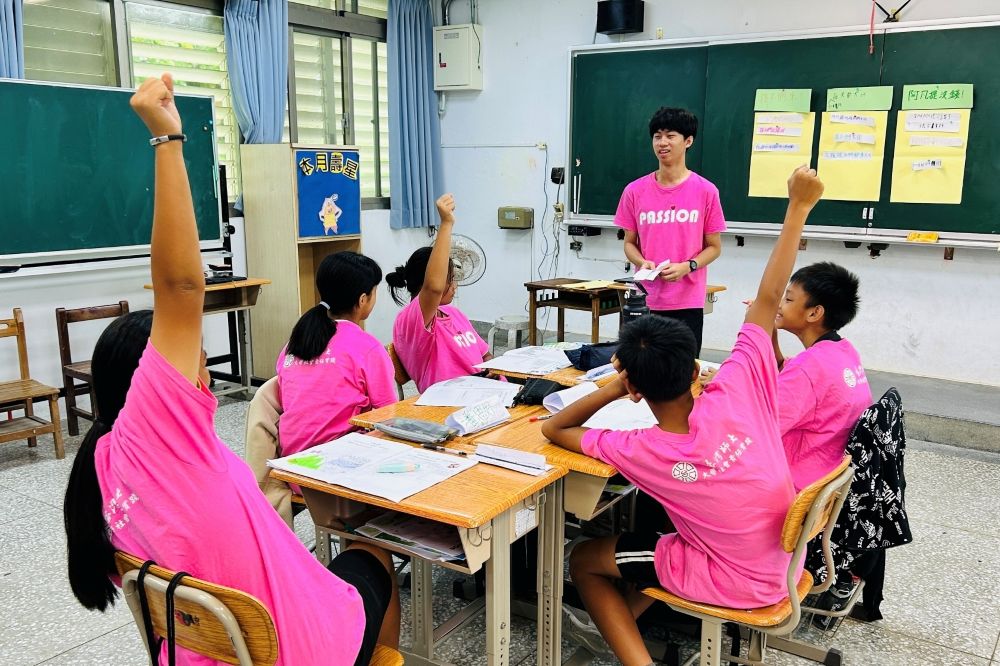
NTNU continued to implement the Program of PASSION Quality Education in Rural Schools, providing sustained support through learning assessments, adaptive teaching materials and teacher professional development. In 2025, the program delivered 196 foundation classes in Chinese, English and mathematics at partner sites, recording 1,304 student participations. Teacher professional development activities recorded a further 766 participations.
During the summer, NTNU students participating in the program delivered three-week transition courses at six partner junior high schools in Hualien and Taitung (rural counties in the East Coast of Taiwan). Lessons in Chinese reading, English and mathematics helped incoming students strengthen the foundational competencies needed for junior high school. International volunteers also supported interactive English learning, broadening opportunities for language practice and intercultural exchange.
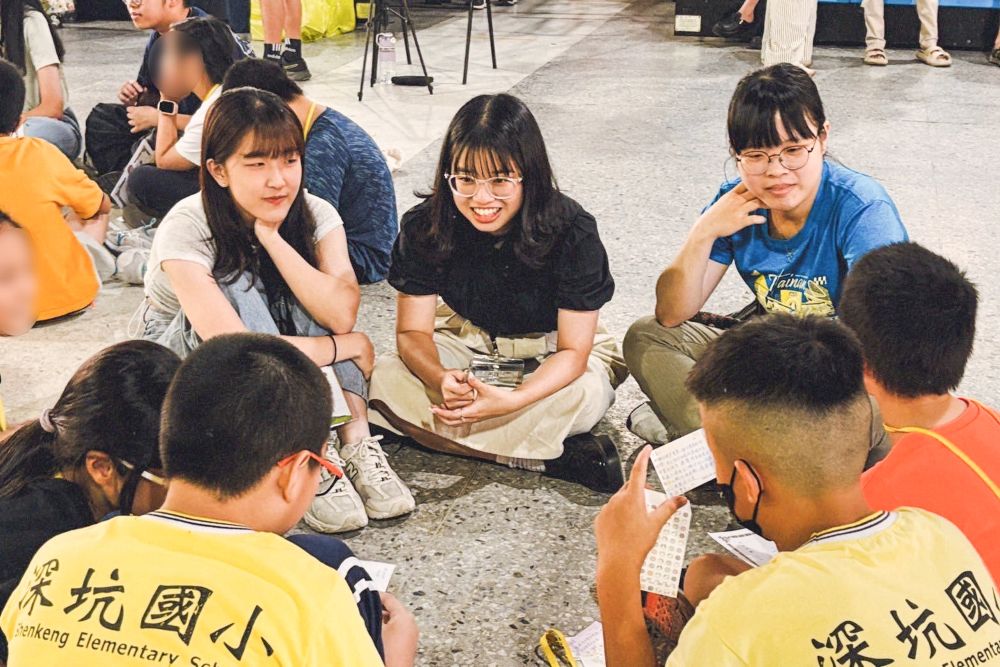
NTNU continued to organize the Schweitzer Educational Service Camp, enabling student teachers to apply their curriculum design and teaching expertise in schools beyond campus. In August 2025, the secondary and primary education teams served at Ganyuan Junior High School and Shenkeng Elementary School, respectively.
The teams developed lessons in language, science, social studies and information technology, incorporating life education, gender equality, interpersonal communication, and food and agricultural education. Subject tutoring, sports, hands-on activities and exploration of local culture supported children’s learning across multiple areas.
Teachers and parents were invited to presentations of learning outcomes, creating opportunities to share students’ achievements and strengthen connections among schools, families and the university.
Established in 2018, the PASSION program continued its rural school partnerships in 2025. High school volunteers from Lawrence S. Ting School in Vietnam joined the program for the first time, working with Fubei Junior High School in the rural areas of Hualien to provide interactive lessons conducted entirely in English.
Student teachers in the 2025 Schweitzer Educational Service Camp delivered tutoring, sports and hands-on learning activities at partner junior high and elementary schools.
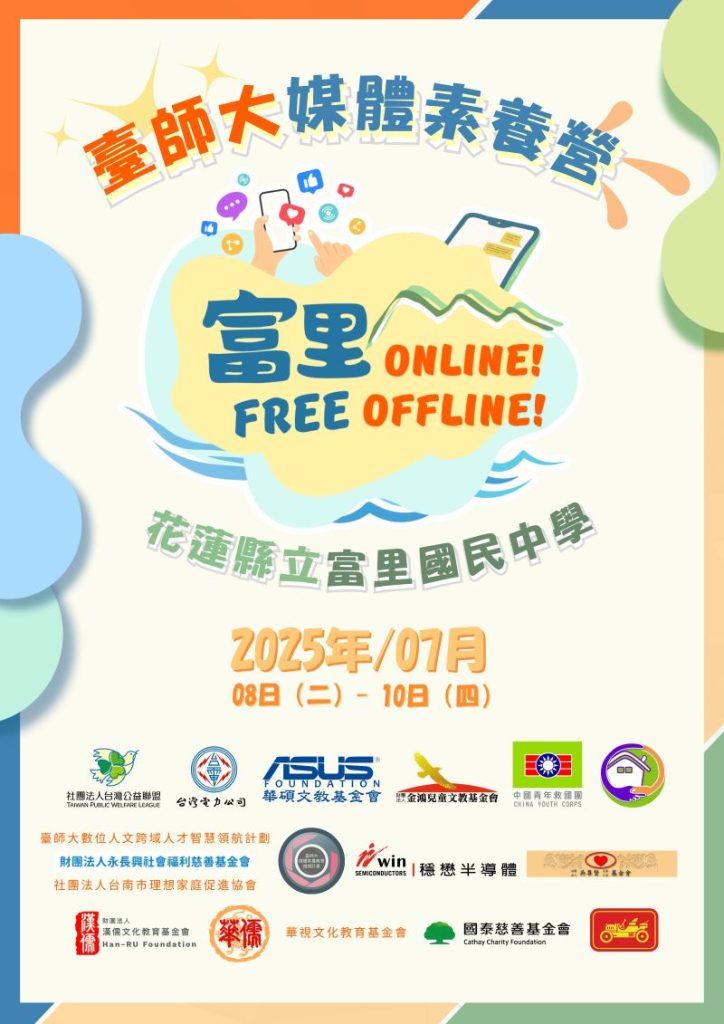
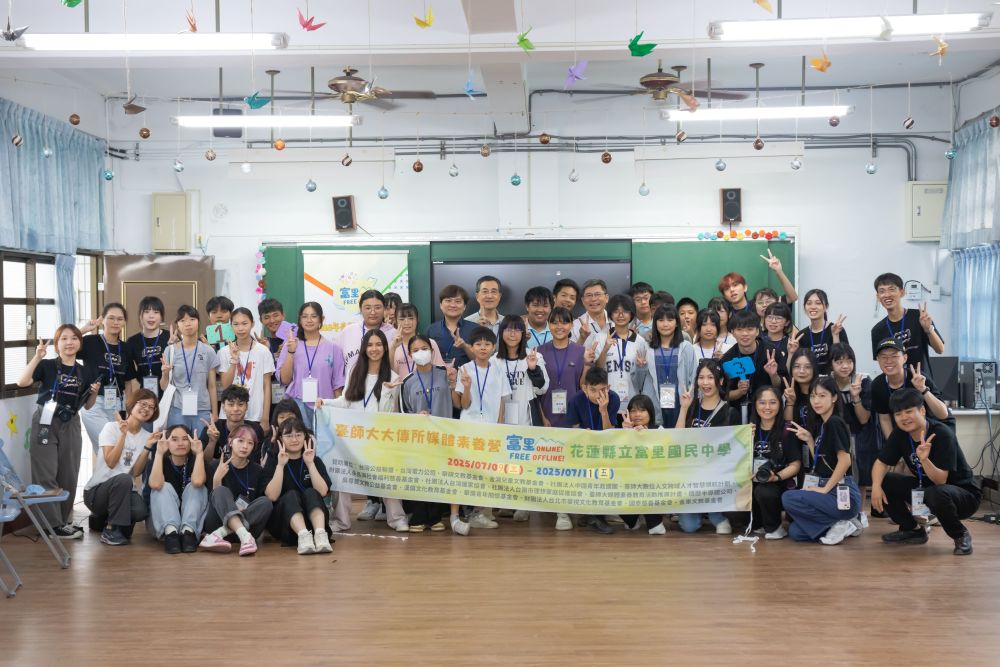
In July 2025, NTNU’s Graduate Institute of Mass Communication held the “Fuli Online! Free Offline!” Media Literacy Camp at Fuli Junior High School in Hualien County (rural areas). Organized by 13 graduate students, the three-day camp engaged 27 junior high school students in interactive lessons, role-playing and games.
Activities addressed social media anxiety, online privacy, scam recognition and the protection of digital footprints, helping students develop critical media literacy and safer internet practices.
The media literacy camp initiative had reached its 15th edition, demonstrating a sustained approach to translating communication expertise into educational outreach for rural communities.
Thirteen NTNU graduate students, supported by nine student mentors recruited from universities and colleges in Taiwan and overseas, delivered media literacy activities for 27 students at Fuli Junior High School.
Through the Active Aging and Intergenerational Learning Project, NTNU brought health education and digital learning opportunities to older adults in community settings. In 2025, courses such as Practicum in Community Services for Older Adults enabled students to apply their disciplinary knowledge at community centres and cultural health stations in Taipei City and New Taipei City.
Partner sites included the Longquan and Xinren communities and the Zhongzheng Cultural Health Station in Xindian. Activities promoted health knowledge, digital inclusion and learning through interaction between university students and older adults.
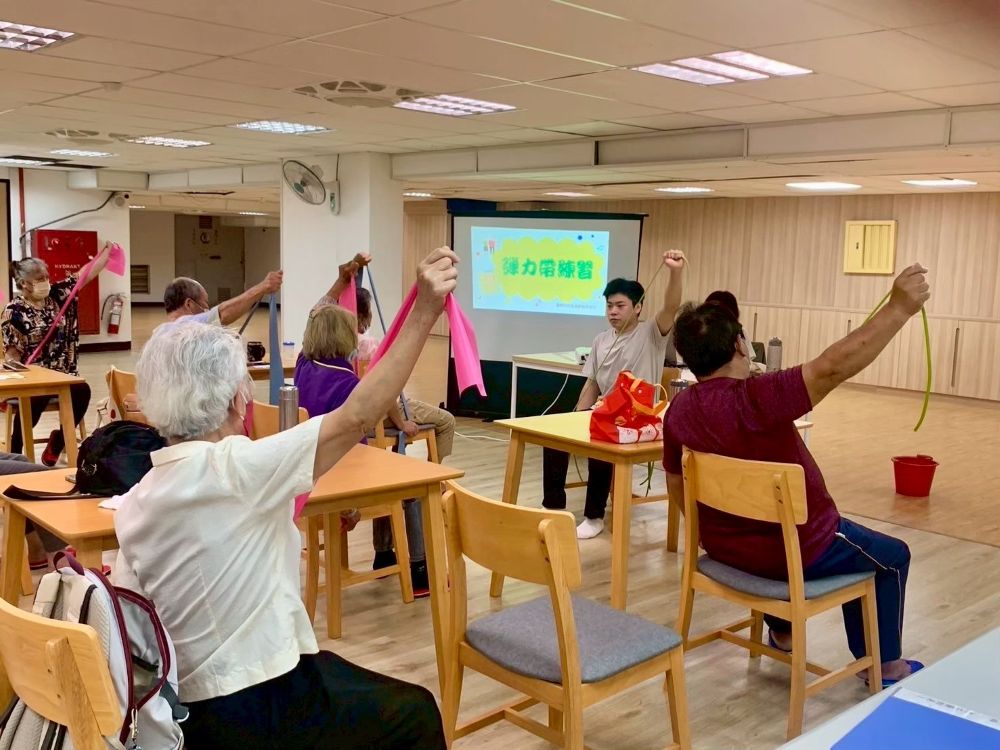
NTNU also continued to deliver fitness activities across 20 communities in Wujie and Su’ao, Yilan County. In 2025, these activities comprised 99 sessions, recording 2,970 participations by older adults. This sustained community outreach supported active ageing, continued learning and intergenerational exchange.
NTNU students applied their academic knowledge to design and deliver health and exercise program for older adults at community centers beyond campus.
From 14 to 22 June 2025, NTNU’s Cheese Start international service team, formed by the Committee of Ministrant Clubs under the guidance of the Office of Student Affairs, delivered educational activities at four secondary schools in Malaysia.
Approximately 200 students participated in leadership camps and academic and career exploration workshops using design thinking as the core teaching approach. Activities guided participants through self-awareness, teamwork, clarification of personal values and goal setting.
The NTNU team spent nearly six months preparing lesson plans, teaching materials and activities, integrating disciplinary expertise, student perspectives and local needs. This tailored outreach extended NTNU’s educational resources to overseas schools while providing university students with practical experience in teaching and community service.
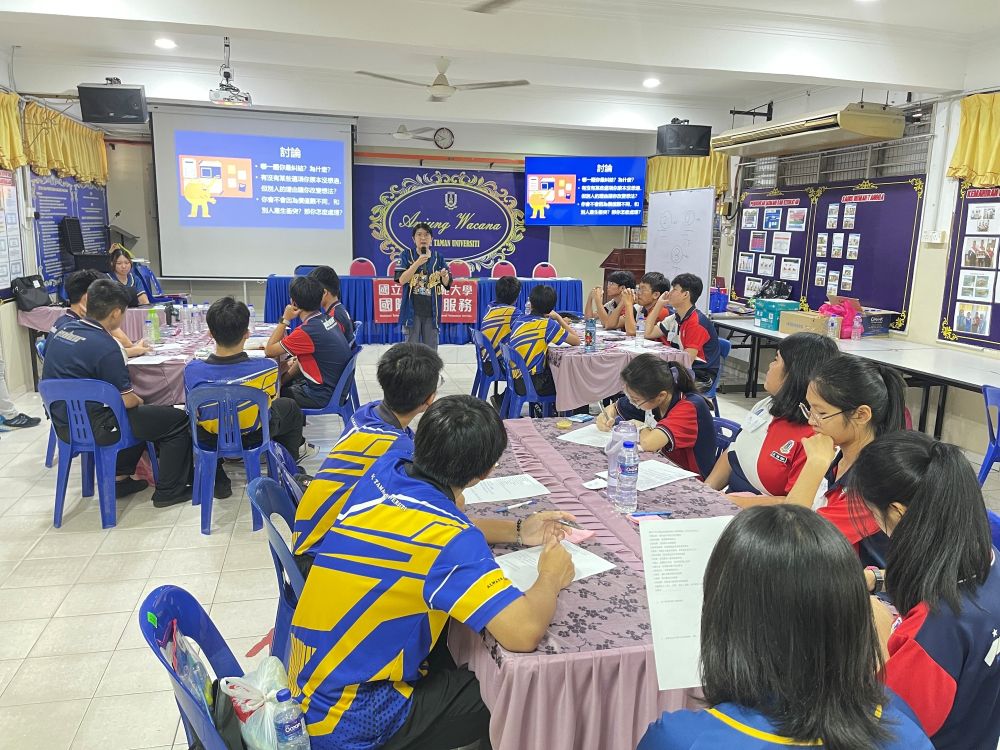
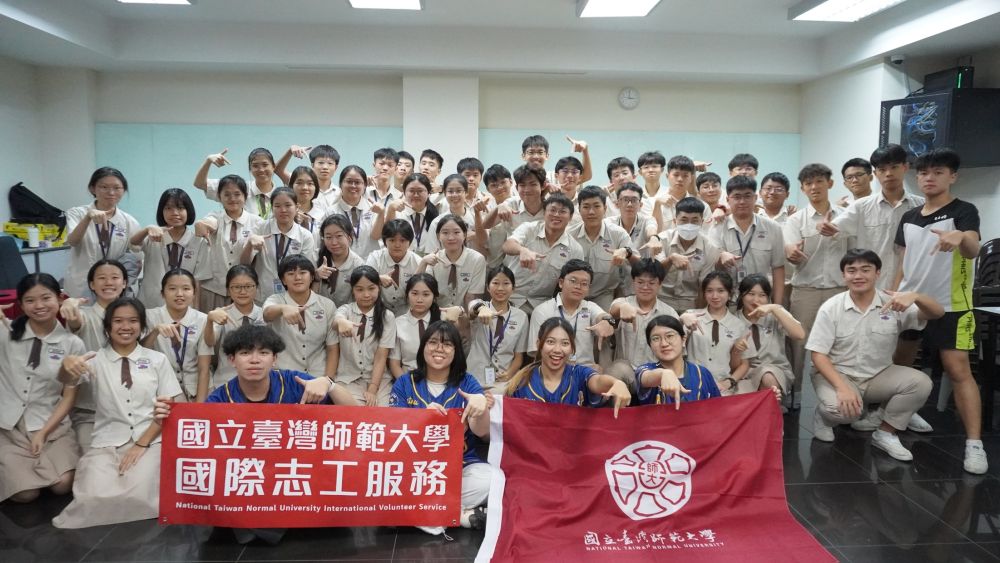
The Cheese Start international service team delivered design-thinking-based leadership camps and academic and career exploration workshops at four Malaysian secondary schools, following nearly six months of preparation.
National Taiwan Normal University (NTNU) upholds equality and non-discrimination in access to education. In developing educational policies and organizing lifelong learning activities, NTNU welcomes participation by learners from diverse backgrounds, regardless of ethnicity, religion, disability, immigration status or gender. This commitment guides the provision of educational opportunities for both the university community and the general public, supporting an inclusive and respectful learning environment.
NTNU’s Regulations Governing Prevention and Handling of Gender-Related Incidents on Campuses, most recently revised in 2024, establish protections against gender discrimination, sexual assault, sexual harassment and sexual bullying.
Article 4 requires respect for the gender characteristics and sexual orientation of students, faculty and staff. It prohibits unreasonable differential treatment in admissions and enrolment on the grounds of gender or sexual orientation, as well as differential treatment in teaching, activities, assessment, rewards and disciplinary measures, welfare and services.
The Regulations also require NTNU to actively assist students disadvantaged because of their gender or sexual orientation and to protect the right to education of pregnant students.
These protections extend to participants in continuing and extension education. Teaching and activities, whether held on or off campus, must respect gender diversity and eliminate gender discrimination. These provisions support equitable participation in lifelong learning and help provide a safe and supportive environment for learners beyond formal degree programs.
On 22 October 2026, NTNU approved its Non-Discriminatory Admissions Policy Statement, which prohibits unjustified differential treatment in admissions based on applicants’ gender, gender identity, sexual orientation, race, ethnicity, nationality, religion, disability, age, socioeconomic status or other protected characteristics.
All applicants are assessed against publicly available, transparent, fair and reasonable admissions criteria. In accordance with applicable laws and NTNU regulations, appropriate special admissions pathways and support measures are provided for Indigenous students, students with disabilities, economically disadvantaged students and other groups with limited educational resources.
These measures aim to reduce structural barriers and promote substantive equality in access to higher education. Together with NTNU’s existing gender equity regulations and support for Indigenous students, the Statement strengthens the policy framework for educational equity, diversity and inclusion.
NTNU’s Indigenous Students Resource Center integrates university resources to support Indigenous students in their studies and daily lives. Through learning support, Indigenous education and cultural transmission, the Center promotes respect for Indigenous identities and cultural diversity.
The Center’s work complements NTNU’s broader commitment to inclusive education by helping Indigenous students access support, participate in university life and pursue their educational development.