10.6.1 Non-discriminatory admissions policy
ational Taiwan Normal University (NTNU) promotes equal opportunities in higher education through institutional policies that prohibit discrimination in admissions and provide appropriate pathways for applicants facing educational disadvantage. NTNU’s Enforcement Guidelines for Gender Equity Education, approved on 13 March 2019, explicitly prohibit gender-based discrimination in recruitment and admission. Building on this established foundation, NTNU adopted its broader Policy Statement on Non-Discriminatory Admissions on 22 October 2026, extending its explicit commitment across a wider range of personal characteristics and explaining the rationale for special admissions measures.
- Established provisions on gender equity in admissions
NTNU’s Enforcement Guidelines for Gender Equity Education were established pursuant to Article 12 of Taiwan’s Gender Equity Education Act to promote substantive gender equality, eliminate gender discrimination, uphold human dignity and provide a gender-equitable educational environment.
Article 4 explicitly stipulates that student recruitment and admission shall not discriminate on the grounds of gender, gender traits, gender identity or sexual orientation, except where approved by the competent authority. This provision demonstrates that gender-based non-discrimination in admissions has been formally embedded in NTNU’s institutional policy since 2019.
The Guidelines also support equitable participation after admission. Article 3 requires a gender-equitable learning environment and gender-friendly, safe campus spaces. Article 5 prohibits discrimination in teaching, activities, evaluations, welfare and services. Articles 6 and 7 require assistance for members of the University disadvantaged by gender-related circumstances and protection of pregnant students’ right to education.
- Broader non-discriminatory admissions policy
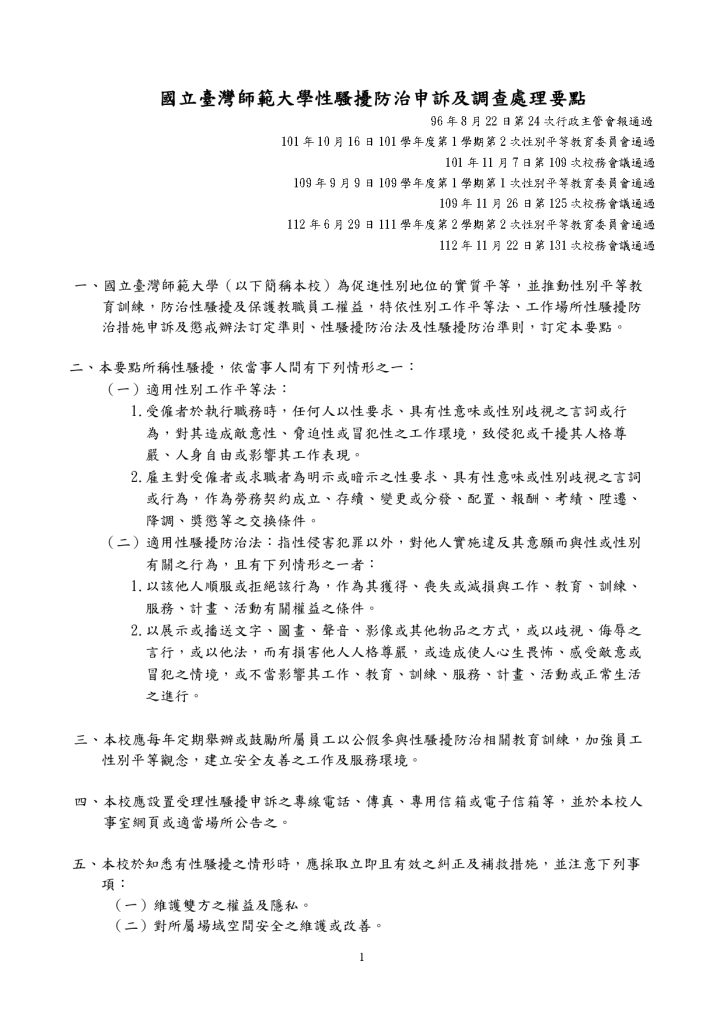
NTNU’s Policy Statement on Non-Discriminatory Admissions was further approved at the third working meeting of the University’s Committee for the Promotion of Sustainable Development and University Social Responsibility on 22 October 2026.
The policy prohibits improper differential treatment in admissions based on an applicant’s sex, gender identity, sexual orientation, race, ethnicity, nationality, religion, disability, age, socioeconomic status, or any other personal status or characteristic protected under applicable laws and regulations.
All applicants are assessed against transparent, publicly available, fair and reasonable admissions criteria, including academic qualifications, individual achievements and relevant abilities. The policy reinforces NTNU’s commitment to fairness, diversity, inclusion and equal educational opportunity.
- Special admissions pathways and their rationale
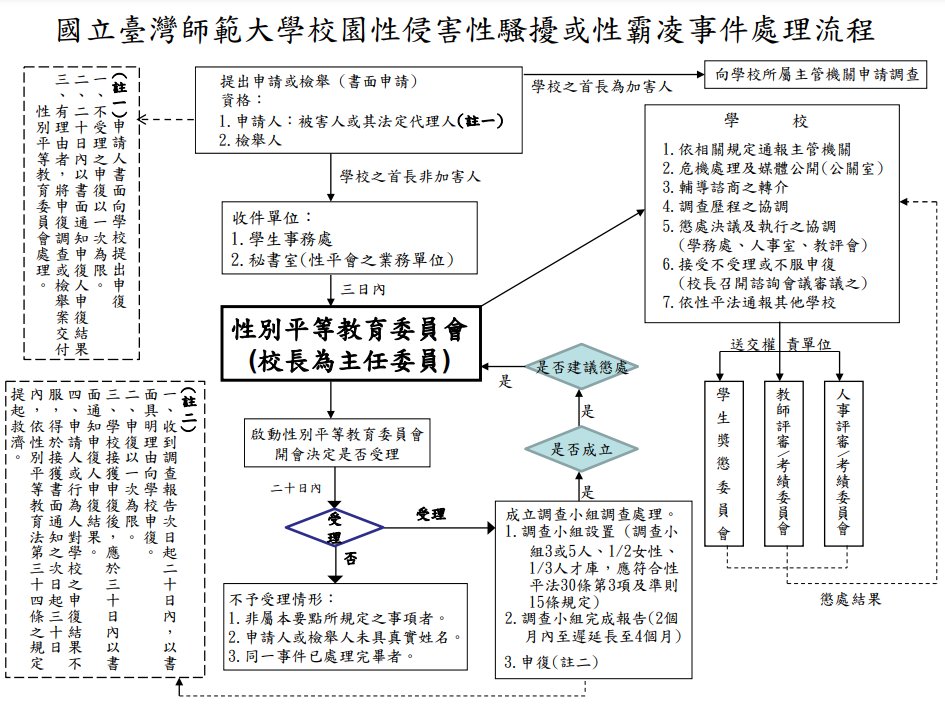
To promote substantive equality and reduce structural disparities in access to higher education, NTNU provides appropriate special admissions pathways and support measures for Indigenous students, students with disabilities, economically disadvantaged students, and other groups with relatively limited access to educational resources.
These measures recognize differences in applicants’ access to educational opportunities and resources and seek to address the resulting disadvantages. They are implemented in accordance with applicable laws, regulations and University rules, using clearly defined eligibility requirements and evaluation criteria. The policy therefore explains both the purpose and the basis of these measures in supporting equitable access to higher education.
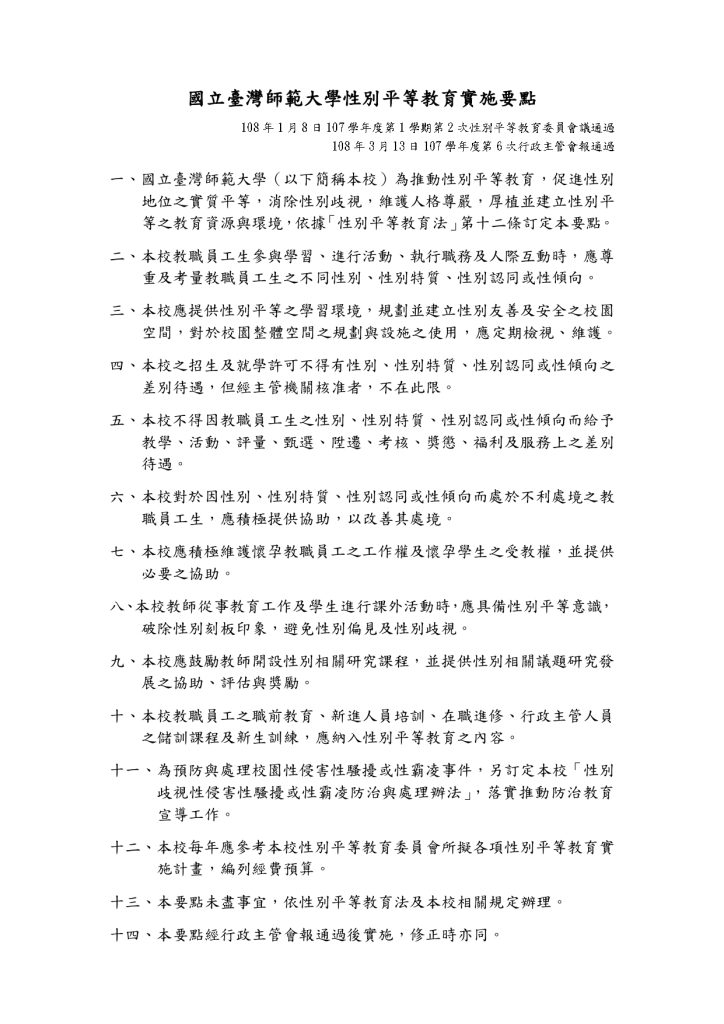
National Taiwan Normal University (hereinafter referred to as “the University”) establishes these Directions in accordance with Article 12 of the Gender Equity Education Act to promote gender equity education, advance substantive equality in gender status, eliminate gender discrimination, uphold human dignity, and cultivate as well as establish educational resources and an environment that fosters gender equality.
Article 2 When faculty, staff, and students of the University participate in learning, conduct activities, perform official duties, and engage in interpersonal interactions, they shall respect and take into account differences in gender, gender traits, gender identity, and sexual orientation among faculty, staff, and students.
Article 3 The University shall provide a gender-equitable learning environment, plan and establish gender-friendly and safe campus spaces, and regularly inspect and maintain the planning of overall campus spaces and the utilization of facilities.
Article 4 The University’s student recruitment and admission permissions shall not discriminate based on gender, gender traits, gender identity, or sexual orientation, except where approved by the competent authority.
Article 5 The University shall not discriminate against faculty, staff, or students on the basis of gender, gender traits, gender identity, or sexual orientation in terms of teaching, activities, evaluations, selections, promotions, performance appraisals, rewards and disciplinary measures, welfare, and services.
Article 6 The University shall actively provide assistance to faculty, staff, and students who find themselves in disadvantaged circumstances due to their gender, gender traits, gender identity, or sexual orientation, in order to improve their situation.
Article 7 The University shall actively protect the right to work for pregnant faculty and staff, as well as the right to education for pregnant students, and shall provide necessary assistance.
Article 8 When faculty members engage in educational work and students engage in extracurricular activities, they shall maintain gender equity awareness, dismantle gender stereotypes, and avoid gender bias and gender discrimination.
Article 9 The University shall encourage faculty to offer courses related to gender research, and shall provide assistance, evaluation, and incentives for the research and development of gender-related topics.
Article 10 The University shall incorporate gender equity education content into pre-service training, new employee orientation, in-service advanced training for faculty and staff, leadership reserve training programs for administrative managers, and freshman orientation.
Article 11 To prevent and handle incidents of campus sexual assault, sexual harassment, or sexual bullying, the University separately establishes the “Regulations for the Prevention and Handling of Gender Discrimination, Sexual Assault, Sexual Harassment, or Sexual Bullying” to fully implement preventive educational campaigns.
Article 12 The University shall allocate an annual budget with reference to the various gender equity education implementation plans formulated by the University’s Gender Equity Education Committee.
Article 13 Matters not covered by these Directions shall be handled in accordance with the Gender Equity Education Act and relevant University regulations.
Article 14 These Directions shall take effect upon passage by the Executive Council; the same procedure shall apply to any amendments.
10.6.2 Access to university track underrepresented groups applications
The university provides multiple admission pathways for students from economically or culturally disadvantaged backgrounds. The Undergraduate and Graduate Academic Affairs Divisions under the Office of Academic Affairs compile annual statistics on admission quotas, the number of admitted students, and enrollment figures. These data are used to build a longitudinal database to monitor the enrollment trends of economically or culturally disadvantaged students.
In 2025, students from economically and culturally disadvantaged backgrounds accounted for 19.25% of first-year undergraduates.
Admission Pathway | Category of Underrepresented Students | Number of Admitted Students) | Number of Enrolled Students |
Stars Program | General Students | 282 | 256 |
Additional Quota for Indigenous Students | Indigenous Students | 73 | 45 |
Additional Quota for Offshore Island Students | Offshore Island Students | 31 | 17 |
Special Admission for Students with Disabilities | Students with Disabilities | 31 | 16 |
Morning Light Program | Economically Disadvantaged (Low-/Middle-Income or Special Circumstances Families) and Culturally Disadvantaged (Second-Generation New Immigrants) | 54 | 17 |
Total | 471 | 351 | |
10.6.3 Access to university underrepresented groups recruit
1. Inclusive Employment and Representation Policies
In accordance with relevant regulations, the university encourages all departments and offices to recruit underrepresented faculty and staff. The related policies are as follows:
(1) Employment of Persons with Disabilities:
Each unit is required to employ persons with disabilities to constitute at least 3% of total staff, following the Implementation Plan for the Employment of Persons with Disabilities. Priority is also given to hiring students with disabilities for on-campus work-study positions to ensure their rights and opportunities. In 2023, the university exceeded the 3% employment threshold, with employees with disabilities formally included among university staff.
(2) Gender Equality Committee:
The composition of the Gender Equality Education Committee must comply with the principle that no gender shall constitute less than one-third of all members.
2. Admission and Student Support for Underrepresented Groups
The university also implements multiple admission and support schemes to recruit and assist underrepresented students:
(1) Morning Light Dual Admission Program:
To support economically or culturally disadvantaged students, the university offers 54 priority admission slots each year and allocates approximately 40 special admission opportunities for students with disabilities. The Special Education Center Resource Classroom provides academic assistance to help these students complete their studies successfully.
(2) Dormitory Allocation Policy:
International students, overseas Chinese students, students with disabilities, and those holding low-income or middle–low-income certificates are granted priority for dormitory allocation and residence, ensuring equitable access to campus housing resources.
10.6.4 Anti-discrimination policies
The university has established the Guidelines for Implementing Gender Equality Education and the Regulations for Preventing and Handling Gender Discrimination, Sexual Assault, Sexual Harassment, or Sexual Bullying. These policies promote long-term gender equity awareness, strengthen gender equality education, advance equal gender status, and ensure that all faculty, staff, and students have access to a safe and equitable learning and working environment.
In addition, to prevent sexual harassment, the university has enacted the NTNU Guidelines for Sexual Harassment Prevention, Complaint Filing, Investigation, and Handling. Dedicated channels—including a complaint hotline, fax, and mailbox—have been set up to safeguard the rights and interests of all members of the university community.
10.6.5 University diversity officer
The university’s administrative units—including the Office of Personnel, Office of Student Affairs, Center for Teaching and Learning Development, and Office of International Affairs—lead the development of initiatives related to diversity, equity, and inclusion, and promote related activities and programs:
Office of Personnel: Establishes the Student, Faculty, and Staff Appeals Review Committees to safeguard the rights and interests of all members of the university community, including cases involving discrimination or unfair treatment. It also implements the Employee Assistance Program (EAP) to create a caring and supportive work environment through diverse assistance measures.
Office of Student Affairs: Oversees the Indigenous Student Resource Center, which provides a range of support services to Indigenous students.
Center for Teaching and Learning Development: Responsible for programs such as the Learning Assistant Incentive Scheme, Learning Communities for Academic Support, the Morning Light Academic Support Program, and the First-Year Student Learning Adaptation Survey.
Office of International Affairs: Provides various support services for international students.
Additionally, university-level bodies—including the Standing Committees of the University Council, the Special Education Center, the Gender Equality Education Committee, the Special Education Promotion Committee, the General Education Committee, and the Research Ethics Review Committee—jointly oversee major university affairs, enhance the rights and well-being of faculty, staff, and students, and offer support services to individuals from underrepresented groups.
10.6.6 Support for underrepresented groups
The Office of Student Affairs (Division of Student Life Guidance), in collaboration with academic departments and the Office of International Affairs, provides a comprehensive Student Financial Support Program for underrepresented groups. Available services include tuition and fee waivers, student loans, need-based grants, discounted on-campus housing, living stipends, and a wide range of scholarships offered both on and off campus, as well as emergency assistance funds and student group insurance. These measures ensure that students can pursue their studies without financial hardship.
In 2024, the program provided 19,165 instances of support, totaling TWD 209,266,037.
Reference: Statistical Table of the Student Financial Support Program.The university has established a comprehensive, three-tier counseling and student support system, offering case management and counseling services for students with psychological or emotional needs.
Case Category | Gender Diversity | Students with Disabilities | Indigenous Students | International Students | Exchange Students | Students from China | Overseas Taiwanese Students |
Number of Individuals | 5 | 6 | 7 | 31 | 7 | 9 | 55 |
Number of Service Instances | 29 | 54 | 32 | 219 | 31 | 47 | 382 |
In addition to case management and counseling services for students with psychological or emotional conditions, the university also provides support for students with a wide range of needs. A coming-out support workshop was organized for LGBTQ+ students (1 session, with a total of 2 participant engagements), and a cross-cultural adjustment growth group was offered for international students (1 session, with a total of 34 participant engagements).
High-concern and crisis-risk case management services are also provided for students in the categories listed above.
Reference: Workshops and Posters for Underrepresented Student Groups.
Case Category | Gender Diversity | Students with Disabilities | Indigenous Students | Exchange Students | Exchange Students | Students from China | Overseas Taiwanese Students |
Number of Individuals | 4 | 9 | 11 | 25 | 17 | 7 | 60 |
Number of Service Instances | 43 | 80 | 53 | 231 | 71 | 42 | 338 |
- Dedicated Advisor Office:
The university implements a Dedicated Advisor System as part of its comprehensive student support mechanism. Advisors provide primary care, emotional support, and special assistance for overseas Chinese and international students in adapting to campus life and learning. In Academic Year 2023–2024, a total of 12,089 advising engagements were recorded.
In addition, department-based dedicated advisors organize student learning and development activities aligned with departmental development, bilingual campus initiatives, and student mental health. Activities conducted during student affairs periods and advisor sessions include multicultural and Indigenous education series, health and friendly campus initiatives, career and internship development programs, advisor–advisee gatherings, alumni talks, and end-of-semester care events.
In Academic Year 2023–2024, 2,572 such activities were held. - Morning Light Learning Support Program:
The university’s Morning Light Learning Support Program provides additional learning opportunities for underrepresented students. Through participation in faculty courses, research activities, or assisting with documentation for faculty learning communities, students interact directly with instructors, gaining insight into faculty research areas and teaching styles. These experiences help students reflect on and explore potential career pathways.
10.6.7 Accessible facilities
The university has long been committed to improving campus accessibility in order to meet accessibility evaluation standards. Related efforts include:
Campus Accessibility Map and Facilities Information:
The Office of General Affairs publishes the campus accessibility map and information on accessible facilities, enabling faculty, staff, students with disabilities—and even visitors—to easily locate and benefit from the university’s accessible environment.Annual Review, Maintenance, and Upgrading of Accessible Facilities:
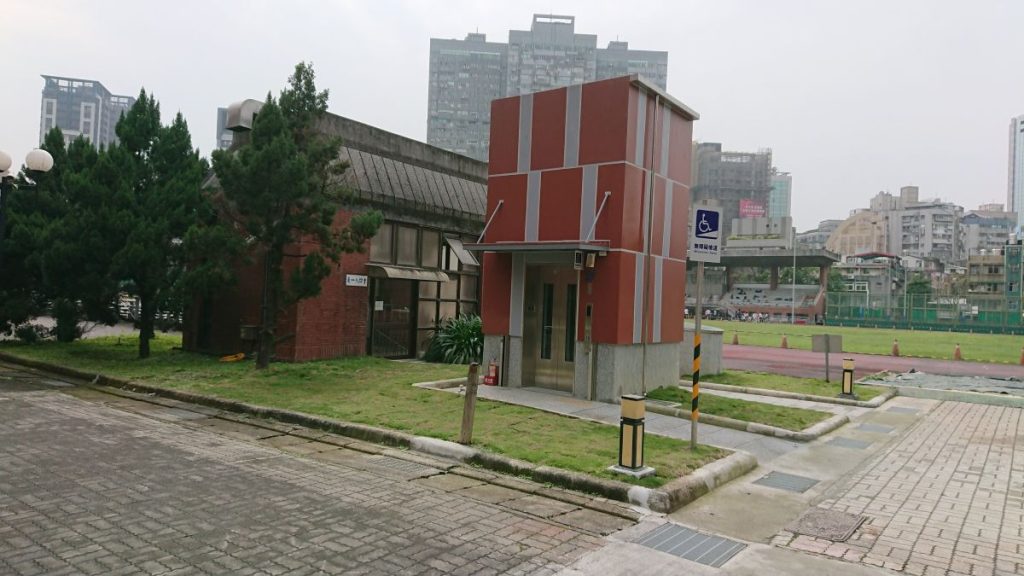
The Office of General Affairs conducts ongoing annual inspections, maintenance, and improvements to accessible facilities. In 2024, improvements included converting the manual door of the accessibility restroom in the Heping Campus Cheng Building to an automatic door, installing an additional elevator in the Mathematics Building on the Gongguan Campus, and maintaining existing accessible facilities on the Linkou Campus—such as replacing damaged materials surrounding the toilet in the accessible restroom in the Jingye Building classroom area and replacing deformed restroom doors.Support Resources for Faculty and Staff with Disabilities:
In accordance with the Ministry of Education’s Reference Guidelines for Inventorying Support Resources for Faculty and Staff with Disabilities, the Office of Personnel inventories internal and external support resources available to employees with disabilities. A consolidated resource directory has been established and is proactively provided to faculty and staff, with a designated single contact point on campus to offer timely assistance.Mobility Aid Lending Services:
The Health Center provides crutches and wheelchair loan services, allowing faculty, staff, and students in need to borrow mobility aids at any time.
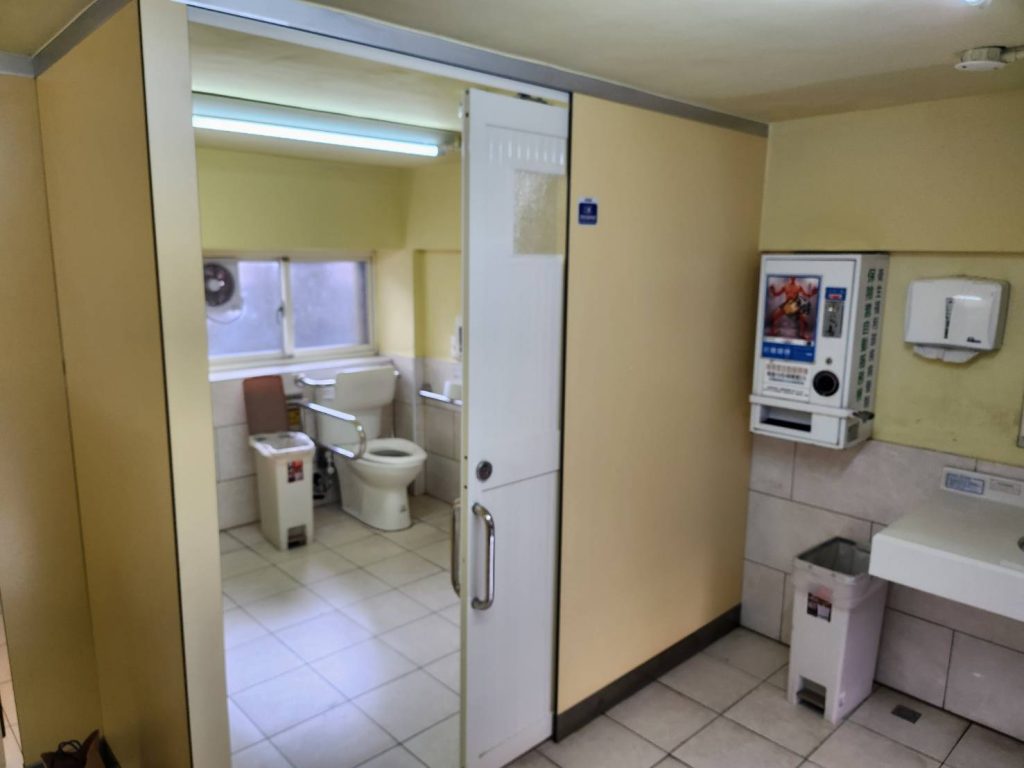
Accessible Restroom
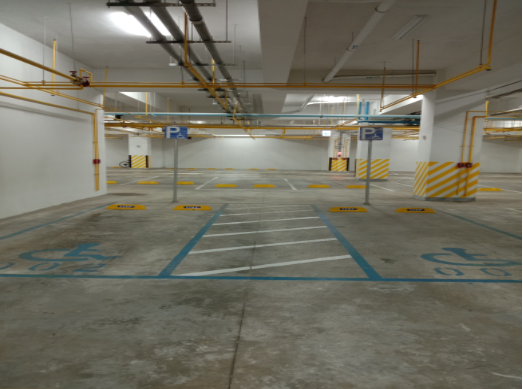
Accessible Parking Space
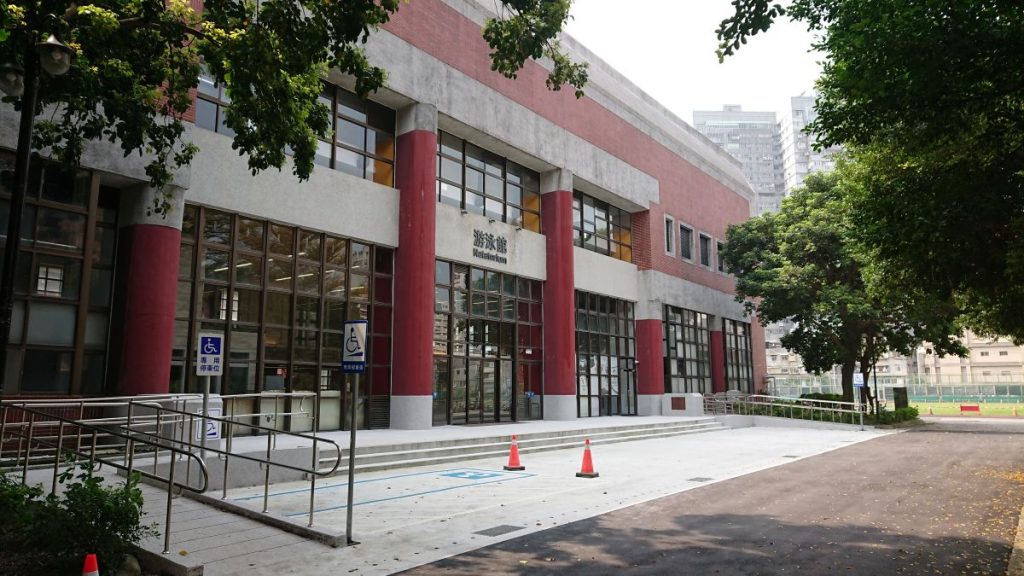
Accessible Ramp
Accessible Elevator
10.6.8 Disability support services
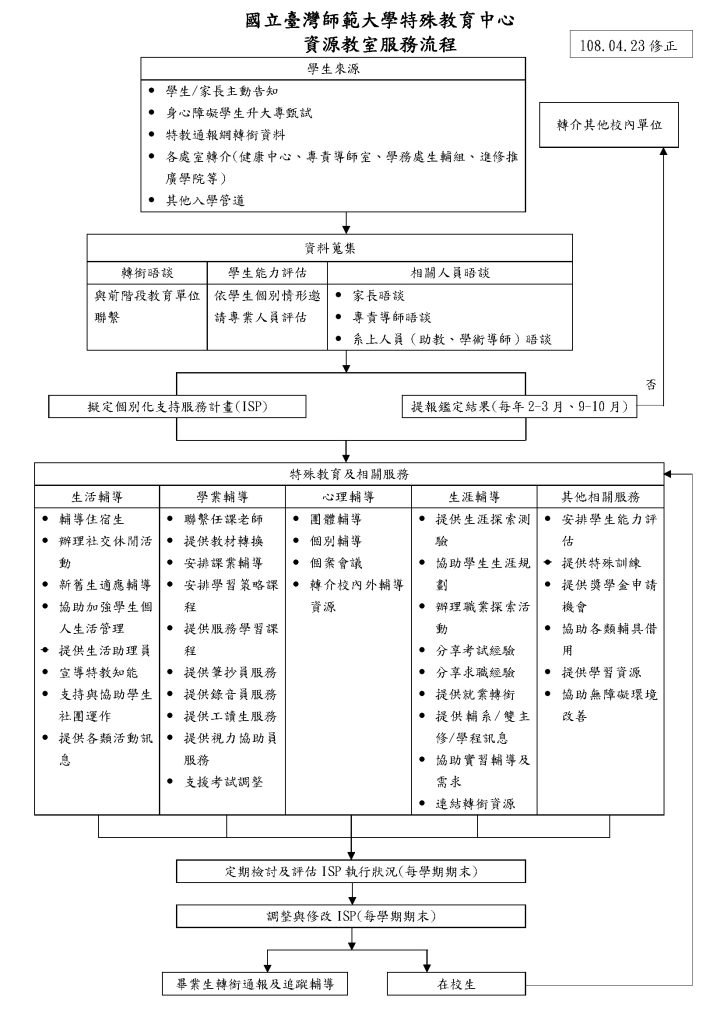
The Special Education Center has a long history, established in 1974, and is dedicated to research, consultation, counseling, and outreach in special education. The Resource Classroom provides individualized support services for students, including academic tutoring, psychological counseling, life counseling, and career counseling, with a total of 3,234 service engagements. At the beginning of each academic year, the Center convenes Individualized Support Plan (ISP) meetings for students with special needs. In the first semester of Academic Year 2024–2025 (AY 113), 188 ISP meetings were held, involving 577 participants (including students, parents, academic advisors, dedicated advisors, departmental assistants, and resource room counselors).
Based on the needs identified in these meetings, the Center provided the following services from the second semester of AY 113 up to March:
(1) 218 instances of academic tutoring
(2) 6 instances of assessment accommodation
(3) 16 instances of instructional material conversion
(4) 10 hours of real-time transcription services
(5) 182 hours of visual assistance services
(6) 334 hours of personal care assistance
(7) 2 assistive device applications
(8) 128 individual counseling sessions
(9) 16 group sessions providing interpersonal supportAccording to the university’s Dormitory Management Guidelines, international students, overseas Chinese students, students with disabilities, and students from low-income households are given priority for dormitory allocation, ensuring a safe and convenient living environment. Through these measures, the university is committed to supporting students with disabilities in completing their studies successfully and advancing educational equity.
10.6.9 Disability access scheme
National Taiwan Normal University is committed to educational equity and inclusion, providing comprehensive learning, research, and employment support for students, faculty, and staff with disabilities. The university actively promotes an accessible campus environment and an inclusive cultural atmosphere. Related initiatives are as follows:
1. Organizational Structure and Support Mechanisms
To promote research and services in special education, the university established the Special Education Center in 1974 in accordance with the Ministry of Education’s “Special Education Development Acceleration Plan.” The center continues to engage in research, consultation, and outreach, and celebrated its 50th anniversary with a special publication in 2024 showcasing long-term achievements.
In 1992, the Special Education Resource Classroom was established based on the Ministry of Education guidelines for supporting students with disabilities in higher education, providing counseling in learning, psychological well-being, daily living, and career development. The university also enacted the Regulations for the Special Education Promotion Committee to integrate internal and external resources and strengthen cross-unit collaboration to meet diverse student needs.
The Office of Special Education Resources was further established to create a fair and accessible learning environment, foster self-advocacy and resource utilization abilities, and support students in adapting to campus life and successfully completing their studies.
For faculty and staff, the university maintains an Accessibility Service Information Portal, consolidating on- and off-campus living and workplace support resources.
2. Accessible Curriculum and Campus Environment
System Optimization:
The university has improved course registration systems to ensure accessibility and provides priority course enrollment for students with disabilities. English listening test formats are adjusted when necessary (e.g., for students with moderate to severe hearing impairments) to ensure fair and equitable assessment.Innovative Teaching and Support:
Career Development:
Through collaboration with Fubon Financial Group on the “Feather Project,” students receive free professional skills training. The university also operates on-campus work-study counseling in cooperation with the Personnel Office and has assigned dedicated career advisors to establish a structured transition support system.Skills Enhancement:
English language and guided-tour communication courses (taught by foreign instructors) are offered to strengthen students’ language proficiency and workplace competitiveness.Self-Advocacy:
The student-led “Playing with Disabilities” Podcast encourages students to share diverse perspectives and enhances self-expression and social participation.
3. Research Advancement and National Resource Development
Applied Research Dissemination:
The university promotes a postsecondary transition program for students with intellectual disabilities, supporting their adaptation to university learning environments while developing independent living skills and social interaction abilities, thereby enhancing educational continuity and social inclusion.National Platform Development:
The university maintains a nationwide special education information platform, providing theoretical and practical resources for special education professionals, promoting knowledge exchange and resource sharing, and strengthening the sustainable development of Taiwan’s special education system.
10.6.10 Disability accommodation policy
In accordance with the needs of students with disabilities, the university provides the following reasonable accommodation measures:
- On-Campus Dormitory Support under the Disadvantaged Student Assistance Program:
The program offers full subsidies for on-campus housing across all dormitories, regardless of room type or accommodation fee level. - Comprehensive Academic and Living Support Services:
These services include adjustments to student learning assessments, conversion of learning materials, adapted physical education courses, assistive device services, accessible dormitory rooms, transportation subsidies, and various scholarships and grants. - Dreams Fulfillment Talent Cultivation Scholarship (2024):
In 2024, a total of 206 scholarship awards were provided, amounting to NT$2,060,000.
The student dormitories include 17 accessible rooms and 1 room designated for students with hearing impairments, accommodating 47 students with disabilities and 6 students with hearing impairments. Additionally, 9 medical recovery rooms are available, providing housing for 27 students in need of temporary or ongoing medical accommodation.
References:
10.6.11 Anti-harassment policy
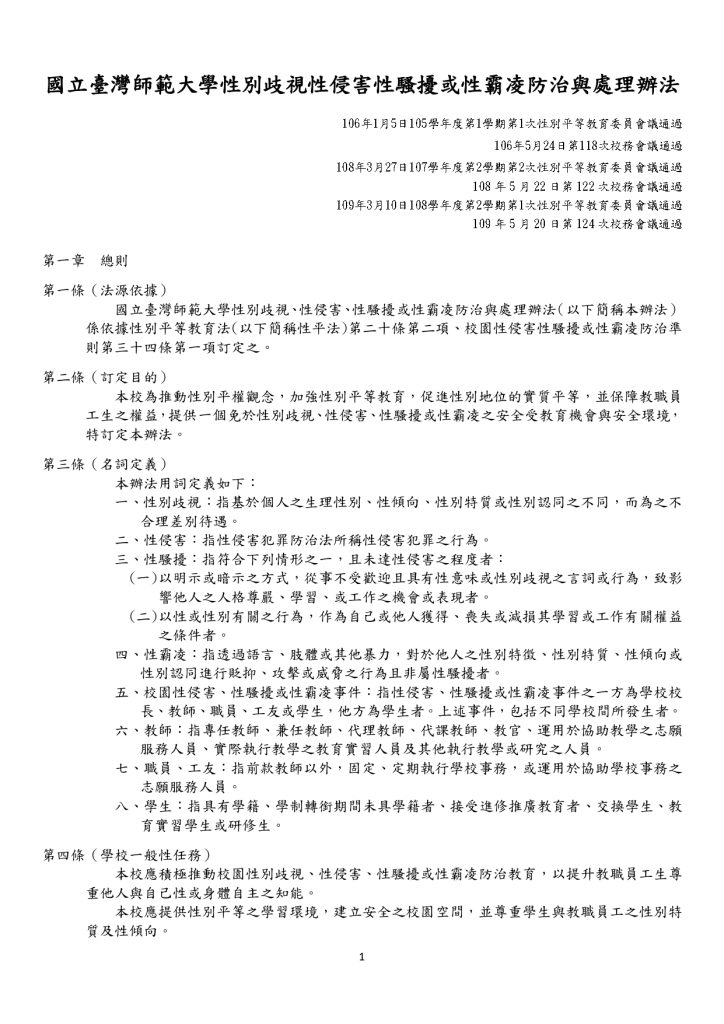
The university has established anti-harassment policies through the Personnel Office and the Gender Equality Education Committee. The Personnel Office has formulated the “Guidelines for the Prevention, Filing of Complaints, and Investigation of Sexual Harassment”, which apply to faculty, staff, and students in accordance with the Act of Gender Equality in Employment and the Sexual Harassment Prevention Act. The university further requires that sexual harassment prevention education and training be held regularly each year, or encourages faculty and staff to participate in such training with official leave, in order to strengthen awareness of gender equality.
In order to promote gender equality on campus and to prevent and address incidents of gender discrimination, sexual assault, and sexual harassment—thus protecting the rights of all faculty, staff, and students—the Gender Equality Education Committee has established a set of procedures for handling gender-related cases. These include the appointment of members to the Sexual Harassment Grievance and Review Committee, application forms for investigation, notification forms for various categories of gender-related incidents, and standard operating procedures for academic departments when responding to campus gender-related cases. Together, these efforts contribute to maintaining a safe and secure educational environment.
National Taiwan Normal University Policy Statement on Campus Anti-Harassment
Passed at the 3rd Working Meeting of the Sustainable Development and University Social Responsibility Promotion Committee of the University on October 22, 2026
National Taiwan Normal University (hereinafter referred to as “the University”) is dedicated to creating a campus environment that is safe, respectful, diverse, inclusive, and free from harassment, thereby safeguarding the human dignity and equal rights of all campus members. The University maintains a zero-tolerance policy toward any form of harassment, bullying, intimidation, and discrimination. To further implement the core principles of United Nations Sustainable Development Goal 10 (SDG 10: “Reduced Inequalities”) and campus anti-harassment policies, this policy statement is hereby formulated.
I. Scope of Application and Fundamental Principles
These campus anti-harassment principles apply to students, faculty, staff, researchers, and contracted vendors of the University. They cover teaching, research, administration, employment, campus life, and all university-related activities, including off-campus field trips, internships, and online interactions.
The University strictly prohibits any harassment based on gender, gender identity, sexual orientation, race, ethnicity, nationality, religion, disability, age, socioeconomic status, or any other personal status and characteristic protected by law. The University’s preventive scope encompasses sexual harassment, workplace bullying, cyber harassment, and any other inappropriate conduct that creates a hostile, intimidating, offensive, or unfriendly learning and working environment.
II. Preventive Measures
The University raises awareness of harassment prevention, mutual respect, diversity, and inclusion among all campus members through educational campaigns, professional training, and relevant preventive initiatives.
All academic and administrative units share the responsibility of maintaining a harassment-free campus and shall undertake appropriate preventive and handling measures regarding related incidents.
III. Grievance Procedures and Rights Protection
The University establishes accessible, well-defined, and confidential reporting and grievance channels. Grievance cases shall be handled adhering to the principles of fairness, timeliness, and objectivity in accordance with relevant laws, regulations, and internal University policies, while safeguarding the privacy and legitimate rights of all parties involved.
The University shall provide appropriate protective, supportive, and assistive measures tailored to the needs of individual cases. Retaliation or adverse treatment against anyone who files a grievance in good faith, participates in an investigation, or seeks assistance is strictly prohibited.
The University shall regularly review the implementation of its harassment prevention, grievance handling, and support mechanisms, continually strengthening institutional governance and administrative accountability to foster a safe, fair, respectful, and inclusive campus environment.