2026 SDG3

3.2.1 健康促進與衛生教育專業畢業生的比例

2023學年度畢業生總數共計3802人,健康專業相關系所(含學士班、碩士班、碩專班、博士班),包含體育系所、心輔系所、衛教系所、人發系所、特教系所、生科系所、營養學程、復諮所、社工所、生科所、生醫所及樂活 EMBA 等畢業生共700人。參考資料:2023學年度本校畢業人數統計表。

學年度

2022

2023

畢業生數

3605

3802

衛生專業畢業生數

614

700

衛生專業畢業生比例

17.03%

18.41%

3.3.1 與社區、政府、國際衛生機關合作,以改善健康與福祉

本校結合健康促進、教育研究與社會實踐專長,透過地方、全國及國際合作,推動高齡健康、學校健康促進及全齡戶外活動,將研究與教學資源運用於社區健康服務、健康教育及跨國健康倡議。

1. 時光共融:高齡長健與跨世代共學計畫

合作層級:Local collaboration

本校透過高齡長健USR計畫,結合地方政府、文化健康站、大專院校、非營利組織與產業資源,推動健康體適能、科技檢測、數位包容及跨世代共學,從身體活動、生活技能與社會互動等面向,支持社區高齡者健康與福祉。

  • 結合社會局資源,提供持續性的高齡體能活動

本校與臺北市政府社會局共同推動銀齡樂活據點業務及課程,2025年開設4期、18門高齡身心健康與樂活相關活動及課程,將體能活動納入持續開設的社區課程,提供高齡者規律參與身體活動的機會。全年共辦理240堂體能活動課程,高齡者參與7,030人次,並有教師及學生共同參與。透過連續辦理的課程,支持高齡者將運動融入日常生活,以維持身體活動能力及自主生活所需的體能為健康促進方向。

據點亦辦理80場青銀共餐活動,以及14場講座與工作坊,將身體活動與人際交流結合於社區支持場域。高齡者除能參與運動,也可透過共同用餐、學習及跨世代互動,增加社會參與機會,兼顧身體健康與心理社會福祉。
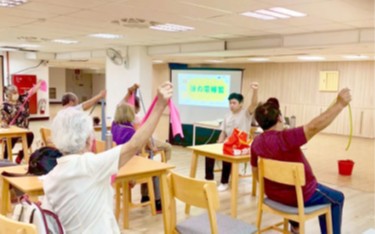
Through health promotion and sustainability education programmes for older adults, NTNU provides community residents with aerobic exercise, strength training and stretching activities, alongside practical education on climate change adaptation, low-carbon diets and plastic reduction. These activities help older adults develop health management skills and adopt more sustainable lifestyles. The photo shows older community members participating in an exercise class.
「銀領健康浪潮」大型社區健康促進方案累計服務逾7,000人次
  • 與地方單位合作,將健康體適能課程及科技檢測帶入社區

本校與宜花數位機會中心、五結鄉公所及蘇澳鎮公所合作,在地方社區推動高齡健康體適能課程與科技檢測服務。合作內容兼具實際身體活動與檢測服務:透過體適能課程提供運動參與機會,並藉由科技檢測協助高齡者瞭解自身健康體適能狀況,使健康學習連結個人身體狀況與日常活動需求。

上述合作共辦理99場,社區高齡者參與2,970人次。本校將體適能教學與科技檢測資源帶入地方場域,結合地方單位的社區連結,提供高齡者接觸健康知識、參與運動及認識自身體能狀況的機會,以支持健康老化與日常生活自主能力。

  • 深入文化健康站,推動數位包容與跨世代共學

本校於新北新店中正文化健康站及新北市中和巴歌浪文化健康站辦理長健數位包容教育提升方案,結合學生參與,支持高齡者學習數位生活技能,並增加跨世代交流機會。兩處文化健康站共辦理96場活動,服務高齡者2,880人次,學生參與272人次,將學習與交流機會帶入高齡者熟悉的社區場域。

本校亦與臺北市政府資訊局「厝邊好幫手服務」計畫合作,由學生參與提供社區高齡者數位諮詢,並結合資訊安全、防詐及媒體識讀宣導。服務除協助高齡者面對數位使用問題,也將安全判讀資訊與辨識詐騙風險納入學習內容,支持其參與數位生活。2025年學生參與152人次,服務高齡者1,104人次。
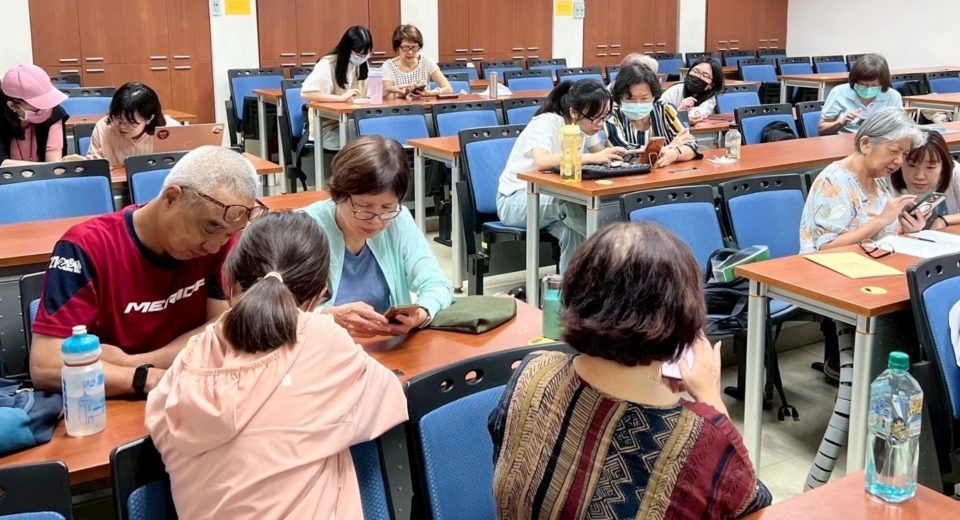
NTNU students serve as youth digital assistants, helping older community members set up NFC functions through hands-on guidance to improve their digital skills.
本校學生擔任青年數位好幫手協助社區長輩設定NFC功能,透過實際操作指導,提升長者的數位應用能力。
  • 透過藝術與文化活動,拓展高齡者社會參與

本校與身體氣象館、牯嶺街小劇場合作,參與4場戲劇創作及讀劇演繹交流活動;並與新北市圖書館林口李科永紀念圖書館合辦「羽芬的筆心讀劇音樂會」,透過戲劇、讀劇及音樂提供表達與交流的機會。此外,計畫參與臺北市政府文化局主辦的「山城食序」活動,推廣青銀共融創齡方案,將跨世代共學延伸至地方文化活動。

  • 跨校及跨組織合作,培育高齡服務人才

本校與多所大專院校合作,推動高齡服務及樂齡方案設計人才培力,透過高齡知能課程,支持參與者發展服務高齡者及設計學習方案的能力,共辦理18場課程,合計917人參與。

計畫亦與中華電信基金會、社團法人臺灣服務學習學會、金車文教基金會及揚生慈善基金會合作,辦理高齡人才培力講座與專業研討會,促進不同領域的知識與實務經驗交流;另與雄獅旅行社合作舉辦「社會實踐—哈伯造星」講座,拓展高齡服務與產業實務的對話。
Students enrolled in NTNU’s “Community Service Practicum for Older Adults” course apply their disciplinary expertise to design and deliver service programmes at community centres.
「社區高齡者服務實習」課程學生結合系所專業設計方案至社區據點服務。

計畫合作夥伴名單

大專院校

宜蘭大學

臺北醫學大學

陽明交通大學

臺北商業大學

亞東科技大學

佛光大學

中原大學

長庚科技大學

朝陽科技大學

韓國國立釜山大學


政府單位

臺北市政府社會局

臺北市政府資訊局

臺北市政府文化局

新北新店中正文化健康站

新北市中和巴歌浪文化健康站

新北市圖書館林口李科永紀念圖書館

宜花數位機會中心

五結鄉公所

蘇澳鎮公所


非營利組織

身體氣象館

牯嶺街小劇場

中華電信基金會

社團法人臺灣服務學習學會

金車文教基金會

揚生慈善基金會


產業界

雄獅旅行社


2. 臺灣健康促進學校(HPS)計畫

合作層級:Local collaboration、National collaboration

本校承辦教育部國教署委託之臺灣健康促進學校相關計畫,結合地方學校合作網絡,透過師資增能、計畫輔導及健康教育資源,支持學校將健康促進融入教學、校園環境與日常生活。

計畫以學校衛生政策、學校物質環境、學校社會環境、社區關係、個人健康技能及健康服務六大範疇為架構,協助學校從健康需求出發,發展校本健康促進措施。在健康服務方面,強調透過健康觀察、調查與篩檢掌握師生健康狀態,並採取適當措施;在社區關係方面,重視學校與家長、政府機構、地方健康服務機構及社區組織的連結,共同營造支持健康的校園與生活環境。

2025年,計畫網站發布113學年度健康促進學校師資增能研習資料,涵蓋學生參與倡議賦能,以及性教育、菸檳防制、全民健保與正確用藥、健康體位、視力保健及口腔保健等推動策略,提供教師規劃健康教育與學生參與活動的專業資源,支持地方學校將健康知識轉化為教學及校園實踐。

本校並透過「臺灣健康促進學校」網站,整合健康議題教材、活動簡報與影音、衛教資源、指標及測量工具與計畫成果,支持地方學校取得健康促進資源,並透過全國性平台交流實務經驗,持續推動學生健康素養與健康生活實踐。

3. 參與2025年積極戶外活動宣言跨國合作計畫

合作層級:Global collaboration

本校公民教育與活動領導學系王伯宇副教授於2025年擔任「2025年積極戶外活動宣言」跨國合作計畫領導團隊成員,參與由加拿大戶外活動組織、女王大學、渥太華大學及東安大略兒童醫院研究所共同發起的跨國、跨領域合作研究,連結戶外教育與健康研究專業,推動全齡健康與福祉。

新版宣言以大量文獻回顧與分析為基礎,回應氣候變遷、網路成癮及社會與健康不平等等挑戰,主張將戶外活動作為全齡健康促進策略,鼓勵人們在生活、學習及工作中融入戶外活動,拓展戶外活動在健康生活中的應用。

王伯宇副教授於2025年9月25日至28日前往加拿大渥太華,與各國代表共同發表新版宣言。透過參與跨國團隊及共同健康倡議,本校將戶外教育專長連結國際健康促進研究與實務,促進全齡戶外活動及健康生活的知識交流。
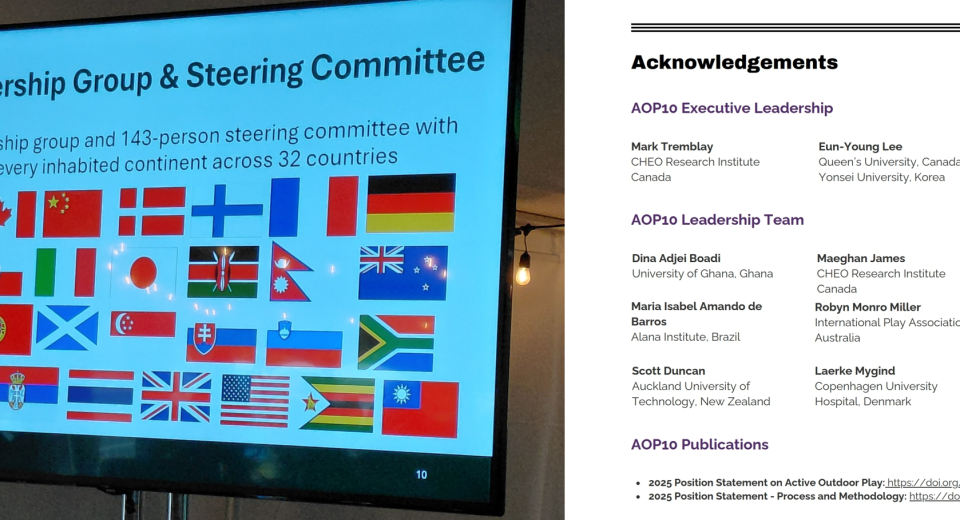
In 2025, Associate Professor Po-Yu Wang of NTNU’s Department of Civic Education and Leadership participated in the international collaborative project for the “2025 Position Statement on Active Outdoor Play” as a member of its global leadership team, working with scholars from various countries to promote outdoor play and health across all ages. The left image shows Taiwan’s national flag displayed on the international collaboration team’s webpage, while the right image shows the statement’s acknowledgements page, which lists Associate Professor Wang and his affiliation with NTNU under the “AOP10 Leadership Team.”
2025年,本校公民教育與活動領導學系王伯宇副教授參與「2025年積極戶外活動宣言」跨國合作計畫,擔任國際領導團隊成員,與各國學者共同推動戶外活動及全齡健康促進倡議。圖左為國際合作團隊頁面列示我國國旗,圖右為宣言致謝頁面將王伯宇副教授及本校列入「AOP10 Leadership Team」名單。

3.3.2 健康促進與衛生教育外展計畫

本校結合健康促進、運動、心理諮商及教育專業,透過大學社會責任計畫、社區合作與學生服務,向社區高齡者、家庭照顧者及具福利身分的弱勢家庭提供健康與福祉支持。2025年持續推動社區運動、健康科技檢測、心理支持與偏鄉健康教育,將校內專業資源轉化為社區居民可參與的服務。

1. 時光共融:高齡長健與跨世代共學計畫

服務對象:當地社區高齡者、中高齡者及其支持者

本校透過高齡長健USR計畫,深入臺北、新北及宜蘭社區,結合規律身體活動、健康科技檢測、數位包容與跨世代共學,支持高齡者維持健康生活及社會參與。計畫以社區需求為基礎,串聯教師、學生、健康專業人員與地方夥伴,提供持續性的健康促進服務。

  • 持續辦理社區運動,支持健康老化

2025年,本校於公館校區辦理兩梯次大型社區健康促進方案,分別於3月至5月及9月至12月進行,共辦理28場高齡體適能活動,服務社區高齡者6,496人次,並有講師、助教及護理師參與執行。透過連續辦理的課程,提供高齡者規律參與身體活動的機會,支持其維持活動能力與日常生活所需體能;另辦理4場健康促進講座,協助參與者增進健康知識。

本校亦與臺北市政府社會局合作,推動銀齡樂活據點的健康身心樂活系列課程,全年辦理240場,服務高齡者7,030人次;另辦理120場USR樂齡運動班,服務高齡者3,640人次,讓社區長者持續取得運動與健康學習資源。

在宜蘭地區,計畫延續五結及蘇澳的社區服務,全年辦理99場體適能活動,服務20個社區、高齡者2,970人次,將運動參與機會帶入地方生活場域。

  • 提供健康科技檢測,增進自我健康認識

本校結合銀齡樂活據點、宜花數位機會中心及日間照顧、長期照顧等合作單位,辦理5場高齡健康科技檢測活動,服務380位高齡者。計畫以智慧科技檢測協助長者認識身體狀況及生活型態,並以自主健康管理與規律體適能活動為推動方向,將健康檢測與日常健康促進相連結。

  • 結合專業課程,由學生進入社區服務

本校將社區健康服務納入高齡人才培育課程。2025年春季,「社區高齡者服務實習」由20位學生至7個社區據點服務;秋季「社區高齡者健康服務實務」則由24位學生參與社區見習,並設計4個服務方案,於高齡夢想市集與社區長者互動。

同年6月,本校與國立宜蘭大學合作,至五結鄉辦理高齡人才共備暨青銀共學活動,結合數位包容、生活防詐與健康體適能課程,讓學生將專業運用於社區,也讓不同地區、不同世代的參與者交流學習。

  • 回應數位落差與社會支持需求

計畫在銀齡樂活據點、臺北市社區據點及新北市文化健康站等場域,辦理96場長健數位包容教育提升方案,服務高齡者2,880人次。另與臺北市政府資訊局合作提供數位諮詢,協助高齡者處理科技使用問題,並融入防詐及假新聞辨識,支持其安全參與數位生活。

本校亦透過照顧現況調查了解高齡者的健康監控、生活支持、情感陪伴及照顧者壓力等需求,作為方案調整的參考;並辦理17場中高齡前瞻因應講座,提供面對老化與照顧議題的學習機會。2025年11月另舉辦全齡運動會,由高齡者、中高齡者及青年跨世代組隊,透過體適能與童玩遊戲,結合身體活動、社會互動及世代共融。
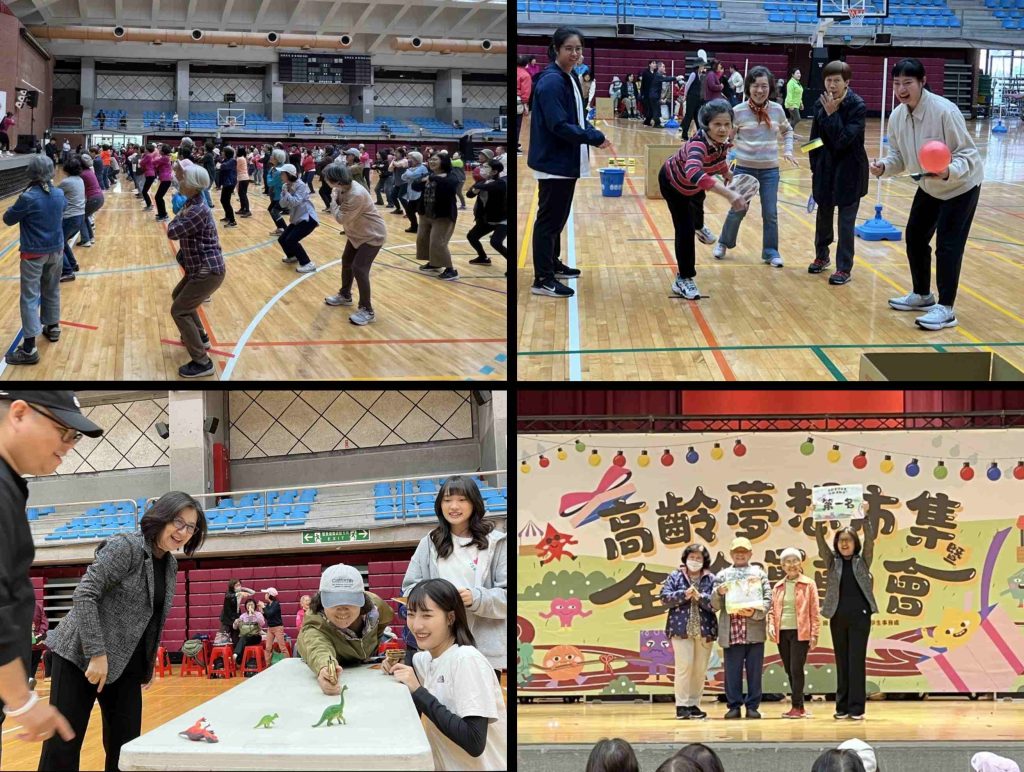
On November 22, 2025, NTNU organized the “Dream Market for Older Adults” and the inaugural “All-Ages Sports Day” through its Generations in Harmony: Healthy Aging and Intergenerational Learning USR project, attracting over 750 participants, including older community members, local residents, students and faculty. The events combined health promotion, technology-based experiences and intergenerational fitness competitions. Through interactive activities and student involvement, they encouraged older adults to stay physically active, expand their social participation and embrace healthy aging and intergenerational inclusion.
2025年11月22日,本校透過高齡長健USR計畫舉辦「高齡夢想市集」暨首屆「全齡運動會」,吸引逾750位社區長者、民眾及師生共同參與。活動結合健康促進、科技體驗與跨世代體適能競賽,透過多元互動及青年學生參與,鼓勵高齡者維持身體活動、拓展社會參與,實踐健康老化與世代共融。
2. 暖陽「心」社區——高齡長者心理諮商之生態系統服務模式

服務對象:當地社區高齡者、家庭照顧者及相關社區民眾

本校整合教育心理、輔導諮商、衛生教育、人類發展與社會工作等跨領域專業,與心田心理諮商所、社區據點及北投親子館合作,將專業心理支持帶入社區。服務包含個別諮商、家庭會談、心理成長團體、公益工作坊及身心健康推廣,回應高齡者與家庭照顧者不同層次的支持需求。

  • 提供專業諮商與家庭支持

2025年持續推行樂齡公益諮商方案,由專業諮商心理師提供個別諮商與家庭會談,全年服務長者及家庭照顧者134人次。服務針對情緒與心理困擾提供支持,並透過家庭會談回應陪伴及家庭關係需求,讓長者與照顧者有機會接觸專業心理資源。

  • 在社區據點推動情緒支持與心理成長

本校於錦華里據點辦理8場樂活心靈工作坊,服務高齡者240人次。活動結合正念、優勢探索、生命經驗分享與手作媒材,透過香包、園藝、拼貼及其他創作,引導長者表達感受、認識自身資源,並與他人交流。

另與心田心理諮商所辦理6場樂齡公益工作坊,服務高齡者53人次,主題包括五感體驗、情緒舒緩、自我探索及生命敘說。活動由心理專業人員及實習心理師帶領,運用樹葉拓印、粉彩、馬賽克拼貼、香氛蠟燭與植物生態瓶等媒材,提供具支持性的表達與分享空間。

本校亦與北投親子館合作辦理6場高齡者心理成長團體,服務48人次,內容涵蓋正念、情緒覺察、人際關係、溝通表達、關係衝突及跨世代互動,透過結構化活動與經驗分享,支持長者自我理解及人際連結。

  • 透過互動體驗推廣身心照顧

計畫於高齡夢想市集設置HRV壓力檢測、花草香包情緒療癒及彩色鹽罐療育諮詢等互動攤位,服務172人次,讓長者及家屬以容易參與的方式接觸身心健康知識,學習日常紓壓方法。

2025年共辦理26場活動,實體活動服務710人次,年度平均活動滿意度為97.83%。計畫並辦理7場實習心理師個案研討會,透過實務交流與專業討論,支持高齡心理服務人員的培育及服務品質。
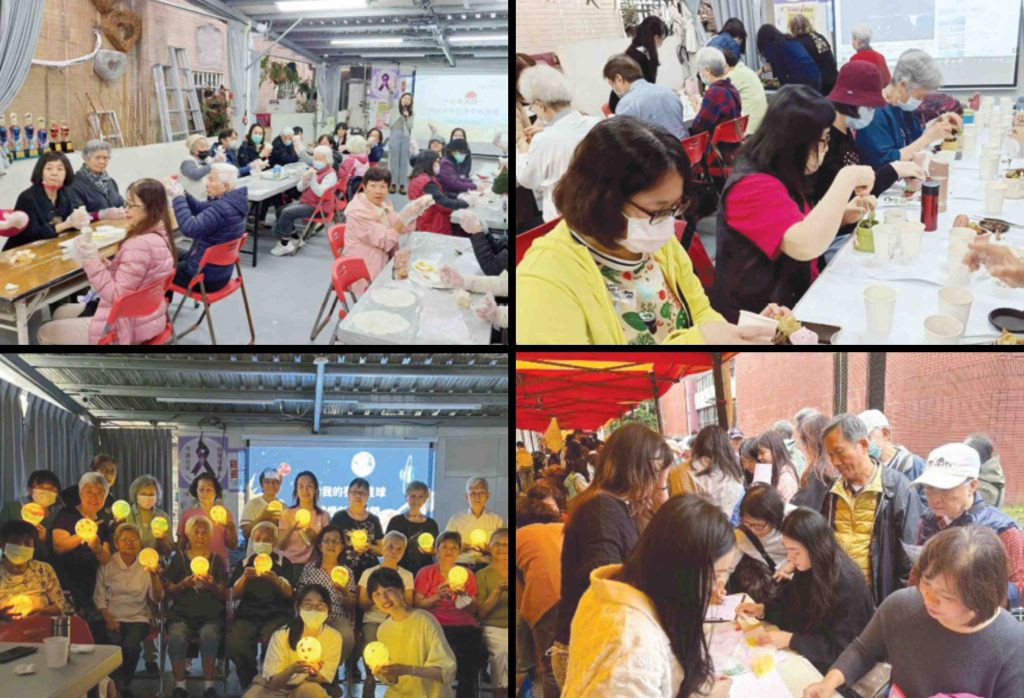
In 2025, NTNU’s “Warm Hearts in the Community” project collaborated with Hsin-Tien Psychological Counselling Clinic and local community service sites to provide psychological counseling, personal growth groups, emotional support workshops and mental and physical well-being activities for older adults and family caregivers. The collage shows older adults participating in various mental health promotion activities. Through professional guidance, interactive experiences and shared discussions, these activities supported psychological well-being, emotional expression and social connections. The project organized 26 activities during the year, recording 710 in-person attendances.
2025年,本校透過「暖陽『心』社區」計畫,結合心田心理諮商所及地方社區據點,為高齡者與家庭照顧者提供心理諮商、心理成長團體、情緒支持工作坊及身心健康推廣活動。上圖為長者參與不同類型的心理健康促進活動之剪影,透過專業引導、互動體驗與經驗交流,支持高齡者的心理健康、情緒表達及社會連結。全年共辦理26場活動,實體活動服務710人次。
3. 衛教系三芝長者服務營與弱勢家庭關懷

服務對象:當地社區長者、具福利身分的弱勢家庭(Local communities、Disadvantaged people)

2025年5月2日至3日,本校健康促進與衛生教育學系與新生活社會福利發展促進會合作,辦理兩天一夜長者服務營。張家臻助理教授帶領博士班師生一行14人,走入新北市三芝區埔頭及新庄馨窩長者關懷據點,將健康促進與高齡照護課程所學轉化為社區服務。

  • 以音樂律動與互動活動推動健康生活

師生設計音樂帶動唱及健康促進活動,播放《心花開》並帶領長者身體律動、活動筋骨,增加身體活動與團體互動的機會。活動運用台語主持,結合跨世代交流,讓健康活動貼近長者熟悉的語言與生活經驗。

團隊亦帶領母親節康乃馨手作,並以拍立得記錄長者參與活動的笑容,透過節慶陪伴、創作與互動提供情感交流機會;另安排香草茶體驗及健康生活分享,將健康教育融入日常生活情境,兼顧身體活動與心理社會福祉。

  • 參與福利案家物資發放,提供生活支持

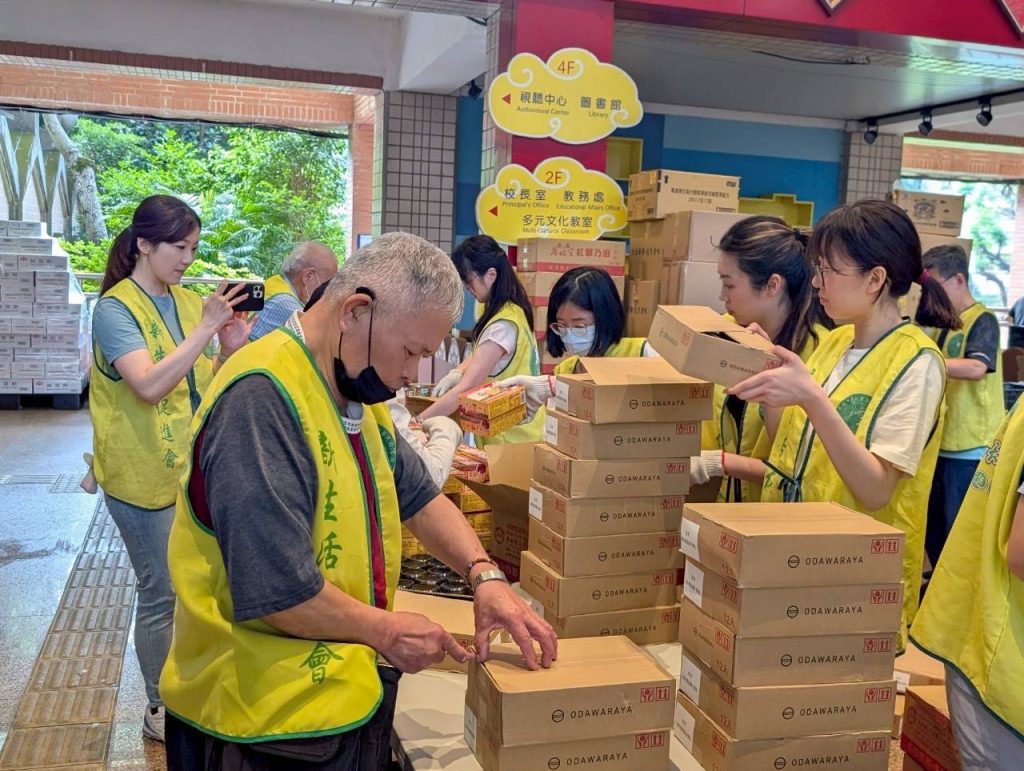
除據點健康活動外,師生於5月2日協助搬運及整備物資,並於翌日參與三芝國小的物資發放行動。該活動面向三芝區公所列冊具福利身分的881戶案家,發放25樣物資,由協會、臺師大師生、企業及童軍等團隊共同投入。

本校師生參與物資搬運、分類、現場引導及溝通,協助物資發放順利進行;整體活動另設代領安排,協助行動不便者取得物資。透過據點健康活動與弱勢家庭生活支持,本校將學生專業學習連結地方需求,實踐社區健康促進及對弱勢群體的關懷。
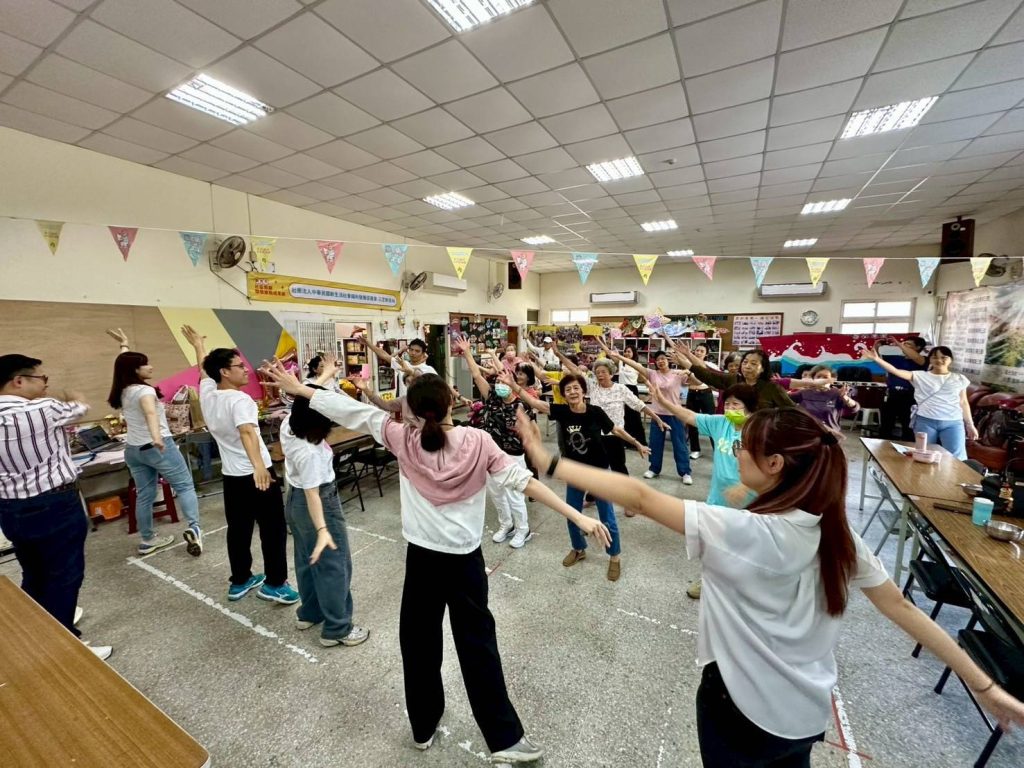
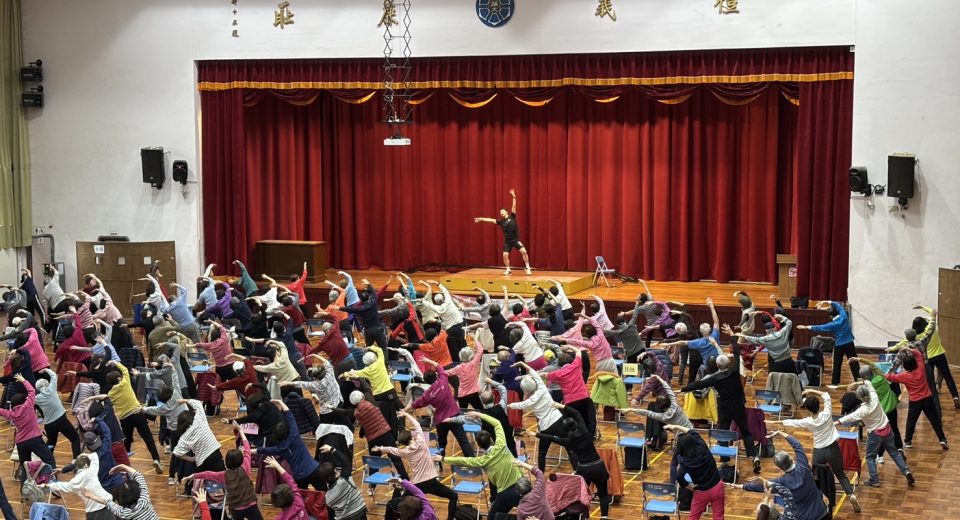
At the Sanzhi Community Service Camp for Older Adults, NTNU students led older community members in group exercises. Through music-based movement and group interaction, the activities promoted physical activity and social participation among older adults.
本校學生於三芝長者服務營帶領社區長者進行健康操,透過音樂律動與團體互動,促進高齡者身體活動及社會參與。
NTNU students and volunteers worked together to prepare, sort and distribute essential supplies to disadvantaged households in Sanzhi. Through collaboration across participating teams, they helped address the everyday needs of local families, putting community service and care for disadvantaged groups into practice.
本校學生與志工於三芝弱勢家庭物資發放活動中,協力進行物資整備、分類及發放作業,透過跨團隊合作回應在地家庭的生活需求,實踐社區服務與社會關懷。

3.3.3 共享體育設施

本校秉持社區共融理念,透過《校園開放宣言》,將戶外運動設施與校園開放空間免費提供在地居民及一般民眾使用。開放範圍包括戶外操場、戶外球場、校園綠地及空地等室外空間,讓社區居民共享校園資源,增加日常運動與休閒活動的機會。

在兼顧校園安全與教學正常運作的原則下,凡場地未安排課程,且未有其他活動申請預約,民眾即可直接進入並免費使用,無須事先申請或預約。透過免費共享戶外運動設施與開放空間,鼓勵社區居民、學校師生及運動團體共同善用校園運動設施與開放空間,建立校園與社區間的長期合作關係,推動全民健康與永續生活環境。
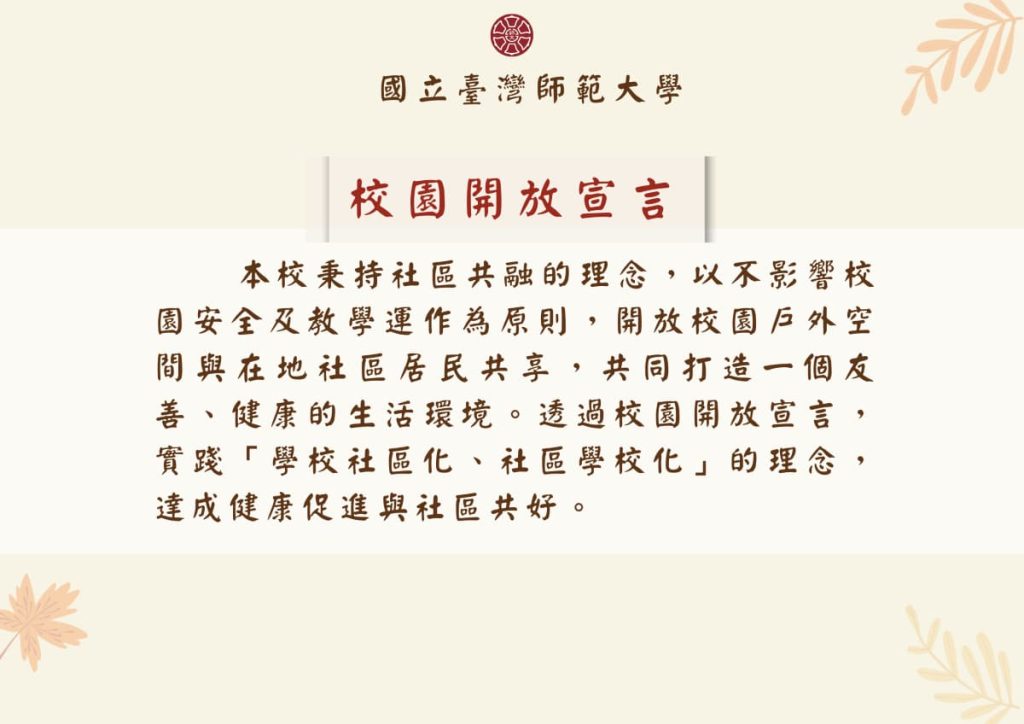
Upholding the principle of community co-prosperity, NTNU opens its outdoor campus spaces for shared use with local residents, under the premise of ensuring campus safety and the normal operation of teaching activities. Through the Campus Open Access Declaration, the university embodies the concept of “schools as part of the community and communities as part of the school,” fostering health promotion and mutual well-being between the university and the local community.
國立臺灣師範大學校園開放宣言

本校秉持社區共融的理念,以不影響校園安全及教學運作為原則,開放校園戶外空間與在地社區居民共享,共同打造一個友善、健康的生活環境。透過校園開放宣言,實踐「學校社區化、社區學校化」的理念,達成健康促進與社區共好。

3.3.4 為學生提供免費性教育服務

本校透過健康中心提供學生性健康資訊、教育活動及預防用品取得管道,協助學生認識性健康與愛滋防治議題,支持其性與生殖健康需求。

  • 免費提供衛教資訊與多元性教育活動

健康中心設置「性教育(含愛滋防治)」專頁,彙整疾病管制署及相關民間組織資源,提供PrEP相關衛教圖卡、愛滋防治資訊及宣導影片,學生可透過公開網站免費查閱相關資訊。

2025年,本校辦理12項性教育及相關宣導活動,合計參與2,124人次,所有活動均免費提供學生參與。活動包括「愛滋防治從理解開始」懶人包、「愛滋,不等於人生的終點」線上健康講座,以及校園快閃活動與新生營學習資源博覽會的愛滋防治諮詢闖關,透過線上教材、講座與校園互動,增加學生接觸性健康資訊的機會。

本校亦辦理「性暴力施加者在想什麼?」「女性性需求的可視化」等主題講座,並結合情感關係討論與讀書會,提供學生認識性、身體需求及人際關係的學習機會。

2025年性教育及相關宣導活動

活動名稱

類型

日期

參加人次

愛滋防治從理解開始

懶人包

2026.04.25

780

愛滋,不等於人生的終點

線上健康講座

2026.05.01

844

愛滋防治校園快閃活動

快閃活動

2026.05.16

110

新生營學習資源博覽會—愛滋防治

諮詢闖關

2026.08.28

152

讀書會—終將成為你

讀書會

2026.09.24

21

戀愛無能者討論會

健康講座

2026.10.08

25

性別×工作討論會

健康講座

2026.10.16

32

厭女與父權社會的哲思

健康講座

2026.11.06

26

愛滋進行式

健康講座

2026.11.19

41

性暴力施加者在想什麼?

健康講座

2026.11.29

58

女性性需求的可視化

健康講座

2026.12.03

12

愛滋是這麼回事

健康講座

2026.12.04

23

合計


2,124

  • 提供校內預防用品取得管道

本校於校園設置保險套販賣機,每盒售價新臺幣10元,提供學生在校內取得預防用品的管道。透過免費性健康資訊、教育活動及校內用品供應,本校將健康知識與實際取得資源的方式相互連結,支持學生的安全性行為與避孕需求。

3.3.5 為學生提供心理健康支持

本校透過免費心理諮商、心理健康教育與團體活動、心理假關懷機制、導師制度及優惠諮商方案,提供學生多元的心理健康支持。藉由學生輔導中心、系所、導師及授課教師的合作,主動關懷學生需求,協助學生取得適切的心理支持與轉介資源。

1. 個別諮商服務

本校學生輔導中心為全體學生提供免費且具保密性的個別心理諮商,由心理師及實習心理師提供服務,涵蓋自我探索、生涯規劃、人際關係、情緒調適、家庭關係與壓力管理等議題,協助學生發展情緒管理與人際溝通能力,增進生活與學習適應。

學生可透過校務行政入口的「諮商輔導e化系統」申請個別諮商,亦可親至中心尋求預約協助。提出申請後,由系所心理師以電話或電子郵件聯繫,再依學生需求進行心理師媒合及後續安排。中心並辦理高關懷與危機學生個案管理,提供心理健康支持,協助有需要的學生連結校外資源。

2025年,學生輔導中心提供學生心理諮商,共計1,352人、6,463人次;高關懷與危機學生個案管理(心理健康支持),共計2,070人、9,389人次。處理議題包括精神疾病64人、133人次,校園性別事件51人、157人次,性騷擾/性侵害23人、53人次,自殺自傷53人、150人次,轉介校外資源40人、44人次,家庭暴力事件9人、33人次,其餘為生活適應等相關議題。

除個別諮商與個案管理外,中心亦透過心理健康講座及心靈成長系列團體工作坊,提供學生心理健康教育與團體形式的支持。2025年辦理心理健康相關講座共19場、共計505參與人次;辦理心靈成長系列團體工作坊活動共22場、共計273參與人次。

# 個別諮商服務說明 ## 什麼是個別諮商? 個別諮商是學輔中心主要的服務之一,提供全校學生一對一的專業心理諮商,以協助自我探索與瞭解,發展情緒管理與人際溝通能力,並促進良好的生活與學業適應。 ## 個別諮商的服務時間? 每個學期學輔中心都會持續規劃包括具自我探索、生涯規劃、感情問題、家庭關係、情緒困擾、壓力調適等議題專長的心理師/實習心理師值班,有關本學期的值班時間、心理師專長介紹等資料,您可在中心網頁關於我們「人員職掌」區及「個別諮商」業務項目中查詢,也可以選擇親至學輔中心獲得相關訊息喔! ## 如何預約個別諮商服務? 若您有個別諮商的需求,可以至「校務行政入口→應用系統→學務相關系統」中登錄「諮商輔導 e 化系統→個別諮商」,如有疑問也可以親自到學輔中心來,我們會有專人協助您進行預約申請。 ## 預約後的個別諮商安排? 在您提出個別諮商預約申請後,學輔中心的系所心理師會以電話或 email 的方式與您聯繫,後續也會再進入諮商媒合程序以為您安排適合的心理師,請您留意中心的相關聯繫(email 或 7749 開頭之電話)通知來確定後續相關安排情況。若您未接獲相關聯繫或通知,也可主動來電或來信中心洽詢。 **中心信箱:** counseling@deps.ntnu.edu.tw **中心電話:** 和平校區 II-(02)77495363、(02)77495364、公館校區-(02)77496451
2. 實施「心理假」制度

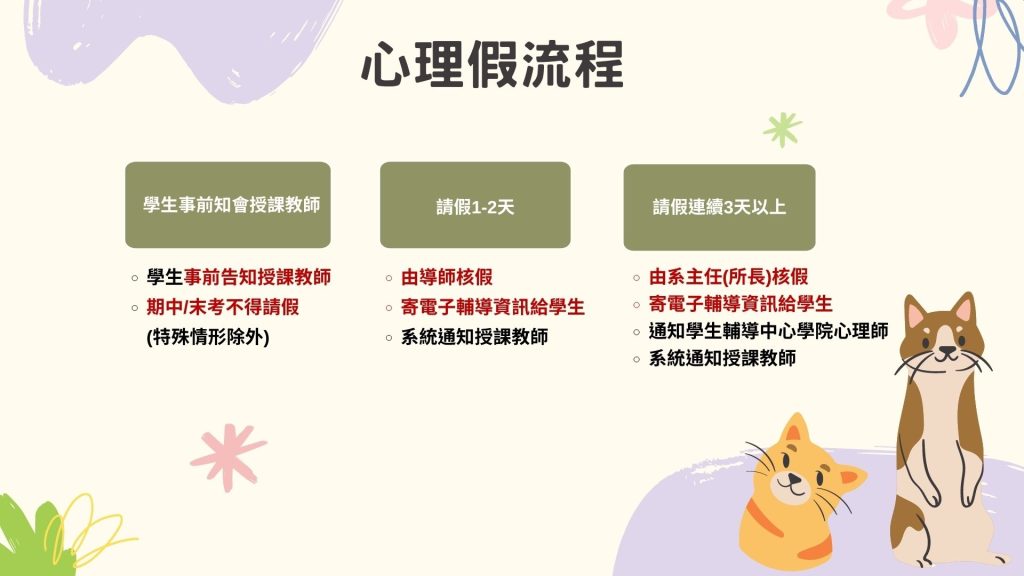
本校自2023年4月起實施「心理假」制度,整合學系、授課教師、專責導師及學生輔導中心,建立全方位的心理輔導機制:

  • 請假2日內由導師關懷。
  • 請假3日(含)以上由系主任(所長)關懷,並視需要安排諮商或就醫輔導。
  • 連續請假3天以上,系統通知學輔中心個管心理師初步評估學生狀況,並提供相關服務與轉介資源。
  • 請假系統自動發信關懷學生,提供處理情緒困擾及輔導資源資訊。
  • 完成請假程序後,系統通知授課老師,以便適時予以關懷。
Mentors will check on students who take leave for two days or less. For three days or more leave, the department head will provide support and arrange counseling or medical care as needed. If a student is absent for over three days, the system will notify the counseling center for an initial assessment and relevant services.
心理假流程
3. 導師制度提供學生關懷與心理支持

本校實施專責導師制度,提供學生個別初級關懷、情緒支持及必要轉介,並關注僑生與外籍學生的生活及學習適應需求。

依《國立臺灣師範大學導師制度實施辦法》,專責導師應與學系及學生家長保持聯繫,了解學生家庭與個人狀況,及時提供必要協助或轉介,並運用校內外資源,加強高關懷學生的初級預防。專責導師亦須依規定每月登載班級及學生個人輔導紀錄,落實持續關懷與輔導。

透過日常接觸、個別關懷及必要轉介,導師協助學生表達困擾並取得相關支持。113學年度(2024–2025)共輔導19,371人次,其中包含情緒疏導與轉介服務1,416人次。

各系專責導師亦配合系所發展、雙語校園及身心健康等議題,於學務與導師活動時間辦理學習與成長活動,包括多元文化與全民原教、健康與友善校園、生涯與實習發展、導生聚會、校系友講座及期末關懷等,支持學生的生活適應、學習與個人成長,113學年度共辦理4,313場次。

# Regulations for National Taiwan Normal University Advising System Approved at the 112th University Affairs Committee on June 18, 2014 Amended and approved at the 117th University Affairs Committee on November 23, 2016 Amended and approved at the 125th University Affairs Committee on November 25, 2020 ## Article 1 The regulations are established by National Taiwan Normal University in accordance with Article 32 of Teachers’ Act. The purpose is to implement the advising system, help develop characters in students, and provide advising services based on students’ actual needs. ## Article 2 The roles and selection of the advisers shall be as follows: 1. The Chair of each department shall be the head adviser as appointed by the President. 2. Graduate students shall be advised by a supervisor at their graduate institute and dissertation adviser according to their progress in graduate school. An adviser shall be assigned to provide first-year students (including master’s and doctoral degree students) with life guidance and academic consultation before they have a dissertation adviser. 3. The University shall appoint academic advisers, student advisers, and indigenous student advisers for undergraduate students. **a. Academic Adviser:** Each department shall appoint a full-time faculty member as the Academic Adviser for every two classes. A class that consists of 50 or more students may be assigned one adviser by the department. If the appointed faculty member is unable to serve as the adviser, the departments shall recommend or appoint another full-time faculty member in their place. **b. Student Adviser:** Each department shall appoint an adviser with a master’s degree as the Student Adviser. The Student Adviser shall be selected by the Office of Student Affairs and the department. Departments with fewer than four classes and 150 students shall be assigned one Student Adviser. **c. Indigenous Student Adviser:** The University shall employ several Indigenous Student Advisers who are specifically responsible for indigenous student counseling. ## Article 3 ### Responsibilities **Head Adviser:** 1. Promote student affairs of the department. 2. Coordinate with academic advisers, student advisers, and teachers on student affairs of the department. 3. Hold case management meetings for at-risk students and students in crises. 4. Hold adviser meetings every semester. (Adviser meetings can be held in conjunction with department affairs meetings.) 5. Attend meetings related to student affairs. 6. Other matters related to student affairs of the department. **Academic Adviser:** 1. Provide guidance and advice on course enrollment. 2. Offer routine evaluation of student learning. 3. Assist students with learning difficulties and make referrals. 4. Advise on career development and other related matters. 5. Assist in scholarship applications and academic or employment recommendations. 6. Work together with the Chair, teachers, and Student Advisers. 7. Assist in other student learning and career-related matters. **Student Adviser:** 1. Promote student affairs in accordance with relevant regulations and under the instruction of the deans and the chairs. 2. Attend student affairs meetings, counseling meetings, and in-service trainings. 3. Keep in contact with the departments and parents, understand family and personal backgrounds, be familiar with learning resources and student aid, and provide students with guidance or referral when needed. 4. Utilize intramural and extramural resources to strengthen primary prevention for at-risk students. 5. Conduct student assessment and implement punishment and reward based on the decision of the Student Reward and Disciplinary Committee. 6. Supervise students to complete the Guidance and Counseling Information System and E-portfolio. 7. Provide assistance in facilitating physical and mental assessments for students. 8. Implement education on college orientation and university regulations, promote holistic education, and encourage students to participate in extracurricular activities. 9. Handle student leave and emergencies. 10. Be on call for nighttime emergencies and conduct off-campus rental home visits for students. 11. Assist in department affairs and attend department meetings. 12. Assist in other student affairs and counseling-related matters. **Indigenous Student Adviser:** 1. Assist in application of tuition exemption and scholarship, and collect information regarding studying abroad and public employment examinations. 2. Hold forums and lectures related to mother tongue education and ethnic identity. 3. Provide assistance related to difficulties in learning or college life adjustments. 4. Assist in coping with adversity and stress management. 5. Provide referrals for students for after-school tutoring or remedial education programs as needed. 6. Provide advice and guidance on career development. 7. Make requests for extramural resources and connections. 8. Other indigenous student related affairs. ## Article 4 ### Key Responsibilities of the Advisers: 1. For freshmen and sophomores, Academic Advisers shall focus on orientation, academic planning, and minor selection. For juniors and seniors, the focus shall be on professional education, plans for further studies, and career planning. 2. Student Advisers shall focus on life education, college life adjustment, deviant behavior correction, emergency assistance, and primary prevention for at-risk students. 3. When encountering special cases, the Academic Advisers and Student Advisers may request assistance and referral from relevant units in and out of the University. Assistance for at-risk students and students in crisis is provided in accordance with Guidelines for Crisis Intervention and Assistance for At-Risk Students. 4. Academic Advisers and Student Advisers shall record group and individual advising records monthly on the Student Advising Information System. ## Article 5 ### Office hours 1. Wednesdays from 8:10 a.m. to 10:00 a.m. are reserved as student affairs and advising office hours. Departments shall not schedule classes during these hours. 2. Academic Advisers shall provide two time slots per week, one hour each, for academic advising and two hours per semester for group meetings. 3. Student Advisers shall conduct life education and group meetings no less than two hours per month for each grade level. 4. Advising may be done through group meetings, forums, class discussions, home visits, sports and leisure activities, or individual meetings. ## Article 6 Advisers shall participate in intramural and extramural trainings and workshops to enhance professional competence. ## Article 7 ### Funding 1. Advisers for first-year graduate students employed only for the first semester are granted a two-hour exemption from teaching per week or paid an equivalent compensation of 18 weeks at most. Advisers for first-year graduate students employed for the first academic year are granted a one-hour exemption from teaching per week or paid an equivalent compensation of 36 weeks at most. 2. Academic Advisers are granted a two-hour exemption from teaching per week or paid an equivalent compensation of 36 weeks at most. Each department is permitted to adjust the number of advisers based on the premise that the total amount of funds remains unchanged. Head Advisers and Student Advisers are not paid extra for advising services. 3. Student Advisers and Indigenous Student Advisers are given class activity funds based on the actual number of students in each department. The funds are listed in the budget of the Office of Student Affairs and adjusted accordingly. Student Advisers shall provide receipts for expenditure reimbursement. 4. Adviser compensation and class activity fees are covered by University tuition and self-raised funds. ## Article 8 Advisers and Counselors with outstanding performance shall be rewarded. Guidelines for the Selection and Rewarding of Outstanding Advisers are formulated separately. ## Article 9 Student Advisers are evaluated annually by the Vice President of Student Affairs and the Head Adviser of each department. Evaluations are conducted in accordance with Guidelines for Contract Employee Evaluation. ## Article 10 Regulations for the Advising System for In-service Master’s Programs and Division of Preparatory Programs for Overseas Chinese Students are formulated separately. ## Article 11 These regulations and amendments thereto take effect after approval by the University Affairs Committee and ratification by the President.
4. 心田心理諮商所提供學生減額諮商服務

本校心田心理諮商所提供學生減額諮商服務,透過「大專院校學生諮商方案」,由執業心理師為大學生及研究生提供專業心理支持,協助有進一步需求的學生取得諮商資源。

本方案以低於一般民眾的收費提供服務,每次諮商50分鐘,費用為新臺幣1,600元,每人每年可使用6次,以減輕學生使用專業諮商服務的費用負擔。學生可掃描方案海報上的QR code填寫預約表單,提出諮商預約申請。

2025年共計服務在學生33人、139人次;休學生1人、6人次;教學實習生2人、12人次。

3.3.6 校園禁菸政策

本校為維護全體教職員工生及校園使用者的健康,營造健康的學習與工作環境,訂有《國立臺灣師範大學菸害防制實施辦法》,推動全面無菸校園。該辦法於2012年11月28日經第338次行政會議通過,並於2021年10月13日經第373次行政會議修正通過。校園所有室內、室外場所均禁止吸菸,包含電子菸及加熱式菸品,並禁止任意丟棄菸蒂。

  • 適用對象

本校菸害防制規定適用於全體教職員工生,以及進入校園的校外人士、廠商及訪客,所有校園使用者共同遵守。

  • 禁菸標示與教育宣導

總務處負責於各校區入口設置明顯禁菸標誌,並勸導校內商店不販售菸品。各行政及教學單位應共同推動菸害防制,結合社區、民間團體及學生社團,透過教職員工訓練、衛生教育宣導、社團活動、課程教學及導師時間等方式,增進校園成員對菸害防制的認識。

  • 違規勸導與通報

本校教職員工生對校園內吸菸行為負有勸導之責。吸菸者經勸導仍不配合者,得予舉發,舉發人身分應予保密;屢犯者依《菸害防制法》通報地方衛生主管機關處理。

校外人士、廠商及訪客於校園內違規吸菸,應先予以勸導;經勸導仍未配合者,通報校園安全單位,或通知地方衛生稽查人員到校處理。

  • 戒菸諮詢與支持

有戒菸意願的教職員工生,可洽健康中心尋求協助。健康中心提供諮詢、戒菸支持或治療轉介,協助有需求者取得相關資源。本校亦得依規定獎勵推動菸害防制有功者,並表揚戒菸成功者。

國立臺灣師範大學菸害防制實施辦法完整政策內容如下

# National Taiwan Normal University Regulations for Tobacco Hazards Prevention Approved at the 338th Administrative Council on November 28, 2012 Amended and approved at 373rd Administrative Council on October 13, 2021 ## Article 1 The Regulations for Tobacco Hazards Prevention are established to protect the health of faculty, staff and students and promote a smoke-free campus. For matters not stipulated in these Regulations, the provisions of other laws and regulations shall apply. ## Article 2 Smoking, including electronic cigarettes and heat-not-burn products, and littering of cigarette butts are completely prohibited indoors and outdoors on University campus grounds. ## Article 3 The Office of General Affairs shall place conspicuous no-smoking signs at all entrances to the campuses and advise all shops on campus not to sell tobacco products. ## Article 4 All administrative and academic units shall join forces with the community, civic organizations, and student clubs to promote tobacco hazards prevention awareness and education through faculty and staff training, health education promotion, student club activities, classroom instruction, adviser hours and Chun-Hui Youth-Support Project activities. ## Article 5 The faculty, staff and students of the University have the obligation to discourage smokers on campus. Smokers who refuse to cooperate after being dissuaded may be reported. The identity of the person who made the report shall be kept confidential. Repeat offenders are reported to the local health authorities in accordance with the Tobacco Hazards Prevention Act. ## Article 6 When a student, staff or faculty member has the intention to quit smoking, the Health Center will provide counseling services, smoking cessation support or referral for treatment. ## Article 7 If any person, vendor, or visitor from outside the University is in violation of the regulations on smoking on campus in Article 2 herein, they shall be politely advised to stop smoking. If they fail to do so, they will be reported to the campus security, or a local health inspector may be notified to come to the University for investigation and management. ## Article 8 Persons who have contributed to the promotion of tobacco hazards prevention may be reviewed and rewarded. Those who have successfully quit smoking may be commended in public. ## Article 9 These Regulations and any amendments thereto shall become effective after approval by the Administrative Council and ratification by the University President.

3.3.7為員工提供心理健康支持

本校透過員工協助方案提供免費且具保密性的專業心理諮商,並辦理心理健康講座、團體及工作坊,提供教職員多元心理健康支持。透過個別諮商及壓力調適、情緒探索與自我照顧等學習機會,本校協助教職員取得適切支持,主動促進心理健康。

1. 免費心理諮商

本校透過員工協助方案,由心田心理諮商所提供免費心理諮商服務,協助教職員取得專業心理健康支持。服務適用於專任教職員工、助理及實習人員,符合資格者每年可使用6次免費心理諮商,每次50分鐘,使用服務時須出示員工證。

教職員可透過電話、線上表單,或親至心田心理諮商所櫃檯填寫預約表單,申請心理諮商服務。服務地點位於臺北市大安區青田街5巷16號,預約電話為02-7749-5720。服務時段涵蓋部分平日晚間及週六,教職員可依工作與生活安排,洽詢並預約適合的諮商時間。

心理諮商服務紀錄及個人資料均依相關規範與專業倫理保密保存,提供重視隱私的求助環境,支持教職員安心尋求專業心理協助。

2025年,心田心理諮商所提供本校教職員工諮商服務,共157人、691人次。

# Information on Psychological Counseling Services for Faculty and Staff **Legal Basis:** NTNU Employee Assistance Program **For:** Full-time faculty, staff, assistants, and interns (must present employee card) **Location:** NTNU Hsin-Tien Psychological Counselling Clinic (No. 16, Ln. 5, Qingtian St., Da’an Dist., Taipei City) ## Appointment Methods 1. By phone: 02-77495720 2. Online: https://forms.gle/JUmbCL5miwUiZwZp73 3. In person: Fill out the booking form at the front counter. ## Hours 1. Mondays, Wednesdays, Thursdays: 10AM to 9PM 2. Tuesdays: 2PM to 9PM 3. Fridays and Saturdays: 10AM to 5PM **Number and Duration:** 6 free 50-minute sessions per year **Confidentiality:** All records and personal data will be kept confidential and stored as per relevant regulations and professional ethics. ## Website Links 1. NTNU Hsin-Tien Psychological Counselling Clinic (https://www.hsin-tien.com) 2. Taiwan Counseling Net (http://www.heart.net.tw) 3. Teacher Chang Foundation (http://www.1980.org.tw) 4. Taipei Lifeline Association (http://www.lifeline.org.tw)
2. 心理健康支持:團體及工作坊

本校學務處為教職員工生辦理心理健康相關講座及心靈成長系列團體工作坊,提供壓力調適、情緒探索、人際關係、自我照顧與自我接納等主題的學習機會,主動促進心理健康。

心理健康相關講座共辦理19場、505參與人次。113學年度(2024–2025)心靈成長系列團體及工作坊共22場,合計273參與人次,其中第1學期10場、96參與人次,第2學期12場、177參與人次。各項統計均為教職員工生合計參與人次。

113學年度團體及工作坊參與情形

學期

團體及工作坊數(場)

參與人次

第1學期

10

96

第2學期

12

177

合計

22

273

113學年度第1學期團體及工作坊活動表

編號

活動名稱

帶領人

日期

參與人次

1

解密生涯迷蹤,活出真實的自己——生涯意義建構團體

王煒萱

10/7–12/2

31

2

星際迷航:尋找我的關係星球-人際界線探索團體

林臻

10/2–11/12

29

3

情緒勒索養成記-擺脫以愛為名的套索工作坊

溫珈瑩

10/5

9

4

《夢映.煦光》芳香夢境探索工作坊(一)

潘奐璇

11/3

5

5

讓我們同「桌」吧:玩出關係的N種心法-桌遊人際增能工作坊

曾于珊

11/16

8

6

Fit in or not fit in:僑生跨文化適應工作坊

陳芝犖

11/17

0

7

穿越繁忙生活,擁抱自己的不完美-正念減壓工作坊

許侑倢

11/9

6

8

《夢映.煦光》芳香夢境探索工作坊(二)

潘奐璇

11/23

4

9

《香氣引路.悠遊童話》芳香關係探索工作坊

潘奐璇

11/30

3

10

Crafting Well-being Workshop: Self-Care through Art

陳芝犖

12/7

1

合計

10場


96

113學年度第2學期團體及工作坊活動表

編號

活動名稱

帶領人

日期

參與人次

1

《紓壓輕旅,舒暢行——壓力管理、紓壓與放鬆訓練團體》

王煒萱

3/10–5/5

34

2

「在異國扎根:尋找自我之路」境外生適應工作坊

陳芝犖

3/22

3

3

「香氣拾光:從異鄉走入內在」境外生故事調香工作坊Ⅰ

潘奐璇、陳芝犖

3/22

10

4

「香氣拾光:從異鄉走入內在」境外生故事調香工作坊Ⅱ

潘奐璇、陳芝犖

3/23

8

5

告別亂糟糟,從「心」斷捨離-人生整理工作坊

陳穎姿

4/13

9

6

和自己談場「練」愛吧!-親密關係探索團體

許侑倢

4/15–5/20

33

7

情緒「桌」迷藏——桌遊情緒增能團體

曾于珊

4/16–5/21

41

8

《微光對話,共築心景》微景觀蠟燭伴侶增溫工作坊

潘奐璇

4/19

9

9

「異鄉共燭.微景語心」境外生人際微景觀蠟燭工作坊

陳芝犖、潘奐璇

4/20

9

10

「遇.我.內在秘境」自我接納工作坊

林臻

4/26

7

11

《香徑.夢途》夢境探索調香工作坊

潘奐璇

5/3

5

12

家的遠近:探索關係中舒適界限工作坊

陳盈帆

5/10

9

合計

12場


177