

Physical Health-Care Services
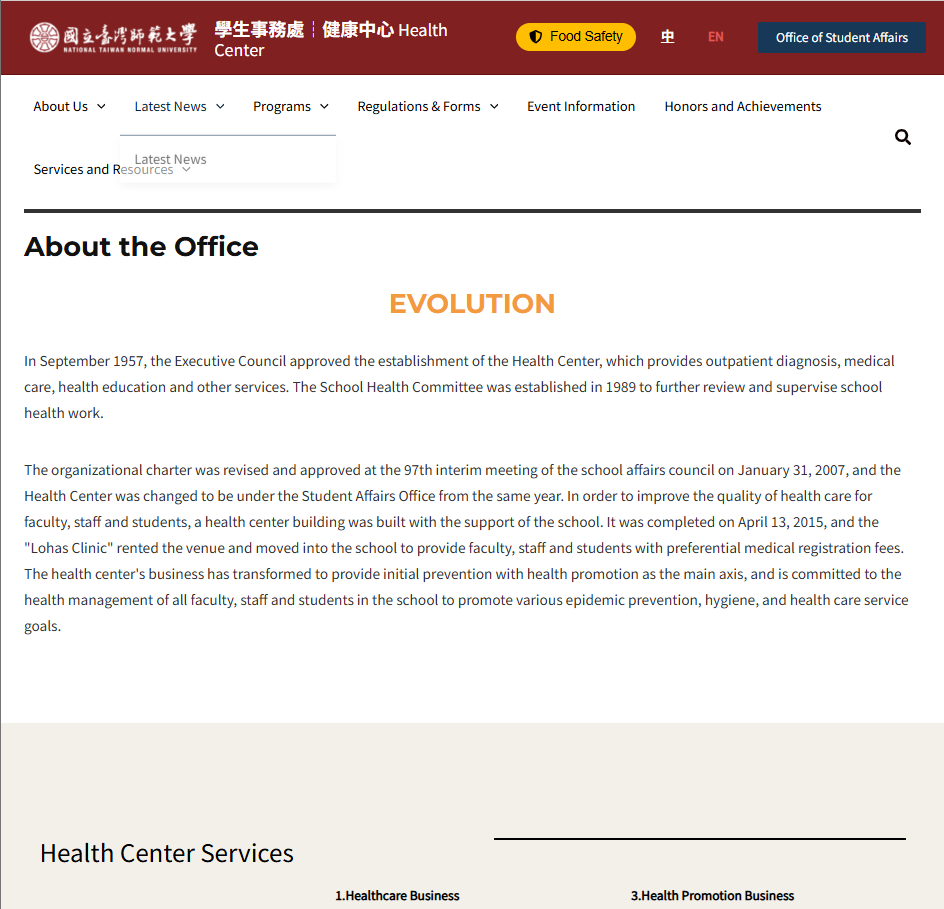
NTNU’s Health Center provides physical health care, medical services, and health management for all faculty, staff, and students. Since its establishment, the Health Center has continuously provided outpatient care, medical and health-care services, and health education. Its services include health examinations and follow-up checks for new students, corrective follow-up care, case management and referral information, emergency care for injuries and illnesses, communicable disease prevention, case management for special medical conditions, AED management, loan of medical equipment, and individual nutrition counseling. In addition, NTNU also promotes employee health services, health examinations, and workplace health management to build a comprehensive campus health support system.
NTNU’s Health Center also organizes a variety of health promotion activities each year. In 2025, for example, the Health Center organized seven health promotion activities covering topics such as health examinations and health management, first aid education and basic life support, and blood donation and public health promotion. The Health Center also provides a wide range of health information and health education resources on its website. These topics include first aid and safety education, healthy body weight, vision care, tobacco hazard prevention, and sex education, including HIV/AIDS prevention. In addition, NTNU offers CPR and AED training, basic life support training, health promotion lectures, and disease prevention campaigns to enhance health literacy, preventive health awareness, and self-health management among faculty, staff, and students.
Sexual and Reproductive Health-Care Services
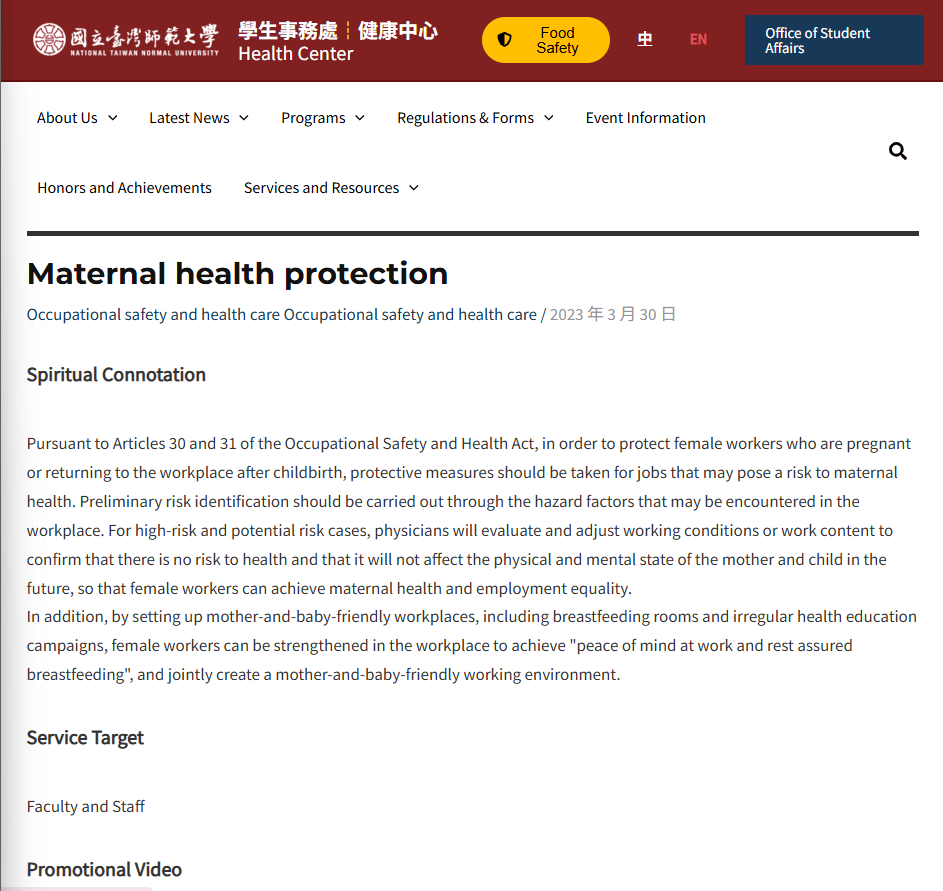
NTNU’s Health Center provides sexual and reproductive health information and education services through its website and related health promotion initiatives. The website includes a Sex Education (including HIV/AIDS Prevention) section, which provides educational resources, awareness materials, related links, and information on condom vending services, as well as a Maternal Health Protection section, which offers health information and external resource links for pregnancy, maternal care, and workplace support for female employees.
In addition, NTNU promotes access to sexual and reproductive health information through related health education activities and online resources. These services support both students and staff in obtaining essential health knowledge and relevant support information.
Mental Health Support for Staff and Students
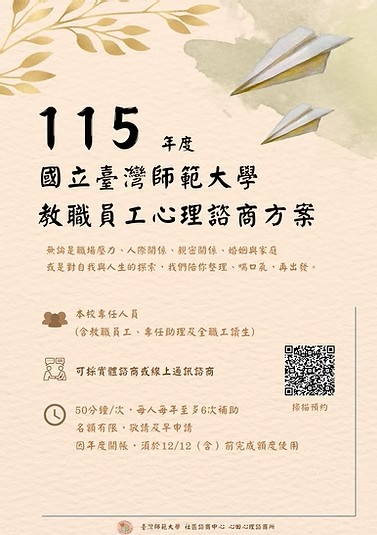
NTNU provides mental health support for faculty, staff, and students through professional counseling services, institutional support mechanisms, and referral resources. For faculty and staff, NTNU offers mental health support under the Employee Assistance Program, including consultation services on stress adjustment, interpersonal relationships, emotional management, couple or parent-child communication, workplace communication, and the management of major crises at different life stages. Individual counseling and resource referral services are also provided by licensed psychologists. In addition, NTNU organizes mental health lectures and provides related information to support the psychological well-being of faculty and staff.
NTNU also provides psychological counseling support information for faculty and staff. Eligible full-time faculty members, staff, assistants, and interns may apply for up to six free counseling sessions per year, with each session lasting 50 minutes, at the university-affiliated Hsin-Tien Psychological Counselling Clinic. Appointments can be made by phone, online form, or in person. All records and personal data are kept confidential in accordance with relevant regulations, helping to ensure both accessibility and trust in the use of mental health support resources.
For students, NTNU’s Student Counseling Center provides one-on-one professional counseling services for all students. These services support self-exploration and self-understanding, help students develop emotional management and interpersonal communication skills, and promote better adaptation to campus life and academic study. Students may book individual counseling through the university’s online counseling system within the administrative portal. Each semester, the center also arranges psychologists and counseling interns with different areas of expertise to respond to student needs related to self-exploration, career planning, relationship issues, family relationships, emotional distress, and stress adjustment.
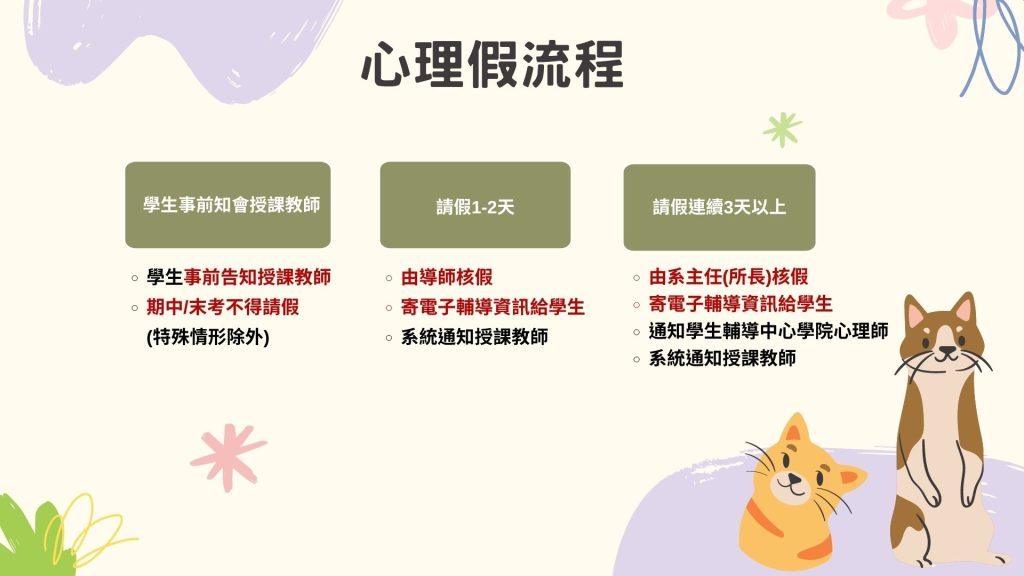
In addition, NTNU has implemented a Mental Health Leave policy since 2023. Students experiencing psychological or emotional distress may apply for mental health leave without the need to submit supporting documentation. After a request is submitted, NTNU activates follow-up care and support mechanisms, including outreach from advisors or department heads, provision of counseling information, and, when needed, further counseling or medical assistance arranged by the Student Counseling Center, thereby strengthening the university’s mental health support network for students.
Information on Psychological Counseling Services for Faculty and Staff
Description of Individual Counseling Services
Related links
(1) website of Hsin Tien Psychological Counseling Clinic
(2) Information on Psychological Counseling Services for Faculty and Staff
(3) Implementation Plan for the National Taiwan Normal University Employee Assistance Program
(4) Description of Individual Counseling Services
(5) Description of Mental Health Leave
Disability Support Office
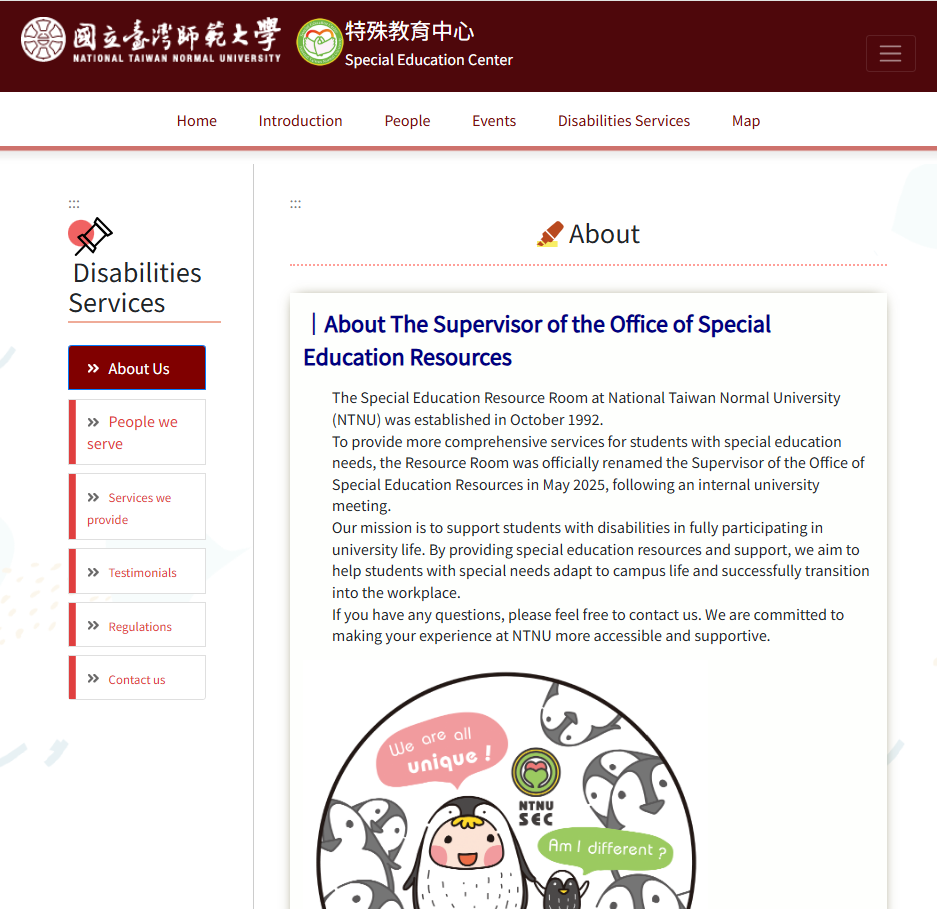
The Office of Special Education Resources, under NTNU’s Special Education Center, serves as the university’s dedicated office for disability support. The office was formerly the Special Education Resource Room, established in October 1992, and was officially renamed the Office of Special Education Resources in May 2025 to provide more comprehensive special education support services. As NTNU’s formal support unit, it primarily serves students with disabilities who have been identified as requiring special education, as well as students who need related assistance based on individual special needs. It also provides consultation and support to faculty and staff, helping them respond to the needs of students with disabilities in teaching and service settings, and thereby fostering a more supportive and accessible campus environment.
Accessible Campus
NTNU continues to promote a friendly and barrier-free campus environment by providing accessible spaces and facilities to improve mobility and ease of use for people with disabilities. Accessible facilities on campus include wheelchair ramps, accessible elevators, accessible restrooms, and designated parking spaces for people with disabilities. Priority waiting areas are also provided near some elevators to assist individuals with mobility impairments in using these facilities. All of these facilities are marked on NTNU’s publicly available campus map, making it easier for those in need to access and identify barrier-free resources on campus.
Support Schemes for People with Disabilities
The Office of Special Education Resources under NTNU’s Special Education Center primarily serves students with disabilities who have been identified as requiring special education, as well as students who need related assistance based on individual special needs. It also provides consultation and support to faculty and staff. To create a fair and barrier-free learning environment, NTNU offers the following targeted support services:
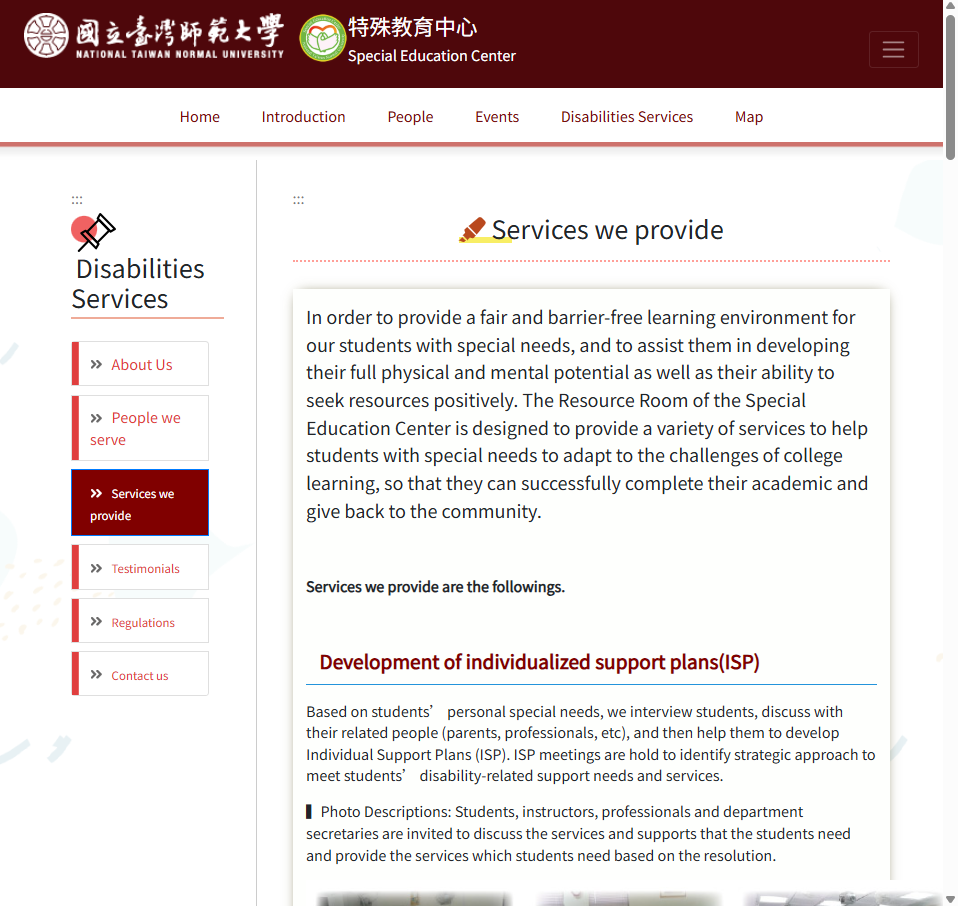
- Development of Individualized Support Plans (ISP): Based on students’ personal special needs, NTNU interviews students, consults with related people such as parents and professionals, and develops Individual Support Plans (ISP). ISP meetings are held to identify strategic approaches and coordinate the services needed to meet students’ disability-related support needs.
- Academic Advising: NTNU provides a range of academic support services, including contacting course instructors, conversion of course materials into formats adapted to students’ needs, course guidance, learning strategy courses, note-taking service, voice recorder service, visual eye assistant service, and reasonable adjustments during examinations.
- Life Counseling: NTNU supports students through residential tutoring, social leisure activities, university adjustment counseling services for new and continuing students, strengthening life- and self-management skills, care assistants, special education advocacy, and support for student organizations.
- Psychological Counseling: NTNU provides group counseling, individual counseling, case meetings, and referrals to other counseling services to support students’ psychological well-being and adjustment.
- Career Counseling: NTNU offers career aptitude tests, career planning, career exploration activities, exam experience sharing, job-hunting experience sharing, transition-to-work employment services, secondary major/double major course information, counseling practicum and internship resources, and career and transfer resources.
Accessible On-Campus Accommodation
NTNU is committed to providing a supportive and accessible environment for students with disabilities through both policy and infrastructure support.
- Policy Support: According to Article 3 of the National Taiwan Normal University Regulations for Student Dormitory Counseling, students with disabilities who apply for on-campus housing are given top priority in bed allocation, ensuring access to suitable and convenient living arrangements.
- Infrastructure Support: NTNU provides accessible dormitory rooms in Student Dormitory 1 and Dormitory No. 2 for students with disabilities. Additionally, Student Dormitory 1 has special dormitory rooms for students with temporary mobility impairments due to injury or illness, which can be applied for with a medical certificate.
National Taiwan Normal University Regulations for Student Dormitory Counseling (Please refer to Article 3).
Application Form for Temporary Injury Illness Room in NTNU Dormitory
NTNU fosters an equitable, diverse, and inclusive campus environment through the NTNU Diversity and Inclusion Statement and by adhering to relevant laws and institutional regulations. In the NTNU Diversity and Inclusion Statement, NTNU affirms a commitment to creating a welcoming and safe environment, respecting and embracing diverse cultures, and enabling faculty, staff, and students from different backgrounds to contribute their knowledge and pursue academic excellence and innovation in a campus founded on equal opportunity and mutual trust.
In practice, NTNU follows Taiwan’s Employment Service Act to ensure that all personnel are treated equally in recruitment, appointment, and promotion, without discrimination on the basis of religion, sexual orientation, gender, race, disability, or other factors. In addition, under the “National Taiwan Normal University Enforcement Guidelines for Gender Equity Education“, NTNU explicitly prohibits differential treatment in teaching, assessment, selection, promotion, evaluation, rewards and disciplinary measures, welfare, and services on the basis of sex, gender traits, gender identity, or sexual orientation. NTNU also requires active efforts to eliminate gender bias in admissions, teaching, and campus life, while supporting members in disadvantaged circumstances.NTNU further safeguards the employment rights of people from different backgrounds and identities in accordance with relevant legislation, including the Employment Service Act, Gender Equity Education Act, Gender Equality in Employment Act, Indigenous Peoples Employment Rights Protection Act, and People with Disabilities Rights Protection Act.
Furthermore, NTNU incorporates gender equity education into orientation for new staff, in-service training, management training, and orientation for new students, thereby strengthening gender awareness and sensitivity across the institution. NTNU also regularly compiles statistics on Indigenous employees and employees with disabilities and publicly discloses this information on the Human Resources Office website, demonstrating NTNU’s commitment to diversity, inclusion, and equal opportunity.