

3.2.1 Proportion of graduates in health professions
The total number of graduates is 3,802, with 700 coming from health-related programs (including bachelor’s, master’s, specialized master’s, and doctoral programs). These programs encompass various departments such as Physical Education, Counseling Psychology, Health Education, Human Development, Special Education, Life Sciences, Nutrition, Rehabilitation Counseling, Social Work, Biomedical Science, and the EMBA in Health Promotion. —reference: 2023 Academic year statistics on graduation numbers from National Taiwan Normal University.
Academic year | 2022 | 2023 |
Total of graduates | 3605 | 3802 |
Number of graduates in health professions | 614 | 700 |
Proportion of graduates in health professions | 17.03% | 18.41% |
3.3.1 Current collaborations with health institutions
NTNU has established long-term partnerships with national health institutions, local communities, and health-related organizations to promote health and well-being. Through research, education, and social engagement, the university actively advances public health initiatives and supports community-based health promotion.
1. Health-Promoting School Programs
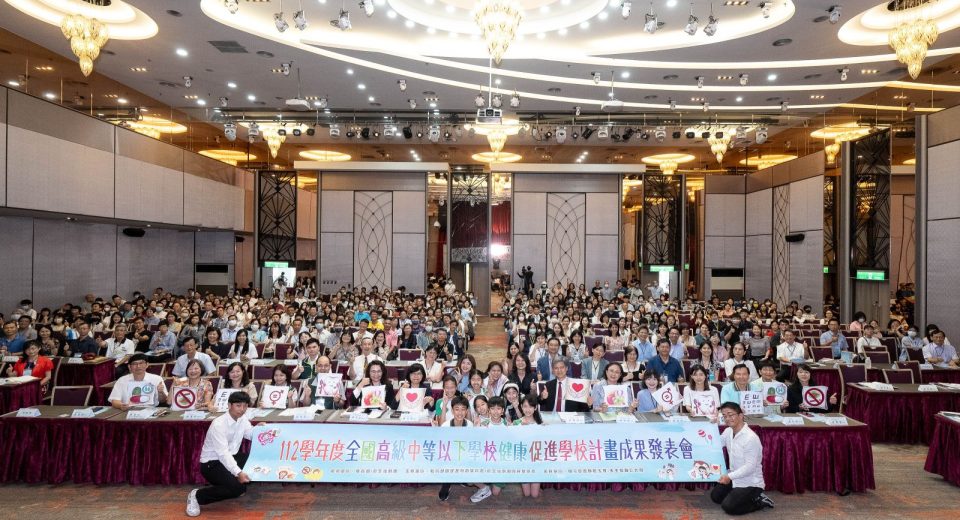
Since 2004, NTNU’s Department of Health Promotion and Health Education has been commissioned by the Ministry of Education to lead the nationwide Taiwan Health-Promoting School Program, aligning with the World Health Organization’s (WHO) “Health-Promoting Schools” initiative launched in 1995. The program has been implemented continuously for 20 years and serves as a cornerstone of Taiwan’s school health and health education policies.
This initiative is jointly promoted by NTNU, the Ministry of Education, the Health Promotion Administration of the Ministry of Health and Welfare, local governments, teacher associations, and parent organizations. It aims to enhance health literacy among students and community members while fostering healthy school and community environments. Key measures include developing systems for health education, health services, and campus environment improvement; creating online resources on safe medication use, sexuality education, tobacco control, and general health; establishing communication platforms linking schools, local governments, and parents; and organizing annual conferences and report publications to share achievements and refine policies.
The program has strengthened collaboration among schools, communities, and families, significantly improving students’ health literacy and contributing to nationwide health promotion.
2. USR Program: Digital Inclusion and Smart Active Aging Program
Through its University Social Responsibility (USR) project titled Smart Digital Inclusion and Active Aging Learning Initiative, NTNU promotes the physical and mental well-being of older adults. Partnering with 52 organizations, including universities, government agencies, communities, NGOs, and enterprises, the program provides senior citizens with health technology assessments, personalized health promotion advice, and diverse well-being activities such as physical fitness, mental wellness, and digital literacy courses.
The initiative aims to reduce the digital divide, enhance older adults’ quality of life, and encourage social participation through cross-sector collaboration, strengthening the community health support system.
The detailed list of partners is shown in the table below.
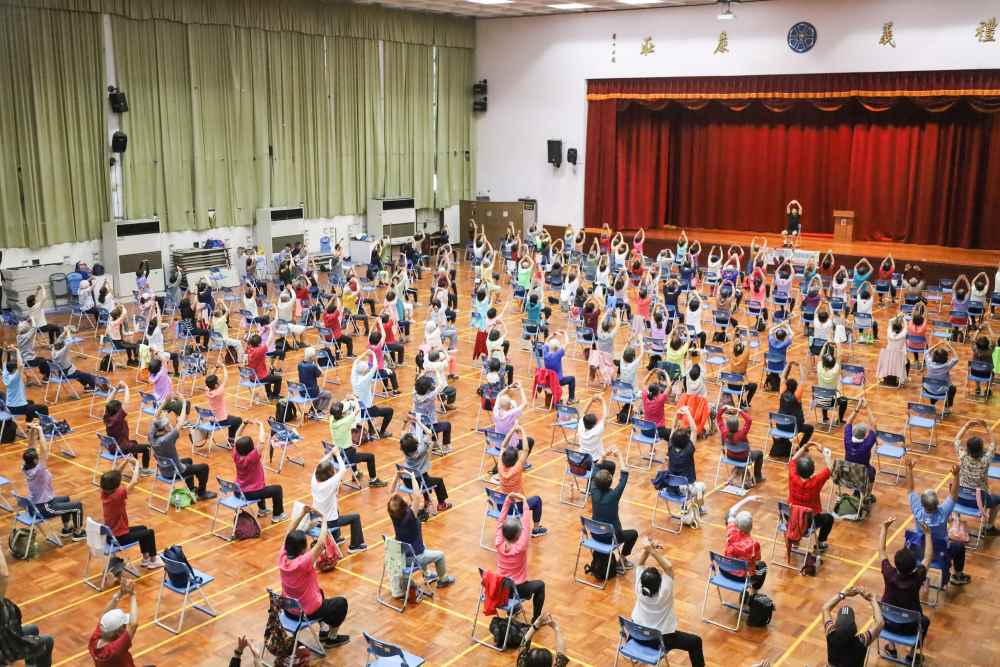
The project team organized senior exercise hub courses at the Gongguan Campus, engaging 240 older adults in physical activities at same time.
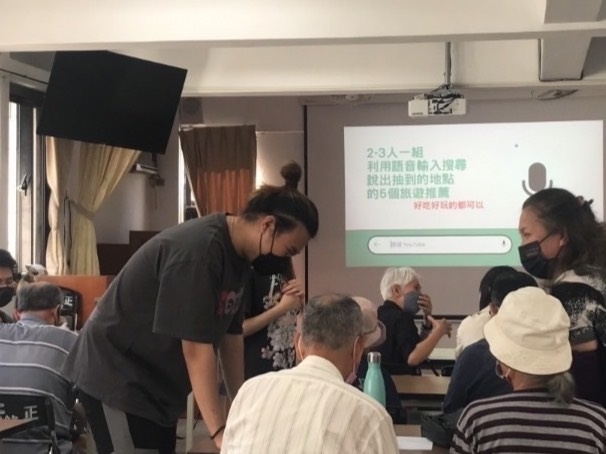
NTNU students taught older adults how to use smartphones during the activity.
Academic Institutions | |||
臺北醫學大學 | 國立臺北藝術大學 | 國立臺灣大學 | 國立宜蘭大學 |
天主教輔仁大學 | 中華科技大學 | 致理科技大學 | 耕莘健康管理專科學校 |
Government Agencies | |||
臺北市政府社會局 | 新竹縣政府教育局 | 宜花數位機會中心 | 宜蘭縣五結鄉公所 |
教育廣播電台 | 臺北市中正區健康服務中心 |
|
|
Community Partners | |||
銀齡樂活據點 | 心田心理諮商所 | 大安區錦安里據點 | 大安區錦華里據點 |
大安區大安小古意 | 大安區古莊社區發展協會 | 大安區龍陣里據點 | 萬華區頂碩里據點 |
北醫信義展齡中心 | 新北市中和巴格浪文化健康站 | 新北市新店中正原住民族發展協會文化健康站 | 新北市新店溪洲部落文化健康站 |
宜蘭縣五結鄉協和社區 | 宜蘭縣中興社區 | 宜蘭縣上四社區 | 宜蘭縣二結社區 |
宜蘭縣蘇澳鎮蘇南社區 | 宜蘭縣聖賢社區 | 大安區永健長青促進協會 | 基督教臺北真道教會 |
Relevant Organizations and Industries | |||
銀髮方舟社會企業/愛長照 | 雲康顧問公司 | 樂活士 | 捌捌陸食室 |
愛迪樂治療所 | Famica 活立時尚輔具 | 揚生慈善基金會 | 永慶房屋師大店 |
澴山生醫有限公司 | 體超全人運動團隊 | 台北 YMCA(士林運動中心) | 台北市體育總會元極舞協會 |
誠安和生技有限公司 | 大橋頭藝術工作室 | 今周刊數位發展部 | 居家安全達人工作室 |
大登旅行社 | Look 陸客藝研堂 |
|
|
Through these sustained partnerships and interdisciplinary programs, NTNU has become a leading national institution advancing public health policies and promoting collective well-being through education and social innovation.
3.3.2 Health outreach programmes
NTNU has long been dedicated to advancing community health promotion and elderly well-being through a wide range of service and outreach programs. The university actively collaborates with partner institutions, government agencies, community organizations, and industries to jointly promote initiatives related to public health and social welfare.
A representative example is NTNU’s Digital Inclusion and Smart Active Aging Program, a flagship University Social Responsibility (USR) initiative that integrates education, research, and community engagement to promote physical and mental health, digital participation, and social connectedness among older adults. The program has been honored with the Bronze Award in the Taiwan Sustainability Action Awards (TSAA) for five consecutive years, demonstrating its long-term commitment and outstanding achievements in the fields of active aging and sustainable development.

1. Technological Health Assessment and Promotion
The program team organized health technology screening activities in collaboration with community centers and industry partners, assisting older adults in using wearable devices for health monitoring. Participants received personalized data analyses, feedback, and lifestyle recommendations. In 2024, a total of 36 health promotion events were held, engaging 6,650 participants.
2. Diverse Active Aging Courses
At NTNU’s Silver-Aged Wellness Center, a variety of health and wellness courses were offered, complemented by intergenerational learning modules under the Elderly Learning Program. In 2024, the program conducted 261 courses with 6,453 participants, promoting lifelong learning and active community participation among older adults.
3. Digital Inclusion Education
In collaboration with non-profit organizations and community centers in Taipei and New Taipei City, NTNU student volunteers guided older adults in using smartphones and digital applications for daily life. In 2024, 51 workshops were held with 1,275 participants, effectively reducing the digital divide among senior populations and enhancing digital confidence.
4. Capacity Building for Active Aging Professionals
NTNU developed a comprehensive Active Aging Talent Development Program, offering 7 courses (14 credits) designed to equip students with practical and social service competencies. In 2024, 971 students enrolled, and 72 completed the certification. The program also hosted workshops and seminars to cultivate future professionals in health promotion and elderly care.
Through these diverse initiatives and collaborations, NTNU continues to respond proactively to community health needs, fulfill its social responsibility as a university, and advance health promotion, digital inclusion, and long-term well-being for older adults—building a collaborative and sustainable society that values learning, health, and shared prosperity.
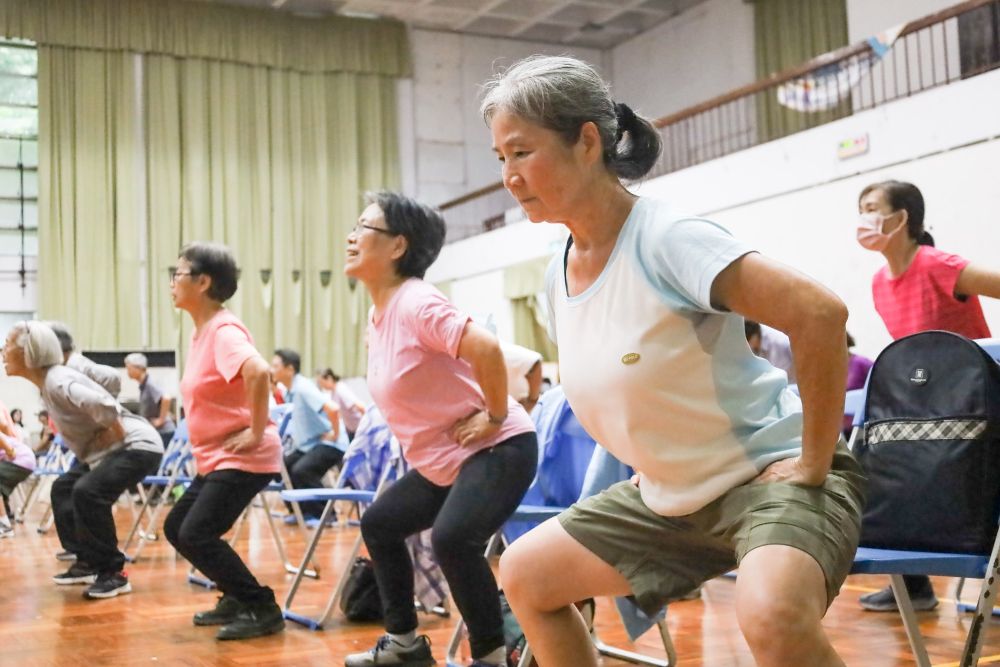
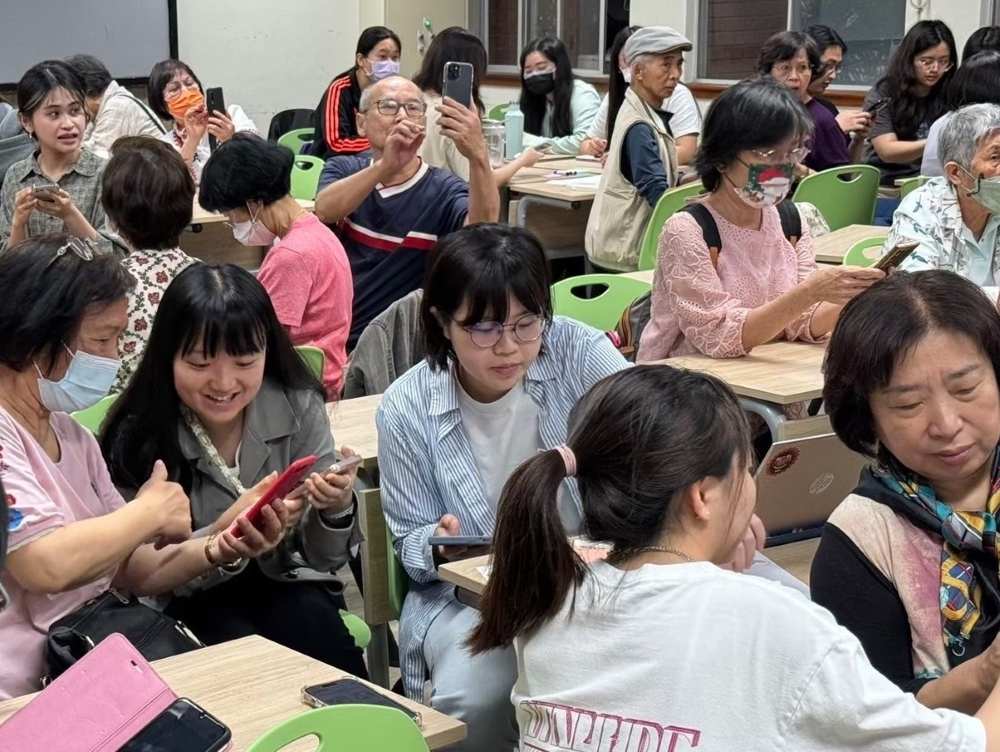
The project team organized a Silver-Ager Active Living Hub, leading older adults in group exercise activities.
Student volunteers from NTNU assist older adults in learning how to use smartphones and mobile applications.
3.3.3 Shared sports facilities
In April 2025, NTNU approved the Campus Open Access Declaration, encouraging community residents, university faculty and students, and sports organizations to jointly utilize the university’s sports facilities and open spaces. This initiative fosters long-term collaboration between the campus and local communities, promoting public health and a sustainable living environment.
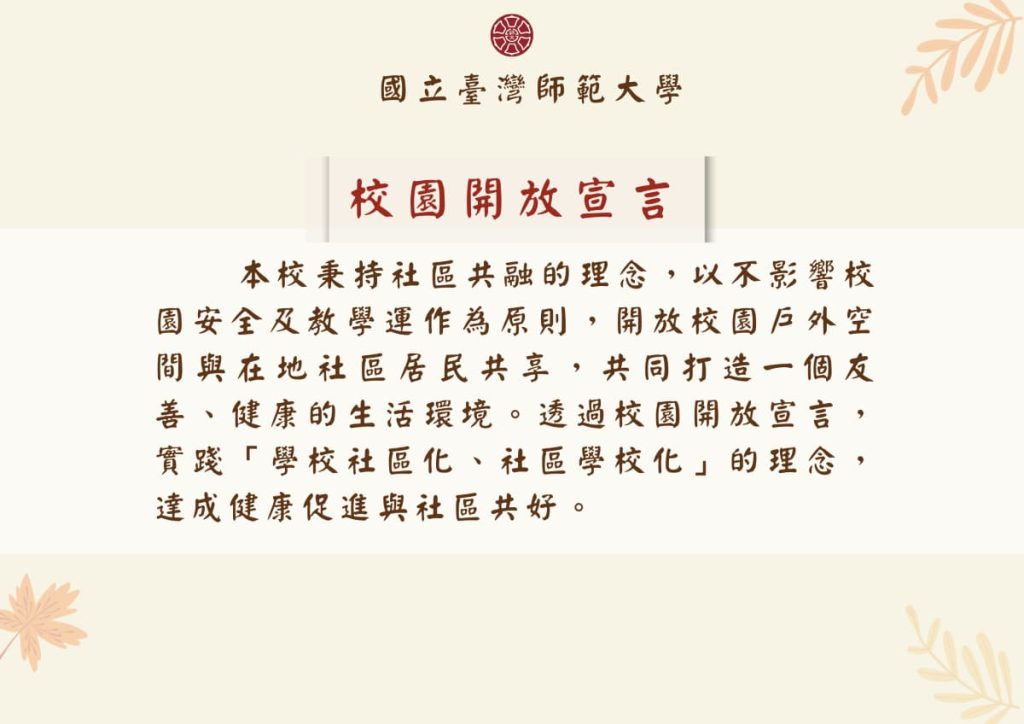
Translation:
National Taiwan Normal University Campus Open Access Declaration
Upholding the principle of community co-prosperity, NTNU opens its outdoor campus spaces for shared use with local residents, under the premise of ensuring campus safety and the normal operation of teaching activities. Through the Campus Open Access Declaration, the university embodies the concept of “schools as part of the community and communities as part of the school,” fostering health promotion and mutual well-being between the university and the local community.
3.3.4 Sexual and reproductive health care services for students
NTNU provides comprehensive guidance and education on sexual and reproductive health through the Health Center’s Sexual Education Section, which offers free online access to diverse educational resources covering topics such as safe sex, and HIV prevention.
In addition, the Health Center organizes annual lectures and workshops on sexual health and gender-related issues. In 2024, a total of eight sessions were held, focusing on topics including HIV prevention, sexual education, and LGBTQ+ awareness, with 1,264 participants in total.
3.3.5 Mental health support for students
NTNU places great importance on students’ mental health and has established a comprehensive support network that ranges from individual counseling to institutional care mechanisms, ensuring that every student can access timely and professional psychological assistance.
1. Individual Counseling Services
NTNU’s Student Counseling Center provides professional and confidential mental health support services for all students. The Center employs licensed counselors and qualified interns specializing in areas such as self-exploration, career planning, interpersonal relationships, emotional regulation, family relationships, and stress management.
Students may schedule one-on-one counseling sessions through an online appointment system, and the Center assigns appropriate counselors and times according to individual needs. All services are strictly confidential, ensuring a safe and professional counseling environment that promotes overall mental health and emotional well-being across campus.
2. Implementation of “Mental Health Leave” Policy
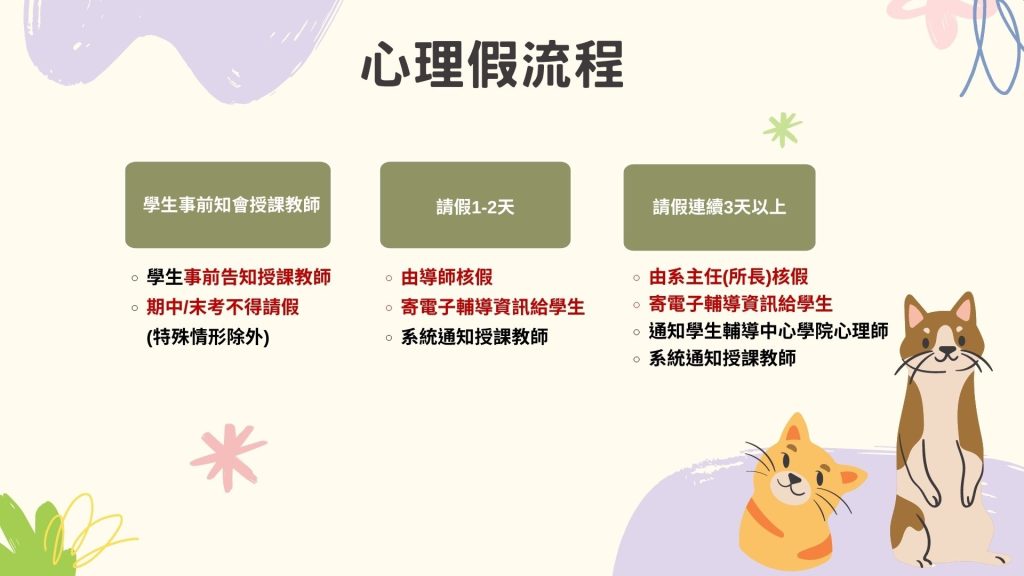
Since April 2023, NTNU has implemented a Mental Health Leave Policy that integrates departments, instructors, mentors, and the Student Counseling Center to establish a comprehensive mental health care mechanism.
- For absences within two days, mentors reach out to express concern and support.
- For absences of three or more days, department chairs or directors provide follow-up and arrange counseling or medical support when necessary.
- For continuous absences of more than three days, the system automatically notifies case-management psychologists at the Counseling Center to assess the student’s condition and offer appropriate services or referrals.
- The system automatically sends caring messages to students, providing information on emotional support and counseling resources.
- Once the leave process is completed, course instructors are informed to provide timely care and support.
This policy institutionalizes psychological care as part of NTNU’s administrative framework, ensuring that students’ mental health needs are detected early, addressed promptly, and monitored continuously.
3. Mentorship System for Student Care and Psychological Support
NTNU implements a Dedicated Mentorship System as a first-line support mechanism for students’ psychological well-being. Mentors provide initial emotional care, guidance, and support, with particular attention to international and overseas Chinese students’ adjustment to academic and campus life.
In the 2023 academic year, mentors conducted 12,089 counseling sessions. In addition, academic departments organized 2,572 mentorship-related activities, including multicultural education, healthy and friendly campus initiatives, career and internship development programs, alumni talks, and end-of-semester care events. These initiatives reinforce students’ mental health, personal growth, and sense of belonging.
4. Public Counseling Program at Hsin-Tien Psychological Counseling Center
In addition to on-campus counseling services, NTNU’s Hsin-Tien Psychological Counseling Center offers a Public Counseling Program for Students to provide extended mental health support outside the university. Each student is eligible for up to six counseling sessions per academic year at a discounted rate, allowing greater access to affordable professional psychological services and strengthening the university’s multi-layered mental health support network.
3.3.6 Smoke-free policy
According to Article 2 of the “National Taiwan Normal University Regulations for Tobacco Hazards Prevention,” smoking, including electronic cigarettes and heat-not-burn products, and littering of cigarette butts are completely prohibited indoors and outdoors on University campus grounds. NTNU is a fully smoke-free campus, ensuring a clean, healthy, and safe environment for all students, faculty, staff, and visitors.
3.3.7 Mental health support for staff
NTNU provides comprehensive mental health support for all faculty and staff through its Employee Assistance Program, administered by the Office of Human Resources. The university collaborates with the NTNU Hsin-Tien Psychological Counseling Clinic to offer high-quality, confidential psychological counseling services aimed at enhancing employees’ mental health and overall well-being.
Each faculty or staff member is eligible to receive up to six free counseling sessions per year. In 2024, a total of 104 faculty and staff members received counseling services, accounting for 529 individual sessions.