NTNU promises to be carbon-neutral by 2048 in response to Taiwan’s 2050 Zero Emission policy and UN 2030 Agenda – Sustainable Development Goals (SDGs). In addition to continuing to cultivate talents and develop research, NTNU will fulfill social responsibilities and increase impacts. NTNU aims to reduce carbon emissions by 50% by 2030 and achieve complete carbon neutrality by 2048 through net-zero green life, energy efficiency, low-carbon emission electricity, and green energy.
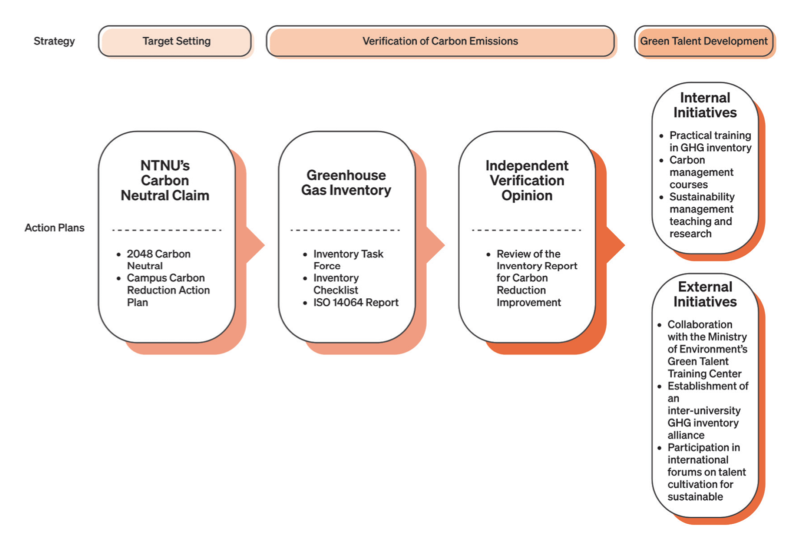
NTNU’s Carbon Neutral Claim
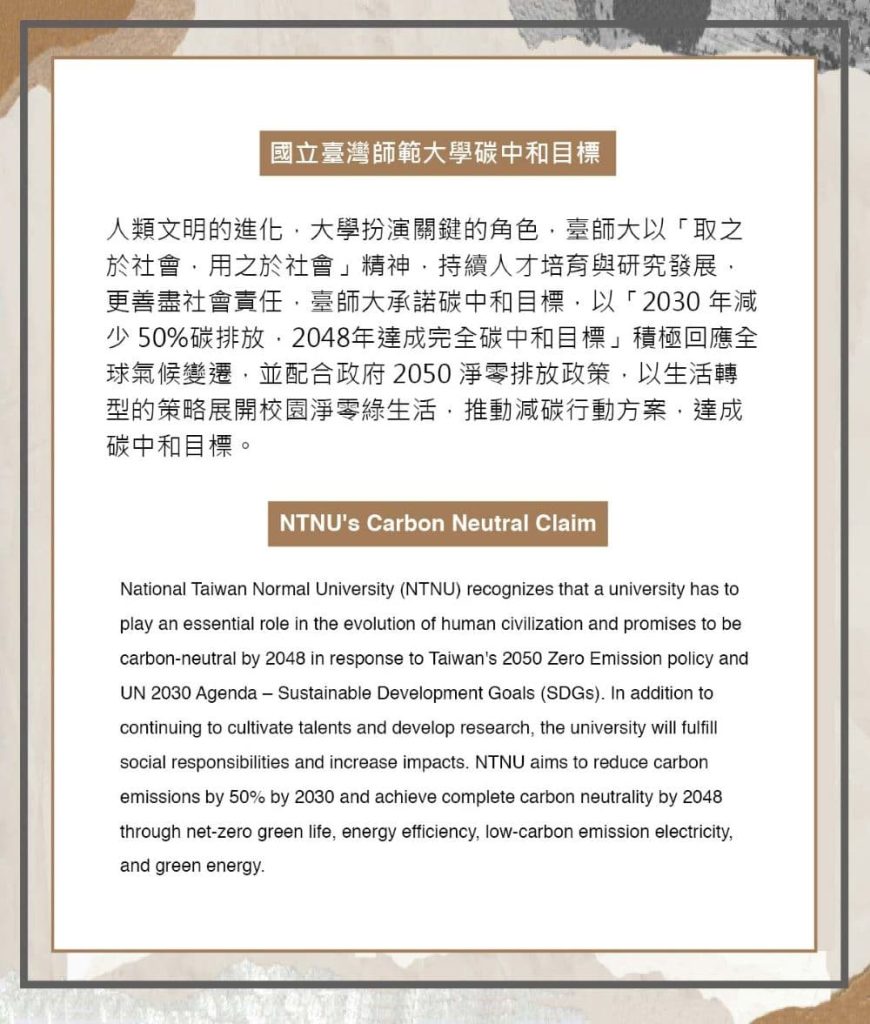
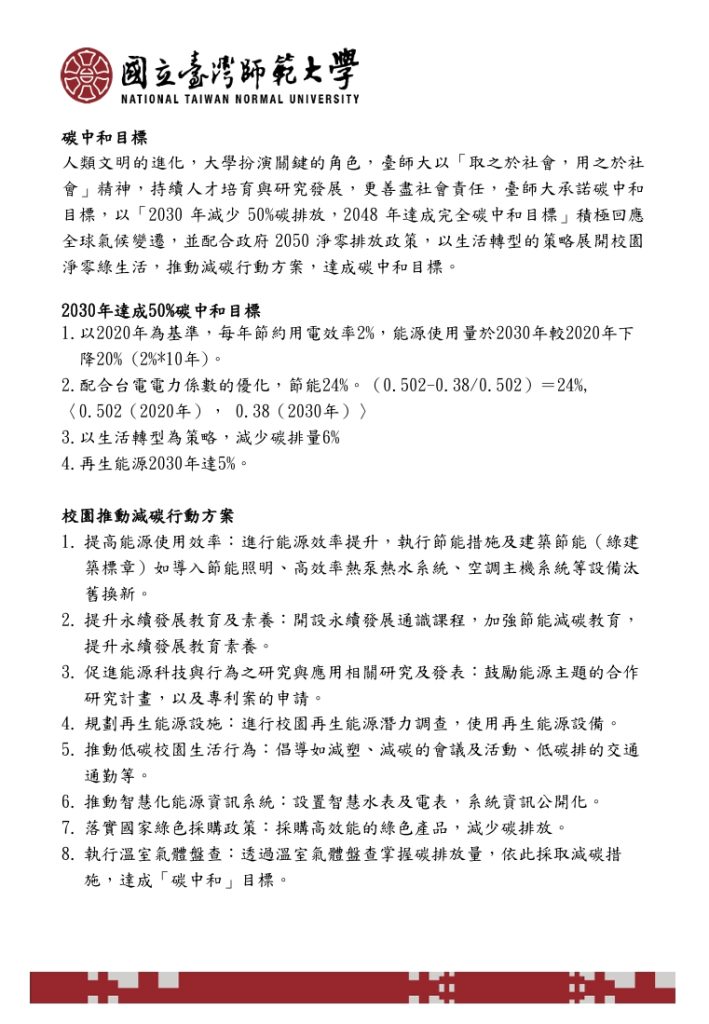
National Taiwan Normal University (NTNU) recognizes that a university has to play an essential role in the evolution of human civilization and promises to be carbon-neutral by 2048 in response to Taiwan’s 2050 Zero Emission policy and UN 2030 Agenda – Sustainable Development Goals (SDGs). In addition to continuing to cultivate talents and develop research, the university will fulfill social responsibilities and increase impacts. NTNU aims to reduce carbon emissions by 50% by 2030 and achieve complete carbon neutrality by 2048 through net-zero green life, energy efficiency, low-carbon emission electricity, and green energy.
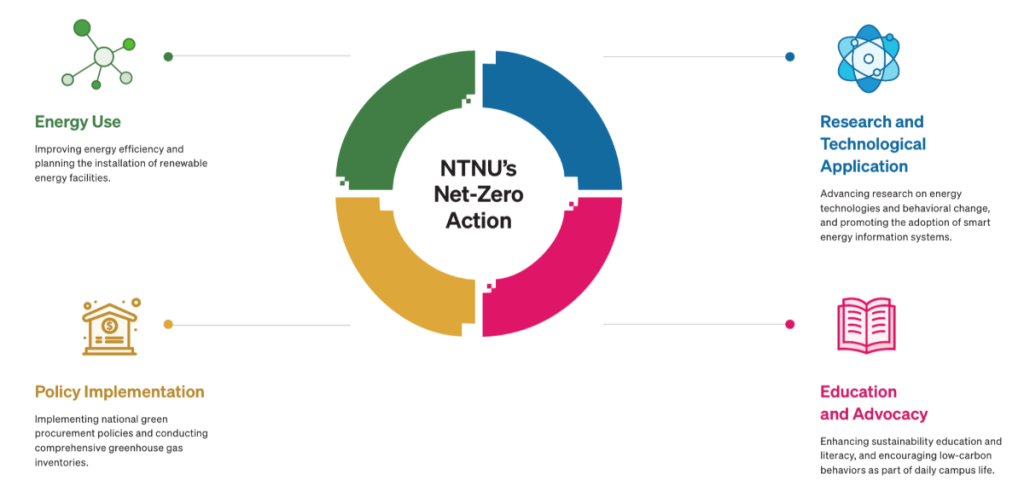
To achieve our carbon neutrality goal, our university has developed a carbon reduction action plan across all campus levels, primarily divided into the following four strategic aspects:
1. Energy Use: “Improving energy efficiency” and “Planning renewable energy facilities”;
2. Research and Technology Application: “Promoting research and application related to energy technologies and behaviors, and promoting intelligent energy information systems”;
3. Policy Implementation: “Implementing national green procurement policies” and “Conducting greenhouse gas inventory checks”;
4. Education and Promotion: “Enhancing sustainable development education and literacy” and “Promoting low-carbon campus living behaviors”.
NTNU conducted its 2024 greenhouse gas inventory between June and November 2025, covering all four campuses and additional facilities, with coordinated efforts across university units.
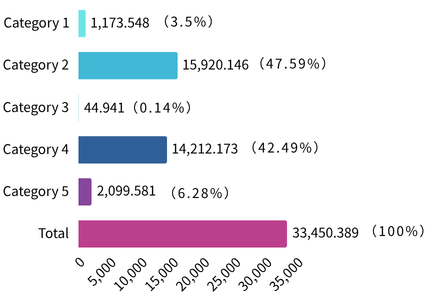
The total greenhouse gas emissions within the reporting boundary amounted to 33,450.389 tCO2e. Among these, Scope 1 and Scope 2 emissions totaled 17,093.694 tCO2e, accounting for 51.1% of total emissions, in accordance with ISO 14064-1:2018 classification.
2024 NTNU Greenhouse Gas Emissions
Scope 1 emissions (Category 1 Direct Emissions) : 1,173.548 tCO2e
Scope 3 emissions: 16,356.695 tCO2e (Category 3 Transportation: 44.941 tCO2e + Category 4 Products used by organization: 14,212.173 tCO2e + Category 5 Indirect GHG emissions associated with the use of products from the organization: 2,099.581 tCO2e)
2024 NTNU greenhouse gas inventory report is developed in accordance with the Ministry of Environment’s Guidelines for Greenhouse Gas Inventory for Higher Education Institutions, as well as international and national standards including ISO 14064-1:2018, CNS 14064-1:2021 and Greenhouse Gas Protocol.
The report discloses NTNU greenhouse gas emissions for the year 2024 and is prepared in line with the principles of relevance, completeness, consistency, accuracy, and transparency. It provides a comprehensive account of the University’s emissions profile and serves as a foundation for ongoing greenhouse gas reduction and management.
To achieve carbon neutrality goals, NTNU formed the “NTNU Greenhouse Gas Inventory Task Force” to oversee inventory operations, which are conducted in accordance with ISO 14064-1:2018. The inventory boundary covers NTNU’s four main campuses and additional facilities, with coordinated efforts across all campus units to ensure a comprehensive and accurate assessment.
In addition, NTNU integrates its educational strengths into sustainability initiatives by actively promoting green talent development. In collaboration with the Ministry of Environment, NTNU established the “Northern Regional Training Center for Net-Zero and Green Workforce Development” to cultivate professionals in carbon management and GHG inventory. Students are also engaged in GHG inventory processes, gaining hands-on experience and practical training through real-case exercises, thereby strengthening their understanding of carbon accounting and sustainability practices.
NTNU has student-led organizations dedicated to sustainability. NTNU Sustainability is a student-led society focused on advancing sustainable development by fostering a culture of sustainability on campus and creating positive impacts among students. And “蔬大人肚子餓”, which is a community that introduces vegetarian restaurants near campus, to promote sustainable eating. In addition, the NTNU Student Union will also hold lectures on sustainability topics, to share sustainable concepts with students.
Student Led Society – NTNU Sustainability
For four consecutive years, the organization has hosted a flagship campus event—the “Warm Sun Sustainability Festival”—featuring forums, workshops, and diverse activities that bring together students, faculty, and external stakeholders from academia, industry, and government. Through these initiatives, NTNU Sustainability promotes campus-wide engagement and extends sustainability practices beyond the University, working collectively toward a more sustainable future.
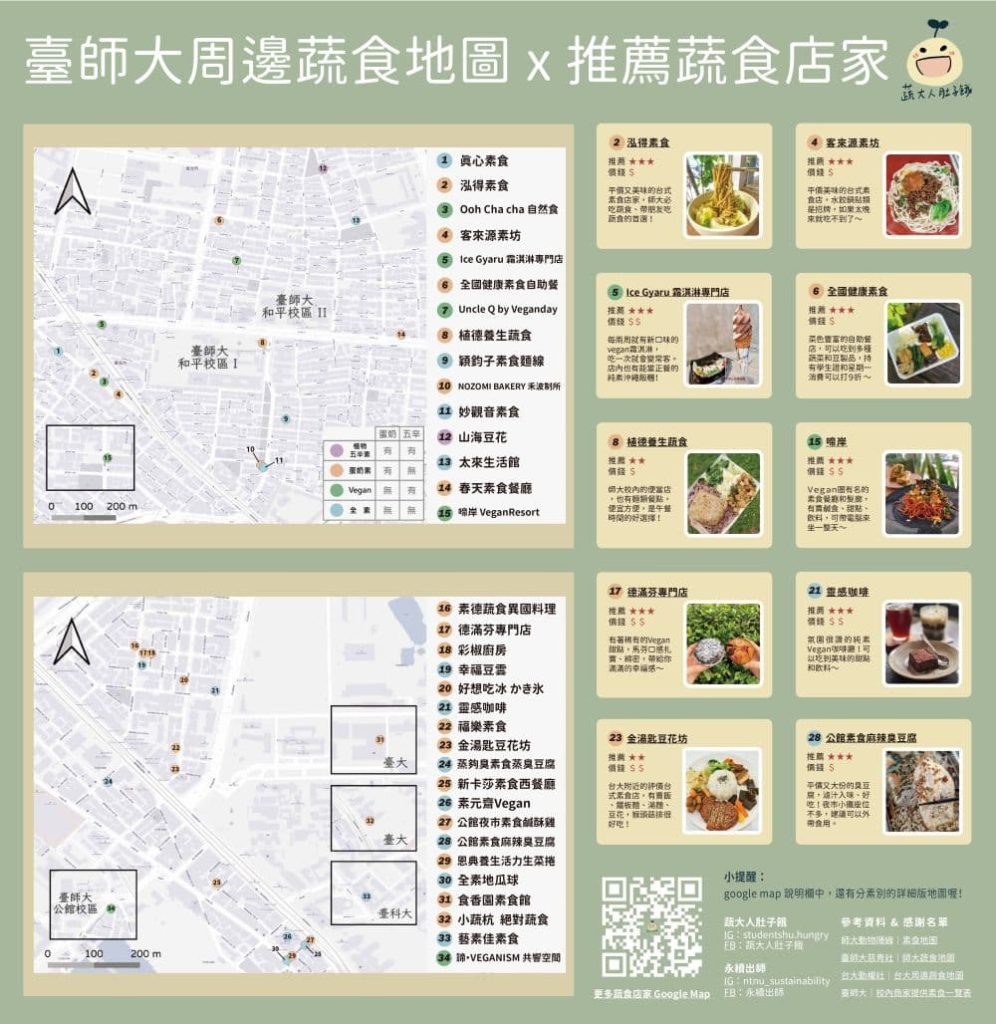
“蔬大人肚子餓” – A food community that shares vegetarian food around NTNU.
The community has created a map of vegetarian restaurants around NTNU, recommending high-quality vegetarian eateries and promoting convenient, sustainable eating habits within the campus community.
The Student Union actively promotes social sustainability through initiatives addressing mental health, gender equality, and student well-being. Through activities such as workshops, lectures, and awareness campaigns, it fosters a supportive and inclusive campus environment.
In addition, the Student Union organizes activities on democratic engagement, encouraging discussions on how to practice civic participation on campus. These initiatives contribute to social sustainability by empowering students to engage in university governance and promoting the values of participation, inclusiveness, and responsible citizenship.
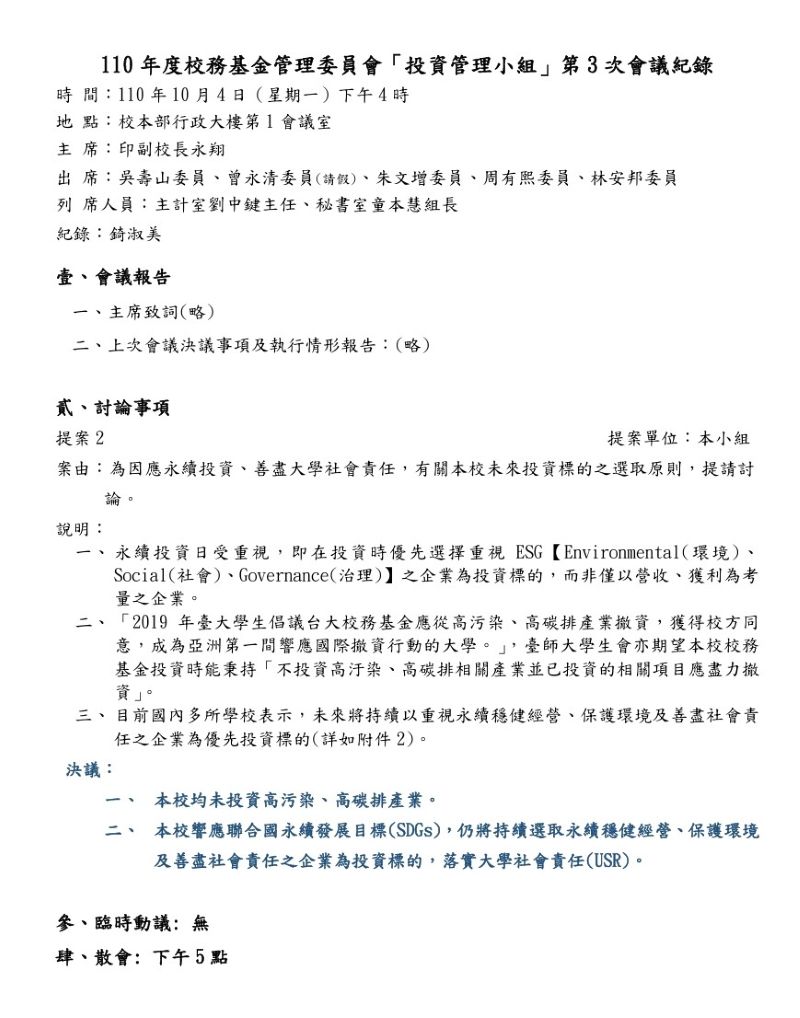
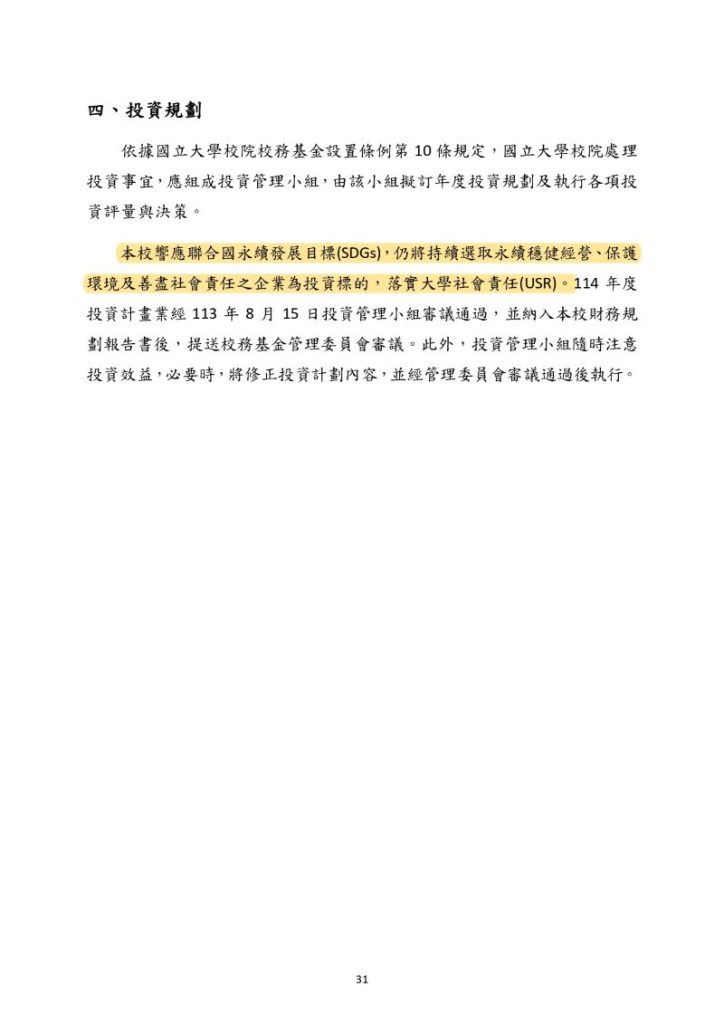
In 2021, NTNU resolved at the Investment Management Committee that it does not invest in highly polluting or high carbon–emitting industries. Instead, NTNU prioritizes investments in companies that demonstrate sustainable and stable operations, environmental protection, and social responsibility, in alignment with the United Nations Sustainable Development Goals (SDGs) and the University Social Responsibility (USR) initiative.
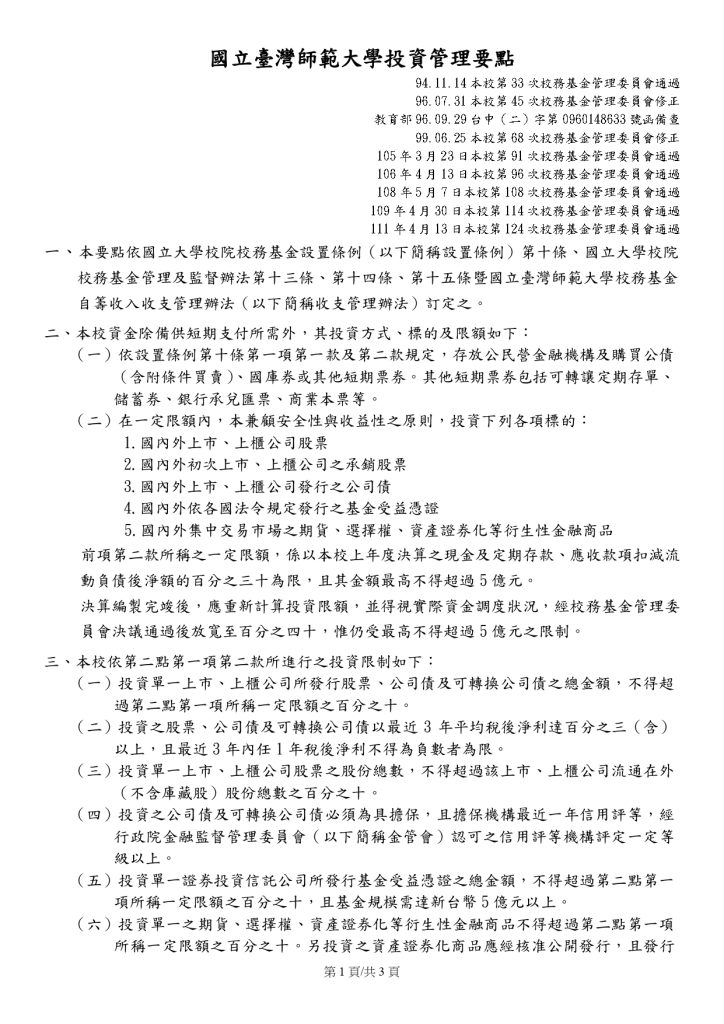
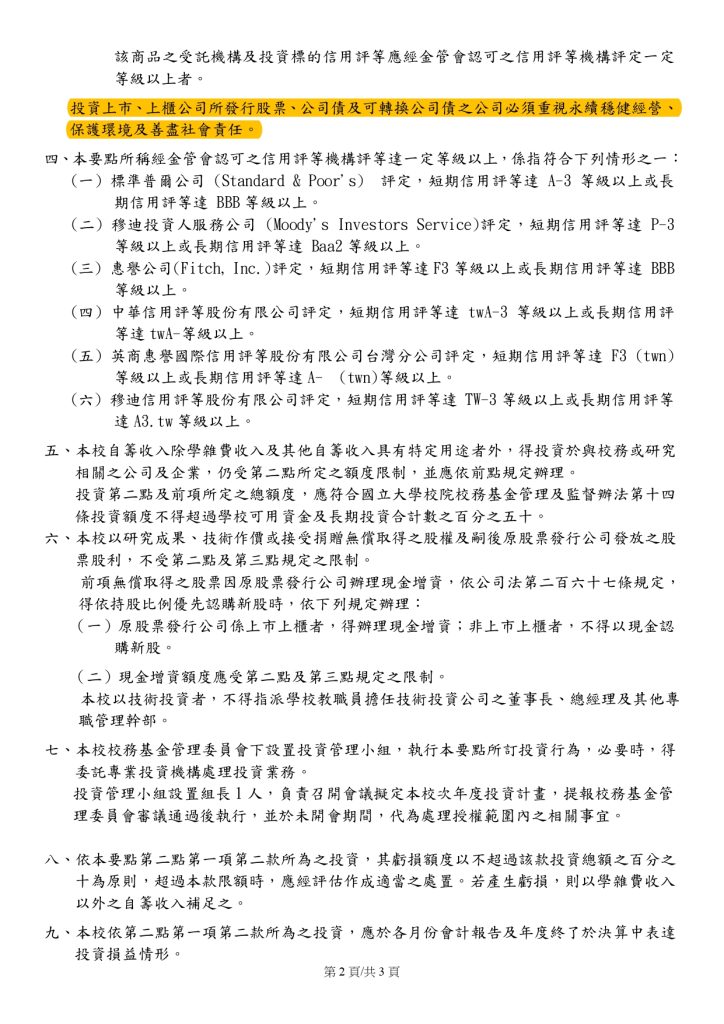
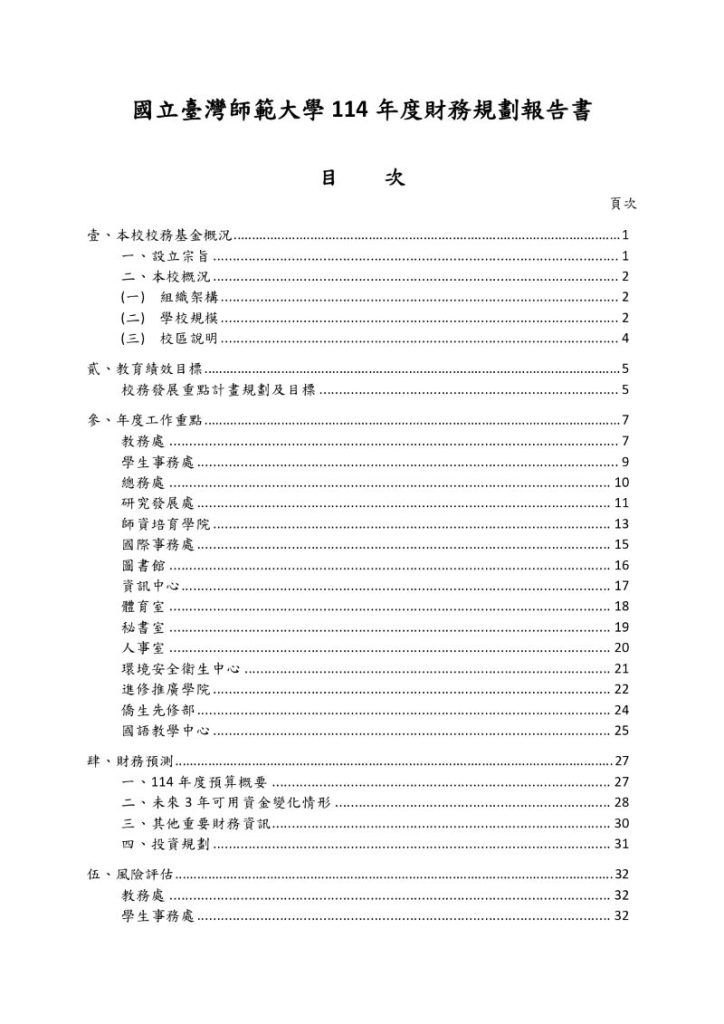
In 2022, NTNU further formalized this commitment by amending its “Investment Management Guidelines,” explicitly stipulating that investments in publicly listed companies—including stocks, corporate bonds, and convertible bonds—must meet criteria related to sustainability, environmental protection, and social responsibility. This policy is also disclosed annually in the NTNU financial planning reports.
Investment Management Committee Meeting Minutes
NTNU does not invest in highly polluting or high carbon–emitting industries.
The policy explicitly stipulate that investments in listed companies, OTC companies, and companies issuing shares, bonds, or convertible bonds must be made in companies with a sustainable business philosophy, a strong emphasis on environmental protection, and a commitment to fulfilling social responsibility.
NTNU aligns its investment strategy with the United Nations Sustainable Development Goals (SDGs) by prioritizing companies that demonstrate sustainable and stable operations, environmental protection, and social responsibility. To implement the commitment to University Social Responsibility (USR).
NTNU implements green procurement, following the Taiwan Ministry of Environment green procurement performance evaluation guidelines, and gives priority to purchasing products with environmental labels. NTNU has established green procurement standard operating procedures to promote the implementation of green procurement operations. NTNU green procurement execution rate in 2025 is 99.65%, demonstrating support for the production and use of green products.
2025 Green Purchasing Performance Evaluation Guidelines
Established by the Ministry of Environment, defines the scope of green procurement, as well as the scoring criteria and implementation guidelines to ensure effective and standardized practices.
These procedures promote the ethical procurement of goods and encourage university personnel to prioritize products with environmental labels. NTNU also compiles and reports its green procurement performance on a regular basis.
NTNU achieved an “Excellent” rating in the designated green procurement performance evaluation for three consecutive years (2023–2025), with achievement rates of 99.91%, 99.96%, and 99.65%, respectively. The University remains strongly committed to promoting green procurement and continues to actively increase the adoption of environmentally preferable products.
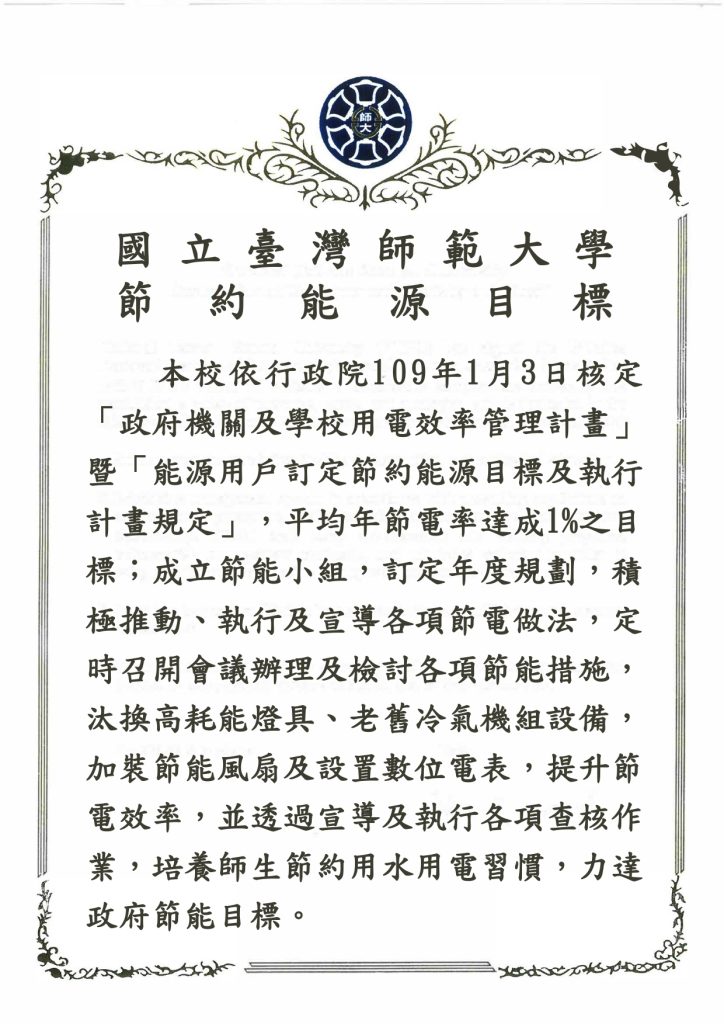
The National Taiwan Normal University (NTNU) has committed to carbon neutrality, aiming to “reduce carbon emissions by 50% by 2030 and achieve complete carbon neutrality by 2048,” actively responding to global climate change. In addition, NTNU has established energy management policies and energy conservation goals to ensure efficient use of energy.
NTNU’s Carbon Neutral Claim
National Taiwan Normal University (NTNU) recognizes that a university has to play an essential role in the evolution of human civilization and promises to be carbon-neutral by 2048 in response to Taiwan’s 2050 Zero Emission policy and UN 2030 Agenda – Sustainable Development Goals (SDGs). In addition to continuing to cultivate talents and develop research, the university will fulfill social responsibilities and increase impacts. NTNU aims to reduce carbon emissions by 50% by 2030 and achieve complete carbon neutrality by 2048 through net-zero green life, energy efficiency, low-carbon emission electricity, and green energy.
To promote university-wide sustainable development goals and specific implementation plans, NTNU established the “Sustainable Development Committee” and set up the “Sustainable Development Office” in 2019. In NTNU public information, including the “Strategic Development Plan 2025-2030” and the “2025 Sustainability Annual Report”, show that sustainable development has been listed as a key development goal in NTNU.
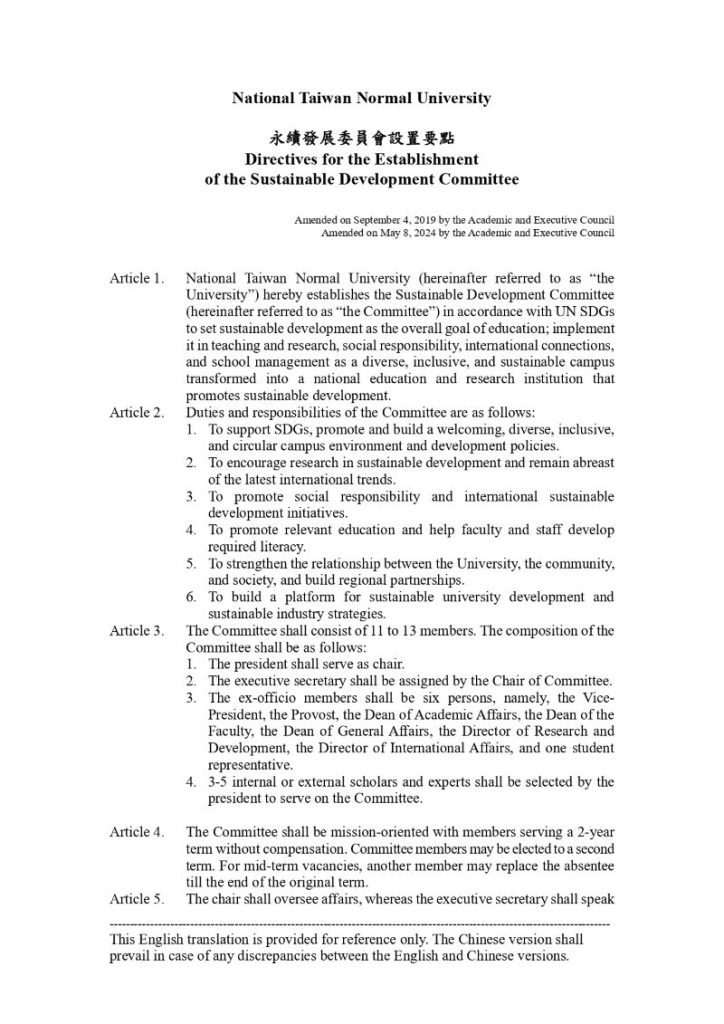
NTNU Directives for the Establishment of the Sustainable Development Committee
National Taiwan Normal University (hereinafter referred to as “the University”) hereby establishes the Sustainable Development Committee (hereinafter referred to as “the Committee”) in accordance with UN SDGs to set sustainable development as the overall goal of education; implement it in teaching and research, social responsibility, international connections, and school management as a diverse, inclusive, and sustainable campus transformed into a national education and research institution that promotes sustainable development.
NTNU has established a sustainability and climate action policy within its 2026–2030 Institutional Development Plan, centered on strengthening social connectivity and advancing a sustainable campus.
NTNU promotes the integration of academic research with industry needs to enhance the application of research outcomes and support sustainable development. It also actively fulfills its social responsibility by contributing to the United Nations Sustainable Development Goals (SDGs) through teaching, research, and community engagement.
In support of climate action and long-term sustainability, NTNU is advancing smart campus initiatives, including the optimization of information and communication infrastructure, the enhancement of digital learning environments, and the promotion of data-driven governance and administrative digital transformation.
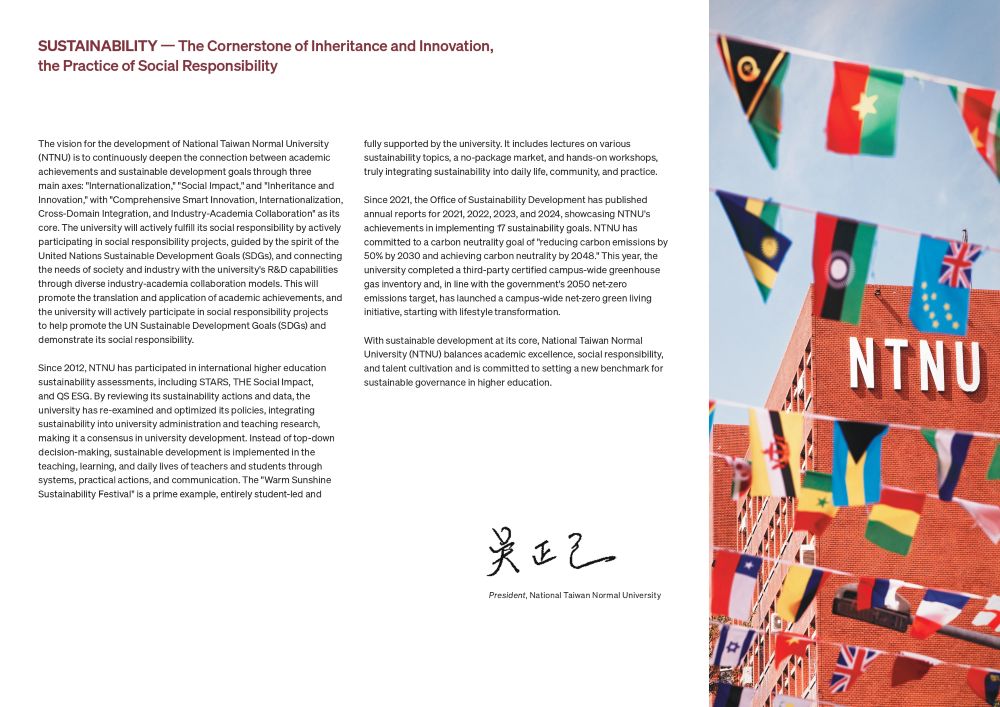
President’s Message in NTNU 2025 Sustainability Annual Report
Sustainability is a core pillar of National Taiwan Normal University’s (NTNU) development strategy, integrating internationalization, social impact, and innovation. Guided by the United Nations Sustainable Development Goals (SDGs), NTNU aligns teaching, research, and industry-academia collaboration to translate academic knowledge into practical solutions that address societal and environmental challenges.
NTNU has committed to ambitious climate action targets. Supported by institution-wide greenhouse gas inventories and net-zero initiatives, NTNU is advancing low-carbon practices and sustainable lifestyles across campus.