The Environmental and Public Safety Center is responsible for tracking and managing water consumption across all campuses annually. In 2024, the total water consumption for the Heping Campus, Gongguan Campus, and Linkou Campus amounted to 600,364 cubic meters.
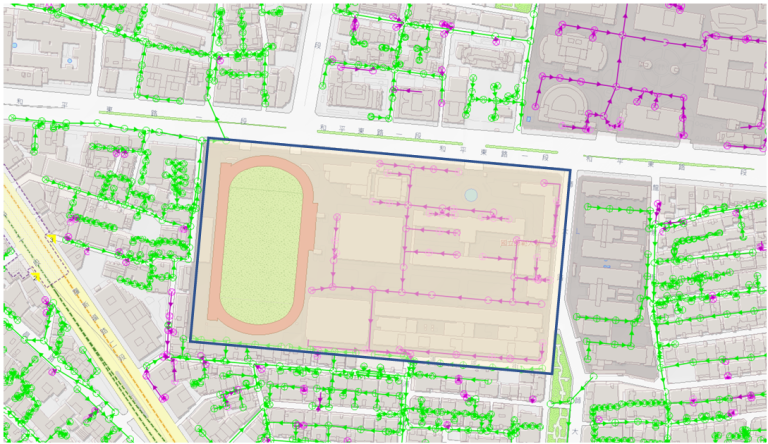
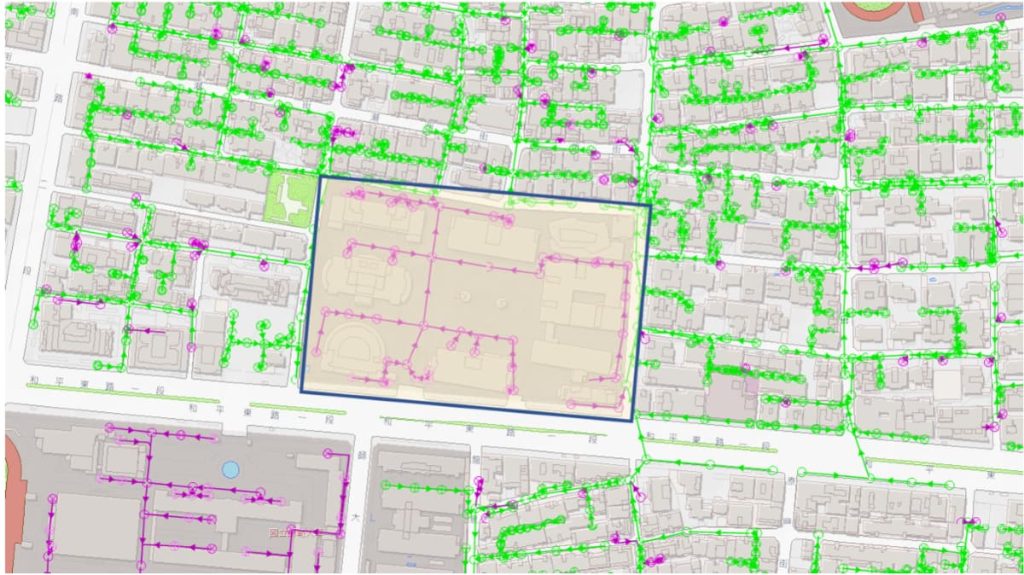
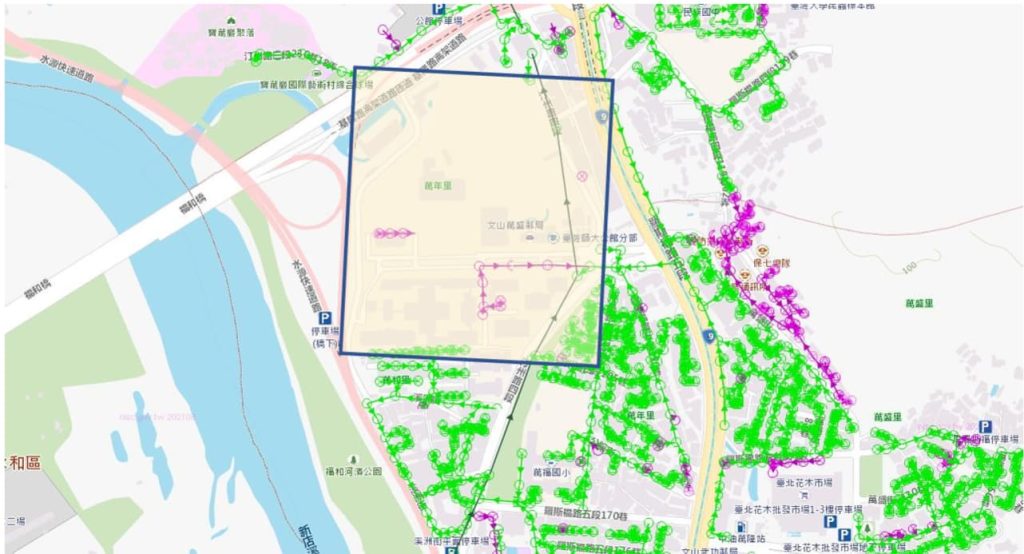
The three NTNU campuses have their own general wastewater treatment procedures based on their respective administrative regions, with the Office of General Affairs responsible for overseeing and managing these processes. Wastewater from the Gongguan and Heping campuses is directed to the Taipei City Sewer System for treatment (sewage pipeline data for two campuses). For the Linkou campus, domestic wastewater from each building is connected to a septic tank for primary treatment, after which it is discharged, along with rainwater, into external wastewater treatment systems.
Heping and Gongguan Campus Sewage Sewer Line Diagram
6.3.2 Preventing water system pollution
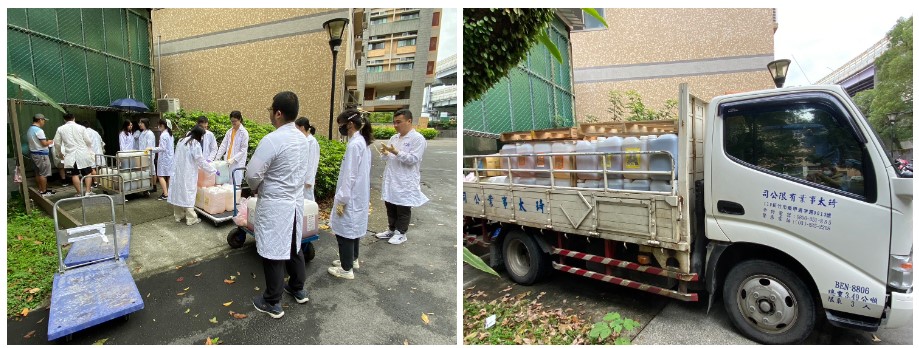
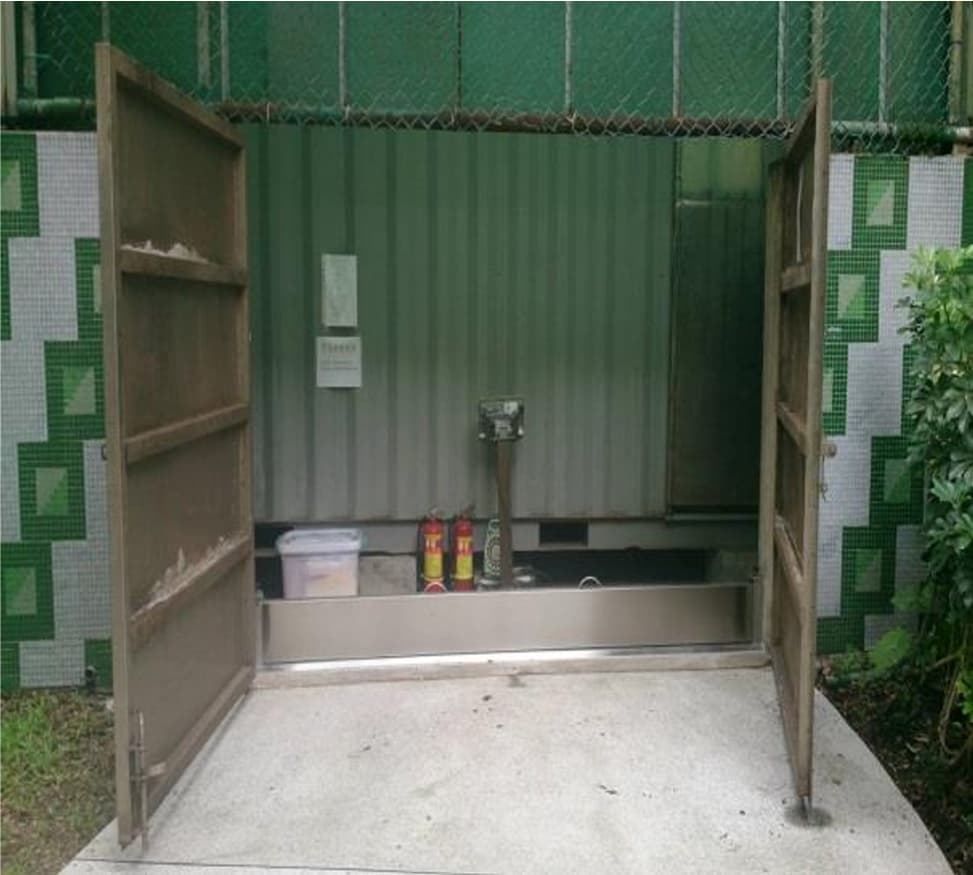
NTNU follows the “Laboratory Hazardous Waste Management Guidelines” for handling chemical waste. Chemical waste is classified based on its hazardous characteristics, stored in appropriate containers, and labeled accordingly. NTNU contracts certified waste disposal companies to transport and dispose of the waste, ensuring compliance with all regulations. To prevent accidental discharge of waste water, NTNU laboratory hazardous waste storage site has added overflow dike facilities to prevent waste from polluting the water resource system.
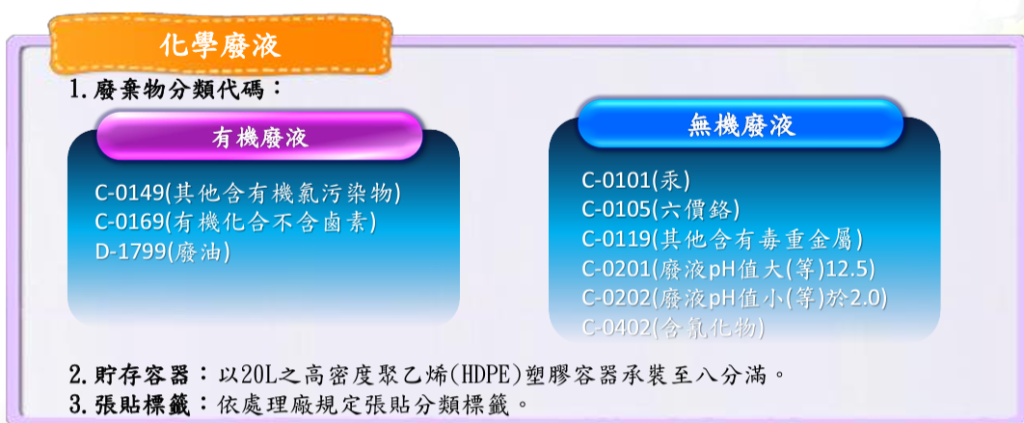
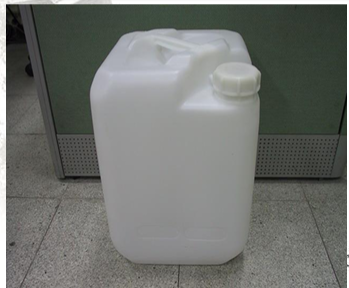
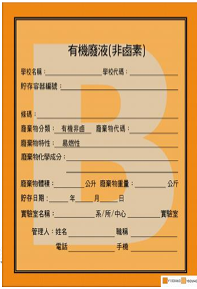
Chemical Waste Cleaning Situation
Chemical waste hazardous characteristics, storage containers, and classification labels.
The hazardous waste storage area at NTNU laboratories has been equipped with overflow dikes to prevent potential contamination of water resources.
6.3.3 Free drinking water provided
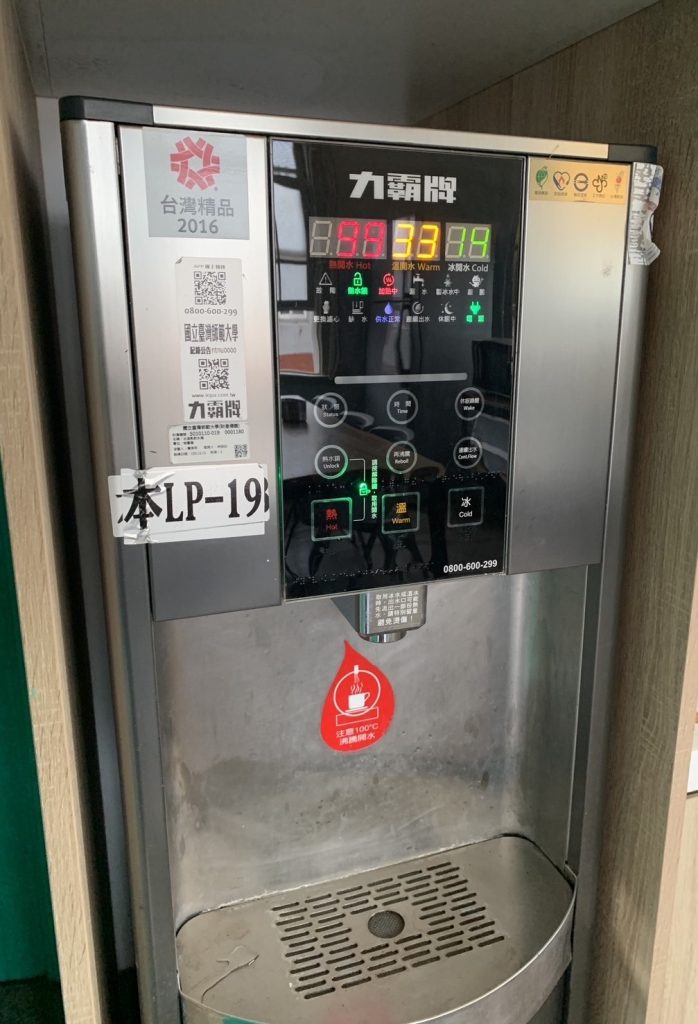
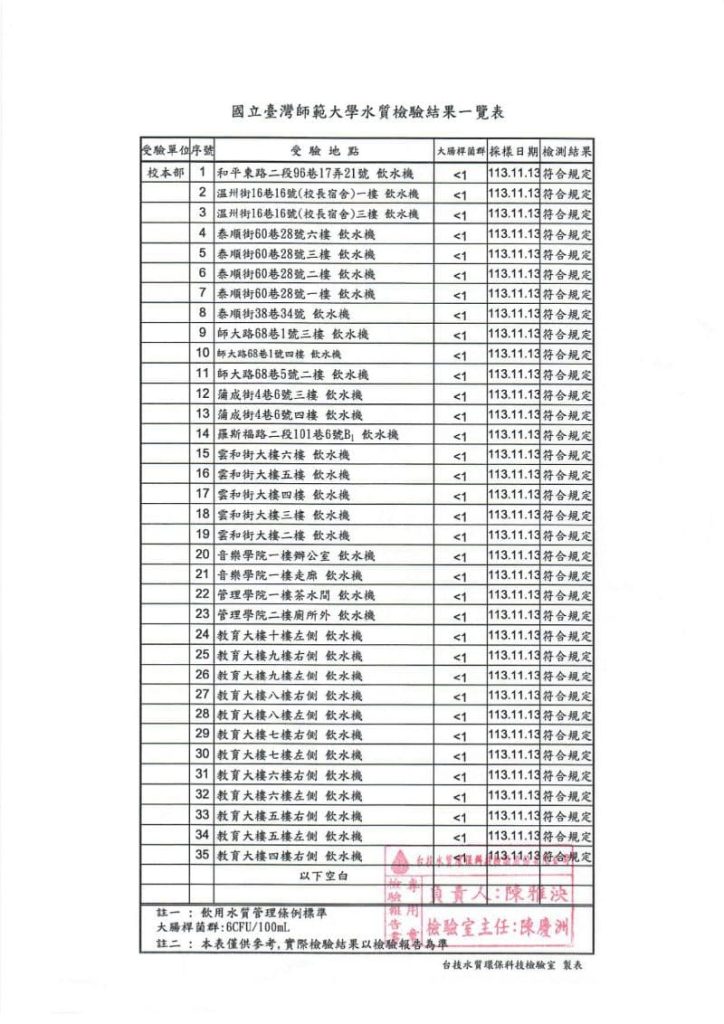
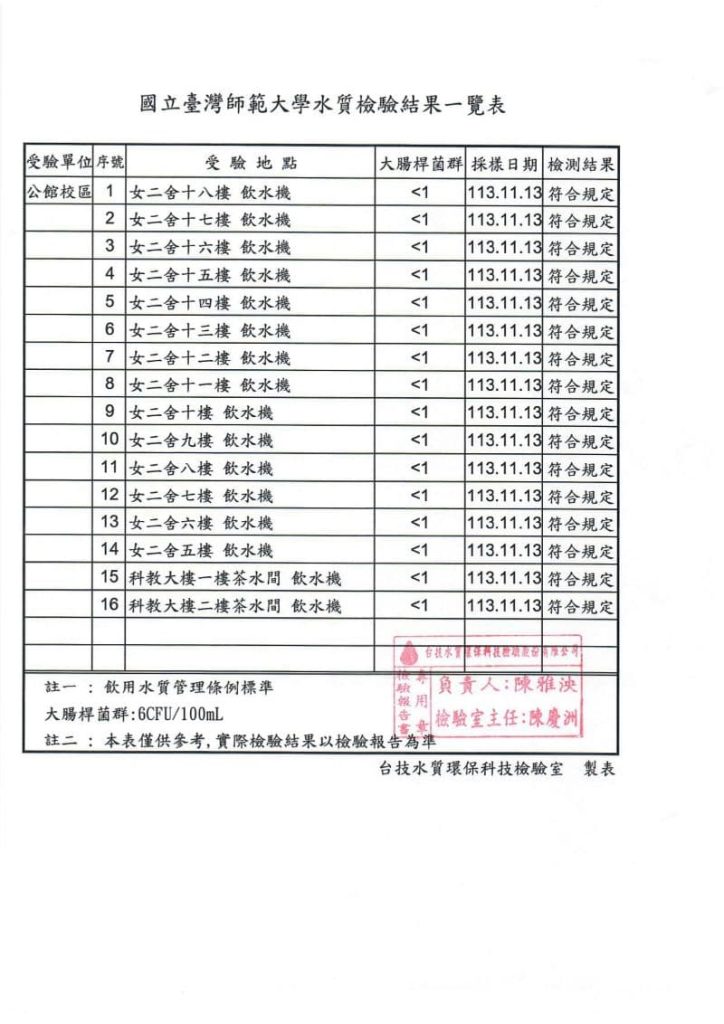
NTNU provides free drinking water to students, staff, and visitors through 504 water dispensers. Additionally, to ensure drinking water safety, the university’s Health Center implements drinking water safety management and tracking according to the “Drinking Water Management Regulations” and the “Regulations for the Use and Maintenance of Continuous Supply Fixed Drinking Water Equipment.” External contractors and the Health Center conduct regular water quality inspections, water quality reports are publicly available for transparency.
Water dispensers quality reports for the water dispenser shows that the test results in 2024 all met the requirements.
6.3.4 Water-conscious building standards
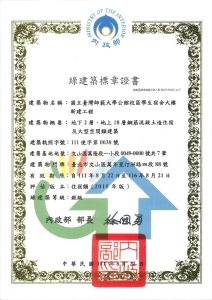
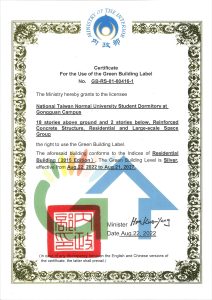
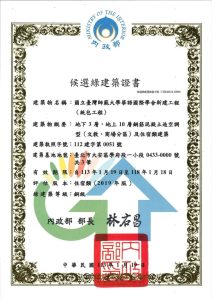
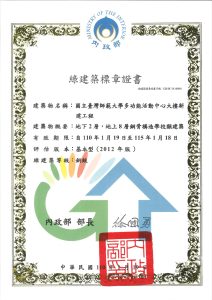
NTNU has several existing and newly constructed buildings that meet Taiwan’s Green Building Certification standards. These include Student Dormitory at Gongguan Campus, which received Silver certification. Multipurpose Activity Center and Chinese International Student Hall, which received Bronze certification. To achieve the Green Building Label, must pass evaluations for water conservation criteria such as “Site Water Retention” and “Water Resources.”
Multipurpose Activity Center and Chinese International Student Hall Bronze Certification
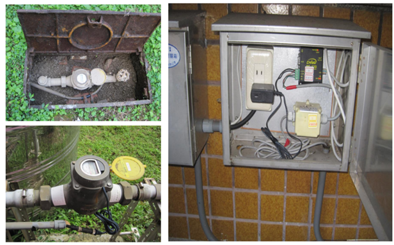
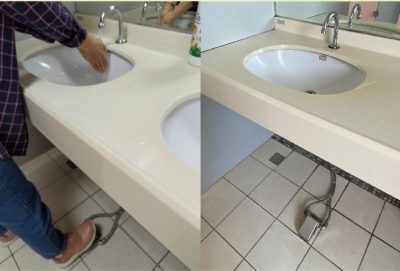
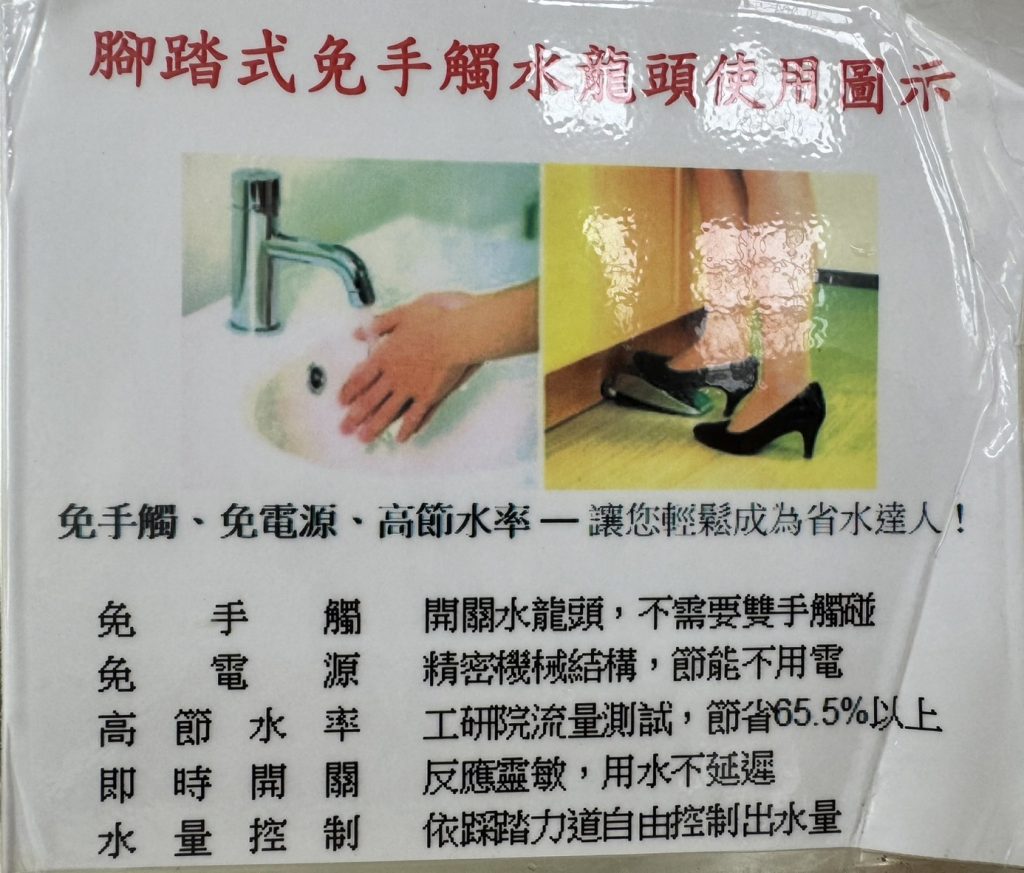
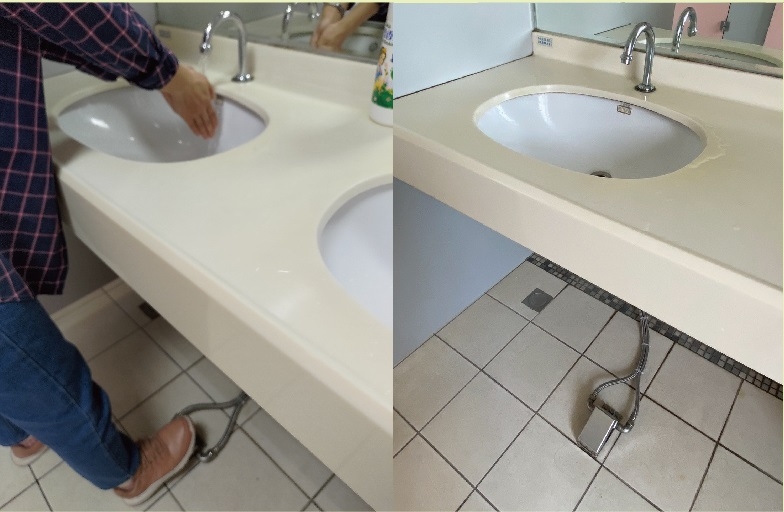
In terms of water-saving facilities, all three campuses are equipped with a “digital water meter monitoring system,” allowing real-time online monitoring of water usage in each building. Additionally, NTNU has installed foot-operated faucets, promoting water conservation and supporting hygiene and infection control. Compared to traditional hand-operated faucets, these provide more precise water use and save up to 40% of water consumption.
Digital water meter monitoring system
Foot-operated faucets
6.3.5 Water-conscious planting
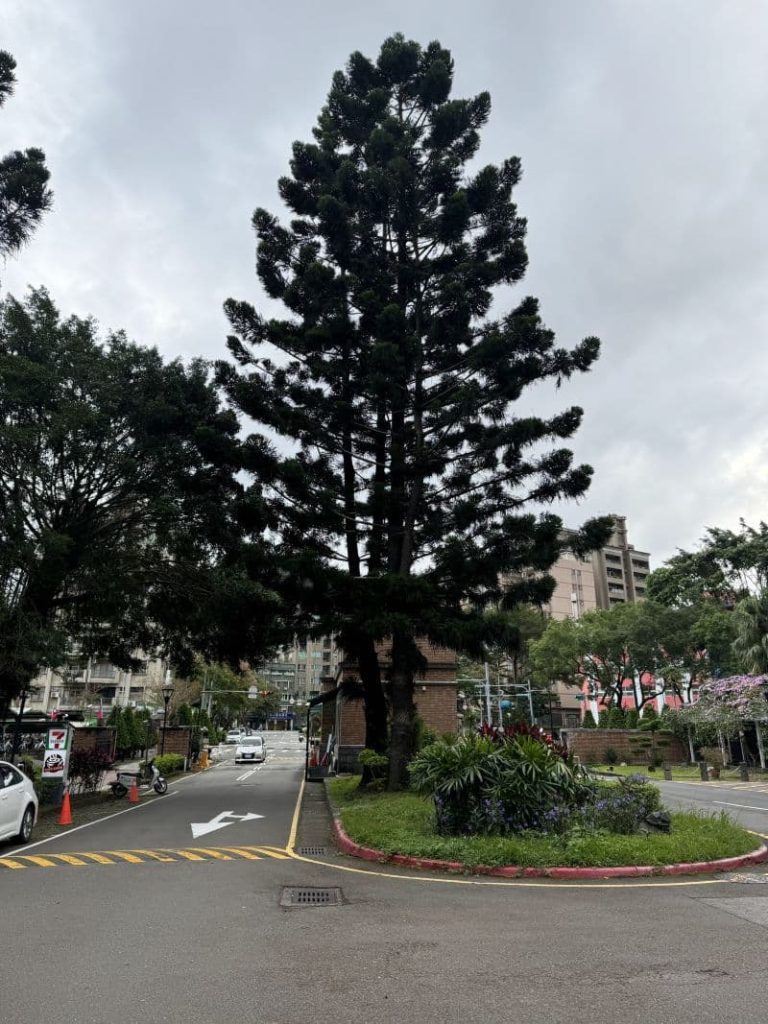
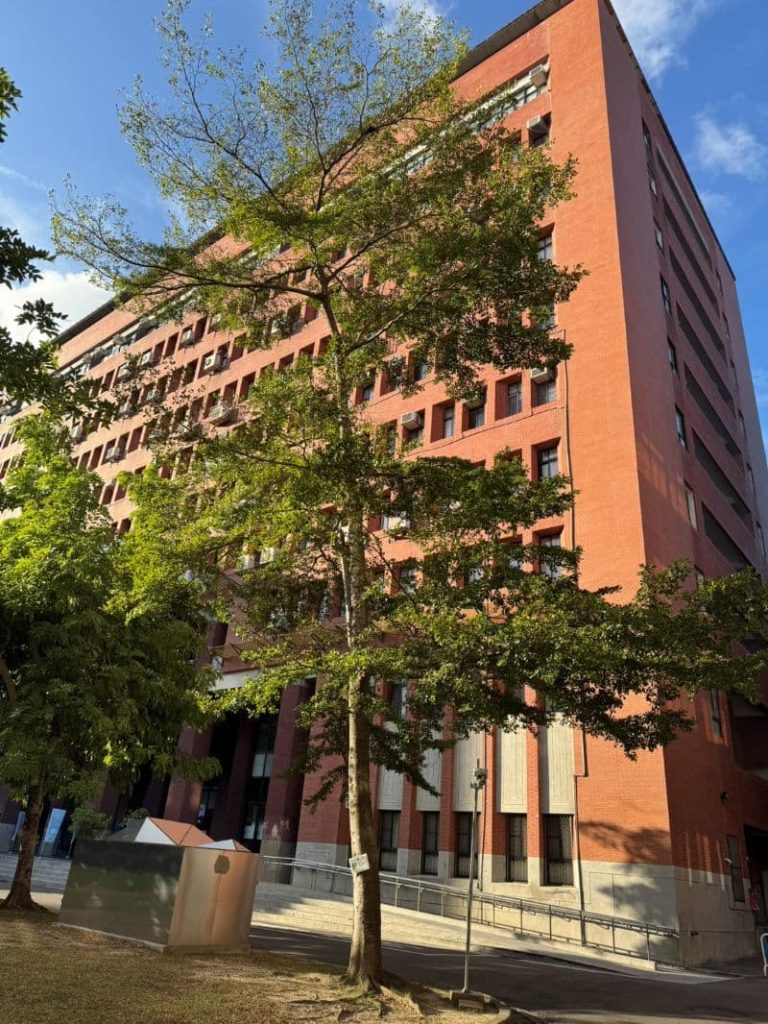
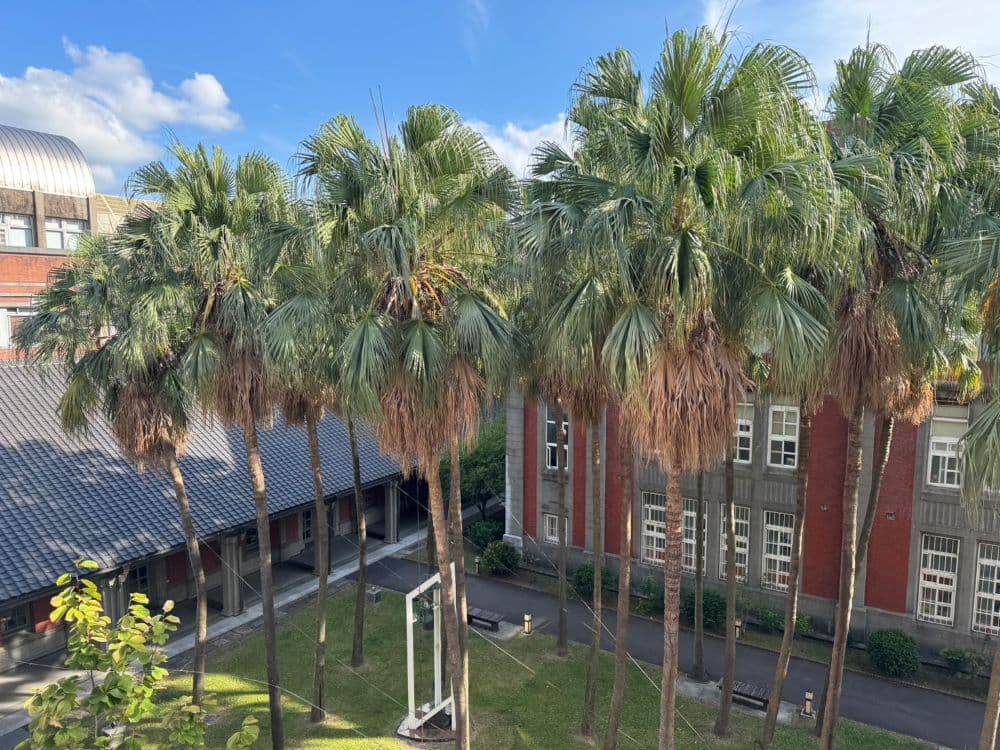
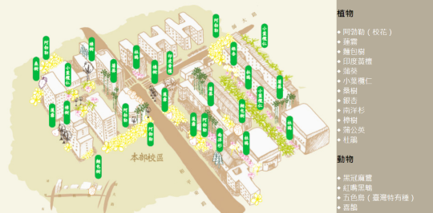
NTNU practices water-conscious landscaping by minimizing water usage in campus planting. Cultivating a variety of drought- tolerant plants on campus, including Araucaria (Norfolk Island Pine), Terminalia mantaly (Madagascar Almond), and Livistona (Chinese Fan Palm), At the Heping Campus, aside from the daily watering of the pond and the plants in front of Wen-Hui Plaza by the maintenance and gardening team, the rest of the landscape is left to develop naturally. At the Gongguan Campus, the trees (primarily large trees) are drought-tolerant and mainly rely on groundwater, with watering only when necessary. Further details about the NTNU plant species can be found in our landscaping and planting guidelines.
Araucaria in Gongguan Campus and Terminalia mantaly in Heping Campus
Livistona in Heping Campus
NTNU landscape planting instruction website
6.4.1 Water reuse policy
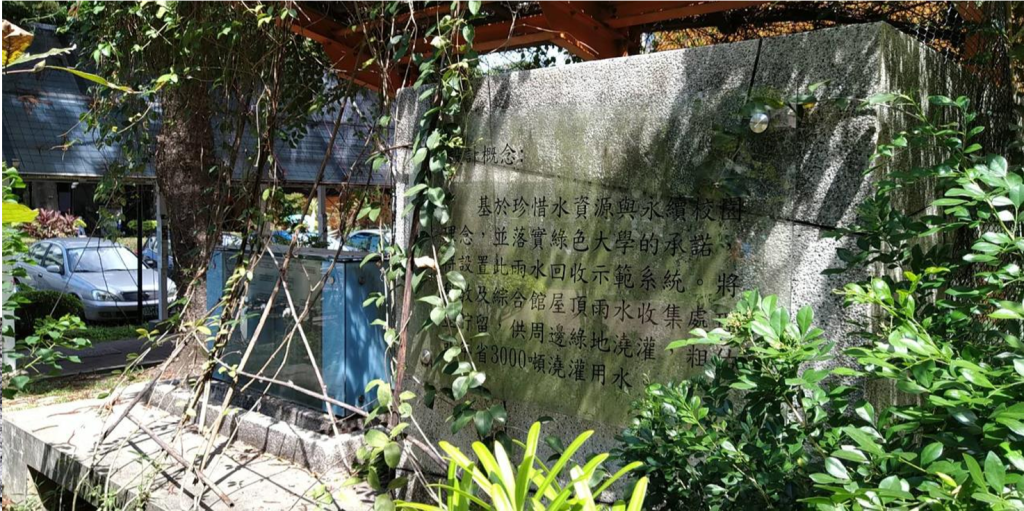
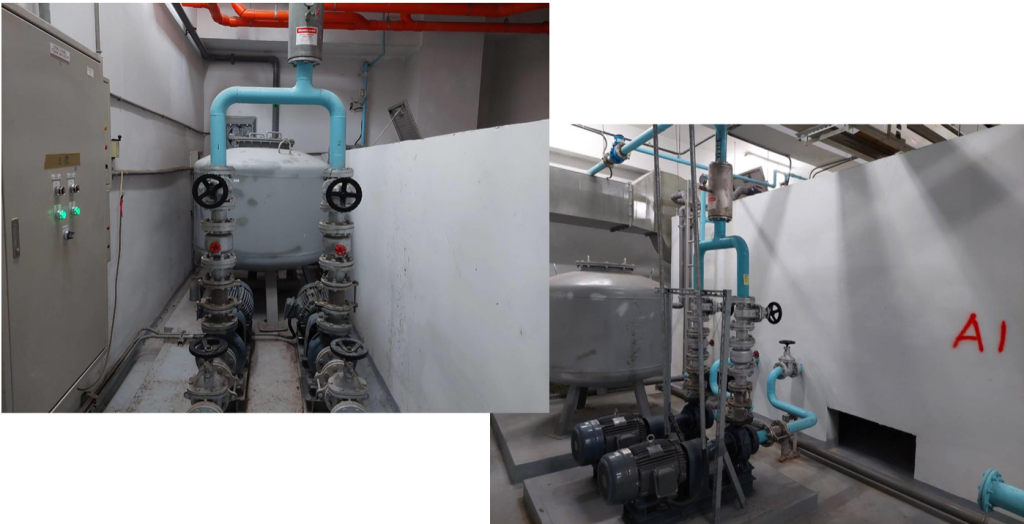
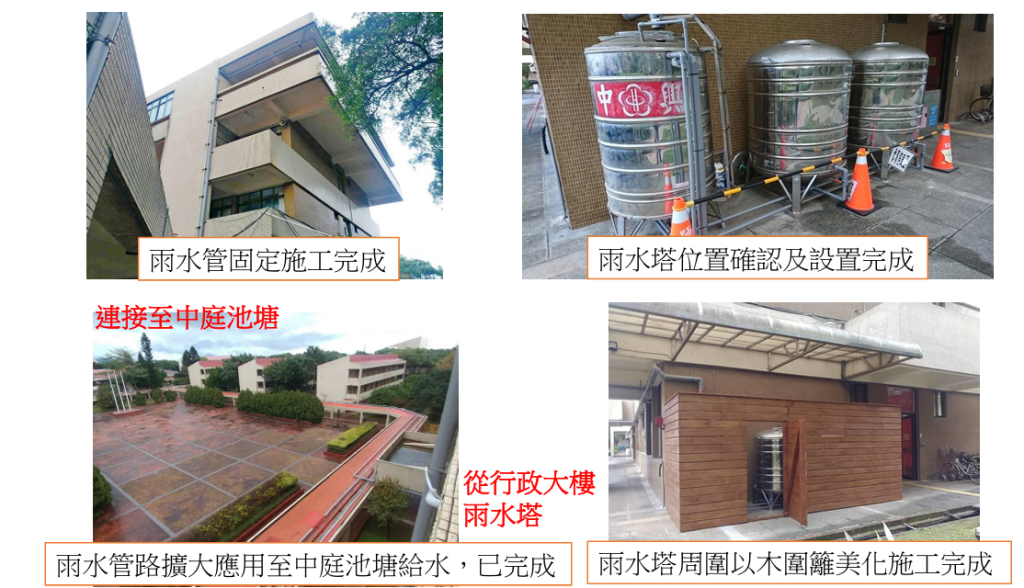
NTNU has established a Campus Energy Conservation Task Force Policy to maximise water reuse across all campuses. The task force analyses and reports campus water usage, promotes conservation, and implements reuse strategies. Under the university’s “Energy Conservation Targets,” awareness campaigns and regular audits are conducted to encourage water-saving habits among students and staff. At the Linkou Campus, rainwater harvesting systems installed in the Administration and Information & Teaching Buildings have a combined storage capacity of 177.5 tons, collecting about 5,240 tons of rainwater annually for irrigation and toilet flushing. At the Gongguan Campus, two greywater recycling systems treat lightly used water from sinks and kitchens for reuse in non-contact applications, saving approximately 3,000 tons of water each year. Detailed information on each campus’s rainwater harvesting system can be found in our reports.
Gongguan Campus Rainwater Recycling Construction
Linkou Campus Rainwater recycling system for the Information and Teaching Building
Construction of rainwater recycling system for the administrative building of Linkou campus.
6.4.2 Water reuse measurement
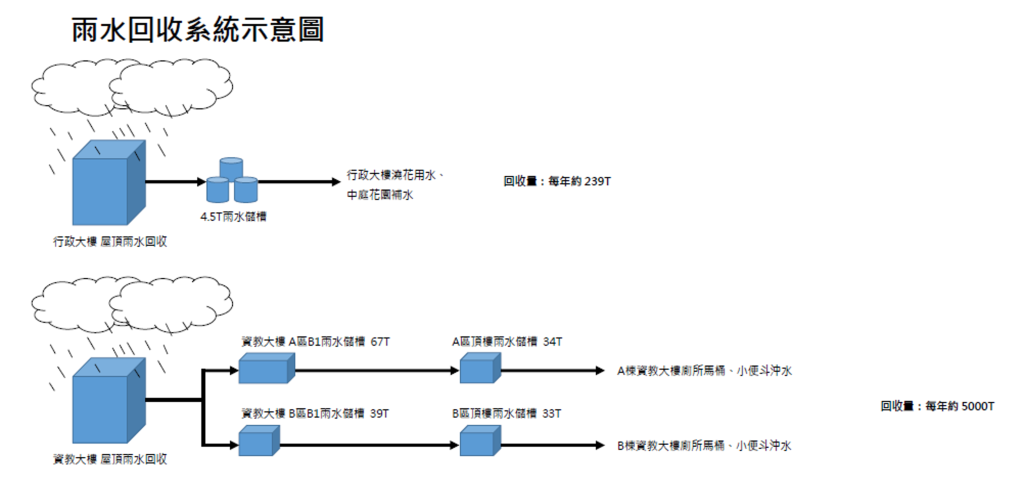
NTNU measures the reuse of water across all campuses to monitor and enhance sustainable water management. The total annual volume of reused water is approximately 8,333 tons. At the Gongguan Campus, two greywater recycling systems save around 3,000 tons of water annually. At the Linkou Campus, the Administration Building is equipped with a 4.5-ton rainwater storage tank, which, based on 74 full-capacity rainfall events in 2024, collects about 333 tons of water per year. The Information and Teaching Building features a 173-ton rainwater tank with a 1,967.68 m² collection area, yielding an estimated 5,000 tons of reused rainwater annually. These systems collectively demonstrate NTNU commitment to effective water reuse measurement and conservation.
Schematic diagram of the rainwater recycling system in Linkou Campus.
To actively promote sustainable water usage and optimize water resource management, the University has installed a “digital water meter monitoring system” across all three campuses. This system allows for online monitoring of water usage in each building to identify any irregularities, such as pipe leaks. It helps the Office of General Affairs to fix them and prevent waste. Currently, the Heping Campus has 24 digital water meters, while the Gongguan Campus has 273 meters (23 in various buildings and 250 in dormitories), for 297 digital water meters across the campuses.
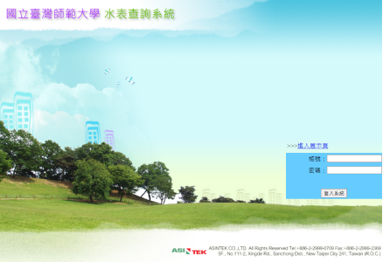
Water meter inquiry system
Digital water meter equipment
6.5.1 Water management educational opportunities
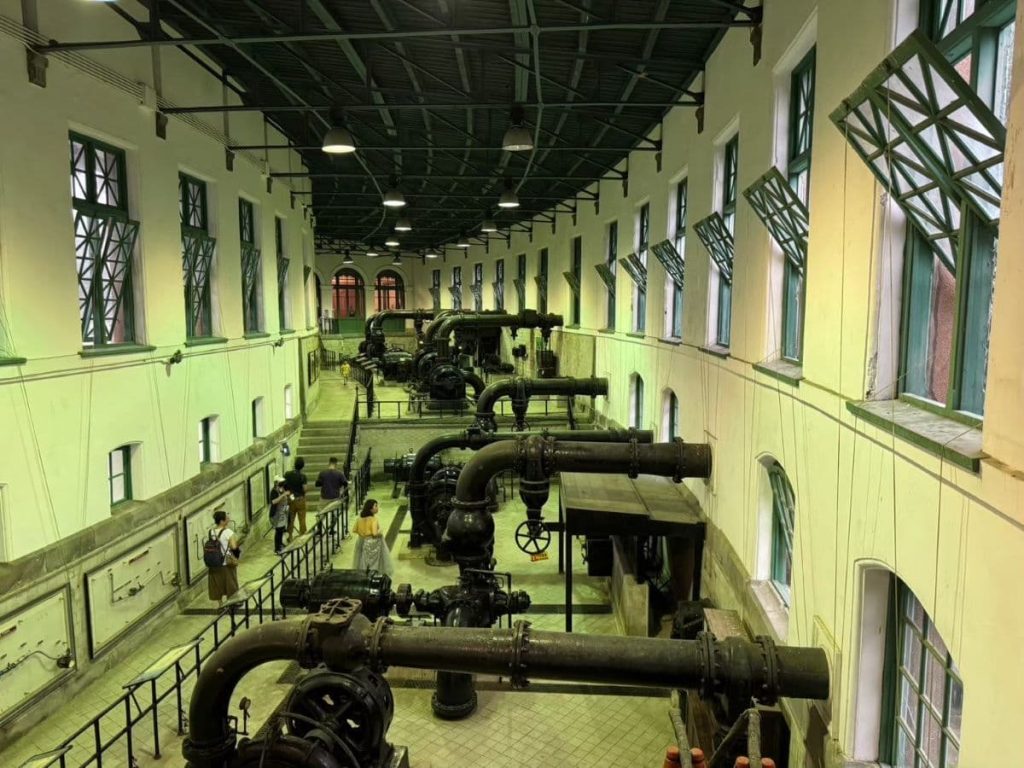
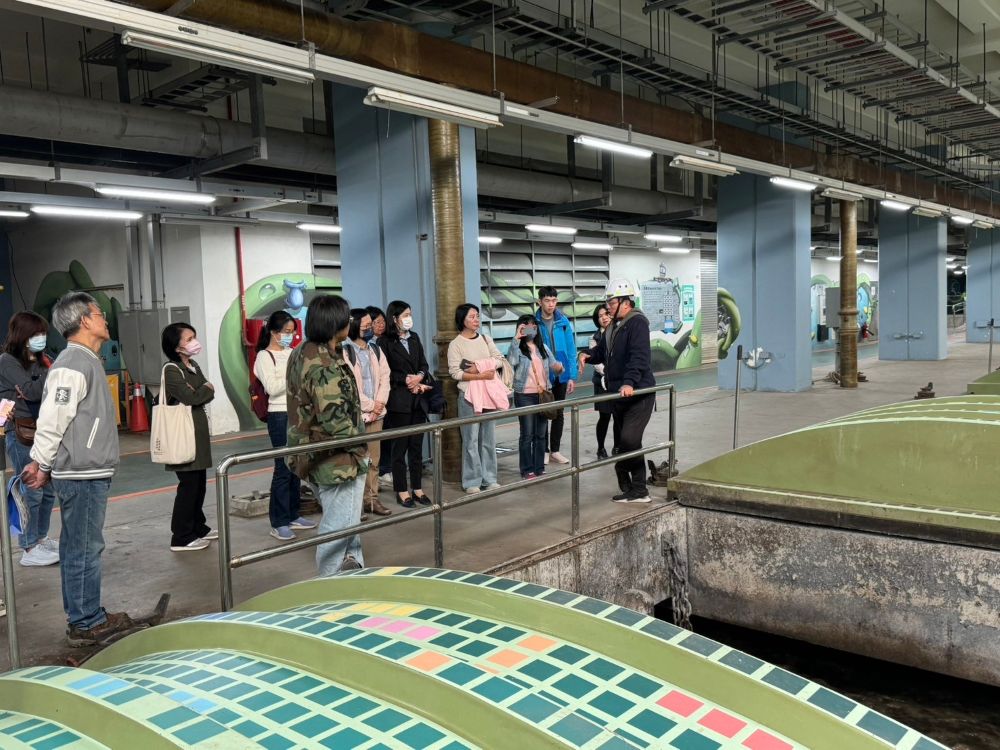
NTNU provides educational opportunities for local communities to learn about good water management through outreach and experiential learning programmes. Professor Tzu-Chao Chang, Director of the Center for Sustainability, led the project “Enhancing Environmental Awareness Among Watershed Residents and Assisting Regional Development Plans.” In 2024, the project guided local elementary and secondary school teachers, students, and community organizations in Taipei to visit key water resource facilities, including the Chihtan Water Purification Plant, Taipei Water Park, Feitsui Reservoir and Dihua Sewage Treatment Plant. Participants learned about water purification, supply systems, and wastewater recycling, gaining a comprehensive understanding of integrated water resource management.
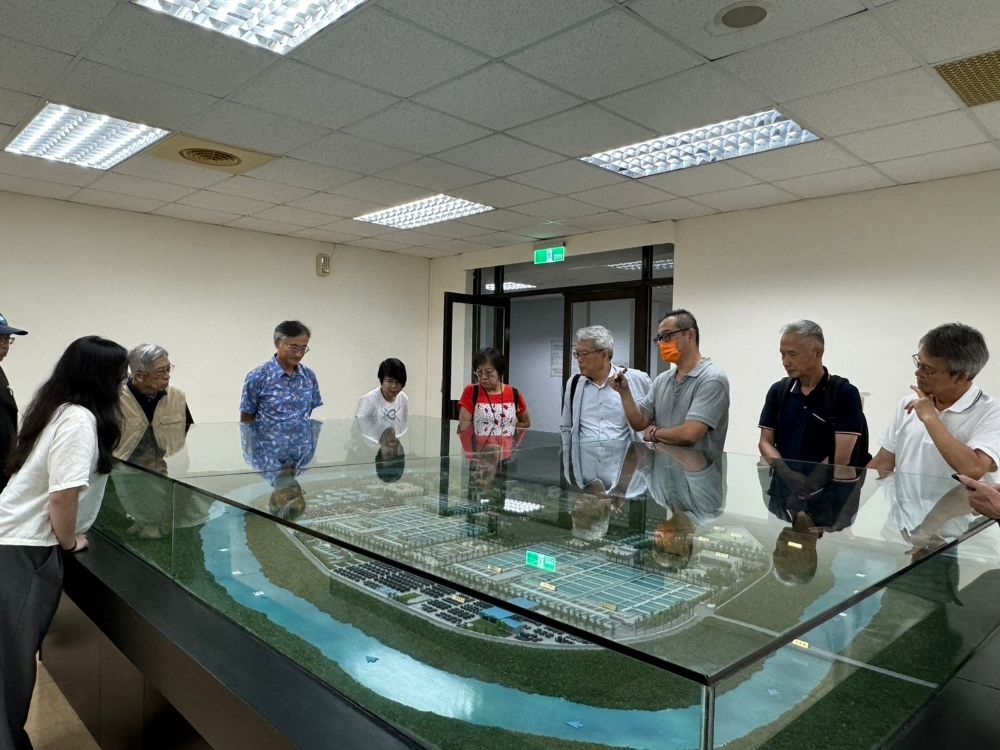
A model of the Chihtan Water Purification Plant is shown. It is currently the largest water treatment facility in Taiwan. The plant draws raw water from the Xindian River, purifies it, and supplies nearly 70% of the tap water for the Greater Taipei area, making it the most important and largest water source for the region.
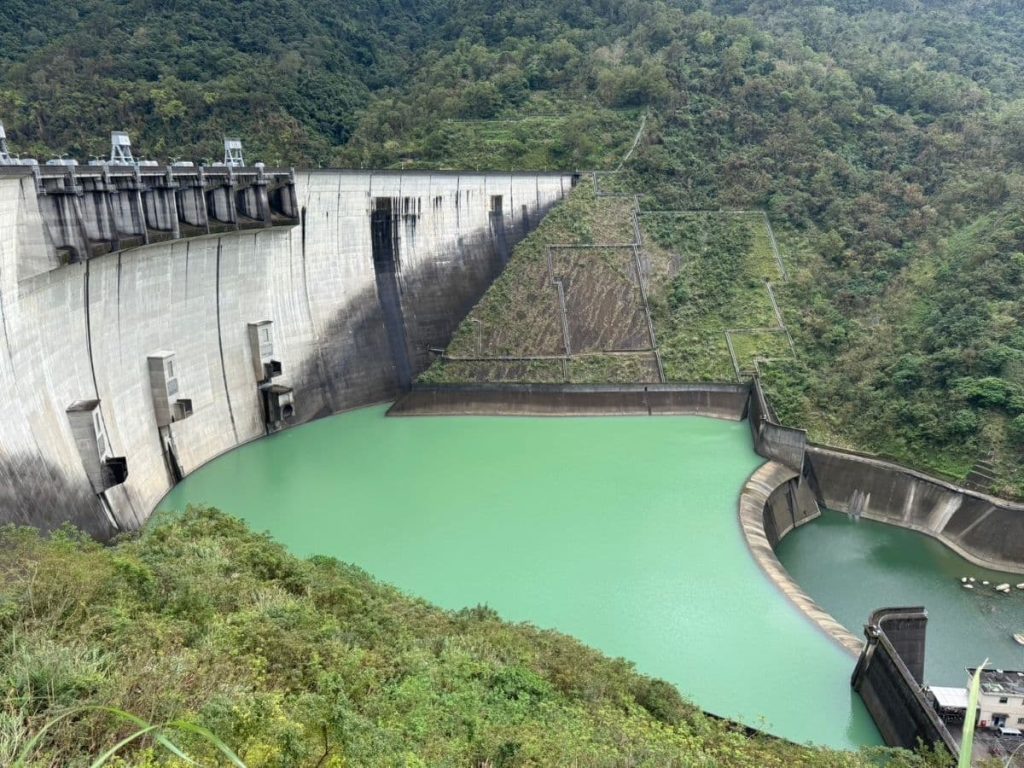
The Feitsui Reservoir was constructed to address the frequent flooding along the Xindian River caused by typhoons and heavy rains, as well as to meet the growing demand for stable water resources driven by Taipei area urban development. The Beishi River, with its abundant water flow, was chosen as the ideal site for the reservoir, specifically the Feitsui Valley, which inspired the reservoir’s name.
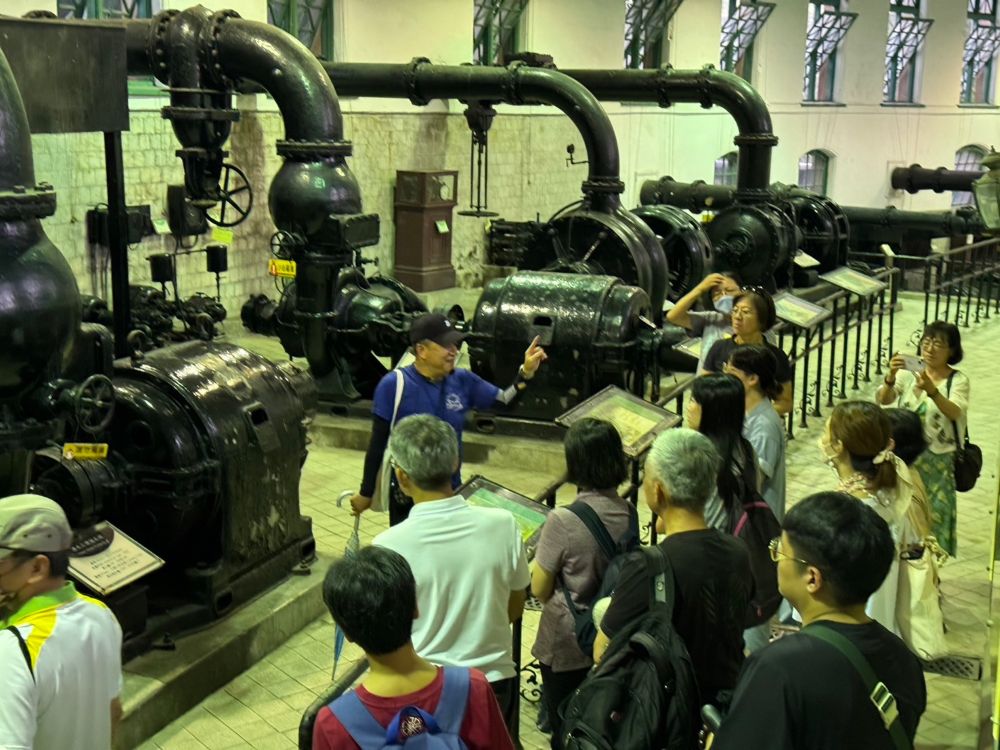
The historic buildings and facilities in the Taipei Water Park date back to the Japanese colonial period. At that time, Taiwan had poor sanitary conditions and inadequate drinking water, with approximately 4,700 deaths caused by environmental pollution. Japan hired British engineer William Barton to help address water resource issues and plan the tap water facilities, leading to his recognition as the “Father of Tap Water in Taiwan.”
The Dihua Wastewater Treatment Plant, Taiwan’s largest secondary wastewater treatment facility, plays a critical role in managing the city’s domestic wastewater. With a daily treatment capacity of up to 500,000 cubic meters, it processes wastewater generated by approximately 2 million people.
6.5.2 Off-campus water conservation support
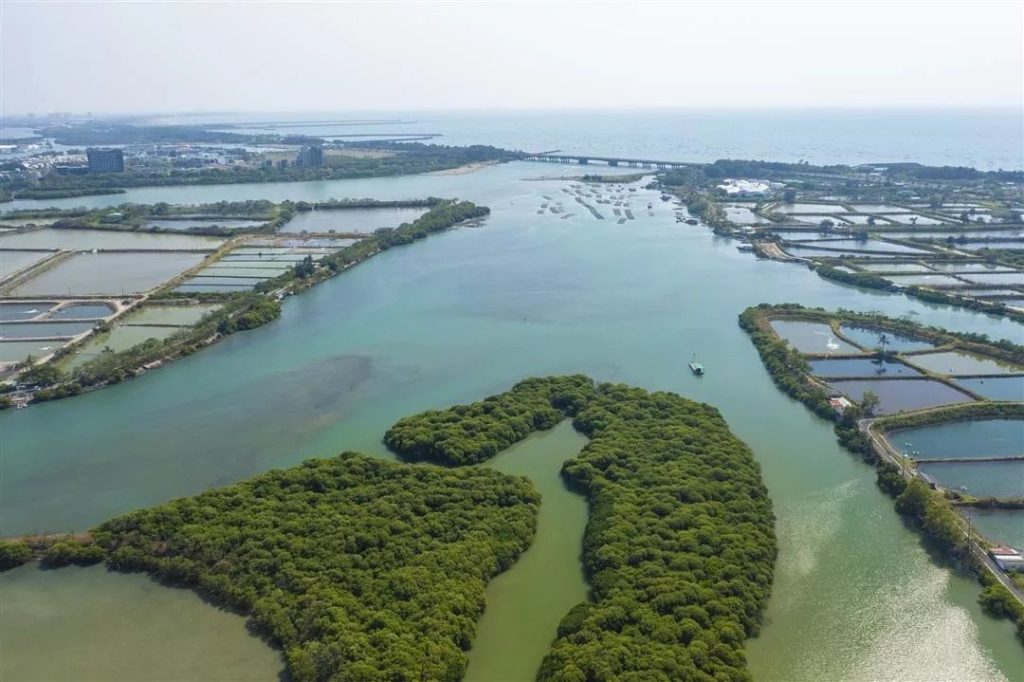
Wetlands play a crucial role in water purification, water regulation, biodiversity conservation, and climate moderation, making them vital to sustainable water resource management and environmental preservation. Their presence mitigates the impacts of extreme weather and provides critical habitats for diverse species, serving as a key interface for the coexistence of humans and nature.
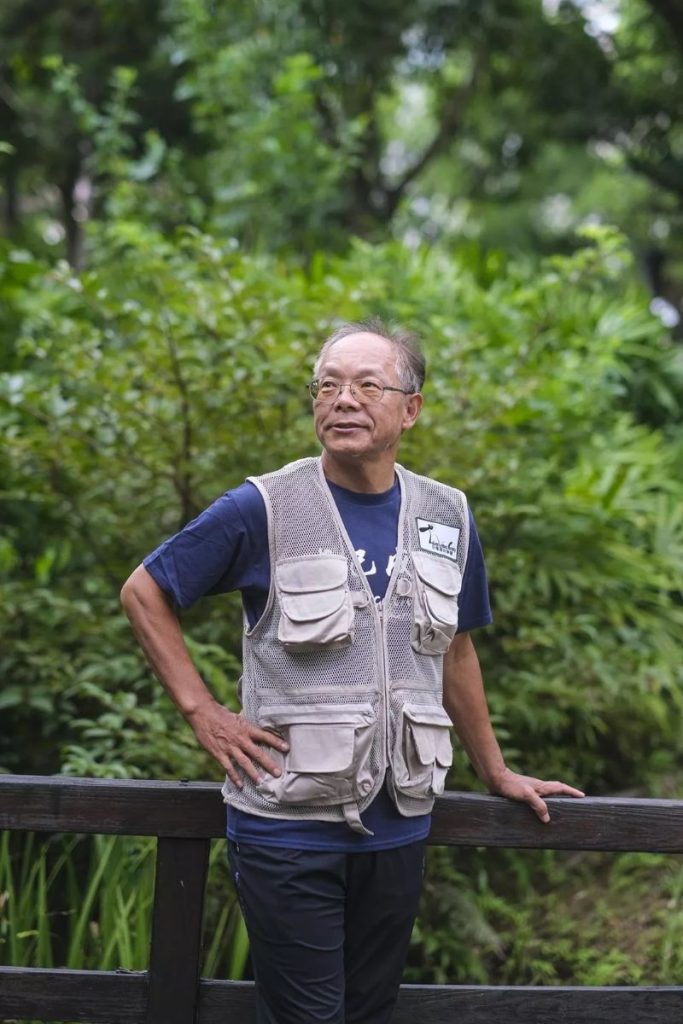
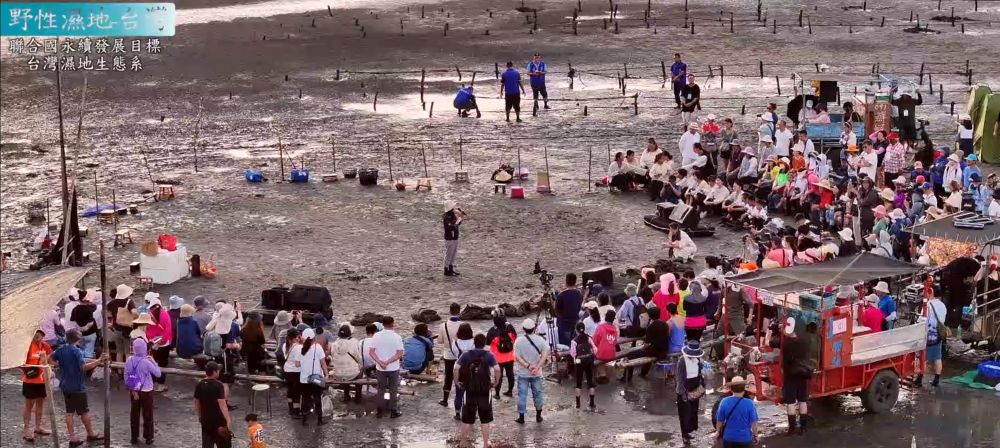
Professor Wei-Ta Fang from NTNU Graduate Institute of Sustainability Management and Environmental Education serves as the President of the Taiwan Wetland Society and the Chair of the Asia Chapter of the Society of Wetland Scientists (SWS). He has been dedicated to the conservation of wetland ecology in Taiwan for many years. In 2024, he produced the ecological documentary “Wild Wetlands”, which took several years to film across Taiwan, documenting diverse wetland habitats—from alpine wetlands and agricultural wetlands to riverine and coastal wetlands.
The documentary showcases Taiwan’s rare wetland landscapes and ecological value, raising public awareness of wetland conservation and the importance of sustainable water resource management. It received the “Best of Best Award” jointly presented by the Ramsar Regional Center – East Asia (RRC-EA) and the Society of Wetland Scientists Asia Chapter, in recognition of its outstanding contribution to promoting wetland protection and public environmental education.
Professor Fang serves as the Chair of SWS Asia Committeeand participates in wetland conservation activities.
Professor Wei-Ta Fang conducts research on Taiwan’s wetlands. The photo shows the mangroves in Taijian National Park, which play important roles in carbon sequestration, flood prevention, and drought mitigation.
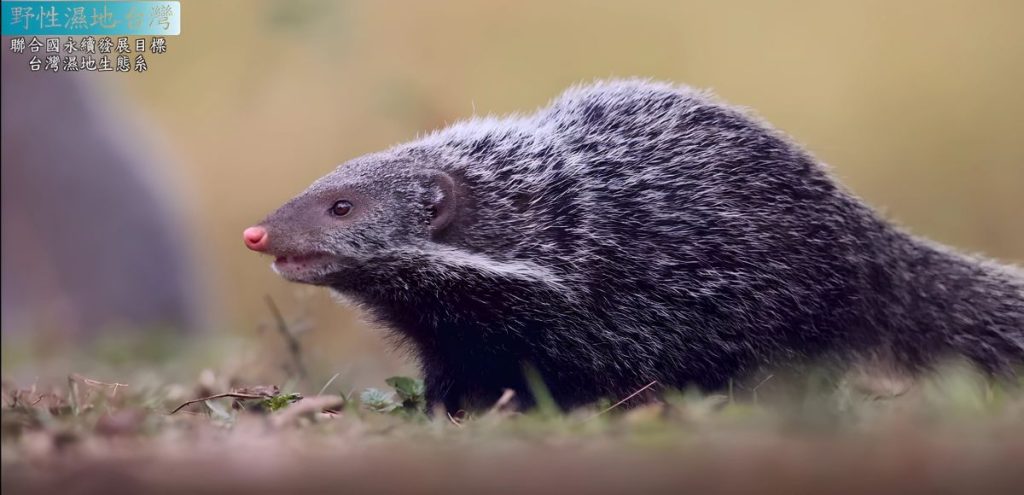
A scene from the documentary “Wild Wetlands,” featuring the crab-eating mongoose, a protected species inhabiting Taiwan’s intertidal zones and alpine wetlands.
6.5.4 Cooperation on water security
NTNU demonstrates cooperation with government agencies on water security through research led by Associate Professor Lee from the Department of Geography titled “Impact Assessment of Climate Change on Water Supply to Hsinchu Science Park in Taiwan.” The study collaborated with the Water Resources Agency, the Central Weather Administration, and the Taiwan Climate Change Projection Information and Adaptation Knowledge Platform (TCCIP) for essential data. It involved local-level hydrological and meteorological data from the Shangping River basin, regional-level analysis of adaptation strategies for Hsinchu Science Park’s water system, and national-level integration of climate projection and water security platforms. This collaboration supports government planning for water resource management under climate change and demonstrates the university’s active contribution to sustainable water security through partnerships with governmental bodies.
6.5.5 Promoting conscious water usage on campus
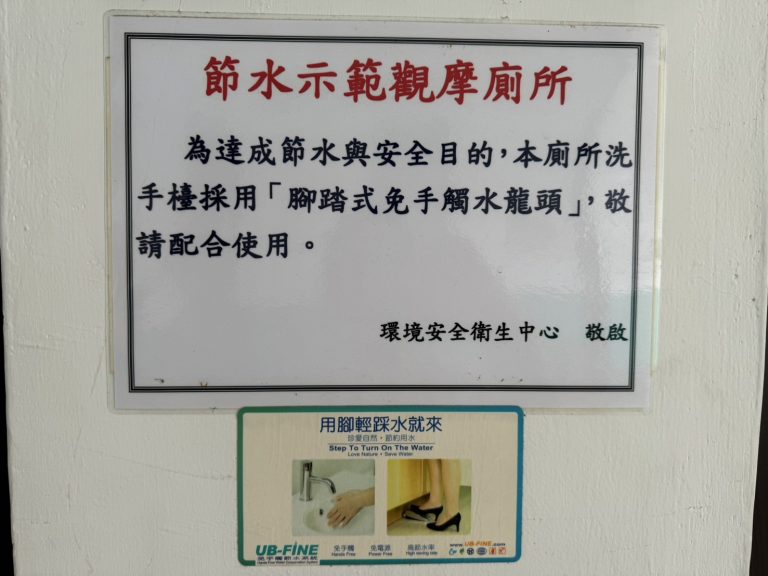
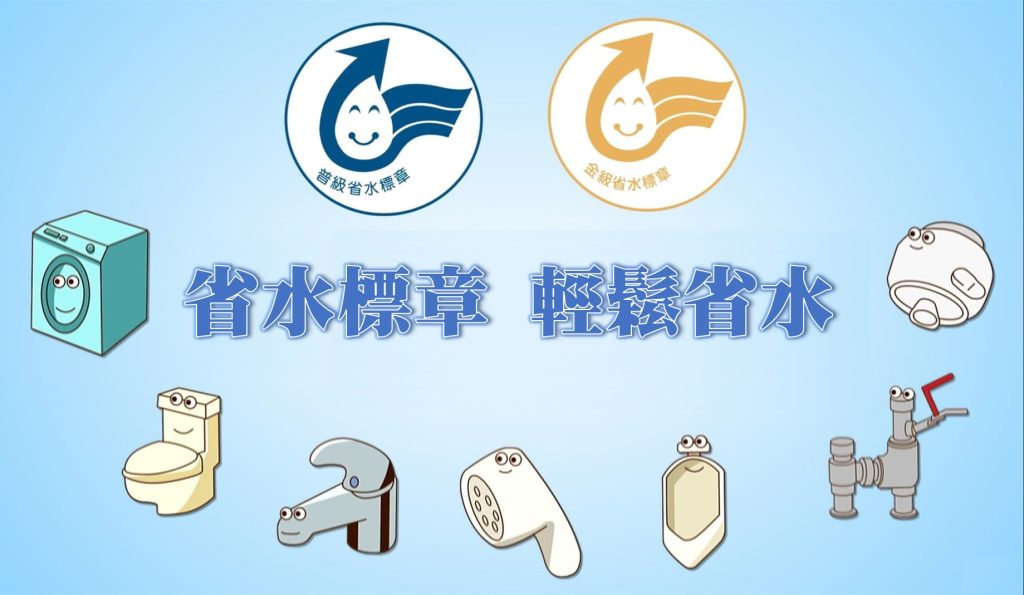
NTNU actively promotes conscious water usage on campus through both technological innovation and education. Since 2017, NTNU has installed Taiwan’s first foot-operated faucets across campus, enabling more precise water control and encouraging water-saving behavior. Clear instructional posters are placed in restrooms to raise awareness and guide proper use. NTNU also shares its water conservation achievements with the wider community to inspire similar actions by other institutions. In addition, the Environmental and Public Safety Center publishes an annual e-newsletter promoting energy and water conservation. In 2024, the newsletter featured an introduction to Water Conservation Labels and Devices, explaining label classifications and encouraging the use of certified water-saving products on campus.
Foot-Operated Faucet and Usage Diagram
The Environmental and Public Safety Center e-newsletter introduces and promotes “Water-Saving Labels and Water-Saving Equipment”.
6.5.6 Promoting conscious water usage in the wider community
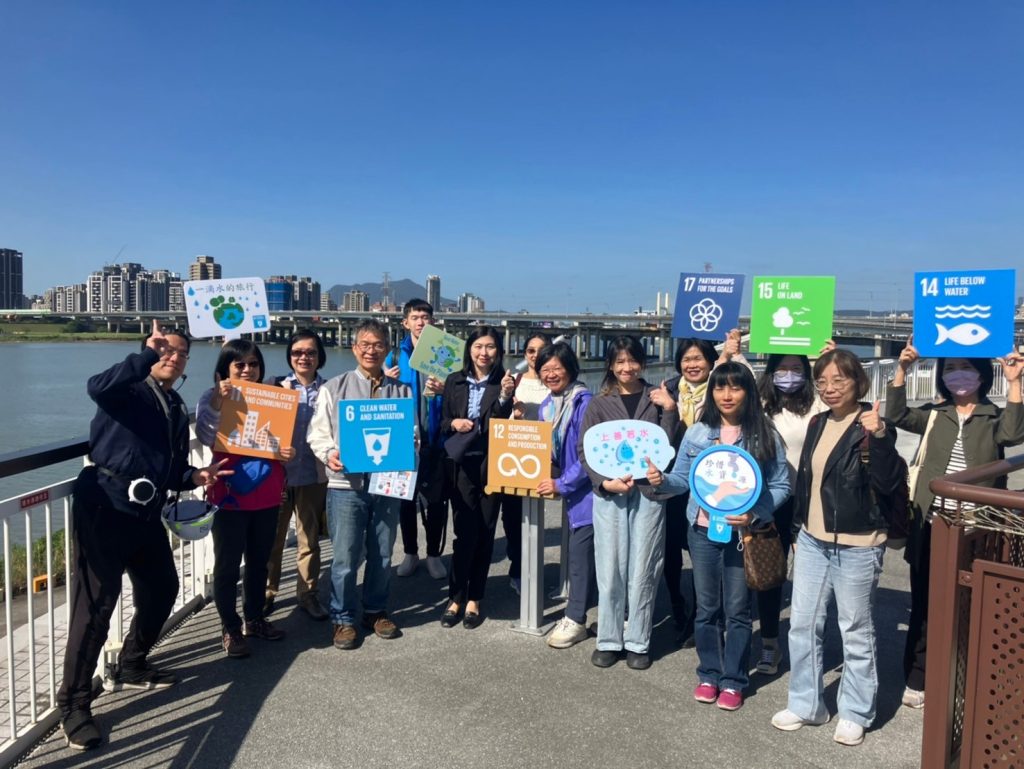
Aligning with Sustainable Development Goal 6: Clean Water and Sanitation, NTNU actively promotes public awareness of water conservation and sustainable water use through educational outreach and field-based learning. By selecting riverbank and water-related facilities as experiential learning sites to connect issues of ecology, environmental protection, and daily life, deepening participants’ understanding of water resource conservation and ecological sustainability.
NTNU invited environmental education experts, faculty members, and members of the Taipei’s Environmental Education Advisory Group, including principals, supervisors, and teachers from local elementary and junior high schools, to participate in this initiative. These activities helped extend the concept of water-saving from campus to the community.
Field visits included the Chihtan Water Purification Plant, Feitsui Reservoir, Taipei Water Park, and Dihua Wastewater Treatment Plant, where participants learned about the entire water system—from source protection and drinking water quality to wastewater management—while emphasizing action-oriented awareness of water conservation and sustainable use.
Through these off-campus educational programs, NTNU empowers educators and community members to adopt water-saving behaviors and contribute to sustainable water resource management.
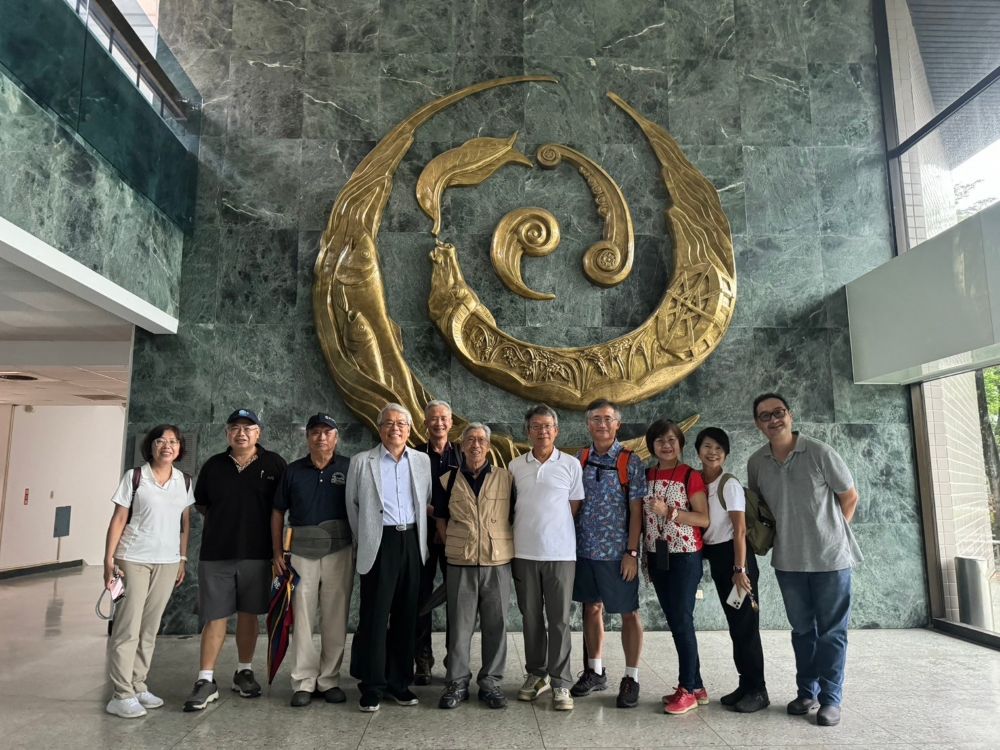
Visit to Chihtan Water Purification Plant with NTNU faculty and external experts discussing water resource issues and educational strategies.
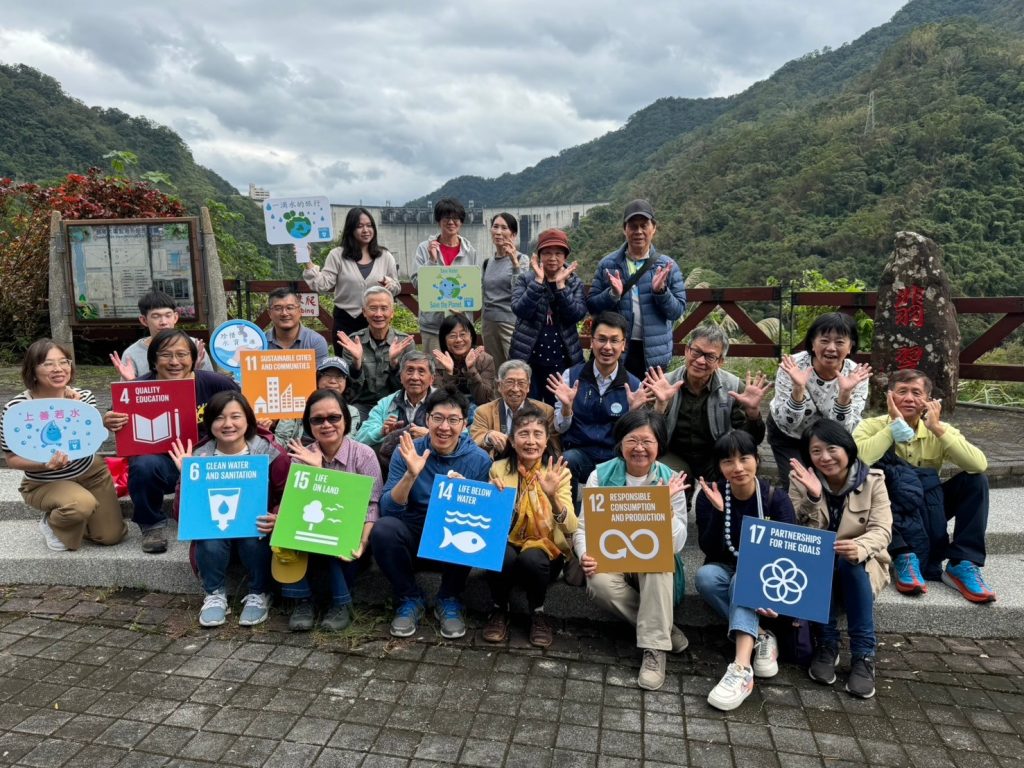
Field trip to Feitsui Reservoir with environmental education experts, NTNU staff, and local school leaders exploring the reservoir’s unique ecological role and its importance in supplying water to the Taipei metropolitan area.
Visit to Taipei Water Park to observe key water conservation facilities, enhancing participants’ awareness and appreciation of sustainable water management.
Visit to the Dihua Wastewater Treatment Plant with teachers from Taipei’s Environmental Education Advisory Group. As Taiwan’s first urban domestic wastewater environmental education site, the visit provided experiential learning activities on water resource management and sustainability, promoting water resource literacy and practical water-saving behaviors.