10.6.1 Non-discriminatory admissions policy
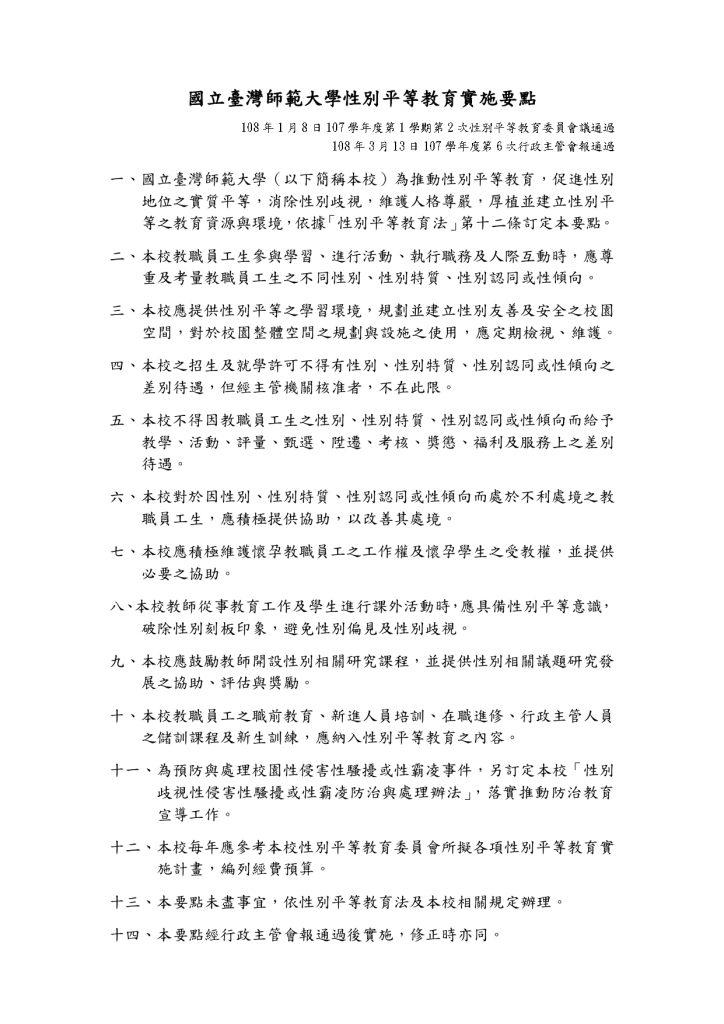
The university does not consider race or identity as criteria for admission. In accordance with the Guidelines for Implementing Gender Equality Education (Article 4), the university ensures that admissions and enrollment decisions are free from discrimination based on gender, gender characteristics, gender identity, or sexual orientation.
According to 2024 data, there were 376 female undergraduate students and 293 male undergraduate students among new enrollees, resulting in a gender ratio of 77.
Reference: 2024 Student Enrollment Statistics Table.
10.6.2 Access to university track underrepresented groups applications
The university provides multiple admission pathways for students from economically or culturally disadvantaged backgrounds. The Undergraduate and Graduate Academic Affairs Divisions under the Office of Academic Affairs compile annual statistics on admission quotas, the number of admitted students, and enrollment figures. These data are used to build a longitudinal database to monitor the enrollment trends of economically or culturally disadvantaged students.
In 2024, students from economically and culturally disadvantaged backgrounds accounted for 17.13% of first-year undergraduates.
Admission Pathway | Category of Underrepresented Students | Number of Admitted Students) | Number of Enrolled Students |
Stars Program | General Students | 282 | 266 |
Additional Quota for Indigenous Students | Indigenous Students | 67 | 40 |
Additional Quota for Offshore Island Students | Offshore Island Students | 26 | 14 |
Special Admission for Students with Disabilities | Students with Disabilities | 37 | 19 |
Morning Light Program | Economically Disadvantaged (Low-/Middle-Income or Special Circumstances Families) and Culturally Disadvantaged (Second-Generation New Immigrants) | 54 | 19 |
Total | 466 | 358 | |
10.6.3 Access to university underrepresented groups recruit
1. Inclusive Employment and Representation Policies
In accordance with relevant regulations, the university encourages all departments and offices to recruit underrepresented faculty and staff. The related policies are as follows:
(1) Employment of Persons with Disabilities:
Each unit is required to employ persons with disabilities to constitute at least 3% of total staff, following the Implementation Plan for the Employment of Persons with Disabilities. Priority is also given to hiring students with disabilities for on-campus work-study positions to ensure their rights and opportunities. In 2023, the university exceeded the 3% employment threshold, with employees with disabilities formally included among university staff.
(2) Gender Equality Committee:
The composition of the Gender Equality Education Committee must comply with the principle that no gender shall constitute less than one-third of all members.
2. Admission and Student Support for Underrepresented Groups
The university also implements multiple admission and support schemes to recruit and assist underrepresented students:
(1) Morning Light Dual Admission Program:
To support economically or culturally disadvantaged students, the university offers 54 priority admission slots each year and allocates approximately 40 special admission opportunities for students with disabilities. The Special Education Center Resource Classroom provides academic assistance to help these students complete their studies successfully.
(2) Dormitory Allocation Policy:
International students, overseas Chinese students, students with disabilities, and those holding low-income or middle–low-income certificates are granted priority for dormitory allocation and residence, ensuring equitable access to campus housing resources.
10.6.4 Anti-discrimination policies
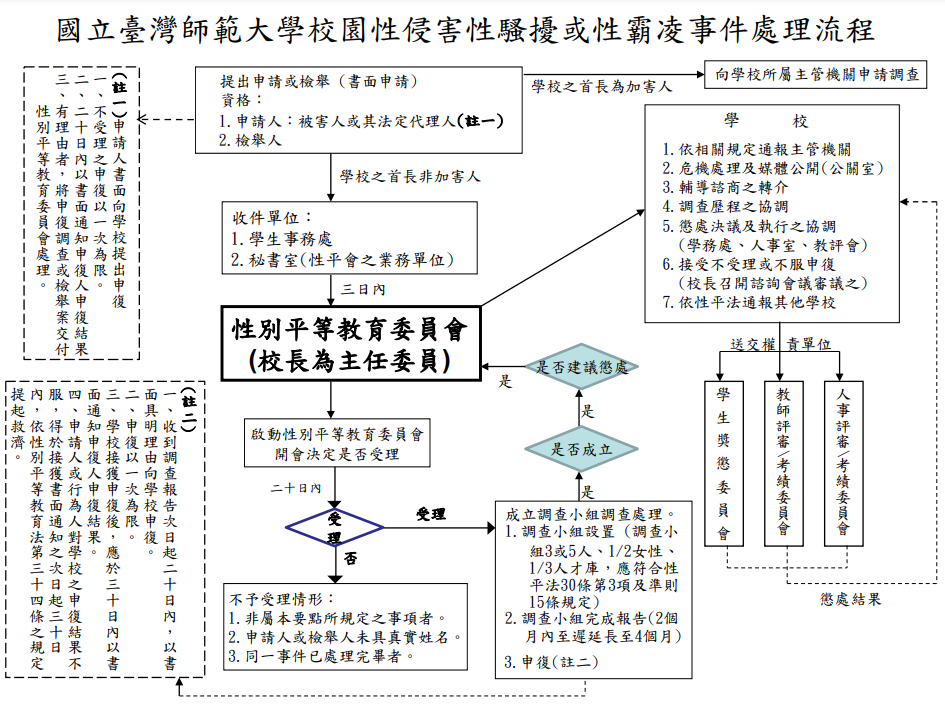
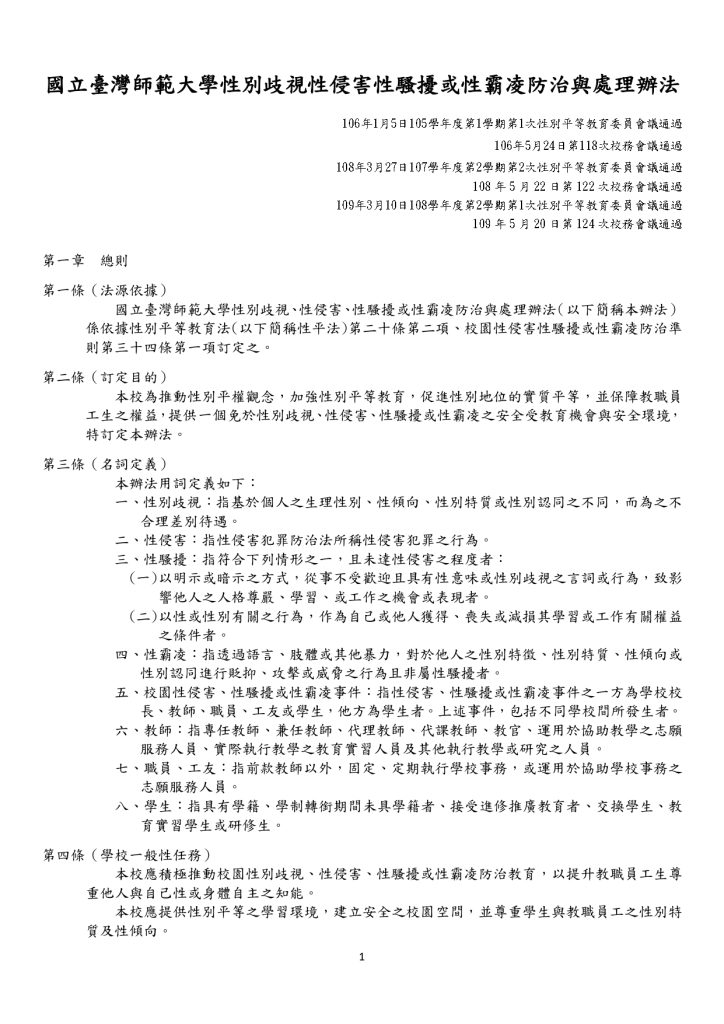
The university has established the Guidelines for Implementing Gender Equality Education and the Regulations for Preventing and Handling Gender Discrimination, Sexual Assault, Sexual Harassment, or Sexual Bullying. These policies promote long-term gender equity awareness, strengthen gender equality education, advance equal gender status, and ensure that all faculty, staff, and students have access to a safe and equitable learning and working environment.
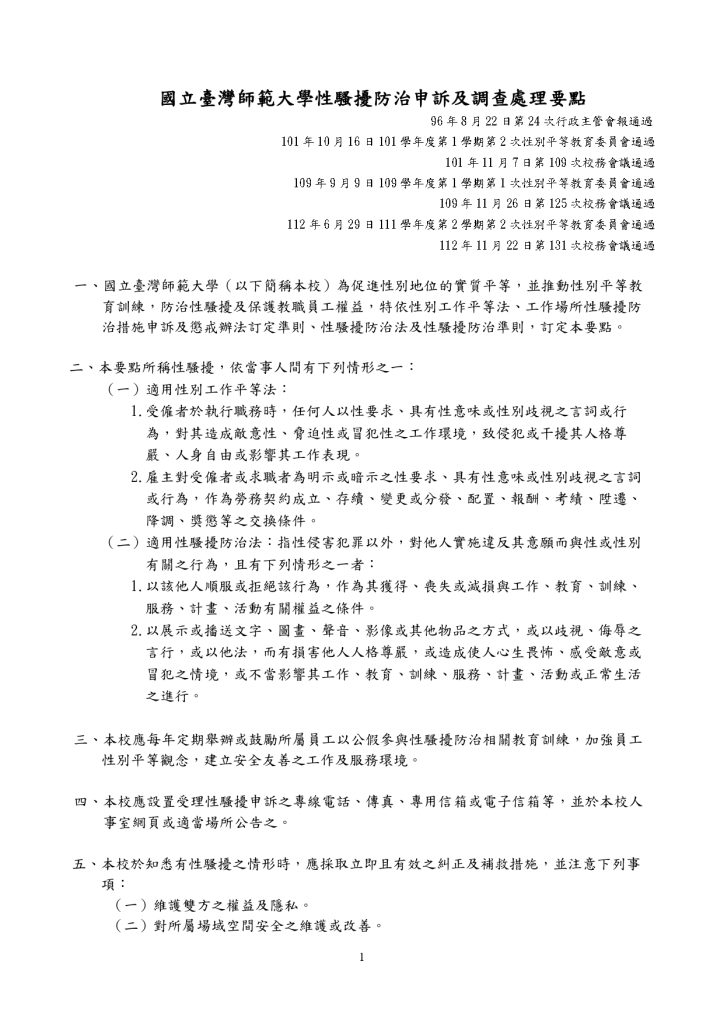
In addition, to prevent sexual harassment, the university has enacted the NTNU Guidelines for Sexual Harassment Prevention, Complaint Filing, Investigation, and Handling. Dedicated channels—including a complaint hotline, fax, and mailbox—have been set up to safeguard the rights and interests of all members of the university community.
10.6.5 University diversity officer
The university’s administrative units—including the Office of Personnel, Office of Student Affairs, Center for Teaching and Learning Development, and Office of International Affairs—lead the development of initiatives related to diversity, equity, and inclusion, and promote related activities and programs:
Office of Personnel: Establishes the Student, Faculty, and Staff Appeals Review Committees to safeguard the rights and interests of all members of the university community, including cases involving discrimination or unfair treatment. It also implements the Employee Assistance Program (EAP) to create a caring and supportive work environment through diverse assistance measures.
Office of Student Affairs: Oversees the Indigenous Student Resource Center, which provides a range of support services to Indigenous students.
Center for Teaching and Learning Development: Responsible for programs such as the Learning Assistant Incentive Scheme, Learning Communities for Academic Support, the Morning Light Academic Support Program, and the First-Year Student Learning Adaptation Survey.
Office of International Affairs: Provides various support services for international students.
Additionally, university-level bodies—including the Standing Committees of the University Council, the Special Education Center, the Gender Equality Education Committee, the Special Education Promotion Committee, the General Education Committee, and the Research Ethics Review Committee—jointly oversee major university affairs, enhance the rights and well-being of faculty, staff, and students, and offer support services to individuals from underrepresented groups.
10.6.6 Support for underrepresented groups
The Office of Student Affairs (Division of Student Life Guidance), in collaboration with academic departments and the Office of International Affairs, provides a comprehensive Student Financial Support Program for underrepresented groups. Available services include tuition and fee waivers, student loans, need-based grants, discounted on-campus housing, living stipends, and a wide range of scholarships offered both on and off campus, as well as emergency assistance funds and student group insurance. These measures ensure that students can pursue their studies without financial hardship.
In 2024, the program provided 19,165 instances of support, totaling NTD 209,266,037.
Reference: Statistical Table of the Student Financial Support Program.The university has established a comprehensive, three-tier counseling and student support system, offering case management and counseling services for students with psychological or emotional needs.
Case Category | Gender Diversity | Students with Disabilities | Indigenous Students | International Students | Exchange Students | Students from China | Overseas Taiwanese Students |
Number of Individuals | 5 | 6 | 7 | 31 | 7 | 9 | 55 |
Number of Service Instances | 29 | 54 | 32 | 219 | 31 | 47 | 382 |
In addition to case management and counseling services for students with psychological or emotional conditions, the university also provides support for students with a wide range of needs. A coming-out support workshop was organized for LGBTQ+ students (1 session, with a total of 2 participant engagements), and a cross-cultural adjustment growth group was offered for international students (1 session, with a total of 34 participant engagements).
High-concern and crisis-risk case management services are also provided for students in the categories listed above.
Reference: Workshops and Posters for Underrepresented Student Groups.
Case Category | Gender Diversity | Students with Disabilities | Indigenous Students | Exchange Students | Exchange Students | Students from China | Overseas Taiwanese Students |
Number of Individuals | 4 | 9 | 11 | 25 | 17 | 7 | 60 |
Number of Service Instances | 43 | 80 | 53 | 231 | 71 | 42 | 338 |
- Dedicated Advisor Office:
The university implements a Dedicated Advisor System as part of its comprehensive student support mechanism. Advisors provide primary care, emotional support, and special assistance for overseas Chinese and international students in adapting to campus life and learning. In Academic Year 2023–2024, a total of 12,089 advising engagements were recorded.
In addition, department-based dedicated advisors organize student learning and development activities aligned with departmental development, bilingual campus initiatives, and student mental health. Activities conducted during student affairs periods and advisor sessions include multicultural and Indigenous education series, health and friendly campus initiatives, career and internship development programs, advisor–advisee gatherings, alumni talks, and end-of-semester care events.
In Academic Year 2023–2024, 2,572 such activities were held. - Morning Light Learning Support Program:
The university’s Morning Light Learning Support Program provides additional learning opportunities for underrepresented students. Through participation in faculty courses, research activities, or assisting with documentation for faculty learning communities, students interact directly with instructors, gaining insight into faculty research areas and teaching styles. These experiences help students reflect on and explore potential career pathways.
10.6.7 Accessible facilities
The university has long been committed to improving campus accessibility in order to meet accessibility evaluation standards. Related efforts include:
Campus Accessibility Map and Facilities Information:
The Office of General Affairs publishes the campus accessibility map and information on accessible facilities, enabling faculty, staff, students with disabilities—and even visitors—to easily locate and benefit from the university’s accessible environment.Annual Review, Maintenance, and Upgrading of Accessible Facilities:
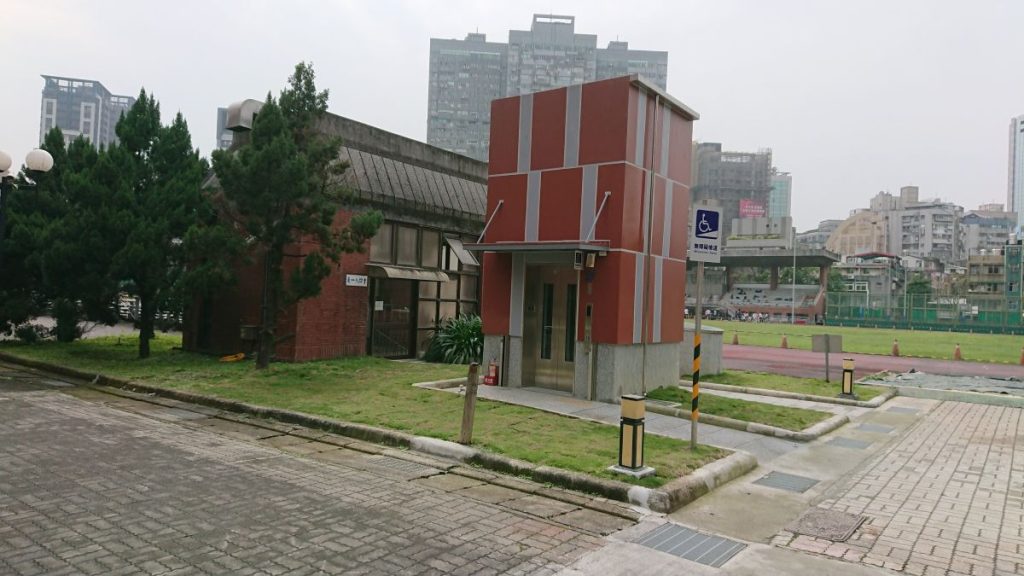
The Office of General Affairs conducts ongoing annual inspections, maintenance, and improvements to accessible facilities. In 2024, improvements included converting the manual door of the accessibility restroom in the Heping Campus Cheng Building to an automatic door, installing an additional elevator in the Mathematics Building on the Gongguan Campus, and maintaining existing accessible facilities on the Linkou Campus—such as replacing damaged materials surrounding the toilet in the accessible restroom in the Jingye Building classroom area and replacing deformed restroom doors.Support Resources for Faculty and Staff with Disabilities:
In accordance with the Ministry of Education’s Reference Guidelines for Inventorying Support Resources for Faculty and Staff with Disabilities, the Office of Personnel inventories internal and external support resources available to employees with disabilities. A consolidated resource directory has been established and is proactively provided to faculty and staff, with a designated single contact point on campus to offer timely assistance.Mobility Aid Lending Services:
The Health Center provides crutches and wheelchair loan services, allowing faculty, staff, and students in need to borrow mobility aids at any time.
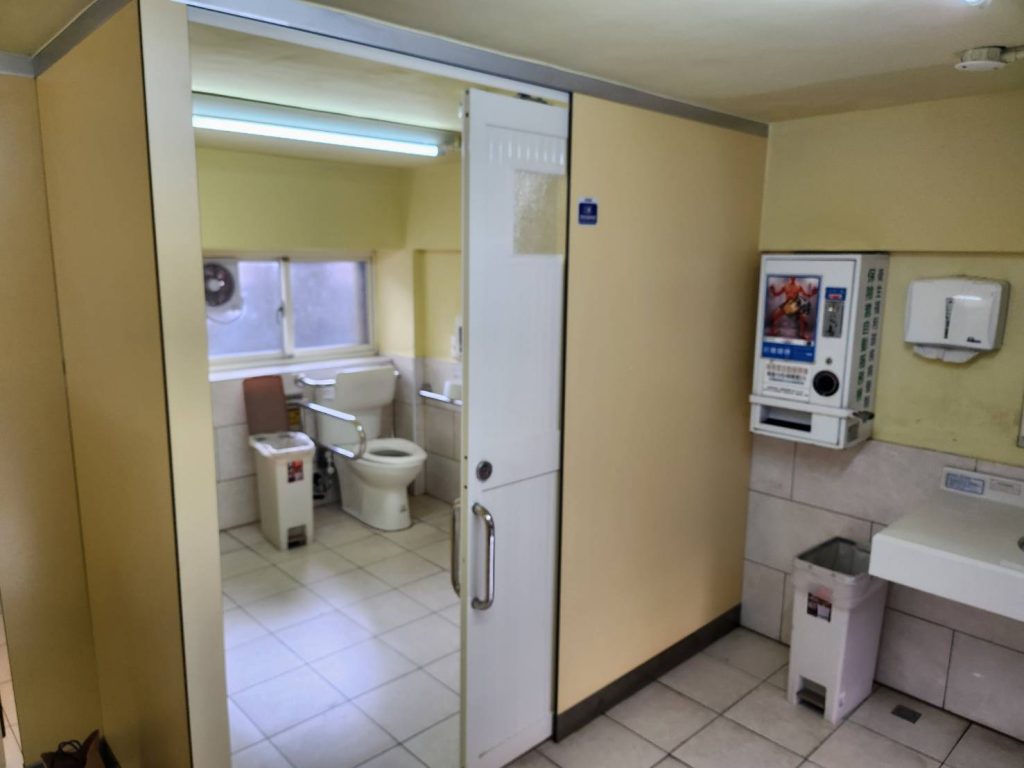
Accessible Restroom
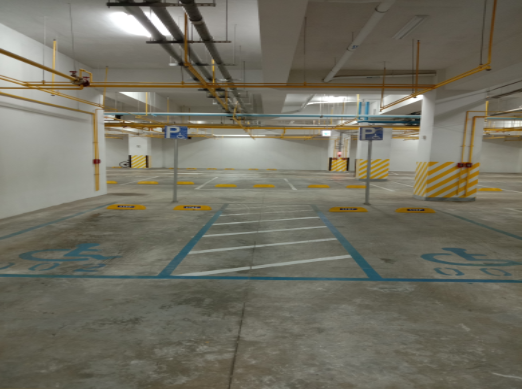
Accessible Parking Space
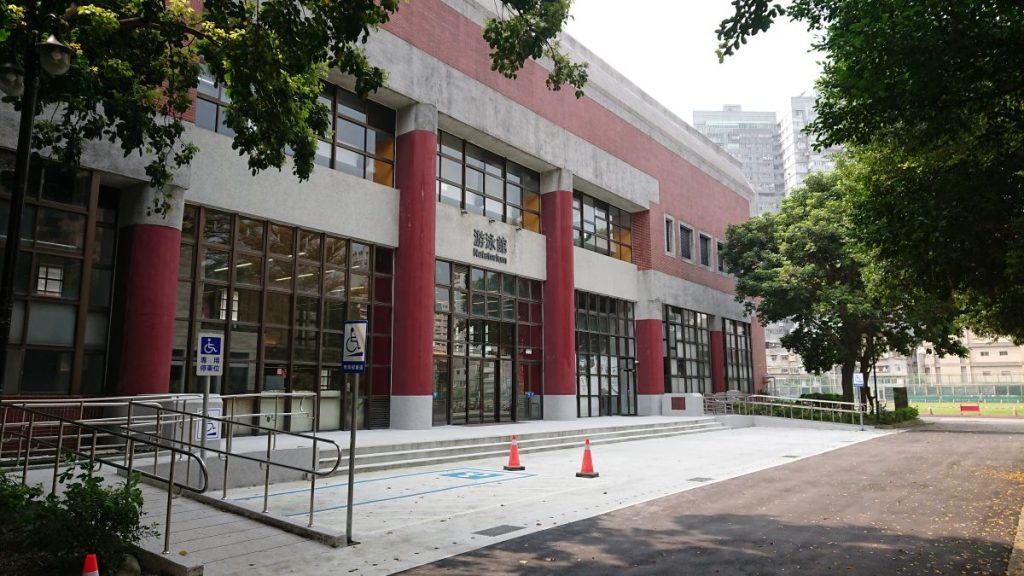
Accessible Ramp
Accessible Elevator
10.6.8 Disability support services
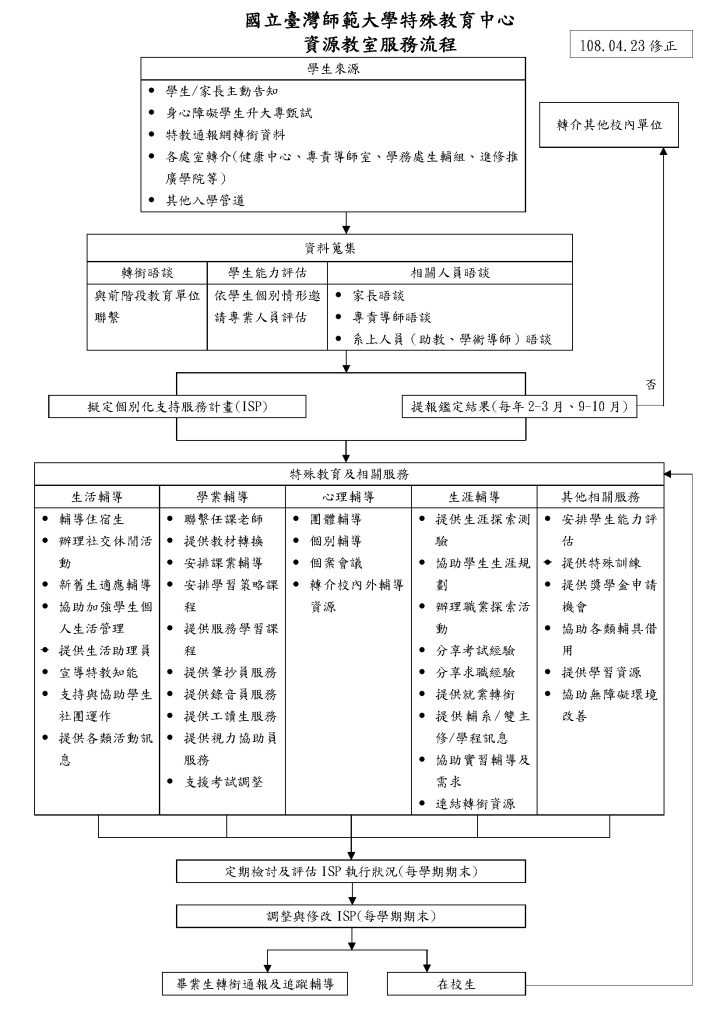
The Special Education Center has a long history, established in 1974, and is dedicated to research, consultation, counseling, and outreach in special education. The Resource Classroom provides individualized support services for students, including academic tutoring, psychological counseling, life counseling, and career counseling, with a total of 3,234 service engagements. At the beginning of each academic year, the Center convenes Individualized Support Plan (ISP) meetings for students with special needs. In the first semester of Academic Year 2024–2025 (AY 113), 188 ISP meetings were held, involving 577 participants (including students, parents, academic advisors, dedicated advisors, departmental assistants, and resource room counselors).
Based on the needs identified in these meetings, the Center provided the following services from the second semester of AY 113 up to March:
(1) 218 instances of academic tutoring
(2) 6 instances of assessment accommodation
(3) 16 instances of instructional material conversion
(4) 10 hours of real-time transcription services
(5) 182 hours of visual assistance services
(6) 334 hours of personal care assistance
(7) 2 assistive device applications
(8) 128 individual counseling sessions
(9) 16 group sessions providing interpersonal supportAccording to the university’s Dormitory Management Guidelines, international students, overseas Chinese students, students with disabilities, and students from low-income households are given priority for dormitory allocation, ensuring a safe and convenient living environment. Through these measures, the university is committed to supporting students with disabilities in completing their studies successfully and advancing educational equity.
10.6.9 Disability access scheme
National Taiwan Normal University is committed to educational equity and inclusion, providing comprehensive learning, research, and employment support for students, faculty, and staff with disabilities. The university actively promotes an accessible campus environment and an inclusive cultural atmosphere. Related initiatives are as follows:
1. Organizational Structure and Support Mechanisms
To promote research and services in special education, the university established the Special Education Center in 1974 in accordance with the Ministry of Education’s “Special Education Development Acceleration Plan.” The center continues to engage in research, consultation, and outreach, and celebrated its 50th anniversary with a special publication in 2024 showcasing long-term achievements.
In 1992, the Special Education Resource Classroom was established based on the Ministry of Education guidelines for supporting students with disabilities in higher education, providing counseling in learning, psychological well-being, daily living, and career development. The university also enacted the Regulations for the Special Education Promotion Committee to integrate internal and external resources and strengthen cross-unit collaboration to meet diverse student needs.
The Office of Special Education Resources was further established to create a fair and accessible learning environment, foster self-advocacy and resource utilization abilities, and support students in adapting to campus life and successfully completing their studies.
For faculty and staff, the university maintains an Accessibility Service Information Portal, consolidating on- and off-campus living and workplace support resources.
2. Accessible Curriculum and Campus Environment
System Optimization:
The university has improved course registration systems to ensure accessibility and provides priority course enrollment for students with disabilities. English listening test formats are adjusted when necessary (e.g., for students with moderate to severe hearing impairments) to ensure fair and equitable assessment.Innovative Teaching and Support:
Career Development:
Through collaboration with Fubon Financial Group on the “Feather Project,” students receive free professional skills training. The university also operates on-campus work-study counseling in cooperation with the Personnel Office and has assigned dedicated career advisors to establish a structured transition support system.Skills Enhancement:
English language and guided-tour communication courses (taught by foreign instructors) are offered to strengthen students’ language proficiency and workplace competitiveness.Self-Advocacy:
The student-led “Playing with Disabilities” Podcast encourages students to share diverse perspectives and enhances self-expression and social participation.
3. Research Advancement and National Resource Development
Applied Research Dissemination:
The university promotes a postsecondary transition program for students with intellectual disabilities, supporting their adaptation to university learning environments while developing independent living skills and social interaction abilities, thereby enhancing educational continuity and social inclusion.National Platform Development:
The university maintains a nationwide special education information platform, providing theoretical and practical resources for special education professionals, promoting knowledge exchange and resource sharing, and strengthening the sustainable development of Taiwan’s special education system.
10.6.10 身心障礙合理調整政策
In accordance with the needs of students with disabilities, the university provides the following reasonable accommodation measures:
- On-Campus Dormitory Support under the Disadvantaged Student Assistance Program:
The program offers full subsidies for on-campus housing across all dormitories, regardless of room type or accommodation fee level. - Comprehensive Academic and Living Support Services:
These services include adjustments to student learning assessments, conversion of learning materials, adapted physical education courses, assistive device services, accessible dormitory rooms, transportation subsidies, and various scholarships and grants. - Dreams Fulfillment Talent Cultivation Scholarship (2024):
In 2024, a total of 206 scholarship awards were provided, amounting to NT$2,060,000.
The student dormitories include 17 accessible rooms and 1 room designated for students with hearing impairments, accommodating 47 students with disabilities and 6 students with hearing impairments. Additionally, 9 medical recovery rooms are available, providing housing for 27 students in need of temporary or ongoing medical accommodation.
References:
10.6.11 Anti-harassment policy
The university has established anti-harassment policies through the Personnel Office and the Gender Equality Education Committee. The Personnel Office has formulated the “Guidelines for the Prevention, Filing of Complaints, and Investigation of Sexual Harassment”, which apply to faculty, staff, and students in accordance with the Act of Gender Equality in Employment and the Sexual Harassment Prevention Act. The university further requires that sexual harassment prevention education and training be held regularly each year, or encourages faculty and staff to participate in such training with official leave, in order to strengthen awareness of gender equality.
In order to promote gender equality on campus and to prevent and address incidents of gender discrimination, sexual assault, and sexual harassment—thus protecting the rights of all faculty, staff, and students—the Gender Equality Education Committee has established a set of procedures for handling gender-related cases. These include the appointment of members to the Sexual Harassment Grievance and Review Committee, application forms for investigation, notification forms for various categories of gender-related incidents, and standard operating procedures for academic departments when responding to campus gender-related cases. Together, these efforts contribute to maintaining a safe and secure educational environment.