12.2.1 Ethical sourcing policy
1. Ethical Procurement of Supplies
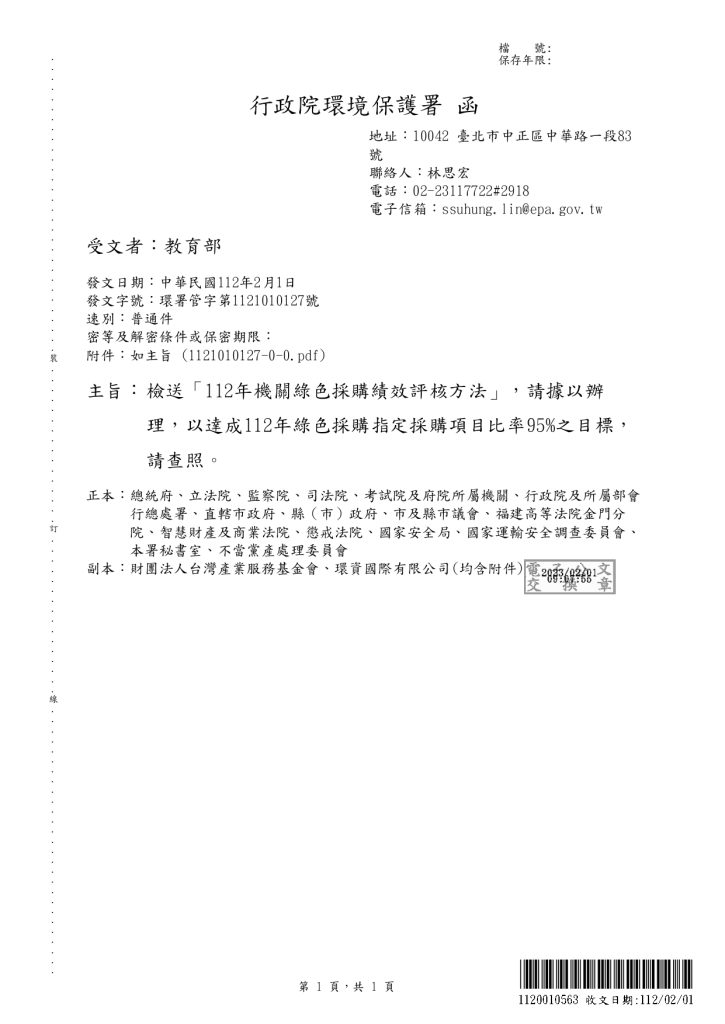
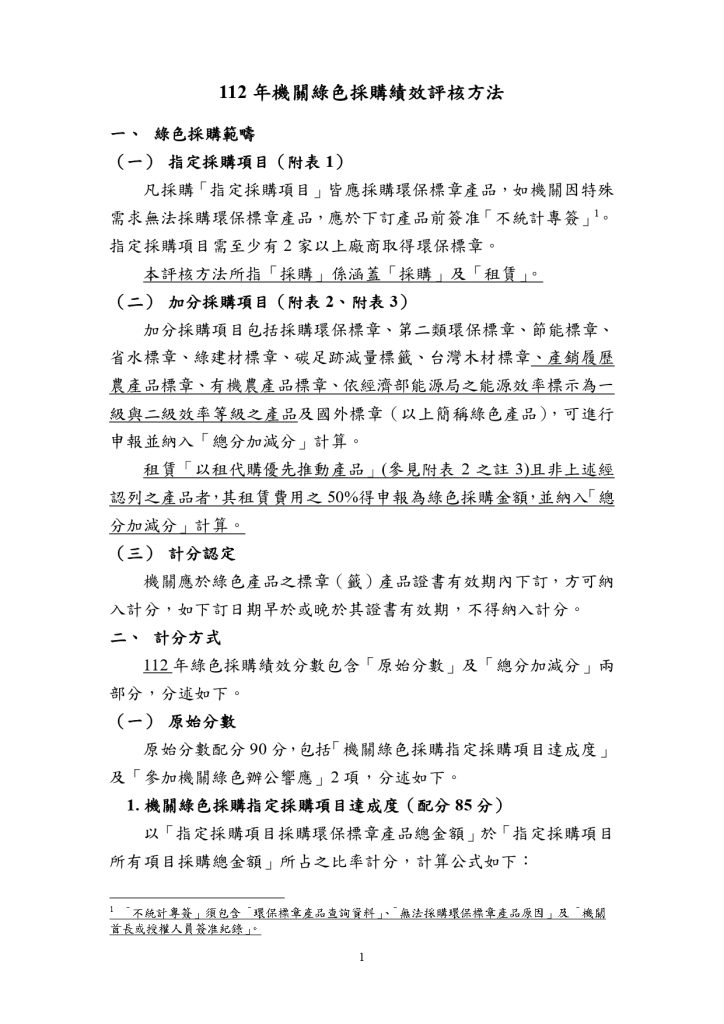
The university has established detailed “Green Procurement Implementation, Target Achievement Control, and Reporting Procedures” in accordance with the Ministry of Environment’s Green Procurement Performance Assessment Method. These procedures promote the ethical procurement of goods and encourage university personnel to prioritize products with environmental labels. The university also compiles and reports its green procurement performance on a regular basis.
Over the past three years, the achievement rates for designated green procurement categories have remained outstanding—99.93%, 99.91%, and 99.96%, respectively—reflecting the effectiveness of the university’s active promotion of green living and sustainable purchasing practices.
2. Ethical Procurement of Food
The university’s Health Center is responsible for advancing dining management and nutrition education and oversees the Dietary Hygiene Coordinating Committee, which manages the campus food-tracking system. The committee ensures that all contracted vendors incorporate clauses aligned with ethical procurement policies into their agreements.
According to the contract requirements for outsourced restaurants, vendors must give priority to agricultural products with traceability certification, such as:
Taiwan Organic Agricultural Product Label (including products in transition)
Traceable Agricultural Product (TAP) Label
Taiwan Premium Agricultural Product Label
GAP Safe Fruit and Vegetable Label
Agricultural (livestock/aquatic) products with official production traceability barcodes
These measures ensure the procurement of ethically sourced and safe food products, while supporting sustainable agricultural practices.
Environmental Protection Administration — 2023 (Year 112) Government Green Procurement Performance Evaluation Method
12.2.3 Policy waste disposal – hazardous materials
1. Hazardous Waste Policy
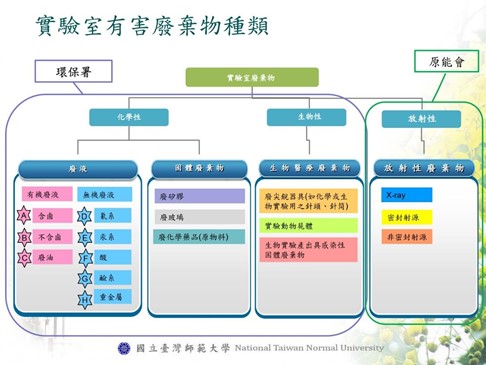
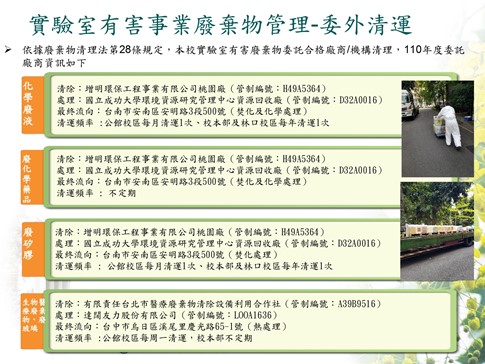
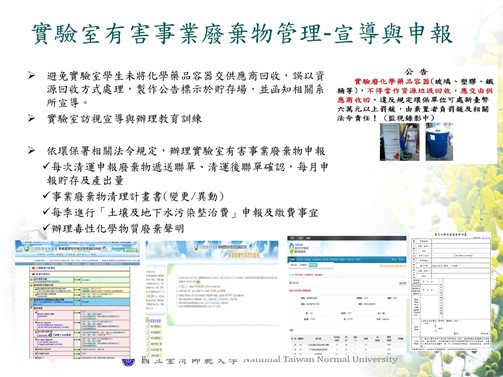
The university has established the Environmental Safety and Health Center, which is responsible for managing safety and health affairs in laboratory settings. A clear and comprehensive “Laboratory Hazardous Industrial Waste Management Guidelines” has been formulated. All procedures—including the classification, storage, and labeling of hazardous waste; maintenance and management of designated hazardous waste storage areas; as well as outsourced removal, safety education, and required reporting—are conducted in accordance with the Environmental Protection Administration’s Waste Disposal Act to ensure the proper and complete handling of toxic waste.
The Laboratory Hazardous Waste Management Policy encompasses regulations on the classification, labeling, storage, and removal of dangerous substances. It emphasizes the responsible management and disposal of hazardous industrial waste to minimize environmental risks to the greatest extent possible.
Outsourced Removal:The removal of hazardous industrial waste is outsourced to licensed and qualified contractors to ensure that all handling and disposal processes comply with relevant laws and regulations. The frequency of waste collection and removal is determined based on the type of waste generated and the specific needs of each campus.
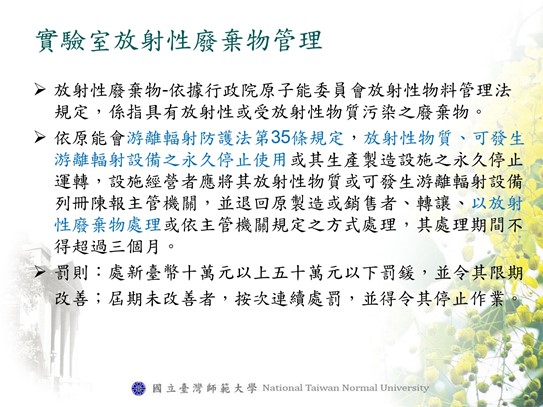
Radiological Waste Management and Compliance with Environmental Regulations:The university complies with the regulatory requirements of the Atomic Energy Council regarding the management of radioactive materials. All procedures related to the decommissioning, registration, and disposal of radioactive waste are carried out in accordance with the law to ensure proper handling and to minimize potential radiation risks.
Awareness, Training, and Reporting:Through laboratory inspections, awareness campaigns, and personnel training, the university ensures that all laboratory members understand the policies and procedures for managing hazardous industrial waste. Guidance is provided to ensure proper waste handling, and relevant reporting requirements are fulfilled in accordance with regulatory standards.
2. Research on Hazardous Waste
Faculty and students are also actively engaged in research on hazardous waste recycling and treatment, covering areas such as policy development, system design, and impacts on biological environments, contributing significantly to the protection of natural resources. Relevant studies include:
“A Policy Study on the Restriction of Hazardous Substances (RoHS) in the Electronics Manufacturing Services (EMS) Industry”
“Effects of Polystyrene Nanoparticles on Zebrafish”
12.2.4 Policy waste disposal – landfill policy
The university commissions licensed contractors to remove waste in accordance with the Waste Disposal Act and the Regulations Governing Permission for Private Waste Clearance and Disposal Organizations, ensuring that all waste is transported to authorized landfills or incineration plants for proper treatment.
The university has also established the “NTNU Waste Removal and Food Waste Recycling Guidelines for the Heping and Gongguan Campuses,” which regulate waste collection and disposal procedures, including bulky waste. Recycling containers are installed according to categories such as general waste, paper, metal cans, and plastic bottles, helping faculty, staff, and students develop proper waste-sorting habits.
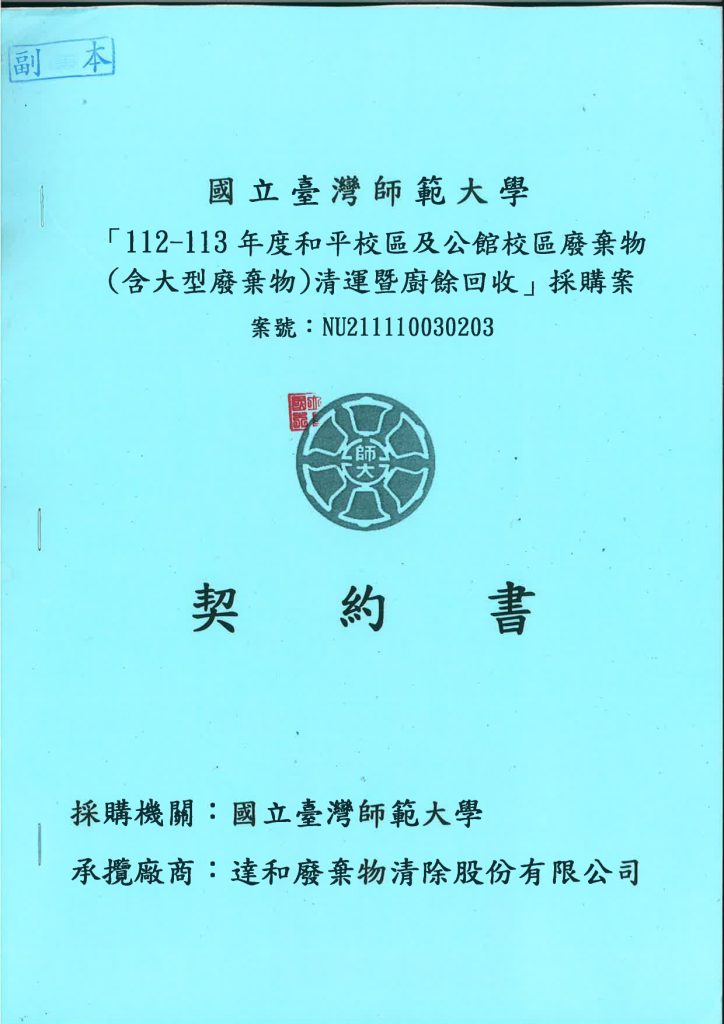
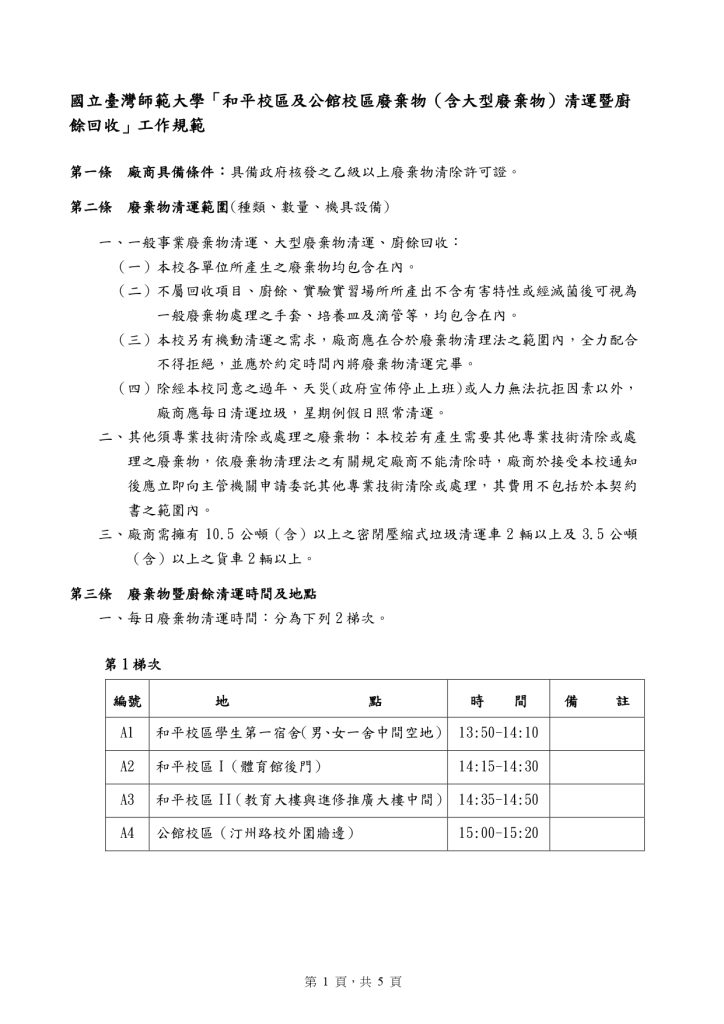
“Waste Removal (Including Bulky Waste) and Kitchen Waste Recycling Contract and Work Guidelines for the NTNU Heping and Gongguan Campuses”
12.2.5 Policy for minimisation of plastic use
1. Policy Development and Promotion
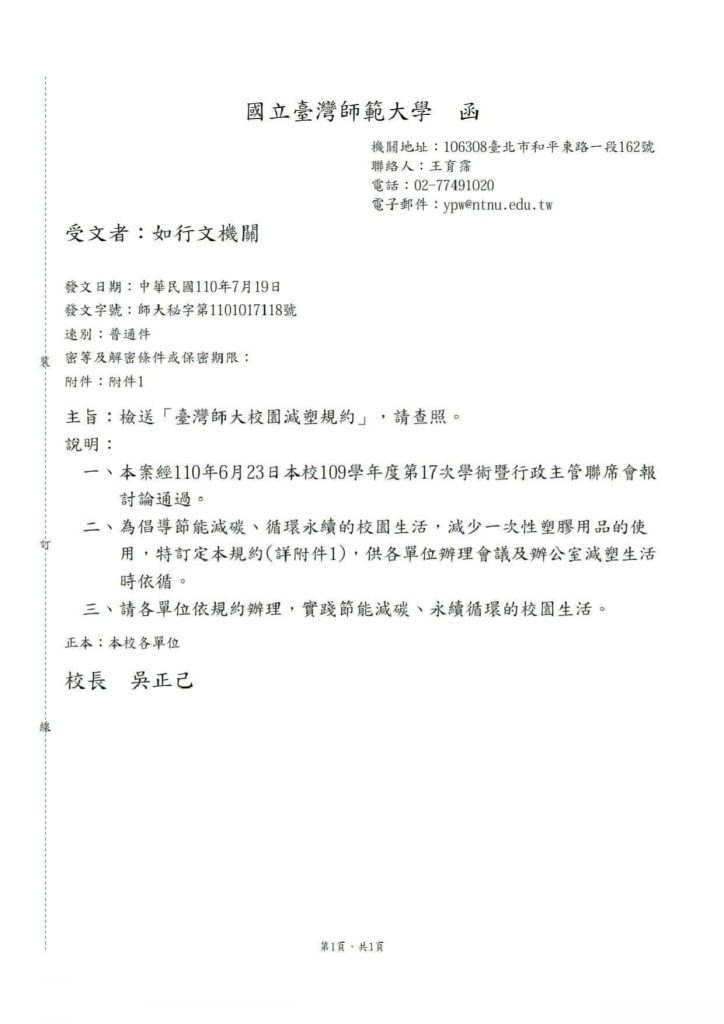
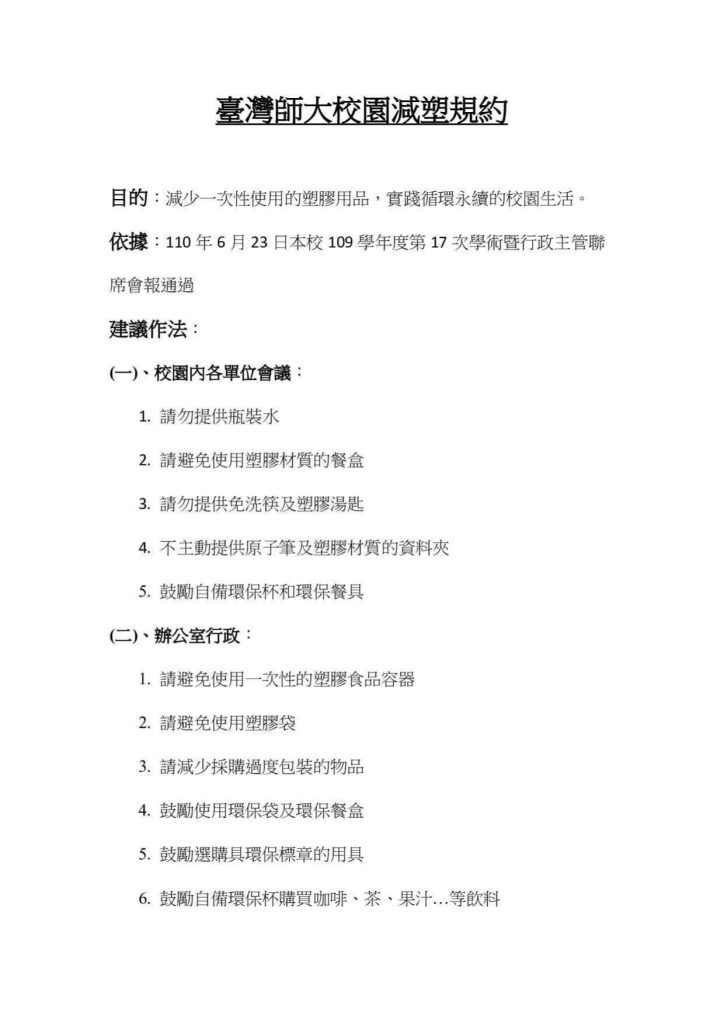
To advance campus sustainability, the university has established the National Taiwan Normal University Campus Plastics Reduction Regulations, aimed at limiting or reducing the use of plastics and single-use items. This policy applies to all meetings and office activities on campus, and all departments are required to comply.
The regulations are as follows:
Please avoid using single-use plastic food containers.
Please avoid using plastic bags.
Please reduce the purchase of excessively packaged items.
The use of reusable shopping bags and reusable food containers is encouraged.
The purchase of products bearing environmental labels is encouraged.
Individuals are encouraged to bring their own reusable cups when purchasing beverages such as coffee, tea, or juice.
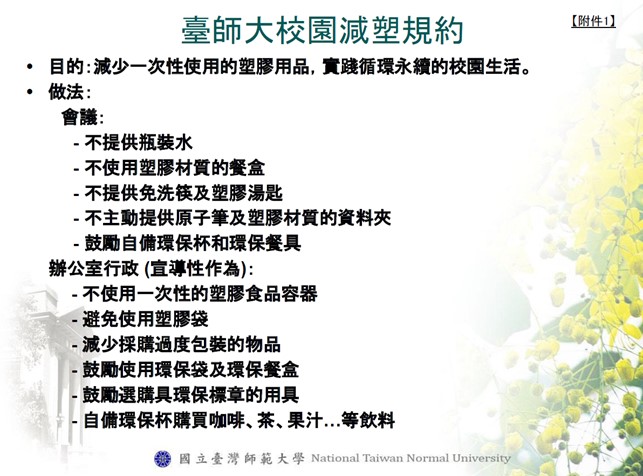
NTNU Campus Plastic Reduction Regulations
2. Plastic Reduction Courses and Advocacy
The university has established the Plastic Reduction Promotion Center, which implements action plans to achieve the goal of reducing plastic waste. These include educational outreach through Facebook and podcasts, as well as offering courses that guide students to learn and practice plastic reduction actions.
With the mission of “reducing plastic pollution,” the Plastic Reduction and Sustainable Consumption Promotion Center successfully held the 7th Golden Plastic Award on November 23, 2024, collecting 214 creative submissions from across Taiwan and overseas. The entries covered four categories: board games, LINE stickers, sustainable actions, and picture books, promoting plastic reduction and sustainable consumption concepts, and actively responding to the Global Plastics Treaty promoted by the United Nations since 2022.
3. Sustainable Consumption Communities
Since 2017, the university has actively built and operated plastic reduction and sustainable consumption communities, involving faculty and staff, enterprises, local communities, and students, totaling 14 communities:
- Faculty and Staff Communities
Including NTNU Faculty Community, Plastic Reduction Alliance, Home Economics Curriculum Center, Environmental Board Games, Fuhe Junior High School, and related groups.
- Enterprise Communities
Collaborations with enterprises or non-governmental organizations (NGOs) to promote plastic reduction or sustainable consumption, including Guzhuang Community, Tse-Xin Organic Agriculture Foundation, Sustainable Food Power, Jen-Jou Plastic-Free, Playing Grass Plant Studio, CPC Corporation, Taiwan, and others.
- Student Communities
Including the NTNU Student Association, Podcast teams, and student board game clubs.

12.2.6 Policy for minimisation of disposable items
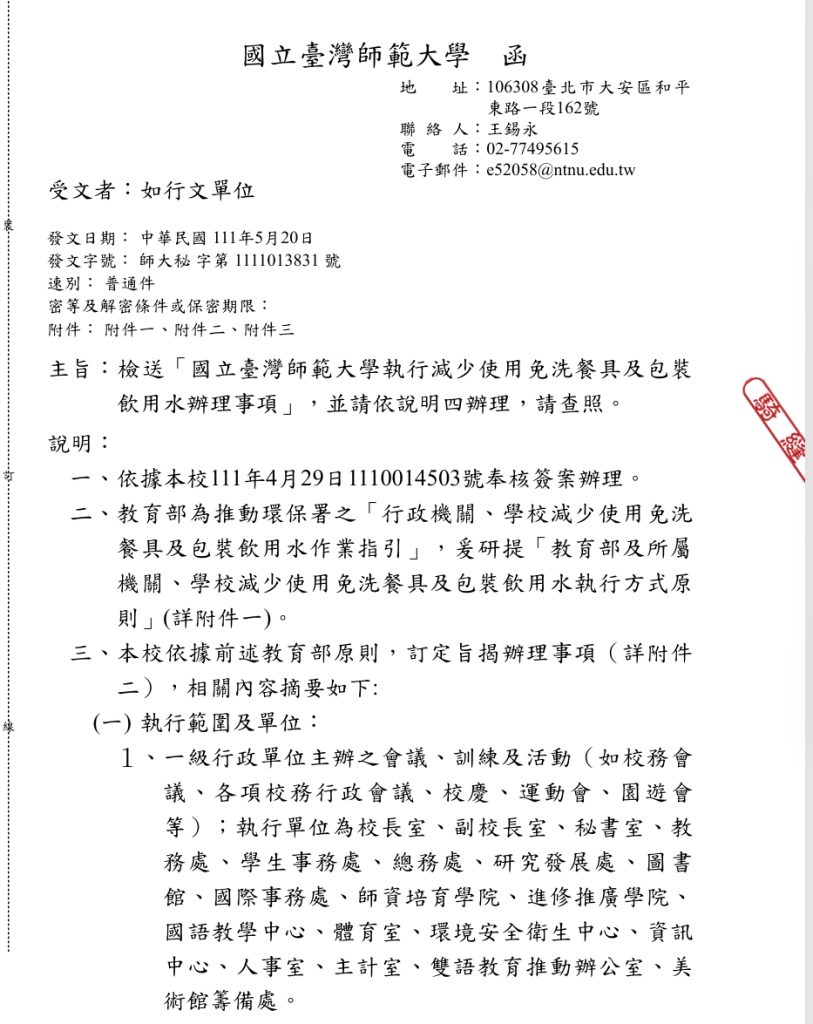
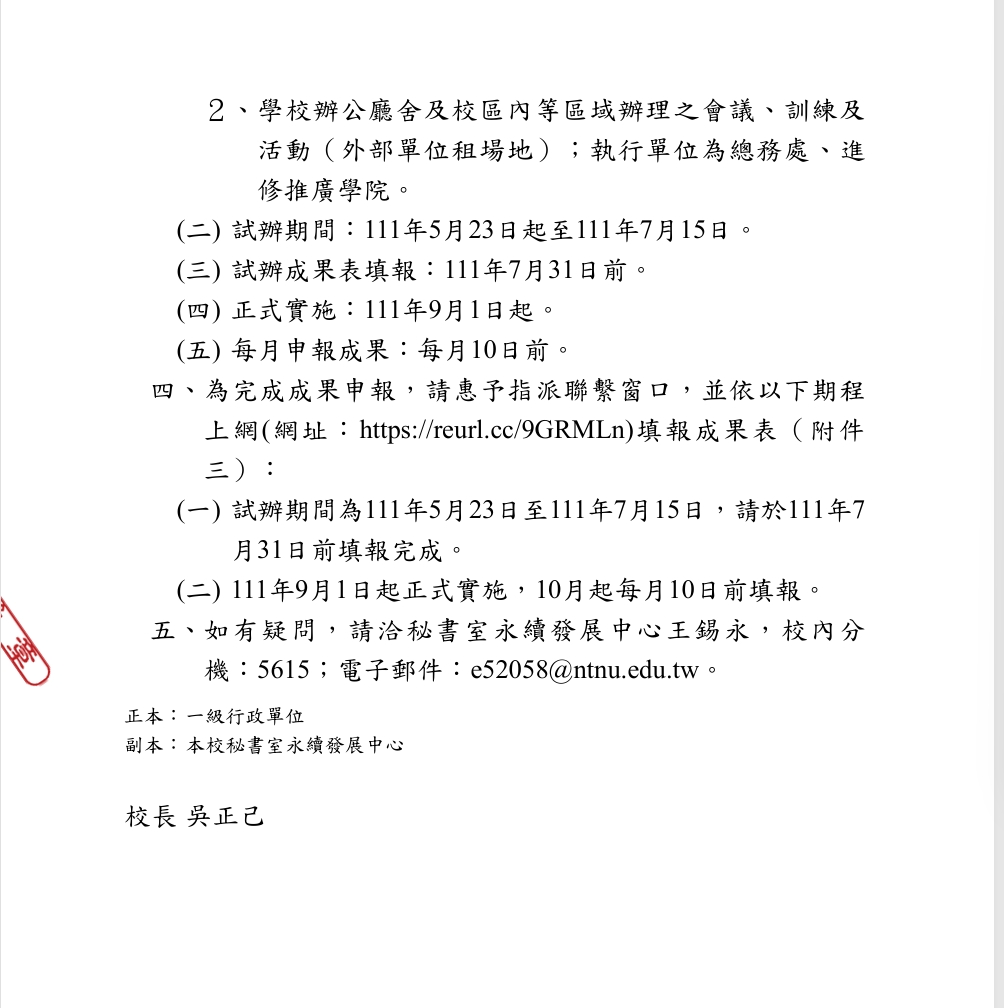
To promote the university’s waste-reduction-at-source policy, NTNU established the “NTNU Campus Plastic Reduction Guidelines” in 2021, and on May 10, 2022, enacted the “Implementation Measures for Reducing the Use of Disposable Tableware and Packaged Drinking Water”. These measures aim to cultivate an environmental mindset among faculty, staff, and students that emphasizes “bring your own, reuse, and use less,” thereby reducing the consumption of disposable tableware, packaged drinking water, and other single-use products.
The regulations apply to meetings, training sessions, and events organized by first-level administrative units, as well as to meetings, training sessions, and events held by external organizations renting university venues.
NTNU Campus Plastic Reduction Guidelines
NTNU Implementation Measures for Reducing the Use of Disposable Tableware and Packaged Drinking Water
12.2.7 Disposable policy: extensions to services
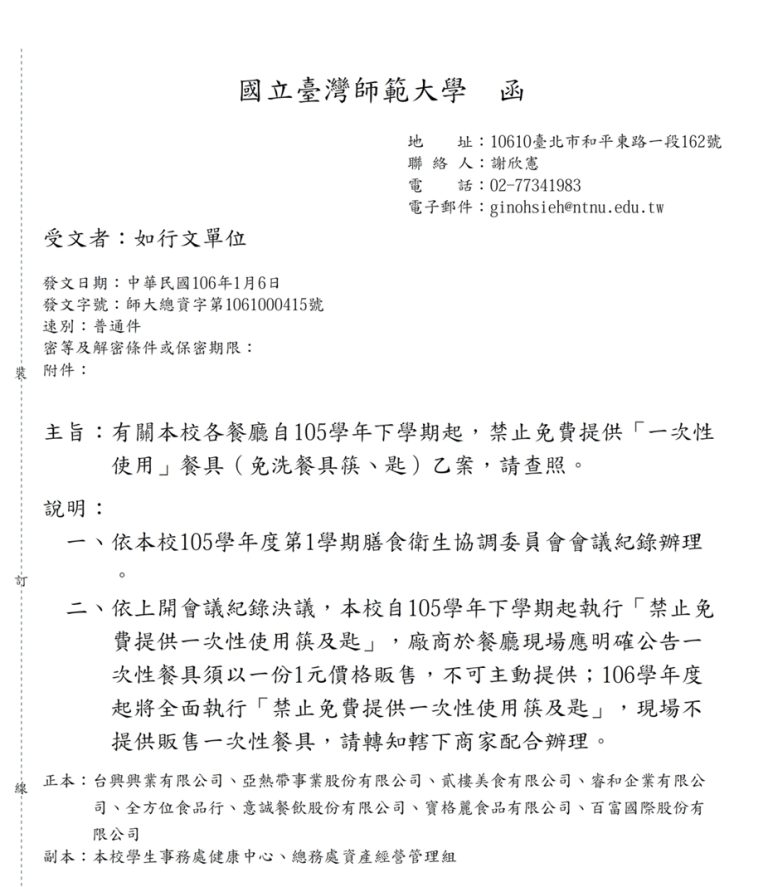
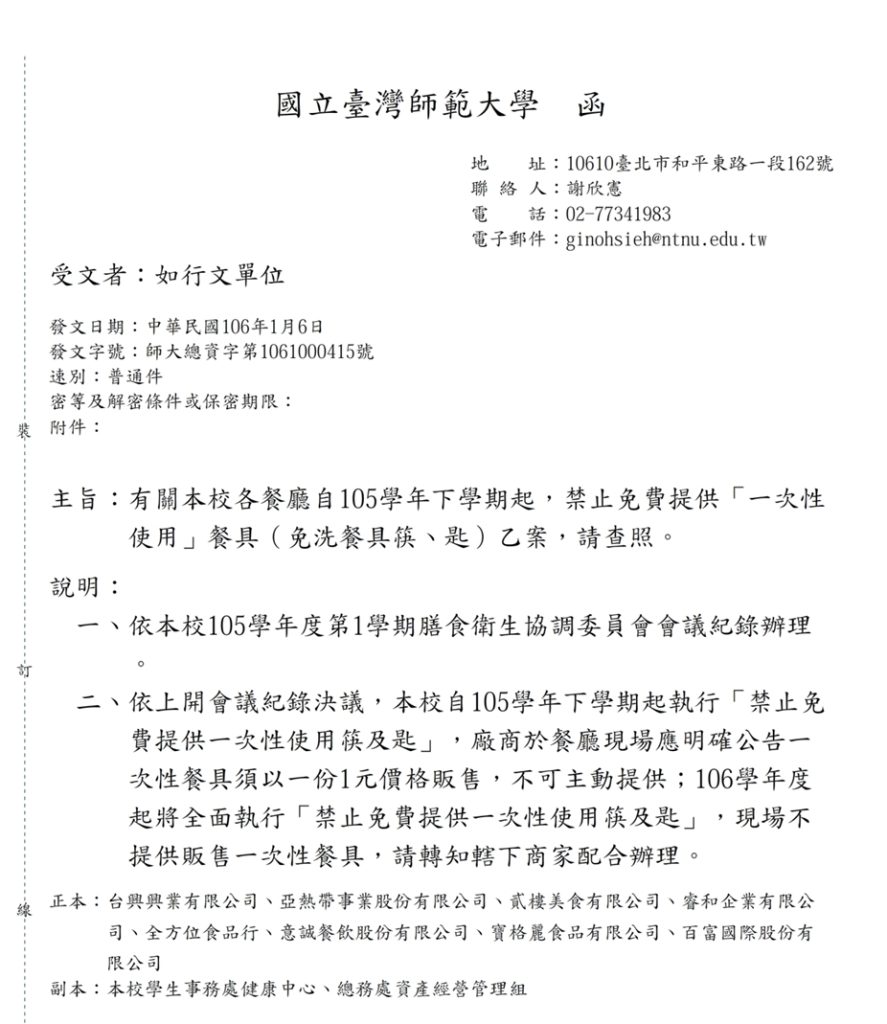
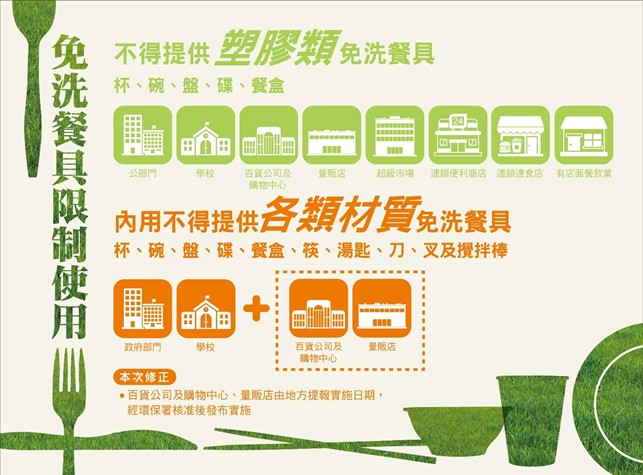
In 2016, the University’s Dietary Committee resolved to fully implement measures prohibiting the free provision of disposable chopsticks and spoons. The outsourced food service contracts for student cafeterias stipulate that contractors must comply with the Environmental Protection Administration’s announced “Restrictions on the Use of Disposable Tableware: Target Entities and Implementation Methods.”
In addition, outsourced convenience stores operating on campus no longer provide disposable tableware, thereby fully enforcing the University’s policy of prohibiting campus vendors from offering disposable tableware free of charge.
Official Notice Prohibiting the Free Provision and Sale of Disposable Tableware
12.2.8 Minimisation policies extended to suppliers
To ensure the comprehensive implementation of the university’s waste-reduction policies, NTNU fully enforces measures that prohibit the free provision of disposable chopsticks and spoons. This initiative helps reduce the use of single-use products. Moreover, the outsourced operating contracts for student cafeterias explicitly require contractors to comply with the Environmental Protection Administration’s “Restrictions on the Use of Disposable Tableware: Target Entities and Implementation Methods,” thereby supporting the university’s goals of resource conservation and environmental sustainability.
The university requires all on-campus vendors to comply with the following regulations:
1.Campus restaurants shall not provide plastic shopping bags for free.
2.When serving food for on-site consumption, vendors shall not provide plastic cups, bowls, plates, dishes, food containers, or plastic inner trays used for packaging meals.
3.Single-use plastic straws shall not be provided for dine-in customers.
12.3.1 Waste tracking
The University commissions licensed contractors to assist with the removal, measurement, and reuse of general waste. The service contracts require contractors to comply with relevant regulations, including the Waste Disposal Act and the Regulations on the Licensing of Citizen-Operated Waste Removal and Disposal Organizations. All waste must be transported to legally authorized landfills or incineration facilities for proper treatment.
The weights of the University’s general waste and recyclable materials are shown in the table below:
Total Waste Generated | 1053.3tons |
Recyclable Materials Collected | 189.3tons |
General Waste | 864tons |