The university is implementing the project “Enhancing Water Environment Literacy of Residents in Water Resource Protection Areas and Supporting Local Development.” The project designates waterside and water resource facilities as practice sites, integrating perspectives of ecology, environmental protection, and daily life to deepen engagement with water resource conservation issues, and to develop related instructional and experiential learning activities.
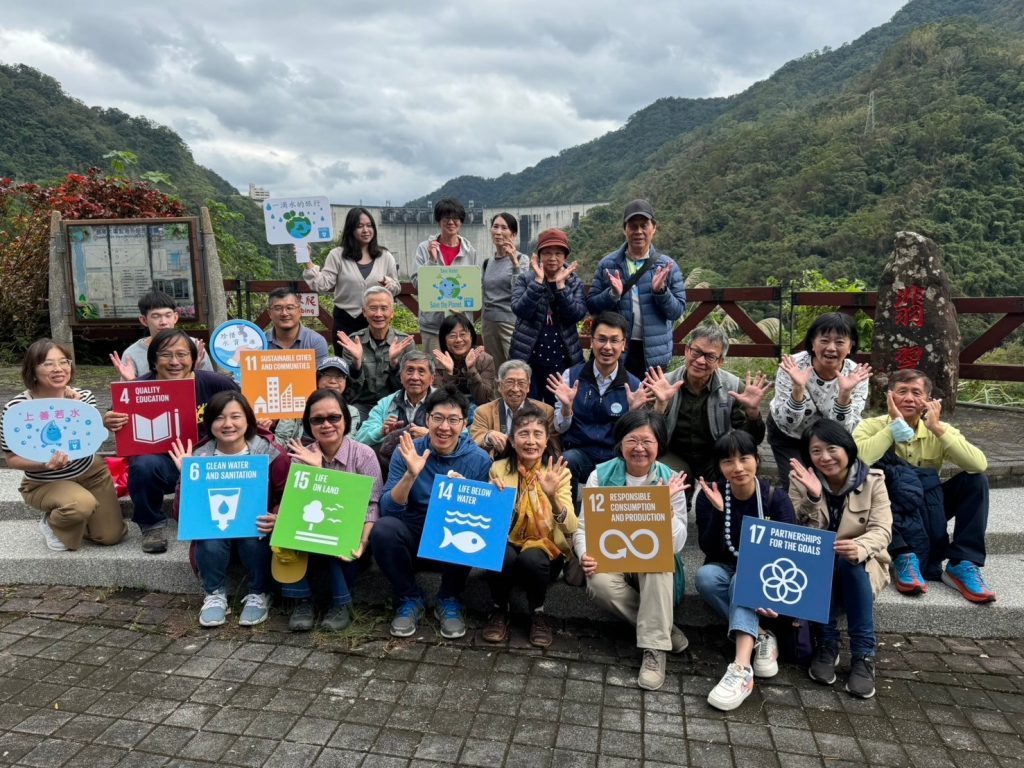
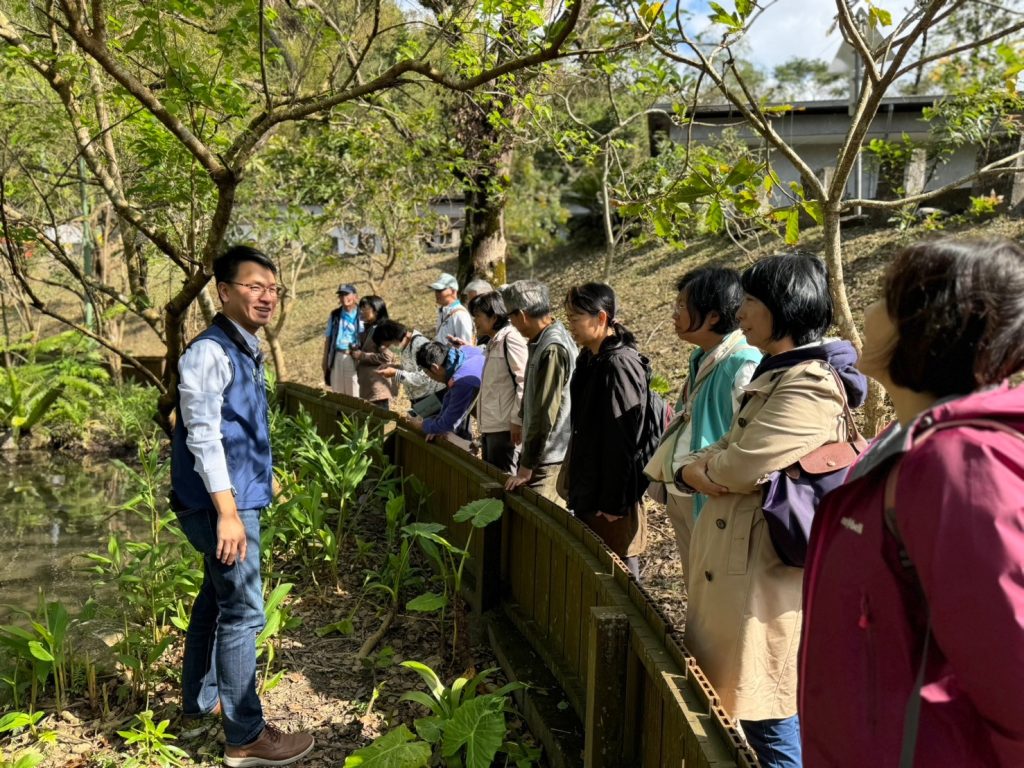
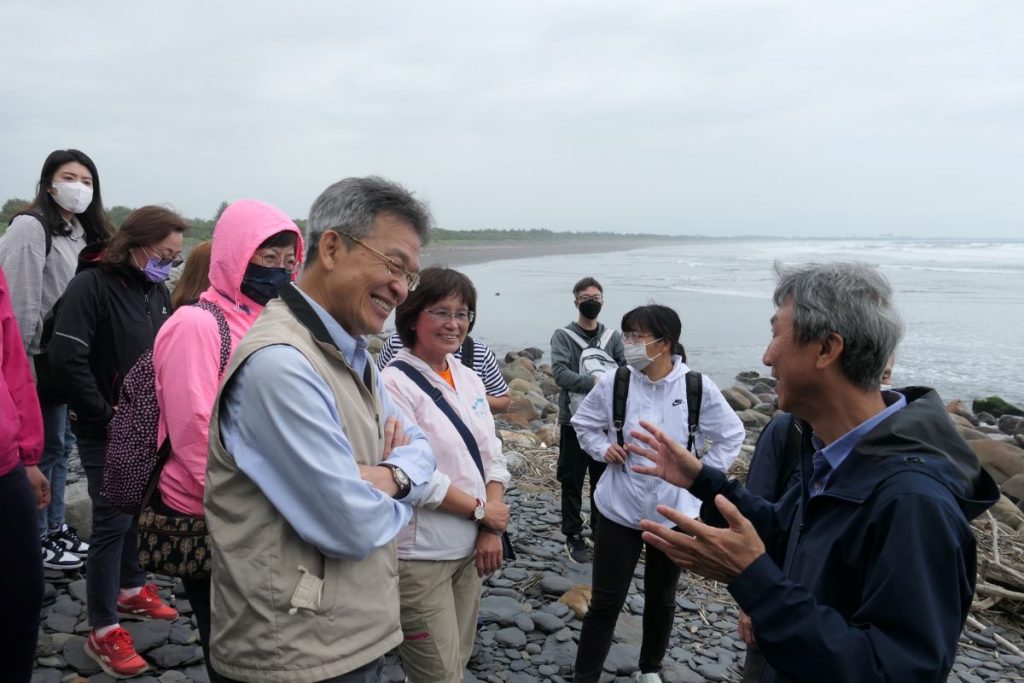
To promote ecological and environmental education on water resources, the university organized a field visit to Feitsui Reservoir on December 6, joined by environmental ecology education experts, NTNU faculty and staff, as well as principals, supervisors, directors, and teachers from the Environmental Education Advisory Team for elementary and junior high schools. The visit highlighted the unique characteristics of Feitsui Reservoir compared to other reservoirs in Taiwan, particularly its crucial role in supplying domestic water to the Greater Taipei area. Participants also gained a deeper understanding of the reservoir’s efforts and achievements in maintaining the local ecological environment, promoting wildlife conservation, and advancing environmental education. This initiative aligns with SDG 6.6, which emphasizes the protection and restoration of water-related ecosystems.
This activity provided an in-depth understanding of water source protection and ecological conservation efforts at Feitsui Reservoir, aligning with SDG 14 (Life Below Water) by emphasizing the importance of improving water quality. Through water quality testing and automated monitoring networks, the condition of rivers and reservoirs can be effectively monitored, helping to reduce disturbances to aquatic ecosystems and strengthening ecological resilience.
In addition, the project brought together experts and scholars, environmental education teachers from elementary and junior high schools, and university partners. The collaborative program examined the entire water resource protection system, from the reservoir management bureau responsible for upstream catchment areas, to the water purification plants that supply potable water, and finally to wastewater treatment facilities. Participants gained a comprehensive understanding of the planning of water resource protection zones, the organizational functioning of responsible agencies, relevant regulations, as well as the processes involved in drinking water purification and wastewater treatment.
Through this integrated approach, the initiative supports SDG 6 and contributes to the protection and sustainable use of river and reservoir resources, ultimately helping to maintain and preserve aquatic ecosystems.
Group photo of participating experts, university representatives, and environmental education teachers from elementary and junior high schools.
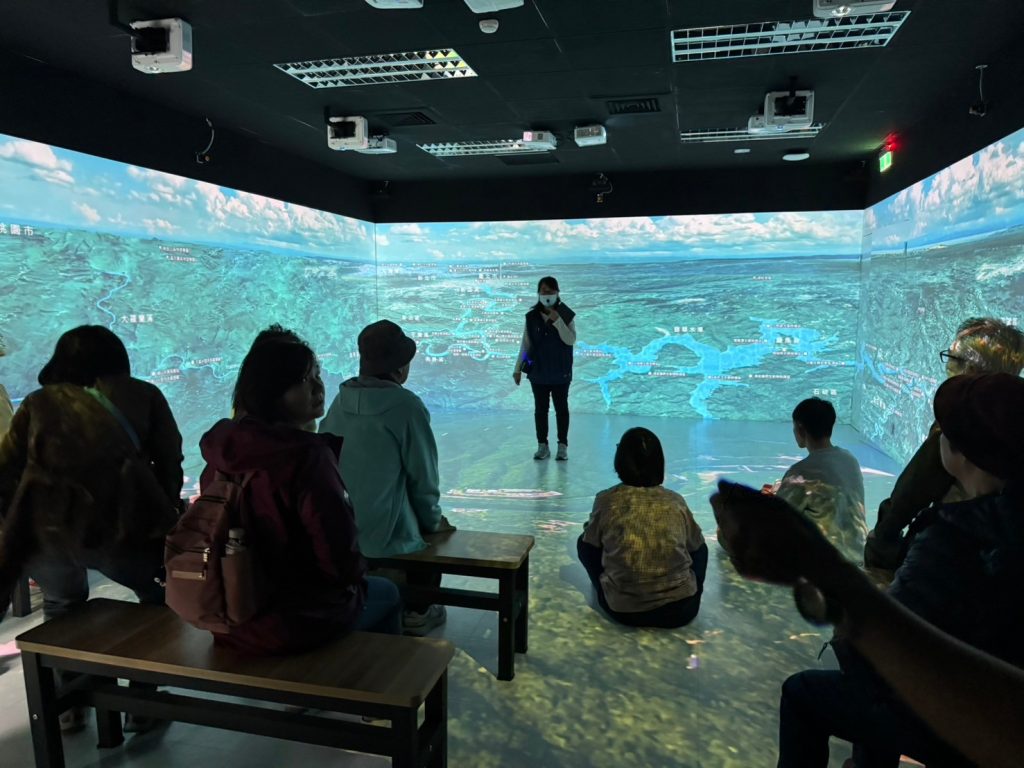
Virtual Reality (VR) and Interactive Touch Wall Experience of the Xindian River Watershed
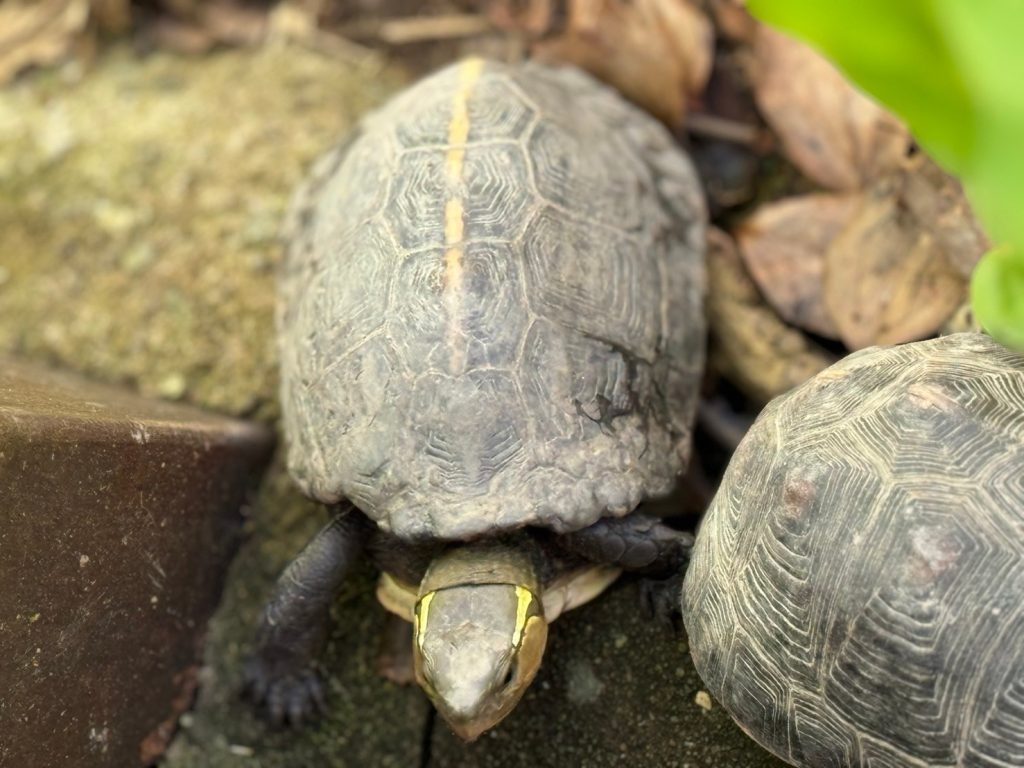
Field visit to a conservation and rehabilitation center for the protected Taiwanese yellow-margined box turtle.
14.2.2 Sustainable fisheries (community outreach)
In response to the global consumption crisis caused by plastic use, Associate Professor Wei Hsiu-Chen of the Department of Human Development and Family Studies launched the “Plastic Reduction for a Heartfelt Home” initiative in 2017. In 2018, the NTNU Plastic Reduction Promotion Center was established in the back alley of NTNU to actively promote plastic reduction actions. In addition to organizing beach and street clean-up activities, the Center also invites teachers from various schools to participate in educational workshops, hosts the creative competition “Golden Plastic Award”, and produces a podcast program. Through a series of enjoyable and educational activities, the Center aims to foster awareness and practice of plastic reduction.
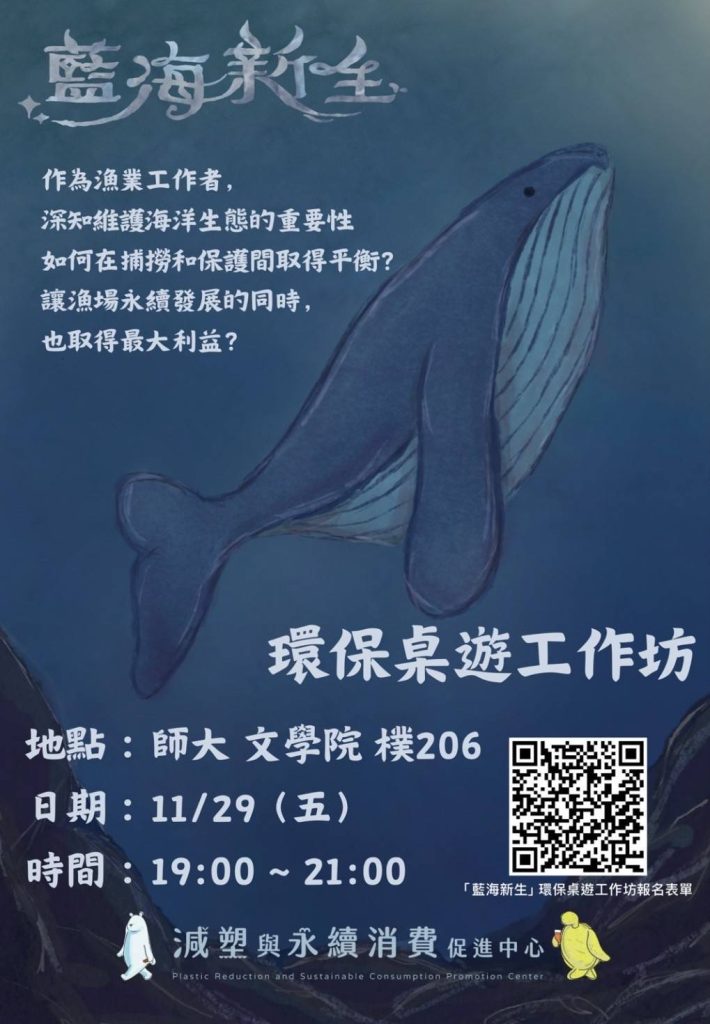
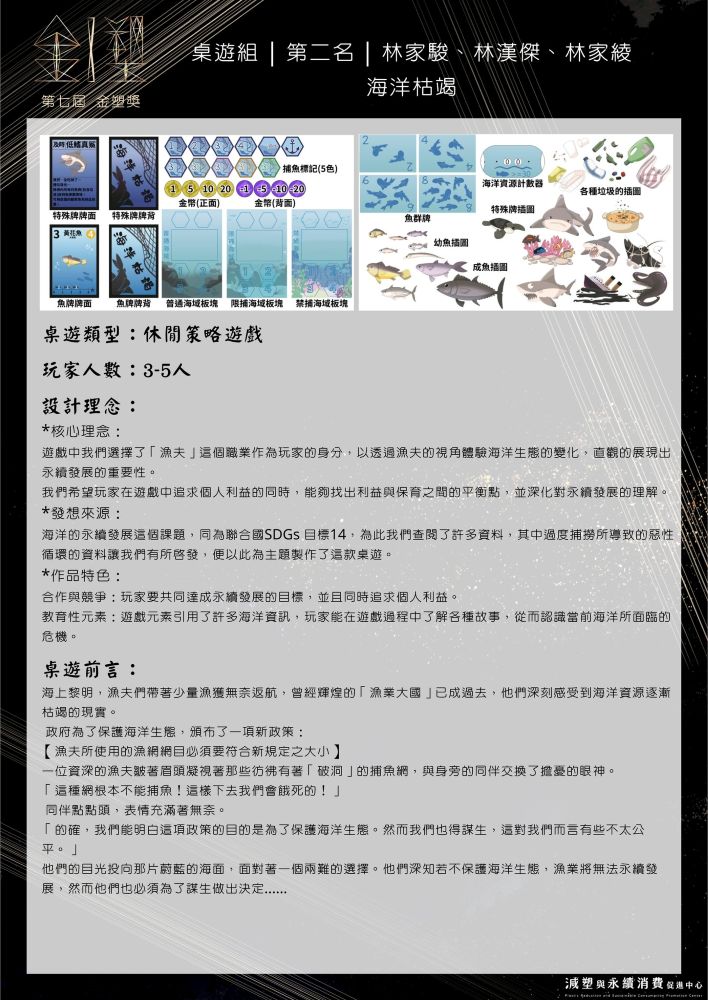
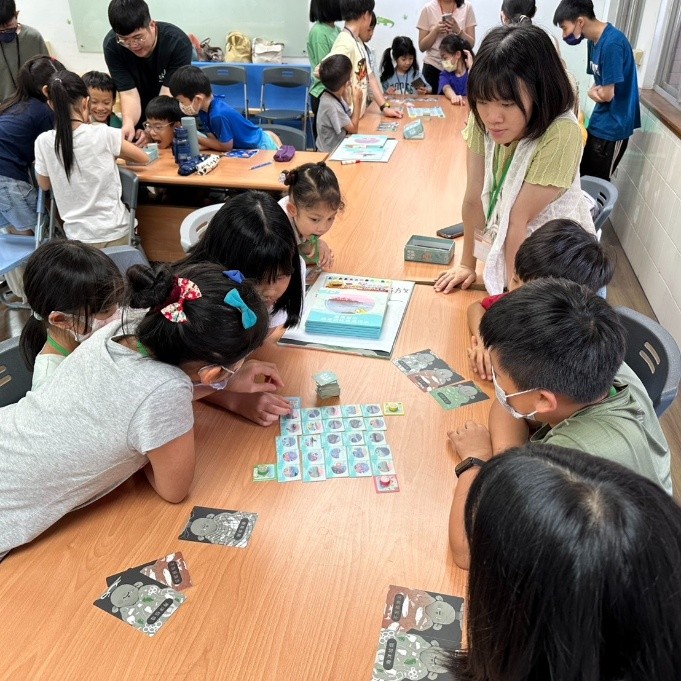
In 2024, the Center held multiple marine education programmes. Alongside promoting the reduction of plastic waste, the Center also hosted sustainable fisheries board game experiences, allowing participants to learn about sustainable fishery management through gameplay. Furthermore, the Center continued its call for educational proposals through the Golden Plastic Award. The second-place winner in the board game category centered on the theme of ocean depletion, with the educational goal of helping the public understand the importance of sustainable fisheries.
The Plastic Reduction Center organizes educational board game activities. In the board game “Blue Ocean Renewal,” players take on the role of a fisherman who relies on the sea for livelihood, attempting to balance sustaining their income while also taking responsibility for restoring the marine ecosystem.
2024 8th Golden Plastic Award – Board Game Category, Second Place: “Ocean Depletion.”
14.2.3 Overfishing (community outreach)
The university is implementing the Ministry of Education’s “Sustainable Community Development Support Program for Elementary and Junior High Schools.” Through supporting school-based curriculum development, the program integrates local life, production, and ecological characteristics into instructional practice. By incorporating issues related to local marine resources, students explore the evolution and causes of changes in fisheries and reflect on the relationship between the ocean and local communities. The program aims to provide knowledge, innovation, and practical solutions to support sustainable development at the community level.
Professor Chang Tzu-Chao of our university is implementing the Community-Based Sustainable Development Program at Yueming Elementary School.
14.3.1 Conservation and sustainable utilisation of the oceans (events)
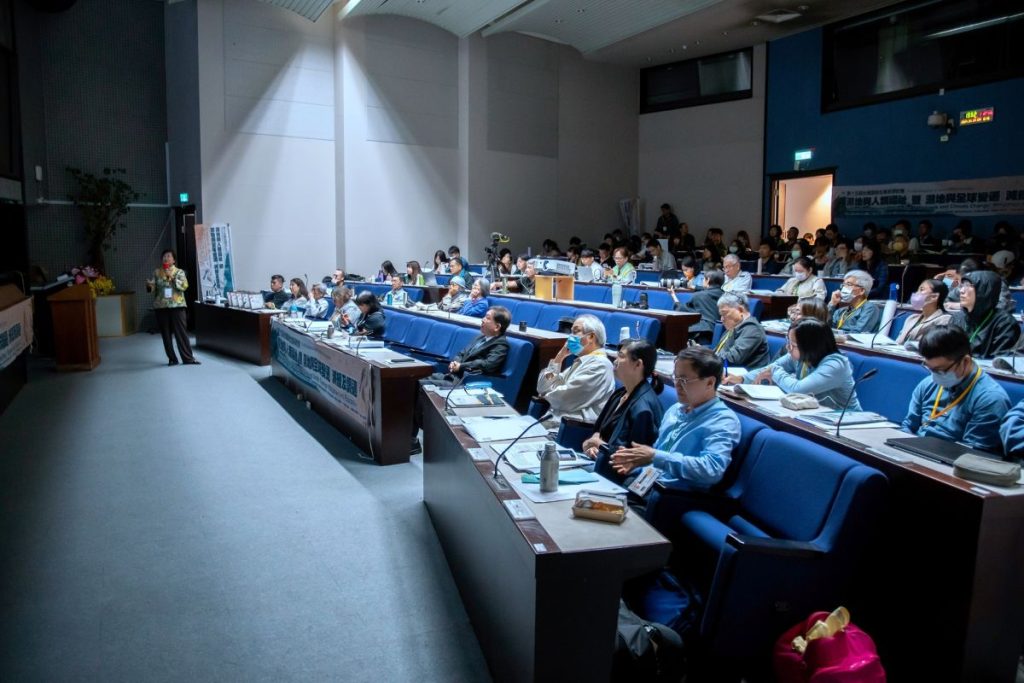
Our university co-hosted the 15th Taiwan Wetland Ecosystem Conference with the Taiwan Wetland Society, under the themes “Wetlands and Human Well-being” and “Wetlands and Global Change: Mitigation and Adaptation.” Scholars who have long been engaged in wetland research and monitoring, along with representatives from civic organizations, were invited to share research findings and conservation experiences. More than 200 scholars, experts, and graduate students attended the conference.
A total of 56 wetland research papers were presented, covering a wide range of topics including:
Wetlands and climate change
International perspectives on wetlands
Wetland science assessment and management
Wetland biodiversity
Wetland ecosystem services and Nature-based Solutions (NbS)
Social, economic, and cultural aspects of wetlands
Wetland communication and education
Wetlands and national policy
The conference promoted comprehensive development in wetland conservation, restoration, and education, responding to the challenges of global climate change and extreme weather events, while highlighting the value and importance of wetlands in sustaining ecological and human well-being.
The 15th Taiwan Wetland Ecosystem Conference
14.3.2 Food from aquatic ecosystems (policies)
The university has established procurement traceability requirements for all food ingredients, ensuring documentation of their sources. Priority is given to purchasing local or sustainably sourced foods. The use of food materials is strictly regulated in accordance with the Act Governing Food Safety and Sanitation, the School Health Act, the Food Administration Act, and the Agricultural Production and Certification Act, to ensure that all food sources are legal and hygienic.
In the 2024 academic year training program for elementary and junior high schools in Taitung County, NTNU promoted local sustainable food knowledge. Dietitian Chang Ya-Ping shared sustainable nutrition concepts with local school kitchen staff and delivered an online lecture titled “Principles of Sustainable Living and Sports Nutrition,” with a total of 80 participants.
In accordance with procurement contracts under the Office of General Affairs, the university prioritizes the purchase of local or sustainably sourced foods. In 2024, two related promotional activities were held:
Sustainable Nutrition Education in collaboration with Uni-President Nutrition & Health (Quaker)
Sustainable Local Food and Well-being Lecture in collaboration with Yuanta Securities
A total of 60 participants joined the events online. The activities promoted the selection of locally produced ingredients as a way to reduce carbon footprints and support sustainable food systems.
14.3.3 Maintain ecosystems and their biodiversity (direct work)
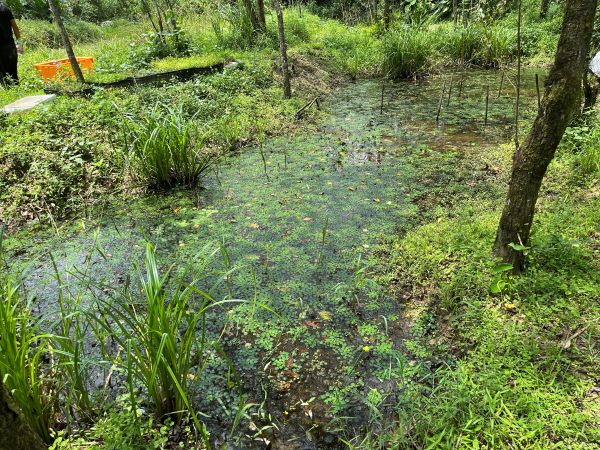
1.The Department of Life Science at our university is dedicated to ecological monitoring and conservation in Taiwan. It undertakes the National Science and Technology Council project “Long-term Research and Ecological Sustainability of Taiwan’s Endemic Species”, which monitors aquatic environments across Taiwan. The department has also published research documenting a new record of an aquatic plant species of Utricularia (bladderwort) in Taiwan.
Field documentation of the newly recorded aquatic plant Utricularia (bladderwort).
2.Professor Deng-Chiu Lin of the Department of Life Science leads the Long-Term Socio-Ecological Research (LTSER) Core Observatory Platform project. Unlike traditional ecological monitoring projects, this initiative not only emphasizes long-term research and observation but also seeks to integrate ecological systems with social systems in order to respond to the impacts of global change on socio-ecological structures. The project aims to promote a new model of long-term socio-ecological research.
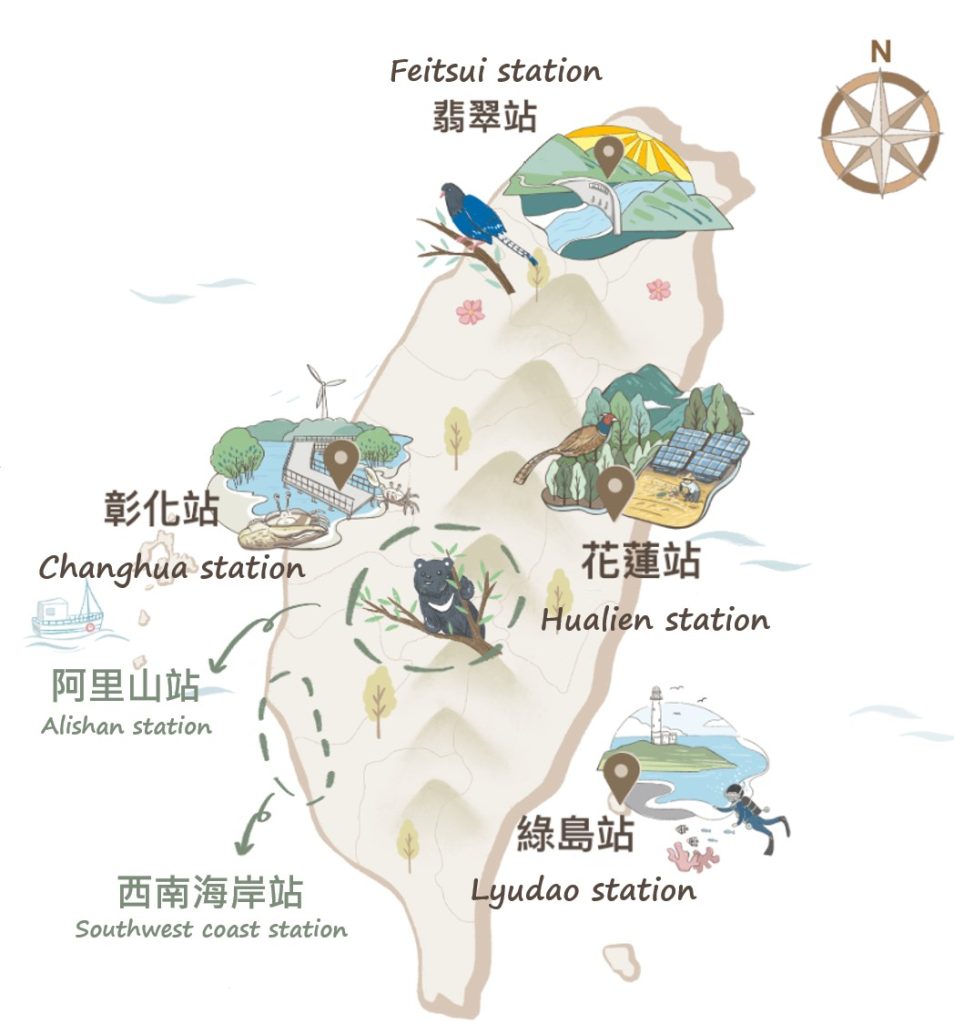
Following the concept of core research infrastructure, representative socio-ecological systems across different regions are selected to establish long-term research stations equipped with fundamental monitoring facilities. Among these, the Changhua Station and Green Island Station conduct long-term monitoring of marine and intertidal environments. Additionally, interviews are carried out within local communities to gather perspectives from diverse stakeholders regarding environmental, economic, and social issues.
Locations of the six Long-Term Socio-Ecological Research (LTSER) core observatory sites
3.The ecological documentary “Wild Wetlands: Taiwan’s Wetland Ecosystems under the United Nations Sustainable Development Goals” was co-produced by Professor Fang Wei-Ta, Director of the Graduate Institute of Sustainability Management and Environmental Education at NTNU, and international filmmaker Feng Jen-Lung. Professor Fang also serves as the Asia Chair of the International Society of Wetland Scientists and President of the Taiwan Wetland Society.
The four-episode series showcases:
The beauty of Taiwan’s wetlands
The diversity of wetland types
The ecological and social importance of wetlands
Climate change impacts
Effects of human disturbance
The documentary features extensive ecological footage collected from wetlands across Taiwan, including migratory and resident waterbirds, as well as rare and protected species such as the crab-eating mongoose.
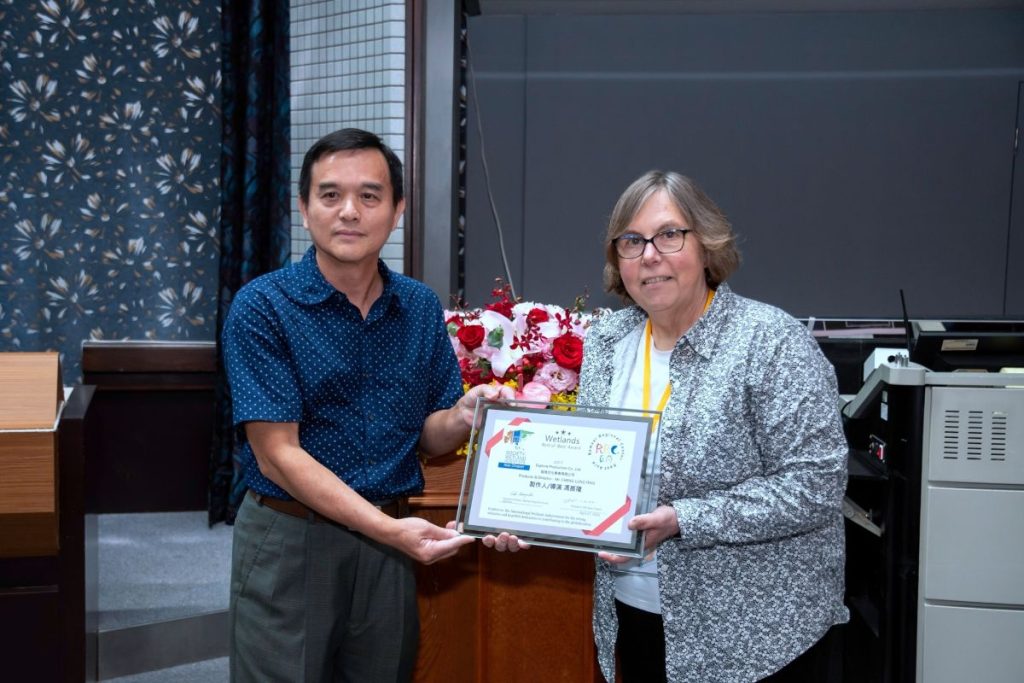
The English promotional trailer for the series received the Best of Best Award, jointly presented by the Ramsar Regional Center – East Asia and the Asian Chapter of the Society of Wetland Scientists, marking a significant international recognition.
The “Wild Wetlands” ecological documentary, produced by NTNU with funding from the National Science and Technology Council, received the “Best of Best Award” from an international wetland organization. Director Feng Jen-Lung (left) accepted the award on behalf of the production team. (Photo by NTNU Graduate Institute of Sustainability Management alumnus Chiang Yi-Te)
14.3.4 Technologies towards aquatic ecosystem damage prevention (direct work)
The Graduate Institute of Sustainability Management and Environmental Education is conducting the project “Coastal Citizen Science Monitoring and Suggested Conservation Strategy: Ghost Crab Survey at Suao Dakenggu, Taiwan.” The sandy shore of the Dakenggu community in Su’ao Township, Yilan County, serves as the long-term monitoring site for the East Asian ghost crab (Ocypode sinensis). This research adopts a community-based citizen science approach, with researchers and local residents collaborating to carry out monthly surveys.
The results indicate that the abundance of ghost crabs is positively correlated with air temperature and negatively correlated with relative humidity. Previous studies have shown that the use of off-road vehicles on beaches can significantly impact ghost crab populations. Based on these findings, local residents can develop appropriate conservation strategies, such as restricting off-road vehicle activities to the winter months (November to February) and planting coastal vegetation as natural barriers to protect the crabs’ habitat from vehicle disturbance.
Long-term environmental monitoring through community-based citizen science allows for the documentation of local ecological changes and provides an important foundation for improving community resilience to environmental challenges. It also helps to strengthen local conservation awareness and enhance the community’s capacity to protect its coastal ecosystem.
To ensure the sustainable use of water resources, the university has established the “Guidelines for the Management of Hazardous Industrial Waste in Laboratories” and implemented strategies such as smart water conservation and reclaimed water reuse to improve both the efficiency and safety of water resource utilization.
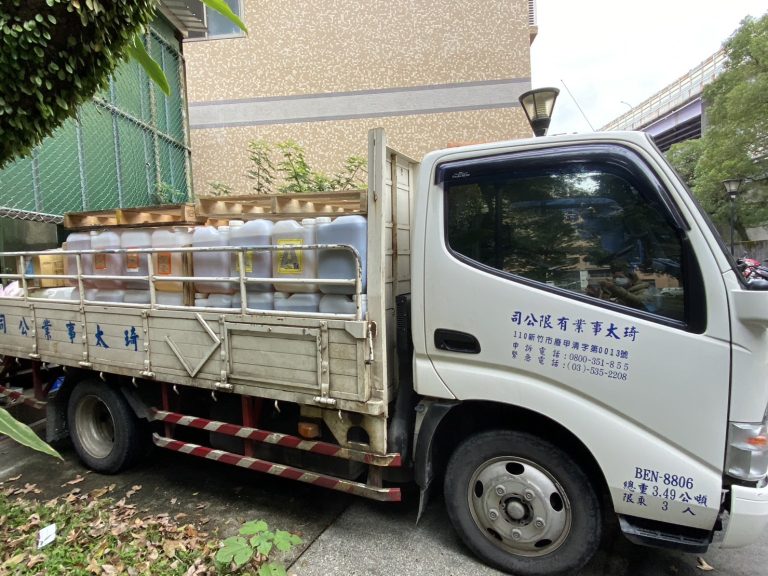
The Environmental Safety and Health Center is responsible for the management of hazardous waste generated in laboratories. This includes the classification, storage, and labeling of hazardous waste, maintenance of storage facilities, outsourcing of waste removal, educational outreach, and reporting—all of which are carried out in compliance with the Waste Management Act and related regulations issued by the Ministry of Environment, ensuring proper treatment of hazardous laboratory waste such as chemical waste liquids.
In addition, the Environmental Protection and Occupational Safety and Health Committee supervises compliance with regulations governing the handling of toxic chemical substances in laboratory environments, ensuring that toxic waste is properly managed and eliminated.
The university commissions qualified contractors to handle the removal and disposal of hazardous laboratory waste.
With regard to domestic wastewater, the university complies with all governmental regulations. Wastewater is discharged through a systematic sewer network into the Taipei City sewerage treatment system, where it undergoes filtration and processing before re-entering the water resource circulation system, contributing to the sustainable management of water resources and river ecosystems. At the Linkou Campus, the primary discharge is domestic wastewater; as the discharge volume is less than 800 m³/day, a combined rainwater and wastewater system is used, connecting to the New Taipei City sewerage network.
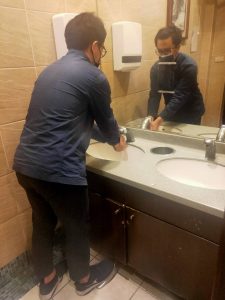
In terms of water conservation, the university has taken proactive measures since 2017 by installing foot-pedal faucets, achieving up to a 40% reduction in water usage. Smart water meters have also been installed across campus to automatically detect leaks or other irregularities. By enabling real-time monitoring of water consumption and usage trends, the system enhances water management efficiency.
Both the Gongguan and Linkou campuses actively promote water reuse. The Gongguan Campus has implemented a reclaimed graywater system, while the Linkou Campus operates a rainwater harvesting system. The reclaimed water is used for landscape irrigation and toilet flushing, further supporting sustainable water use.
Foot-pedal faucets achieve up to a 40% reduction in water usage.
14.4.2 Action plan to reducing plastic waste
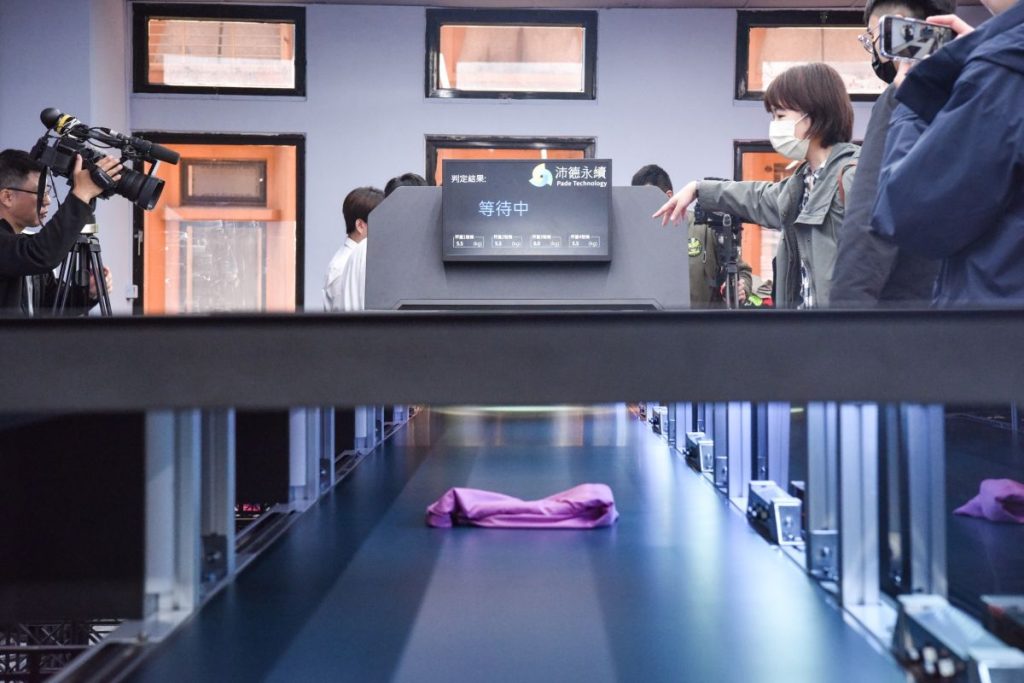
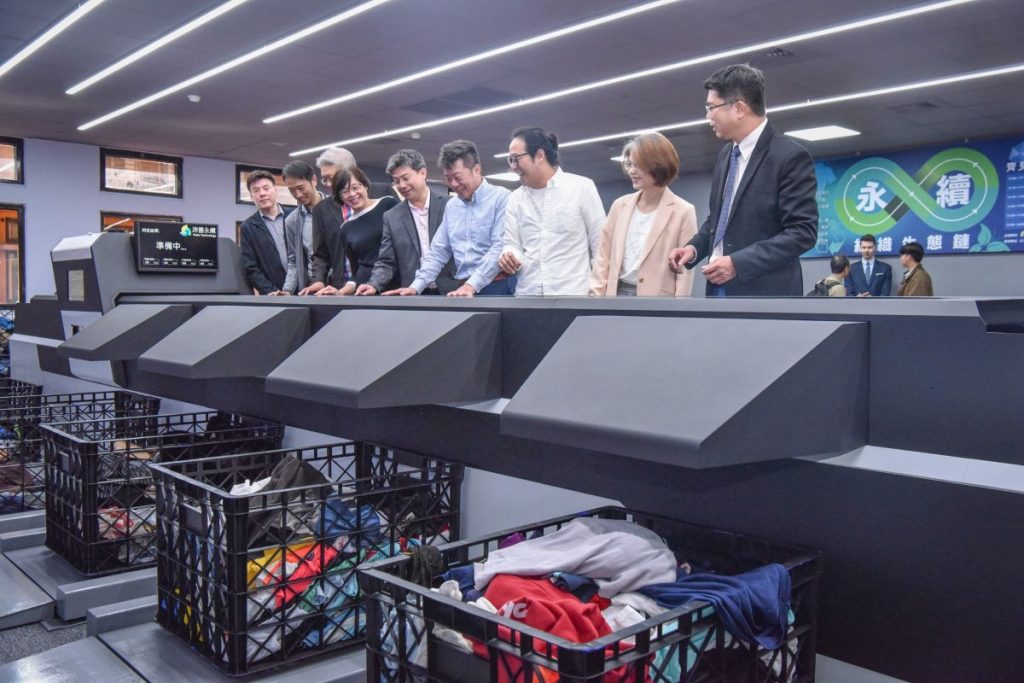
A research team from the Graduate Institute of Electro-Optical Science and Engineering has developed an “Intelligent Textile Material Sorting System” under a project commissioned by the Ministry of Economic Affairs. The system utilizes an AI machine-learning model and continuously improves detection accuracy through large-scale data accumulation, achieving an accuracy rate of over 95%.
Waste textiles and used clothing placed on the conveyor belt are scanned by the optical sensing module, which identifies blended fiber components through both qualitative and quantitative analysis. The system can detect not only polyester fibers but also a wide range of commonly used textile fibers and their blending ratios. Based on the analyzed purity and type, materials are then automatically sorted by air-jet valves into designated bins and subsequently directed to appropriate recycling and reprocessing facilities.
This technology addresses a key bottleneck in achieving sustainable textile circularity, enabling precise sorting of waste textiles and waste plastics to restore value and optimize resource and energy recycling flows. The research aims to resolve the sorting challenges that have hindered the textile circular economy and contribute to the early realization of a sustainable closed-loop textile system.
Operation of the “Intelligent Sorting Sustainable Textile System.”
In response to the global consumption crisis caused by plastic use, Associate Professor Wei Hsiu-Chen of the Department of Human Development and Family Studies launched the “Plastic Reduction for a Heartfelt Home” initiative in 2017. In 2018, the NTNU Plastic Reduction Promotion Center was established in the back alley of NTNU to actively promote plastic reduction actions. In addition to organizing beach and street clean-up activities, the Center also invites teachers from various schools to participate in educational workshops, hosts the creative competition “Golden Plastic Award”, and produces a podcast program. Through a series of enjoyable and educational activities, the Center aims to foster awareness and practice of plastic reduction.
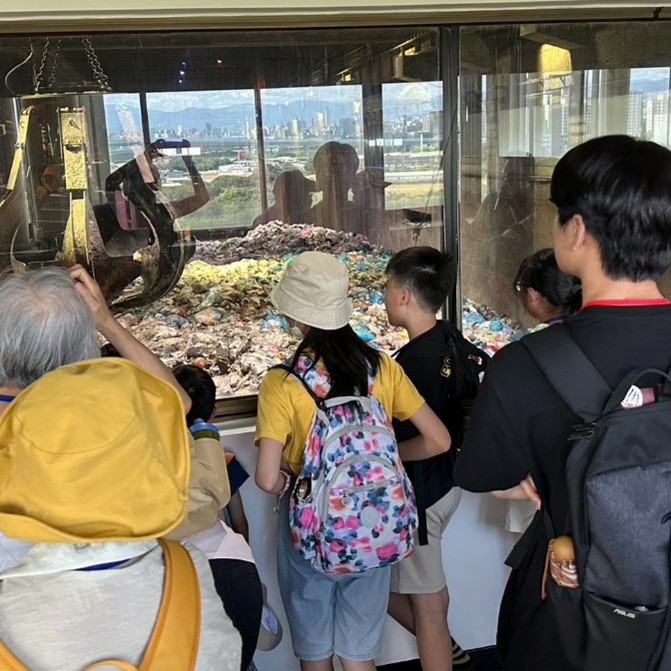
The Plastic Reduction Center led participants on a visit to a waste-to-energy incineration plant and carried out educational outreach activities.
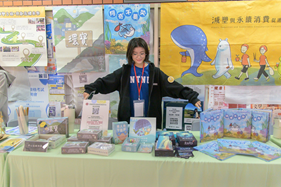
The Plastic Reduction and Sustainable Consumption Promotion Center held the 7th “Golden Plastic Award” in November 2024, actively responding to the United Nations Global Plastics Treaty initiated in 2022. A total of 214 creative submissions were received from across Taiwan and abroad, covering four categories: board games, LINE stickers, sustainable action projects, and picture books, promoting the concepts of plastic reduction and sustainable consumption.
The event featured a board game design exhibition, teacher professional development workshops, and a sustainability exhibition zone, incorporating environmentally conscious practices such as using eco-friendly fabric banner material (Xuan Ying Fabric) and selecting catering vendors committed to reusable tableware and dishware recycling.
The event also invited Yu Hsin-Ying from Renjou Clean Plastic and Chen Peng-Hung from Dear International to share innovative perspectives on sustainable consumption. Through these diverse professional viewpoints, the event aimed to provide deeper guidance on sustainability issues and support participants in developing more layered and meaningful understandings.
7th Golden Plastic Award Ceremony – Exhibition of Publications by the Plastic Reduction Center
14.4.3 Reducing marine pollution (policy)
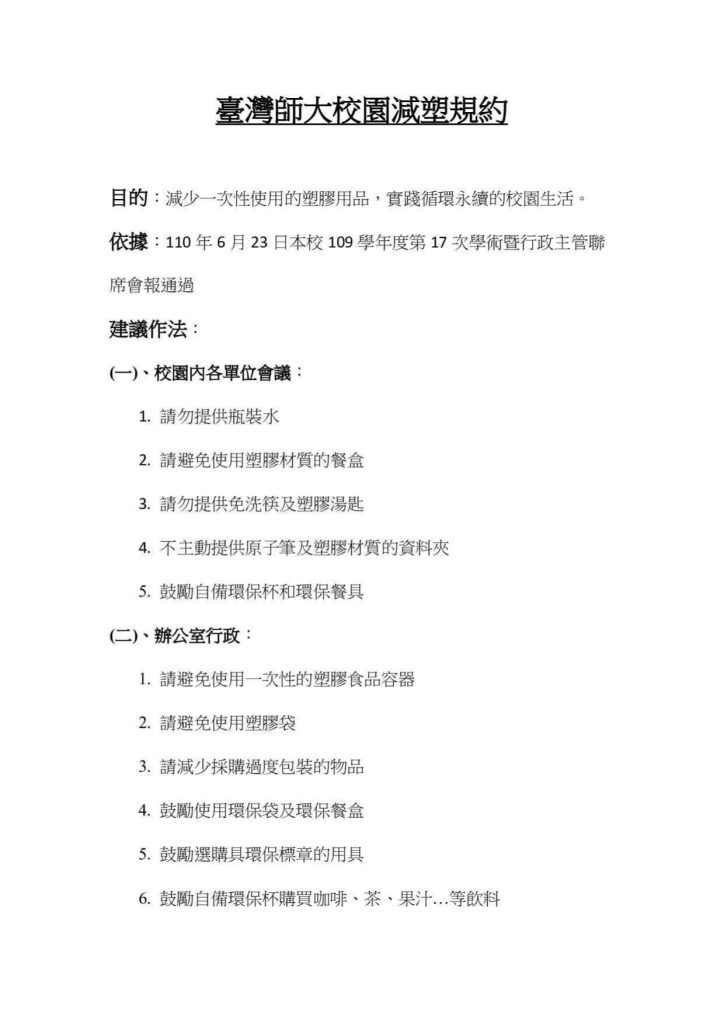
Plastic has long been one of the most severe pollutants in marine environments. In 2021, the university formulated the “NTNU Campus Plastic Reduction Regulations”, which prohibit or reduce the use of plastic and single-use items during meetings and office activities across all departments. Single-use items include disposable chopsticks, plastic spoons, and single-use plastic containers. The intent is to minimize contributions to marine pollution.
14.5.1 Minimizing alteration of aquatic ecosystems (plan)
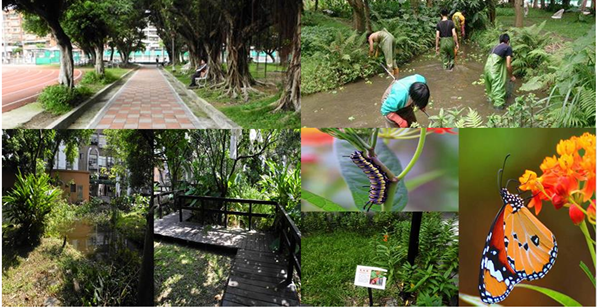
The Department of Life Science continues to study the human impacts on aquatic ecosystems. Professor Lin Feng-Yi’s research on freshwater acidification has identified its toxic effects on fish species. In addition, the university’s Gongguan Campus maintains an ecological pond, which is managed without the use of pesticides or fertilizers. Campus street trees and lawns are also maintained using natural management practices, reducing the introduction of chemical substances into surface runoff, groundwater systems, and the ecological pond. These measures help maintain the stability of the campus aquatic ecosystem.
The ecological pond area on the Gongguan Campus is rich in biodiversity.
14.5.2 Monitoring the health of aquatic ecosystems
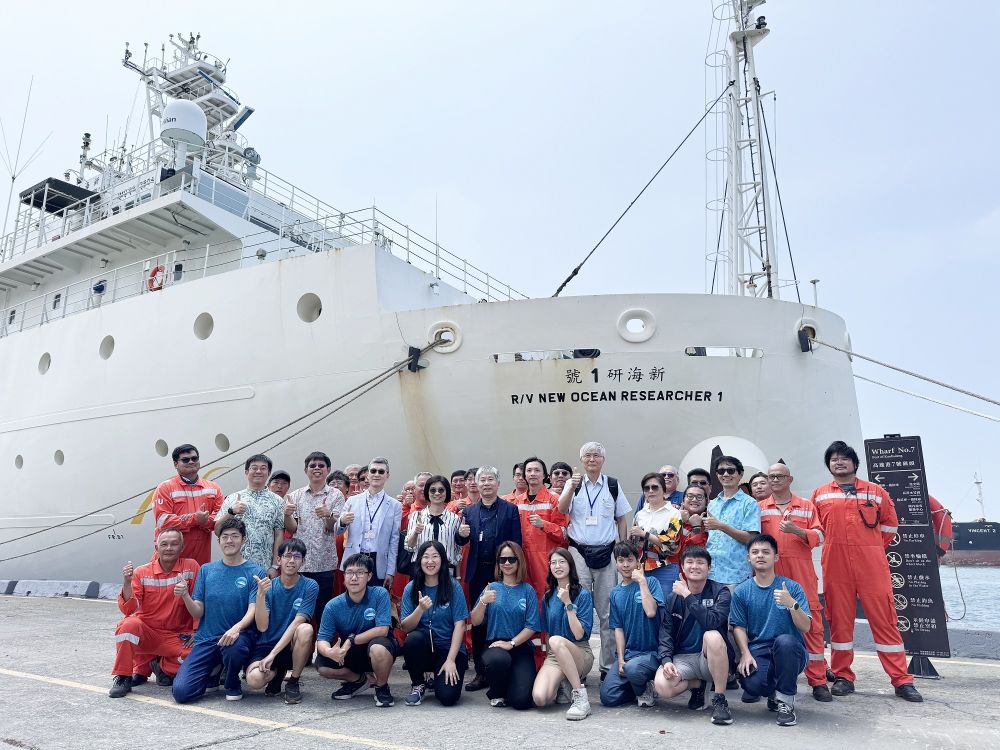
Professor Chung-Chi Chen of our university participated in an international, multi-institutional research team that completed a 24-day voyage of 25,000 nautical miles. The expedition sailed to Palau and docked at Malakal Harbor before returning to Kaohsiung Port. During this scientific cruise, the team carried out the “Integrated Blue Carbon Research in the Northwestern Pacific” project under the National Science and Technology Council’s “Sailing Toward the Blue Ocean Initiative.” Scientific samples were collected and key observational data were brought back for analysis.
This project is expected to provide valuable insights and support for global efforts to mitigate climate change and achieve carbon neutrality, and to advance the development of ocean-based carbon removal technologies, contributing to more effective control and management of global greenhouse gas emissions.
Group photo of the R/V New Ocean Researcher I expedition team.
14.5.3 Programs towards good aquatic stewardship practices
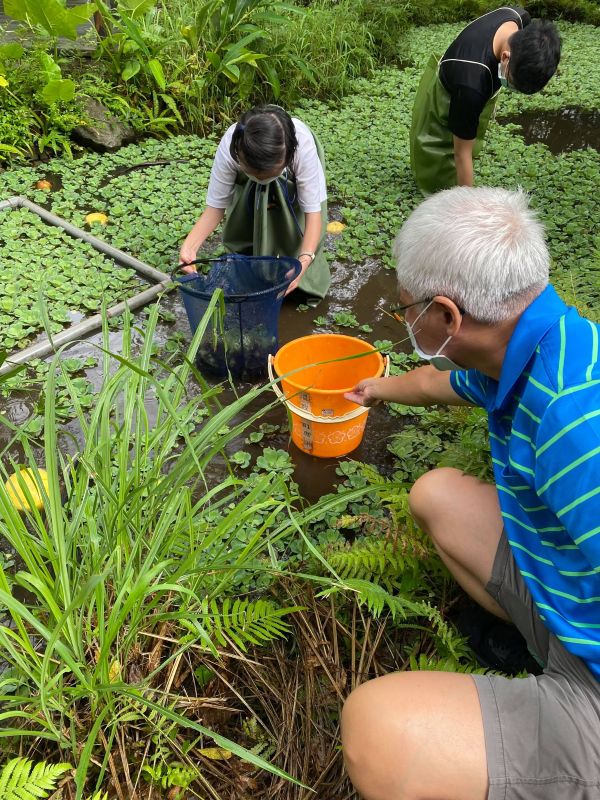
Students from the Graduate Institute of Sustainability Management and Environmental Education formed a self-organized group known as the ECO Group. The ECO Group uses the Gongguan Campus wetland ecological pond as its primary teaching site, guiding participants to learn about wetland ecology and enhance environmental awareness. The program mainly serves high-support-needs children, who typically require specialized educational environments to maintain effective learning.
The ECO Group offers an alternative educational experience different from formal classroom instruction, allowing participants to learn in a more relaxed and experiential manner while also creating meaningful and positive life-learning experiences.
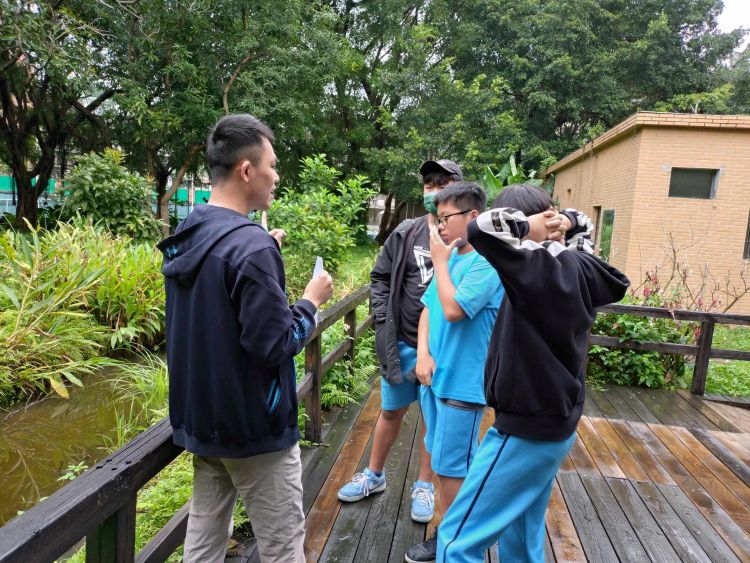
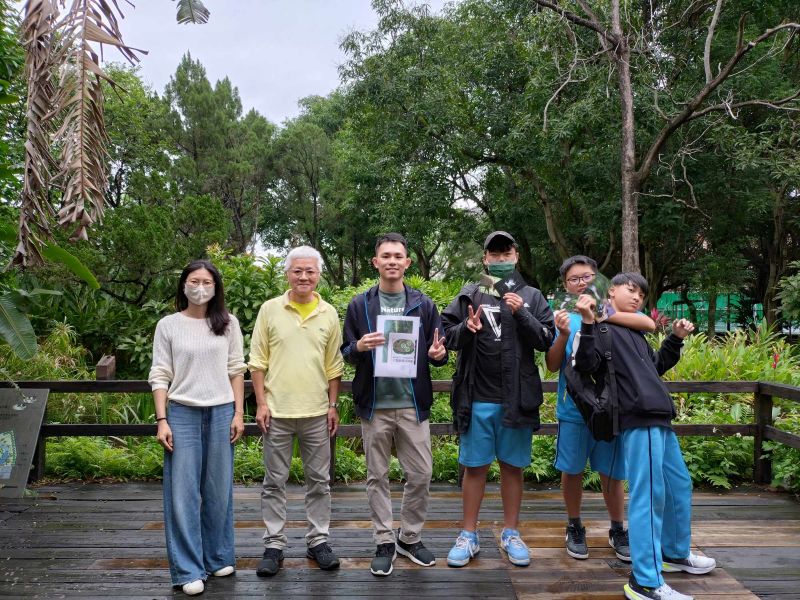
The ECO Group conducted an aquatic ecology lesson activity for students from Zhishan Junior High School.
14.5.4 Collaboration for shared aquatic ecosystems
The ECO Group, formed by students from the Graduate Institute of Sustainability Management and Environmental Education, was established to help maintain the wetland ecological pond on the Gongguan Campus and to use it as a site for environmental education outreach. Since its founding in 2012, the group has organized numerous educational activities, and in recent years has assisted in leading students from various junior high schools in the Taipei area to engage in wetland learning and hands-on ecological experiences.
The ECO Group maintains a strong partnership with a teacher who works specifically with high-support-needs students. Through this collaboration, the group has led students from multiple schools to engage with wetland environments and learn in non-formal educational settings. This partnership not only enhances the professional development and teaching experience of NTNU students, but also provides meaningful experiential learning opportunities for high-support-needs students, helping them understand the importance of aquatic ecosystems and offering them a different kind of educational experience.
The collaborating teacher participated in the experiential activity together.
14.5.5 Watershed management strategy
The university is implementing the project “Enhancing Water Environment Literacy of Residents in Water Resource Protection Areas and Supporting Local Development.” Through school-based educational initiatives, the project strengthens the sense of place among students and local residents, while supporting community-driven sustainable development. For example, ecological field visits to the Feitsui Reservoir area allow participants to understand the importance of water source ecosystems—beginning with the protection of water and biodiversity in water catchment zones, and extending to the broader municipal water supply system. The program also guides discussions on the ecological value of clean water resources and the ethical considerations related to fair water allocation and environmental justice.
One of the activities involved an in-depth field visit to Feitsui Reservoir to learn about water source protection and ecological conservation, aligning with SDG 14 (Life Below Water) by emphasizing the significance of maintaining water quality. Through water testing and automated monitoring networks, the condition of rivers and reservoir systems can be effectively monitored, reducing ecological disturbances and strengthening system resilience.
Additionally, the project brought together scholars, environmental education teachers from elementary and junior high schools, and university representatives to collaboratively explore the entire water-resource management system—from the catchment area reservoir administration, to municipal water purification plants, and finally to wastewater treatment facilities. This comprehensive framework enabled participants to understand planning and regulatory structures, ecosystem conservation measures in designated water source protection zones, and the processes of drinking water purification and wastewater treatment.
Through these efforts, the project advances SDG 6 (Clean Water and Sanitation) and promotes the protection and sustainable use of river and reservoir resources, contributing to the long-term health and stability of aquatic ecosystems.
Field visit to a conservation and rehabilitation center for the protected Taiwanese yellow-margined box turtle.